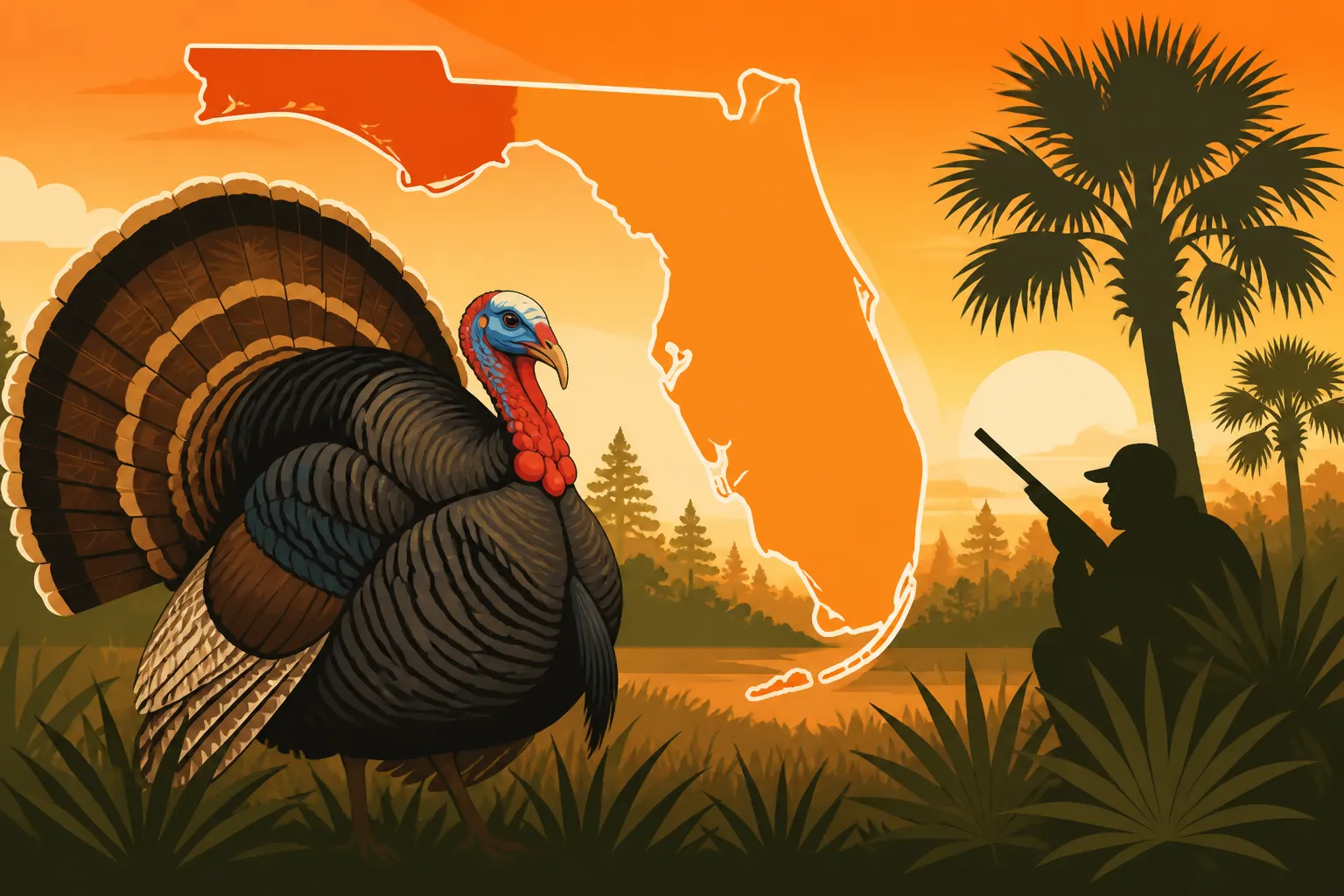
Eastern Turkey Range in the Panhandle
It can be truly bewildering trying to understand the nuances of Florida's turkey populations, especially when you're focusing on the Panhandle. Many hunters get confused about whether they're even in Osceola territory or how the Eastern birds differ culturally and physically. This comprehensive guide will meticulously break down the specific range, habitat, and characteristics of Eastern turkeys in the Florida Panhandle, helping you become a more effective and knowledgeable hunter targeting these magnificent birds.
Understanding Florida's Turkey Subspecies and Zones
Florida is unique in that it hosts two distinct wild turkey subspecies: the Osceola and the Eastern. For hunters, recognizing the dividing line and understanding the FWC's management zones is absolutely crucial to planning a successful hunt. The differences go beyond just geography; they influence bird behavior, habitat, and even the "feel" of the hunt.
The Osceola Versus Eastern Divide
Let's cut right to it: the biggest point of confusion for many new hunters, and even some seasoned folks from out of state, is distinguishing between the Osceola and the Eastern wild turkey. The Osceola, or Florida wild turkey, is truly a Florida native, found only on the peninsula. It's often smaller, darker, and tends to have less white barring on its wing feathers compared to the Eastern. Their calls can sometimes be a bit softer, and they often inhabit denser palmetto scrub and cypress swamps.
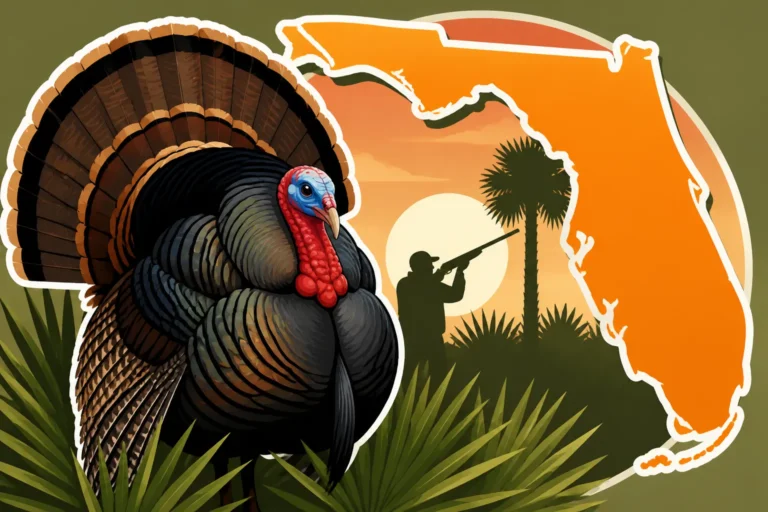
The Eastern wild turkey, however, is a different beast entirely. It's the most widespread subspecies in North America, and in Florida, its range is confined primarily to the Panhandle. These birds are generally larger, boast more prominent white barring on their wing feathers, and often have a more robust gobble. While they share some similarities in behavior with their Osceola cousins, their preferred habitat and the tactics required to hunt them can vary significantly. Understanding this distinction is the first step in successful turkey hunting in the Sunshine State. If you're looking for an overview, our guide on Florida's Osceola and Eastern Turkey Zones really lays out the groundwork.
Florida's Turkey Management Zones
To further clarify, the Florida Fish and Wildlife Conservation Commission (FWC) has established specific turkey management zones that roughly align with these subspecies ranges. The "Eastern Zone" encompasses the entire Florida Panhandle, extending west of the Suwannee River. This is where you'll find healthy populations of Eastern wild turkeys. South of the Suwannee River, and throughout the peninsula, you're in the "Osceola Zone."
These zones are not just arbitrary lines on a map; they dictate season dates, bag limits, and even permit requirements. For instance, the spring season dates for the Eastern Zone are typically a bit later than those for the Osceola Zone, reflecting differences in their breeding cycles influenced by geography and climate. Always double-check the current FWC regulations for the specific zone you plan to hunt, as these details can change. Knowing which zone you're in is paramount to staying legal and making sure your hard-earned permit matches the bird you're pursuing.
Eastern Turkey Habitat Preferences in the Panhandle
The Florida Panhandle, with its distinct geographical features and ecosystems, offers a diverse array of habitats that Eastern turkeys thrive in. Unlike the dense, subtropical landscapes further south, the Panhandle presents a more classic Southern forest environment, which these birds have adapted to perfectly.
Longleaf Pine Ecosystems
When you think of prime Eastern turkey habitat in the Florida Panhandle, longleaf pine ecosystems should immediately come to mind. These magnificent, open forests, often maintained by prescribed fire, offer the ideal blend of cover, food, and clear understory that turkeys adore. The towering longleaf pines provide excellent roosting sites, while the sparse understory, rich with wiregrass and various forbs, allows turkeys to see approaching predators and move freely. These areas are often abundant in insects, a crucial protein source for hens and poults, and provide mast crops like acorns from scattered oaks.
Hunters often find success patterning gobblers that utilize these open pine stands for strutting grounds. The natural visibility makes it easier for hens to spot displaying toms. When scouting, pay close attention to areas where the pines transition into thicker cover or hardwood stringers, as these often serve as travel corridors. A good mapping application, like GoHunt, can really highlight these distinct habitat types, helping you visualize movement patterns. You can learn more about Hunting an Eastern Gobbler in Panhandle Pines if this sounds like your kind of hunt.
Hardwood Bottoms and River Drainages
While longleaf pines are excellent, Eastern turkeys also heavily utilize hardwood bottomlands and the rich river drainages that crisscross the Panhandle. Think of places like the Apalachicola River drainage or the Choctawhatchee River basin. These areas, with their mix of diverse hardwoods like oaks, sweetgums, and hickories, provide an incredible bounty of food sources, especially acorns in the fall and early spring. The denser canopy in these areas offers shade and cover during warmer parts of the day, and the rich soil supports a wider variety of insects and understory plants.
During the breeding season, gobblers will often frequent the edges of these bottomlands, using them for roosting and moving between feeding areas and more open strutting zones. Hens often nest in the thicker cover found along these drainages. Hunting these areas often involves navigating thicker vegetation and being mindful of water, but the reward can be a truly old, wise gobbler that lives deep within these secluded havens. Scouting for fresh tracks and droppings along these creek beds and riverbanks can be incredibly productive.
Agricultural Interfaces and Forest Edges
Don't overlook the agricultural fields and the edges where forests meet open ground. The Florida Panhandle, particularly in counties like Jackson, Holmes, and Walton, features a good deal of agricultural land interspersed with timber. Eastern turkeys are opportunistic feeders and will readily venture into fields to forage for waste grain, insects, and tender green shoots. This is particularly true during the late winter and early spring when natural food sources might be scarcer.
These forest-field interfaces create natural funnels and travel corridors that turkeys frequently use. Toms will often strut along these edges, displaying to hens that might be feeding in the fields. Identifying key entry and exit points, as well as favored strutting zones along these lines, can be a game-changer for hunting success. Setting up a decoy spread just inside the timber edge, overlooking a field, is a classic and often effective tactic. Just make sure you understand Florida Public Land Hunting Hours if you're targeting birds in these transition areas on public ground, as regulations can vary.
Key Panhandle Counties for Eastern Turkeys
When it comes to pinpointing the best places to chase Eastern turkeys in the Florida Panhandle, certain counties consistently rise to the top, offering both abundant public land opportunities and strong private land populations. Knowing where to focus your efforts can save you valuable time and increase your chances of success.
Public Land Opportunities
Florida's public lands in the Panhandle offer fantastic opportunities for Eastern turkey hunting, provided you do your homework and understand the often-competitive nature of these hunts. Large tracts of national forests and wildlife management areas (WMAs) are managed to provide quality turkey habitat. For example, the Apalachicola National Forest, spanning parts of Liberty, Wakulla, and Leon counties, is a vast expanse of pine flatwoods, swamps, and hardwood drains that holds a strong population of Easterns. It requires a significant amount of scouting and legwork, but the rewards can be substantial. Our guide on Apalachicola National Forest Hunting goes into even more detail on this specific area.
Other notable public areas include Blackwater River State Forest in Santa Rosa and Okaloosa counties, known for its longleaf pine restoration efforts, and Eglin Air Force Base WMA, which offers extensive hunting grounds through a specific permit system. The key to public land success is thorough pre-season scouting. Using detailed maps, including those found on platforms like GoHunt, to identify potential roosting areas, feeding grounds, and travel corridors will give you a significant advantage. Don't be afraid to put in the miles; Eastern turkeys on public land are often pressured and require hunters to venture off the beaten path.
Private Land Strongholds
While public land offers a challenge and a rewarding experience, a significant portion of the Panhandle's Eastern turkey population thrives on private lands. These often include large timber company holdings, cattle ranches, and family farms that have been managed with wildlife in mind for generations. Counties like Jackson, Holmes, and Washington are prime examples, boasting extensive timber tracts and agricultural fields that provide ideal habitat.
Accessing these private land strongholds typically involves leasing land, joining a hunting club, or securing permission from landowners. These arrangements often provide less pressured hunting opportunities and can lead to more consistent encounters with mature gobblers. For those interested in this route, understanding the Florida Landowner Deer Permit Rules can offer insights into how private land is managed, even though this guide focuses on deer, the principles of land access often overlap. Many outfitters also operate on private land, offering guided hunts that can be an excellent option for non-residents or those with limited time. The cost and availability for private land access vary widely, but the quality of the hunting can often justify the investment for many passionate turkey hunters.
| Panhandle County | Dominant Habitat Type | Public Land Access | Eastern Turkey Population Estimate | Notes for Hunters |
|---|---|---|---|---|
| Bay | Pine Flatwoods, Coastal | Limited WMAs | Moderate | Coastal influence, patchy habitat. |
| Calhoun | Pine/Hardwood Mix | Apalachicola NF | Good | Strong turkey numbers, diverse terrain. |
| Escambia | Pine Forests, Farms | Blackwater River SF | Moderate-Good | Northernmost county, good for big woods. |
| Franklin | Coastal Swamps, Pine | Apalachicola NF | Low-Moderate | More remote, challenging. |
| Gadsden | Farms, Hardwood Hills | Limited WMAs | Moderate | Mix of ag and timber. |
| Gulf | Coastal, Pine Flatwoods | Apalachicola NF | Low-Moderate | Remote, swampy areas hold birds. |
| Holmes | Farms, Hardwood Hills | Small WMAs | Good | Many private farms, consistent birds. |
| Jackson | Farms, River Bottoms | Limited WMAs | Excellent | Prime turkey country, high density. |
| Jefferson | Farms, Timber | St Marks NWR | Moderate-Good | Diverse habitat, good potential. |
| Leon | Rolling Hills, Timber | Apalachicola NF | Moderate | Close to Tallahassee, some pressure. |
| Liberty | Apalachicola NF | Apalachicola NF | Excellent | Dense, productive timberland. |
| Okaloosa | Pine Forests, Military | Eglin AFB WMA | Good | Large WMA, requires specific permits. |
| Santa Rosa | Blackwater River SF | Blackwater River SF | Good | Managed pine forests. |
| Walton | Pine, Farms, Coastal | Point Washington SF | Moderate-Good | Diverse, from coastal to inland. |
| Washington | Pine Forests, Farms | Small WMAs | Good | Consistent private land populations. |
Population estimates are qualitative and based on general hunting success and observation.
Challenges and Conservation of Eastern Turkeys
Even with robust populations in the Florida Panhandle, Eastern turkeys face a variety of challenges, both natural and human-induced. Understanding these pressures is key to appreciating the ongoing conservation efforts that help maintain these magnificent game birds for future generations.
Habitat Fragmentation and Development
One of the most pervasive threats to Eastern turkeys in Florida, as it is with much wildlife, is habitat fragmentation. The Panhandle, while largely rural, is not immune to development. As residential areas expand, timber lands are converted, and infrastructure projects carve through wild spaces, the large, contiguous blocks of forest that turkeys depend on are broken up. This fragmentation can isolate populations, making them more vulnerable to local extinctions and reducing genetic diversity. It also creates more edge habitat, which can increase predation risk for nesting hens and poults.
Conservation organizations and the FWC actively work to combat this through land acquisition, conservation easements, and promoting sustainable forestry practices. Protecting large tracts of land, particularly those connecting existing habitats, is crucial for ensuring turkeys have enough space to thrive. Prescribed burning programs also play a vital role in maintaining the health and openness of longleaf pine ecosystems, which are critical for turkey success.
Predation and Management Efforts
Eastern turkeys, especially young poults and nesting hens, are vulnerable to a wide range of predators. Raccoons, opossums, bobcats, coyotes, and even feral hogs can all impact turkey populations by preying on eggs, poults, and sometimes even adult birds. While predation is a natural part of the ecosystem, abnormally high predator numbers, often linked to human activity and habitat changes, can put undue stress on turkey populations.
The FWC, in conjunction with private landowners and conservation groups, employs various management strategies to mitigate these impacts. This includes ongoing population surveys, habitat improvements to provide better nesting cover, and regulated predator control where necessary and feasible. Hunters also play a critical role through their license fees, which directly fund these conservation initiatives. Supporting organizations like the National Wild Turkey Federation (NWTF) also contributes significantly to habitat restoration and sound management practices for all wild turkey subspecies, including the Easterns you'll find in the Panhandle.
Scouting and Hunting Strategies for Panhandle Easterns
Hunting Eastern turkeys in the Florida Panhandle is an incredibly rewarding experience, but it requires diligent preparation and a keen understanding of their behavior. These birds are savvy, and successful hunters know that the work starts long before opening day.
Pre-Season Scouting Techniques
Serious turkey hunting success often boils down to serious pre-season scouting. You simply cannot show up on opening day and expect to consistently tag a Panhandle gobbler without doing your homework. Start by poring over topographical maps and aerial imagery, perhaps using a tool like GoHunt, to identify potential roosting areas (tall pines near water or on ridges), strutting zones (open fields, logging roads, firebreaks), and natural travel corridors (creek bottoms, timber edges). Look for signs of past activity like old droppings, shed feathers, and tracks.
As the season approaches, hit the woods. Listen for gobbling at dawn, identifying potential roost trees and the general direction birds are heading once they fly down. Use locator calls—crow, owl, or coyote calls—to try and elicit shock gobblers, helping you pinpoint their general location without putting too much pressure on them with turkey calls. Identifying key food sources, like acorn flats or insect-rich areas, will also tell you where hens are likely to be, and where gobblers will be looking for them. Remember, turkeys are creatures of habit, and observing their patterns before the season can be the single most important factor in your success. Our guide on Scouting Florida Public Land Before Season offers broader tips that are very applicable here.
Effective Calling and Decoy Setups
Once you've located some birds, or at least a promising area, your calling and decoy strategies become paramount. Eastern turkeys in the Panhandle, like most wild turkeys, respond to a variety of calls, from soft tree yelps to aggressive cutting and cackling. Mastering a few different calls – a slate, box, and diaphragm call – gives you versatility. Start soft, mimicking a lonely hen, and only increase volume and urgency if the gobbler shows interest or starts moving away. Don't be afraid to experiment; sometimes a lot of subtle clucks and purrs will close the deal, while other times a string of loud yelps is needed to get a tom fired up.
Decoy setups can be incredibly effective, especially when hunting open areas. A lone hen decoy, or a pair of hens with one in a breeding posture, can be irresistible to a gobbler looking for love. Positioning your decoys in a visible location, about 20-30 yards from your hidden position, allows you to draw the bird in close for a clean shot. Always remember to set up so that the gobbler approaches the decoys from a direction that presents a good shot opportunity for you, usually facing away or quartering toward you. Consider using a jake or small tom decoy only if you're confident there aren't dominant toms in the area that might be spooked by perceived competition. Knowing how to adjust your calls and decoys based on the bird's response and the specific habitat is what makes Hunting Florida's Eastern Panhandle Turkey such an engaging challenge.
Disclaimer
Please remember that hunting regulations, season dates, and permit requirements are subject to change by the Florida Fish and Wildlife Conservation Commission (FWC). Always consult the latest FWC regulations guide before planning or engaging in any hunting activities. This article is for informational purposes only and does not constitute legal advice.