Average Size of a Harvested Florida Alligator
One of the biggest questions that often bubbles up for aspiring alligator hunters, or even just those curious about Florida's ancient reptiles, is exactly how big these creatures really get. You see them in movies, read sensationalized stories, and sometimes it feels like every gator is a monstrous beast. But the reality on the ground, or rather, in the water, for the average harvested Florida alligator, can be quite different from those larger-than-life tales. This guide aims to pull back the curtain on what you can realistically expect when it comes to the average size of alligators taken in Florida, exploring the factors that contribute to their length and girth, and how to approach size expectations responsibly.
The Reality of Florida Alligator Sizes
When you picture a Florida alligator, your mind might conjure images of dinosaurs lurking in murky swamps. While Florida certainly has its share of impressive reptiles, the "average" harvested alligator is often a more manageable size than many first-timers imagine. Understanding this average is key to setting realistic expectations and appreciating the unique challenge of alligator hunting.
Average Harvested Lengths and Weights
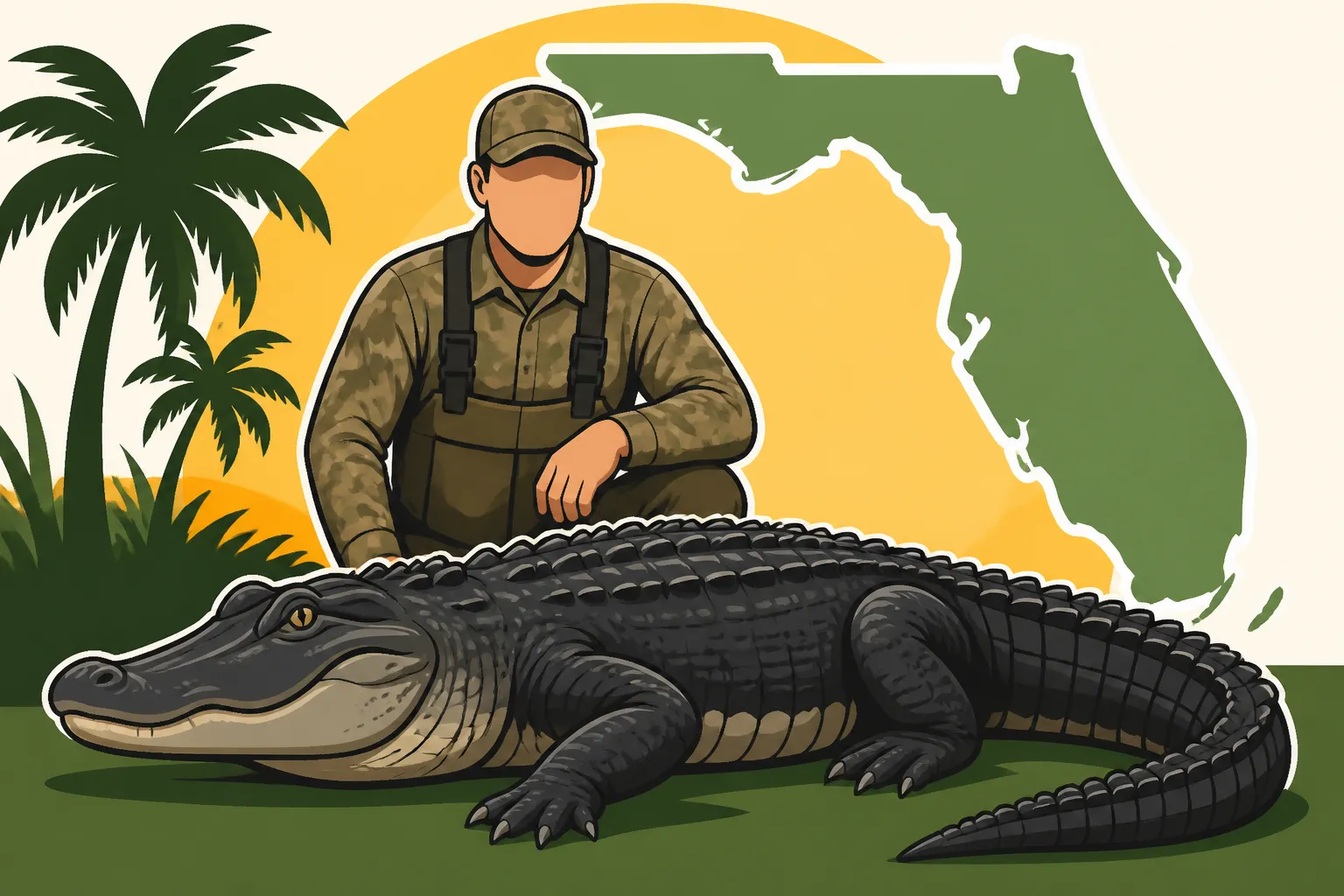
For hunters participating in Florida's statewide alligator harvest program, the typical alligator taken often falls within a range that might surprise some. We're generally talking about alligators ranging from about 7 to 9 feet in length. While you certainly hear stories of 10, 11, or even 12-foot giants, those are considered exceptional trophies and represent a much smaller percentage of the total harvest. A 7-foot gator is a solid animal, and an 8-footer is truly something to be proud of, often tipping the scales at several hundred pounds. Imagine wrestling something the size of a small car, even if it's only 7 or 8 feet long – their muscle density is incredible. These aren't flimsy creatures; they're thick, powerful, and demanding to handle once secured.
The weight can vary dramatically based on length and overall body condition. A healthy 8-foot alligator might weigh anywhere from 200 to 350 pounds, while a 9-footer could easily push 400 pounds or more. These figures are important to consider not just for bragging rights, but for the practicalities of handling, hauling, and processing your harvest. It's a physical endeavor, regardless of the gator's specific dimensions, requiring significant effort and often multiple people to manage safely.
Factors Influencing Alligator Size
Several critical factors play into an alligator's potential size and growth. Just like deer or turkeys, gators are products of their environment, and some habitats are simply more conducive to producing larger animals.
First, food availability is paramount. Alligators in areas with an abundant and consistent food source—like nutrient-rich lakes, expansive marsh systems, or slow-moving rivers teeming with fish, turtles, and smaller mammals—tend to grow faster and larger. Think of those fertile pastures for cattle; a gator needs its own version of that. Conversely, gators in more marginal habitats with scarcer food might show slower growth rates and reach smaller mature sizes. It's a simple energy equation: more calories in, more growth potential.
Second, habitat quality itself makes a huge difference. Deep, stable waters with plenty of cover, basking spots, and suitable nesting areas contribute to a gator's overall health and longevity. Lakes with extensive shallow flats for foraging, or large, undisturbed sections of the Everglades, can be prime real estate for larger gators. These environments allow them to thrive without undue stress, escape predation (especially when young), and conserve energy. On the other hand, smaller, more isolated ponds or canals might support a resident gator population, but rarely produce the giants due to limited resources and potential for territorial disputes. When you're scouting, it's worth considering the entire ecosystem, not just where you might spot a gator. Resources like GoHunt can sometimes provide insights into habitat types and water bodies, helping you identify areas that might hold larger, older gators.
Finally, age and genetics are undeniable components. While specific genetic studies on wild alligator size aren't always definitive for individual animals, it's clear that older alligators are generally larger, simply having had more time to grow. Some regions may also have localized populations that historically grow larger due to a combination of factors, including perhaps a genetic predisposition for larger size within that specific gene pool. A good many of the truly massive gators taken are often older males, having survived for decades to reach their impressive dimensions.
Understanding Growth and Age in Alligators
Alligators are cold-blooded creatures, and their growth rates are much more tied to environmental conditions than warm-blooded animals. This means understanding their growth isn't always a straight line; it's a dynamic process influenced by their surroundings.
Slow Growth vs. Rapid Growth
An alligator's growth isn't a steady, predictable curve year after year. Instead, it's often characterized by periods of rapid growth interspersed with slower phases, all heavily dependent on external factors. When conditions are optimal – warm temperatures, abundant food, and low stress – an alligator, especially a younger one, can put on considerable length and weight in a relatively short period. Imagine a young gator in a marsh system that suddenly experiences a boom in fish or amphibian populations; it will capitalize on that bounty, growing quickly.
Conversely, during periods of drought, cold snaps, or when food sources become scarce, growth can slow significantly or even cease. An alligator might simply maintain its size, focusing energy on survival rather than expansion. This means two alligators of the exact same age might have vastly different sizes if they’ve lived in different habitats or experienced different environmental pressures over their lives. For instance, a gator in a prime central Florida lake with year-round food might outgrow a gator of the same age living in a less productive river system in the Panhandle, even if both started life at the same length. This variability makes "guessing" an alligator's age purely by its size a tricky business.
Age and Size Correlation: Challenges in the Field
While it's generally true that bigger gators are older gators, accurately correlating age with size in the field is incredibly challenging. There's no simple "rule of thumb" like counting antler points on a deer. A 10-foot gator is undoubtedly old, perhaps 20-30 years or more, but a 7-foot gator could be anywhere from 10 to 20 years old depending on its life history.
When you're out on the water, perhaps Stalking an Alligator on a Freshwater Lake, you're not seeing the full animal, nor can you ask its birthdate. Instead, you're looking for visual cues that suggest maturity: a broad head, a thick neck, a robust body. These indicators often suggest an older, more established animal, even if you can't get a precise length measurement. The sheer girth and head size often tell a story of age and dominance more reliably than a quick guess at its tail length when it's partially submerged. This is why experienced guides spend so much time watching and waiting, trying to get a better read on the animal's full dimensions before making a move.
What to Expect on a Florida Alligator Hunt
Embarking on a Florida alligator hunt is an incredible experience, but it’s crucial to go into it with a clear head and realistic expectations regarding the size of the animal you might harvest. The true trophy often lies in the adventure itself, not just the tape measure.
Realistic Expectations for Harvest
Let's be honest, everyone hopes to tag a monster gator. We all dream of that 12-foot beast. But the reality for most successful alligator hunters in Florida is that they will harvest an alligator in the 7 to 9-foot range. And let me tell you, an 8-foot gator is an absolutely fantastic animal, a serious challenge to catch and a magnificent trophy. The excitement of the chase, the tension of the hookup, and the raw power of the struggle are what truly make alligator hunting such a unique and unforgettable pursuit. Focusing solely on a massive length can lead to disappointment, missing the broader, more profound experience of connecting with such a primal creature in its natural habitat.
Consider the entire process, from getting your Applying for a Statewide Alligator Permit to the eventual processing of the meat and hide. Every stage is part of the story. Plus, an 8-foot gator yields a substantial amount of delicious meat and a beautiful hide that can be tanned and used for various projects. It's a complete package of adventure, food, and a tangible memory. Don't let the pursuit of an outlier overshadow the richness of the typical harvest experience.
Judging Size in the Water: The Nose-to-Eye Rule
One of the biggest challenges in alligator hunting is accurately judging a gator's size when it's in the water. All you often see are the eyes and nostrils, maybe a bit of the back. It's easy for the mind to exaggerate what's beneath the surface. This is where the venerable "nose-to-eye" rule comes into play. While not a precise scientific measurement, it’s a time-tested field estimation method used by many hunters and guides.
The basic idea is that for every inch between the tip of the alligator's nose and the front of its eyes, the gator is approximately one foot long in total. So, if you can estimate that there are 8 inches from its nose to its eye ridge, you're likely looking at an 8-foot alligator. This takes practice and a keen eye, especially in low light or choppy water. Factors like water clarity, reflection, and even the gator's posture can throw off your estimate. It's not foolproof, but it's the best tool you have for Judging a Legal-Size Florida Alligator before you commit to a harpoon throw or a shot. Utilizing topographical maps and aerial imagery, perhaps even within a platform like GoHunt, can give you an idea of the depth and structure of the water body, which can sometimes aid in understanding how much of the gator might be submerged. Remember, the true length isn't known until it's out of the water!
Trophy Potential and Record Holders
While the average harvested gator falls into a certain range, Florida is indeed home to some truly massive alligators. These are the elusive giants, often old males that have survived for decades in prime habitats with minimal human disturbance. Every year, a handful of hunters manage to harvest alligators exceeding 10 feet, and occasionally, a truly exceptional animal pushing 12 feet or more is taken. These record-book gators are typically found in the vast, wild expanses of the Everglades, large public lakes, or remote private ranches where they face less pressure and have consistent, rich food sources.
Harvesting one of these behemoths is a monumental achievement, often the culmination of extensive scouting, incredible patience, and a bit of luck. They are formidable animals, requiring specialized gear and a significant amount of skill and experience to subdue. If your dream is to pursue one of these truly giant gators, you'll likely need to target specific areas known for producing larger animals, consider hiring a seasoned guide who specializes in big gators, and understand that such a hunt might take multiple seasons and considerable dedication. It's the ultimate challenge for many alligator hunters, but it's important to understand that it's an exception, not the rule. The thrill of Harvesting an Alligator With a Bang Stick is immense, regardless of the ultimate size, but the larger ones certainly add a layer of intensity.
Here's a quick look at how various factors might influence the typical size you encounter:
| Factor | Influence on Alligator Size | Typical Encountered Size Range (Feet) |
|---|---|---|
| Habitat Type | Large, nutrient-rich lakes, expansive marshes, undisturbed rivers | 8-10+ |
| Food Availability | Abundant fish, turtles, and other prey animals | 8-9+ |
| Hunting Pressure | High pressure may lead to smaller, shyer gators | 6-8 |
| Water Clarity | Clearer water might allow better size judgment before commitment | Varies, but helps in judging |
| Season Timing | Early season can sometimes yield more active, visible gators | Varies |
| Gator's Age | Older gators (20+ years) typically larger | 9-12+ (less common) |
Ultimately, hunting Florida alligators is an adventure that appeals to many because it's so different from other forms of hunting. The average size harvested might not be the "monster" you see on TV, but any alligator taken legally in Florida is a testament to the hunter's skill, patience, and appreciation for this incredible apex predator.
Disclaimer
This article is for general informational purposes only and does not constitute professional advice. Laws, prices and regulations vary by location and change over time. Consult a qualified professional for guidance on your specific situation.