Duck Migration Timing Through Florida
It's a common frustration for Florida waterfowl hunters: you've planned your perfect hunting trip, scouted the best marsh, and set your decoys just right, only to find the ducks haven't arrived yet, or they've already moved on. Unlike more northerly states with predictable cold snaps that push birds south, Florida's milder weather means duck migration timing can feel a bit more nuanced and, frankly, maddeningly inconsistent. This guide will walk you through the typical patterns of duck migration through the Sunshine State, helping you better understand when to expect different species and what factors truly influence their arrival and departure.
Florida's Pivotal Role in the Atlantic Flyway
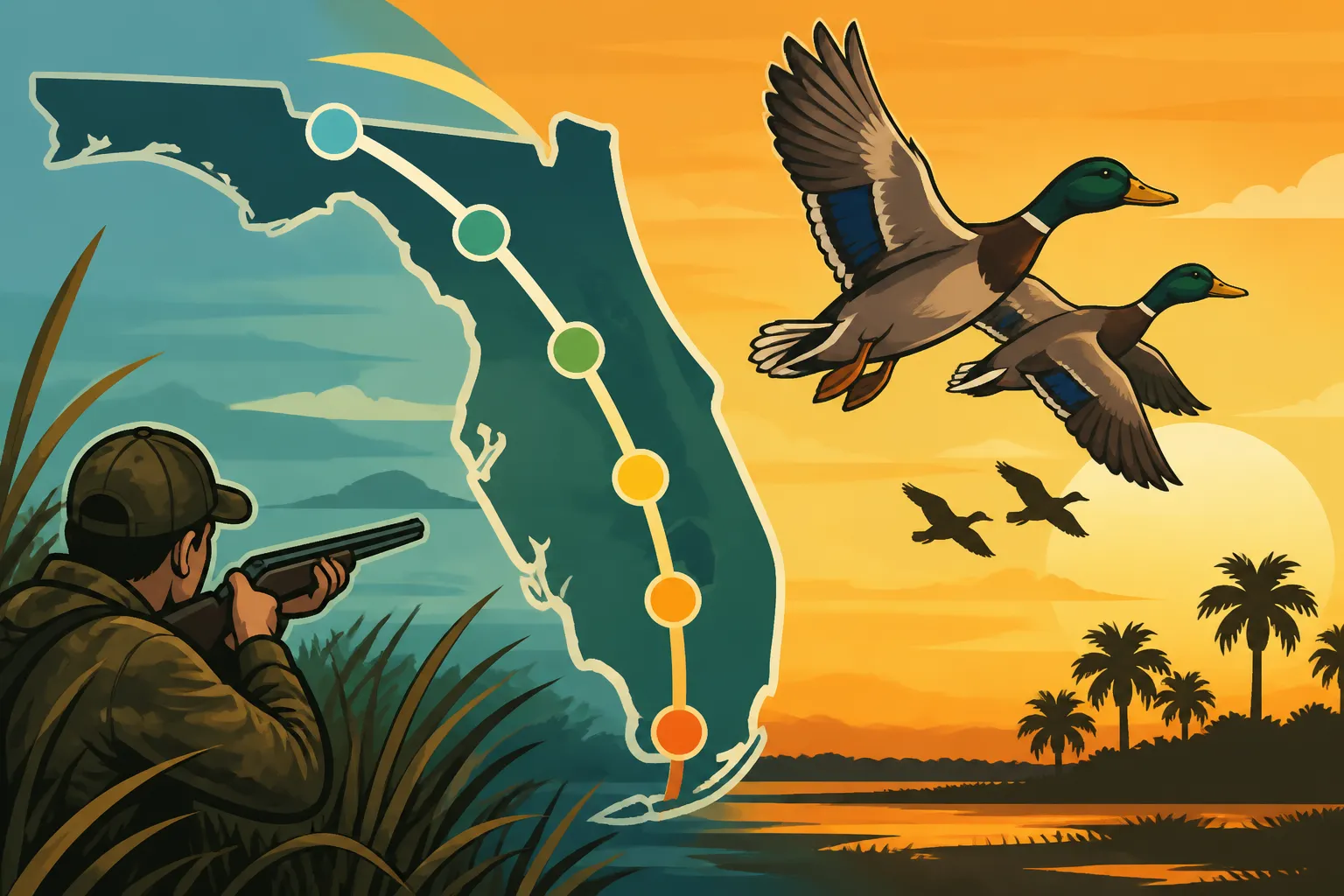
Florida sits at the very end of the Atlantic Flyway, making it a critical wintering ground for millions of migratory waterfowl. When the harsh winters descend upon the northern states and Canada, ducks and geese begin their long journey south, following ancient routes that eventually lead many to Florida's vast wetlands, marshes, and coastal estuaries. But just because they're headed this way doesn't mean they all show up at once, or even on a predictable schedule. Our unique climate and habitat offerings dictate a somewhat staggered arrival, with some species showing up much earlier than others.
Why Florida's Weather Makes Migration Unique
Unlike states further north where a hard freeze can push nearly all the birds south overnight, Florida’s mild climate often means ducks have options. If food and open water are available further up the flyway, they might linger. A warm front in December might see ducks hang around Georgia or the Carolinas longer than anticipated, only pushing into Florida when a significant cold snap finally forces their hand. This means that hunters here often need to pay close attention to regional weather patterns, not just what's happening locally. The subtle shifts in temperature and rainfall in states hundreds of miles north can have a direct impact on when our resident wetlands start to fill with new arrivals.
Florida’s extensive network of freshwater lakes, cypress swamps, and brackish coastal marshes offers incredibly diverse habitat for various duck species. Some prefer shallow, vegetated areas, while others thrive in deeper, open water. This variety means that when birds do arrive, they tend to disperse quickly to find their preferred feeding and resting grounds. Understanding these preferences, often highlighted on detailed mapping services like GoHunt, can help you predict where specific species are likely to congregate once they've made it to Florida.
Key Species and Their Typical Travel Habits
Florida hosts a wide array of duck species throughout the hunting season. While you'll always have a good number of resident wood ducks and mottled ducks, the real excitement comes with the arrival of the migratory birds. We see everything from teal to pintails, gadwalls, wigeon, and various diving ducks. Each species has its own subtle migratory patterns influenced by genetics, food availability, and weather. Some, like the blue-winged teal, are known for making incredibly long journeys and are among the first to arrive and often the first to leave. Others, like ring-necked ducks, are often late arrivals but can provide consistent hunting throughout the colder months. Familiarity with these species-specific habits is a hunter's best friend.
Early Season Arrivals: The Teal Rush
When we talk about early duck migration in Florida, we're almost always talking about teal. Specifically, blue-winged teal are the first major wave of migratory waterfowl to grace our state's wetlands, often arriving well before the main duck season opens for other species. This makes the early teal season a highly anticipated event for many Florida waterfowlers, offering a brief but exciting opportunity to get out in the marsh.
Blue-winged Teal: The First Wave
Blue-winged teal are renowned for their incredible migratory journeys, traveling from as far north as Canada all the way down to South America. Florida serves as a crucial stopover and wintering ground for many of these birds. They are generally the first species to feel the subtle changes of late summer and early fall, triggering their southward movement. You can often see them arriving in Florida as early as late August, with significant numbers building through September and October. This early arrival is precisely why Florida has a dedicated Florida Early Teal Season Dates which allows hunters to target these birds before the full general duck season begins.
These fast-flying ducks prefer shallow water wetlands, often found in flooded fields, marshes, and even ditches. They are dabblers, feeding on seeds and invertebrates found near the surface. Early scouting is key to finding them. Look for areas with abundant submerged vegetation or recently flooded agricultural lands. The challenge with blue-winged teal is that they are also among the first to depart. As soon as a significant cold front hits further north, pushing other species south, many blue-wings might continue their journey even further, heading to points south of Florida.
Green-winged Teal and Early Wood Ducks
While blue-winged teal are the headliners for the early season, their slightly larger cousins, the green-winged teal, often follow close behind. Green-wings tend to be a bit more cold-hardy than blue-wings and often stick around longer into the winter. They typically start arriving in numbers around mid-October, sometimes overlapping with the tail end of the blue-winged teal migration. You'll often find them in similar shallow-water habitats, though they might also utilize slightly deeper sloughs and ponds.
Alongside these early teal, our resident wood duck population is often supplemented by northern migrants starting in October. While Florida has a robust year-round population of wood ducks, the arrival of these northern birds can significantly boost local numbers, particularly in the panhandle and northern parts of the peninsula. Wood ducks are perhaps one of Florida's most beautiful and sought-after ducks, and they thrive in forested wetlands, cypress swamps, and along shaded creek bottoms. Decoying Wood Ducks at First Light is a fantastic strategy when these birds are plentiful. Identifying key roosting and feeding areas through early season scouting can be incredibly productive for these birds.
Main Migration Waves: Puddle Ducks and Divers
As autumn progresses into winter, the more substantial cold fronts from the north begin to push the larger bodies of puddle ducks and diving ducks down the Atlantic Flyway. This is when Florida's wetlands truly come alive, offering hunters a wider variety of species and more consistent opportunities. The timing here is directly linked to colder temperatures and freezing water further up the flyway.
Puddle Ducks: Gadwalls, Wigeon, Pintails, and Shovelers
Once November rolls around and especially into December, hunters in Florida can expect to see a significant influx of other popular puddle duck species. Gadwalls, often referred to as "gray ducks," are plentiful and provide consistent hunting throughout the season. They typically begin arriving in late October and peak in December and January. American Wigeon follow a similar pattern, known for their distinct white patches and whistling calls. Both species are excellent table fare and can be found in a variety of shallow freshwater and brackish habitats.
Northern Pintails, with their elegant long necks and distinctive tail feathers, are another prized migratory visitor. They usually start showing up in good numbers by late October or early November, especially after the first few strong cold fronts. Pintails often prefer wide-open, shallow water areas, sometimes congregating in large groups on agricultural fields or expansive marshes. Using a mapping tool like GoHunt can help you identify these larger, more open water bodies. Shovelers, with their comically large bills, also arrive during this period, often found in nutrient-rich, shallow waters where they filter feed. Reading a Marsh for a Morning Flight can help you determine which species are using which parts of the habitat.
Diving Ducks: Ringnecks, Scaup, and Redheads
Florida is also a significant wintering ground for several species of diving ducks, particularly in its larger lakes, coastal bays, and deeper wetlands. Ring-necked ducks are perhaps the most common and widespread diving duck in Florida. They start arriving in late October and can be found in large numbers from December through February, often congregated on inland lakes and ponds. Their distinctive "ring" is often hard to see, but their black back and white sides are unmistakable.
Lesser Scaup, also known as "bluebills," and Redheads are other prominent diving duck species that make Florida their winter home. Scaup typically arrive a bit later than ringnecks, with peak numbers often seen in January and February, especially in coastal estuaries and large, open lakes. Redheads, prized for their striking appearance, also prefer larger open water bodies and tend to arrive from November onwards, peaking in mid-winter. For those hunting these open-water species, understanding Florida Waterfowl Season and Zones and perhaps employing techniques like Layout Blind Hunting a Flooded Rice Field if applicable to your area, is crucial. These birds can be challenging to hunt due to their preference for wide-open spaces, making robust decoy spreads and precise calling even more important.
Factors Influencing Duck Arrival and Departure
While we can talk about "typical" migration timing, the truth is, ducks don't read calendars. Their movements are highly dynamic and influenced by a complex interplay of environmental factors. For Florida hunters, understanding these variables can be the difference between a bust and a fantastic day in the blind.
Weather Patterns Up North
The single most significant factor driving duck migration to Florida is the weather in their northern breeding and staging grounds. A severe cold front, or even prolonged periods of freezing temperatures, further north will quickly push birds south. When lakes and marshes start to freeze over in states like Arkansas, Missouri, or even the Carolinas, ducks are forced to continue their journey. Conversely, a mild winter across the Mississippi Flyway or Atlantic Flyway can mean a delayed arrival in Florida, or even fewer birds overall if they find suitable habitat further north.
This is why staying informed about weather forecasts not just for Florida, but for the entire flyway, can be incredibly beneficial. Hunters often use weather apps and even specialized hunting forecast tools, much like the detailed data available on GoHunt, to track these larger weather systems. A good rule of thumb: when temperatures consistently drop below freezing for several days in states north of Florida, expect a new push of birds to arrive within the next week. These new arrivals are often less wary and can provide some of the best hunting opportunities.
Food Availability and Habitat Conditions
Beyond temperature, the availability of food and suitable habitat plays a critical role in where and when ducks decide to stop and stay. Ducks are opportunists, and they will go where the groceries are. If there's abundant natural forage—like widgeon grass, wild millet, or smartweed—in a particular wetland, it can hold birds for weeks or even months. On the other hand, if a marsh has been heavily hunted, or if natural food sources are depleted due to drought or overuse, ducks will quickly move on in search of better prospects.
Water levels are also paramount. Many puddle ducks require shallow water to feed, so drought conditions can significantly reduce available habitat. Conversely, heavy rainfall that floods new areas can create temporary but highly attractive feeding grounds. This is particularly true for agricultural areas like flooded peanut or cornfields, which can be magnets for ducks. Regular scouting, even if just by driving nearby roads or using satellite imagery on platforms like GoHunt, is essential to understand the current habitat conditions in your hunting area. Florida's Florida Duck Season Split Dates often account for these natural fluctuations, giving hunters a chance to target birds as they arrive in waves.
Hunting Pressure and Disturbance
Ducks are intelligent and quickly learn to avoid areas with high hunting pressure. If a particular public land spot, like some of our popular WMAs, is getting hammered every weekend, birds will often move to quieter refuges, private lands, or even simply become nocturnal, feeding at night and resting during the day. This can make them incredibly challenging to hunt.
When birds arrive in Florida, they might initially be less wary from their long journey, but a few days of intense hunting pressure can quickly educate them. This is why knowing when to lay off a spot, or being willing to walk further and find less pressured areas, can be critical. Hunters who succeed consistently often do so by finding spots that offer both good habitat and minimal disturbance. Remember to comply with all regulations, including carrying your Florida Federal Duck Stamp Requirement and Florida HIP Certification for Bird Hunters when pursuing migratory birds.
Table: Typical Duck Migration Windows in Florida
To give you a clearer picture, here's a general overview of when different migratory duck species typically arrive and peak in Florida:
| Species Group | Typical Arrival Window | Peak Season in Florida | Notes |
|---|---|---|---|
| Blue-winged Teal | Late August – Early September | September – Early October | First major migrants, often gone by late October. |
| Green-winged Teal | Mid-October | November – January | More cold-tolerant than blue-wings, often stay longer. |
| Wood Ducks (Migrant) | Mid-October | November – February | Supplement resident populations; common in forested wetlands. |
| Gadwalls | Late October | December – January | Consistent and widespread; "gray ducks." |
| American Wigeon | Early November | December – February | Identified by white patch on wing; often graze in fields. |
| Northern Pintails | Early November | December – January | Elegant, long-necked; prefer open, shallow water. |
| Northern Shovelers | Mid-November | December – February | Distinctive large bill; filter feeders in shallow, rich waters. |
| Ring-necked Ducks | Late October | December – February | Most common diver; found on inland lakes and ponds. |
| Lesser Scaup | Mid-November | January – February | "Bluebills;" prefer large open water, often coastal. |
| Redheads | Late November | January – February | Striking diver; found on larger open water bodies. |
Keep in mind that these are general guidelines. A particularly harsh winter up north can push birds down earlier and in greater numbers, while a mild winter might delay their arrival. Consulting resources like the FWC's reports and using tools that monitor migration patterns, such as those found on platforms like GoHunt, can provide more real-time insights into current bird movements. For a broader overview of hunting opportunities, check out Florida Waterfowl and Dove.
Conclusion on Migration Timing
Ultimately, mastering duck migration timing in Florida is less about memorizing dates and more about understanding the environmental cues that drive these incredible birds. It's about being observant, staying flexible, and adapting your hunting strategy to what the weather and habitat are telling you. Whether you're anticipating the first blue-winged teal or hoping for a late-season push of pintails, paying attention to the larger picture beyond Florida's borders will give you the best chance of being in the right place at the right time. Prepare well, understand the regulations, and enjoy the unique challenges and rewards of Hunting Florida's Big Bend Coast or any of our other incredible waterfowl hunting grounds.
Disclaimer
This article is for general informational purposes only and does not constitute professional advice. Laws, prices and regulations vary by location and change over time. Consult a qualified professional for guidance on your specific situation.