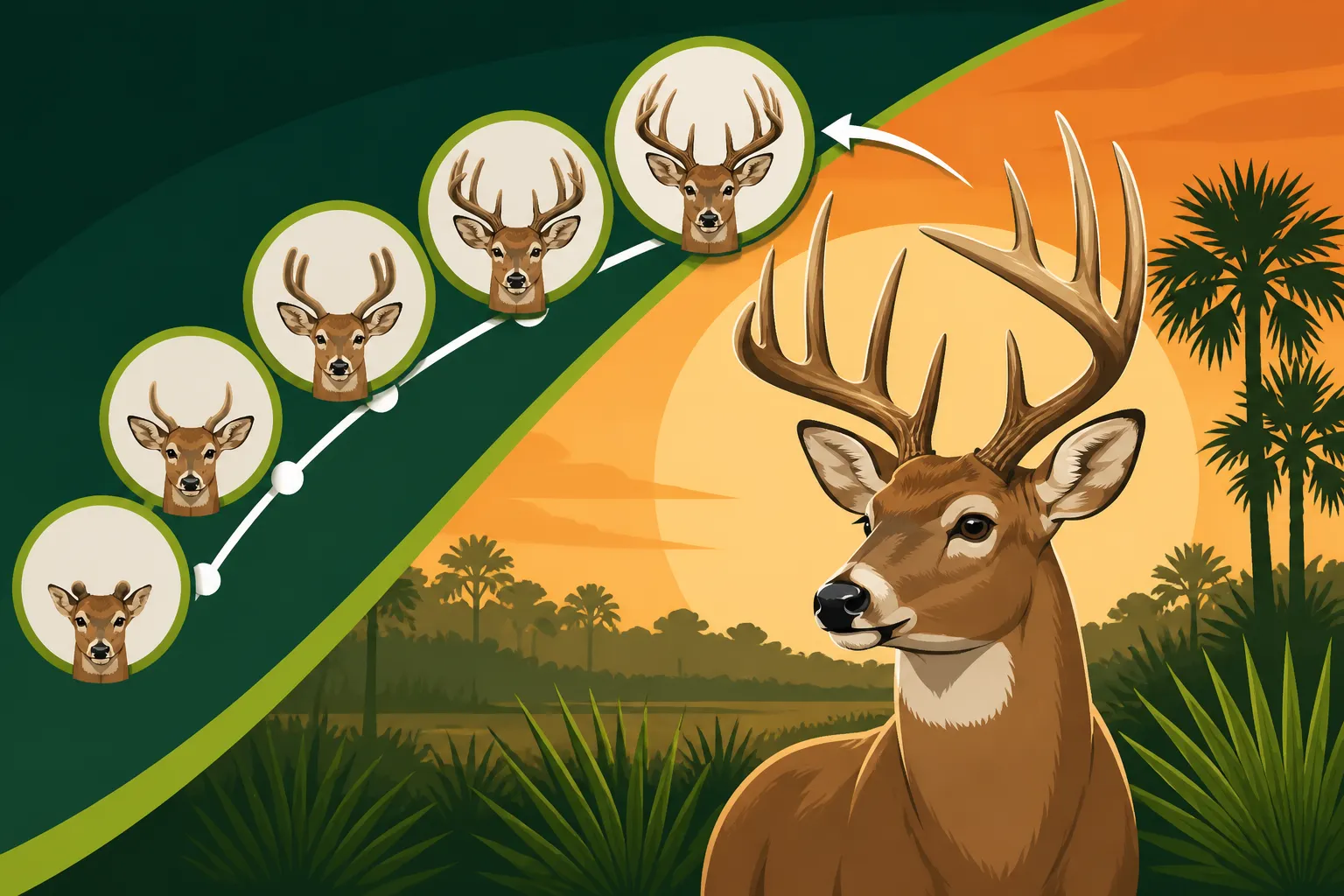
Florida Deer Antler Growth Timeline
It's an age-old question that gets every Florida hunter's gears turning: "How big will he be this year?" We watch year after year, sometimes seeing promising young bucks, sometimes seeing mature giants that seem to appear out of nowhere. Understanding the fascinating and often frustrating process of a Florida deer's antler growth timeline is crucial for scouting, managing expectations, and ultimately, making informed decisions in the field. This guide dives deep into that annual transformation, offering insights into what drives antler development in our unique subtropical environment.
Understanding the Basics of Antler Growth in Florida Deer
Deer antlers aren't just bone; they're one of nature's most incredible examples of rapid tissue regeneration. Unlike horns, which are permanent bony projections, antlers are grown and shed annually. For Florida hunters, this means the buck you see in February is going to look vastly different from the same buck you might encounter in August or September. The timing and speed of this growth cycle are finely tuned by biology, and while the general principles apply to whitetails everywhere, Florida's specific climate and habitat can influence the nuances.
The Annual Cycle: Shedding and Regrowth
The antler growth cycle in Florida, like in most places, is a predictable, seasonal event, though the exact timing can vary by individual deer and even by region within our vast state. Generally, bucks will shed their antlers sometime between late January and March. You might be out Shed Hunting on Florida Public Land during this period, hoping to find those fallen trophies. This shedding process is driven by decreasing testosterone levels after the rut, weakening the connection between the antler and the pedicle (the bony base on the skull).
Once the old antlers are gone, a new growth cycle begins almost immediately. For a few weeks, all you'll see are "buttons" on the pedicles, sometimes even on older bucks that might have shed early. But don't let those small nubs fool you; beneath the surface, the biological machinery is already firing up. The timing of this initial regrowth is critical, as it sets the stage for the rest of the year's development. It's a marvel to witness, knowing that in just a few short months, a full rack can emerge from those humble beginnings.
Key Hormones and Nutritional Influences
Antler growth is a complex process primarily governed by hormones, with nutrition playing a critical supporting role. Testosterone, while more famous for its role in the rut, also influences antler development and hardening. However, the initial rapid growth phase in velvet is largely driven by Growth Hormone (GH) and Insulin-like Growth Factor-1 (IGF-1). These hormones surge after shedding, signaling the body to funnel massive amounts of nutrients and energy into growing bone and cartilage at an astonishing rate.
But hormones can only do so much if the raw materials aren't there. A deer's diet directly impacts the quality and quantity of antler growth. Bucks need a substantial intake of protein, calcium, phosphorus, and a whole host of trace minerals to build those impressive racks. In Florida, where soil quality and forage can vary dramatically from the rich muck farms to the sandy pine flatwoods, the availability of these essential nutrients directly affects antler development. For instance, a deer in a lush agricultural area with abundant food sources will likely have a better chance at growing larger antlers than a buck struggling in an area with sparse, low-quality forage. This is why when you're Scouting Florida Public Land Before Season, you're often looking for areas that offer diverse and rich food sources.
A Month-by-Month Look at Antler Development
Tracking antler growth through the seasons is one of the most exciting aspects of deer hunting, offering a glimpse into a buck's potential before the season even opens. For us Florida hunters, understanding this progression helps us judge a buck's age and potential, whether we're talking about White-Tailed Deer Across Florida in general or focusing on a specific deer.
Early Spring: Button Bucks to Velvet Growth (March-May)
As the cold snaps of winter fade and the Florida sun starts to warm things up consistently, the antler growth process kicks into high gear.
- March: Most bucks have shed their antlers, or are in the final stages of doing so. New pedicles are clean, sometimes with just a small button visible. This is a critical recovery period for bucks after the demands of the rut and shedding. Their body is starting to replenish resources.
- April: The first true signs of new growth begin. Small, soft nubs covered in velvet start to emerge. This velvet is essentially living skin, rich with blood vessels and nerves, providing the necessary nutrients for the rapidly growing bone underneath. At this stage, it's virtually impossible to predict the final size or shape.
- May: Growth continues steadily. The nubs start to extend, and you might begin to see the earliest formation of brow tines or the primary beam. The antlers are still very soft and easily damaged, which is why bucks are incredibly careful during this period. For those using tools like GoHunt, you might be looking at vegetation maps to understand where deer are finding the best spring browse.
Summer Peak: Rapid Development (June-August)
Summer in Florida means heat, humidity, and intense antler growth. This is when you start to get excited about what's coming!
- June: This month often sees some of the most dramatic growth. The main beams are elongating, and tines are really starting to pop up. You can often begin to distinguish the general shape and point count of a buck's rack. The velvet is thick and vibrant, indicating active blood flow. This is a great time to hang trail cameras to monitor progress.
- July: Antlers are nearing their maximum length. The focus shifts from outward growth to mass and densification. Bucks are packing on weight, and their antlers are absorbing calcium and phosphorus at an incredible rate. Even in our subtropical environment, a buck needs a rich diet to sustain this, especially if you consider how Why South Florida Deer Run Smaller due to habitat differences.
- August: Antlers are almost fully formed, though still covered in velvet. The tines might look blunt at the tips as they continue to calcify. This is the final stretch before hardening, and any damage to the velvet now could result in deformed antlers. Hunters are often pouring over trail camera photos from this month, trying to get a read on the local buck population.
Late Summer to Early Fall: Hardening and Polishing (August-September)
The end of summer brings the grand reveal – hardened antlers.
- Late August/Early September: As testosterone levels begin to rise in preparation for the rut, the blood flow to the velvet ceases. The velvet dries, cracks, and eventually begins to peel away. This process can happen quickly, sometimes in a matter of hours or days, driven by the buck rubbing his antlers on trees, bushes, and anything he can find. The fresh, hardened antlers are often stained from sap and vegetation.
- September (and into the season): Bucks are now sporting their fully hardened racks. They'll continue to polish them, making them shine and ready for the challenges of the breeding season. This is the moment hunters have been waiting for, seeing the culmination of a year's growth. The antler quality at this point is a direct reflection of the buck's age, genetics, and the nutritional resources available to him over the past several months.
Here’s a simplified timeline for reference:
| Month | Antler Status | Key Activities |
|---|---|---|
| Jan – March | Shedding | Post-rut recovery, hormone levels drop, antlers detach |
| March – April | Button/Nubs | Pedicles clean, new velvet nubs emerge, rapid initial bone growth initiated |
| May | Early Velvet Growth | Beams and tines start to form, increasing length |
| June | Rapid Velvet Growth | Significant length and mass added, main beams extending, tines visible |
| July | Near Full Velvet Size | Antlers reach near-final length, focus on mass and calcification |
| August | Hardening & Velvet Shedding | Blood flow ceases, velvet dries and peels, antlers begin to harden |
| Sept – Dec | Hardened Antlers (Hunting Season) | Bucks polished and ready for rut, maintain hard antlers until shedding |
Factors Affecting Antler Size and Quality
While the timeline gives us a general framework, any hunter knows that not all bucks grow the same antlers. There are several critical factors that influence just how impressive a buck's headgear will be. Understanding these elements helps us appreciate the complexity of Florida Deer Herd Size and what goes into growing a trophy.
Age: The Ultimate Contributor
If there's one single factor that consistently correlates with antler size, it's age. Young bucks, typically 1.5 to 2.5 years old, are still growing themselves, funneling much of their energy into body development. They might have spikes or small fork-horns. As a buck matures, usually hitting his peak antler potential between 4.5 and 7.5 years old, his body has matured, and more resources can be allocated to antler growth. This is why you hear hunters talk about letting young bucks walk to "grow into their potential."
A 3.5-year-old buck in Florida will almost always have a larger, more developed rack than a 1.5-year-old buck from the same area, assuming similar genetics and nutrition. You can see this reflected in the Florida Buck Age Structure data, which often shows hunters prefer to harvest more mature animals. Once a buck passes his prime, perhaps around 8.5 years old or more, antler quality can sometimes start to decline as his body begins to age.
Genetics: The Blueprint
Just like in humans, genetics play a huge role in determining a buck's potential. Some deer simply have the genetic blueprint to grow larger, wider, or more tines. You can have two bucks of the same age, eating the same food in the same habitat, and one will consistently produce a bigger rack due to superior genetics. This is why some landowners focus on quality deer management, trying to promote the genetics of bucks that consistently produce impressive antlers.
While you can't control the genetics of free-ranging deer, understanding its importance helps set realistic expectations. Observing patterns in antler growth year after year in a specific area can give you clues about the genetic potential of the local herd. For instance, if you're consistently seeing mature bucks with narrow racks or short tines, it might suggest a genetic predisposition within that population. GoHunt's mapping features can sometimes help identify consistent patterns in areas over time, aiding in these observations.
Habitat and Food Availability
Florida's diverse landscape, from dense palmetto thickets to vast pine plantations, offers a wide range of habitats, and the quality of that habitat directly impacts a deer's ability to grow antlers. A buck needs a continuous supply of high-quality forage throughout the spring and summer to fuel antler growth. This means not just enough food, but the right kind of food – protein-rich browse, mast crops, and minerals.
Areas with fertile soils, diverse plant life, and consistent water sources tend to produce better antler growth. Conversely, areas with poor soil, monoculture forests, or heavily hunted food sources can result in smaller antlers. Things like Hunting After a Poor Acorn Year can have a noticeable impact, as acorns provide a significant late-season nutritional boost that helps bucks recover from the rut and sets them up for the next year's growth. In places with abundant food plots or managed agricultural lands, deer generally have access to better nutrition, which translates to better antler development.
Monitoring Antler Growth for Hunters
For the dedicated Florida hunter, observing and understanding antler growth isn't just a curiosity; it's a vital part of scouting and planning for the season. It helps you make decisions about which deer to pursue and where to focus your efforts.
Trail Cameras and Scouting
Trail cameras are an absolute game-changer when it comes to monitoring antler growth. Setting up cameras in key locations – near food sources, pinch points, or water holes – allows you to track individual bucks through their growth cycle without disturbing them. You can get photos of bucks in velvet in June, July, and August, giving you a sneak peek at their potential. This also helps you understand the When the Florida Rut Peaks by Zone by observing how buck behavior changes as their antlers harden and they become more aggressive.
When you're positioning your cameras, consider how deer will approach the area and how the sun will affect your photos. Knowing Where to Hang a Camera on a Sand Road or at the edge of a food plot can make all the difference in capturing clear images of antler development. Repeated photos of the same buck over several weeks can provide an invaluable visual timeline of his rack's progression, allowing you to estimate his age and potential before the season even starts.
Interpreting Antler Development for Hunting Strategy
Observing antler development helps you formulate a more effective hunting strategy. If you've been tracking a specific buck and know he's put on significant growth by late summer, you can prioritize that area for your early season sits. It also helps you understand the general health of the local deer population. If most bucks in an area are showing poor antler development despite being mature, it might signal an issue with nutrition or population density that could influence your hunting decisions.
Beyond individual bucks, consistent observations of antler growth over several seasons can give you a better grasp of the overall Florida Deer Population Estimate and health in your hunting grounds. This knowledge empowers you to make more informed choices, whether it's deciding to pass on a young buck in hopes he'll grow into a giant, or knowing when a specific mature buck is in his prime and ready for harvest. Using all the tools at your disposal, from trail cameras to platforms like GoHunt that help you analyze data and maps, can significantly enhance your understanding of Florida's deer and their impressive antler transformations.
Disclaimer
This article is for general informational purposes only and does not constitute professional advice. Laws, prices and regulations vary by location and change over time. Consult a qualified professional for guidance on your specific situation.