Florida Whitetail Color Phase Rarities
It's incredibly exciting when you're out in the Florida woods, perhaps patiently still-hunting a palmetto flat, and you glimpse something that just doesn't quite look like the "norm." While most of us are accustomed to seeing the familiar, earthy brown coat of a healthy whitetail, Florida's diverse genetics and environment can sometimes produce truly stunning and rare color phases. This guide dives deep into these unusual coat patterns, explaining what causes them, how to distinguish them, and what they mean for the deer and those of us who hunt them.
The Canvas of the Florida Whitetail: Understanding Standard and Rare Coloration
For most of us who spend time in the wild, the image of a whitetail deer is pretty fixed in our minds: a beautiful, agile creature with a reddish-brown coat in the summer that darkens to a grayish-brown in the cooler months, accented by that iconic white tail, a white belly, and white patches around the eyes and muzzle. But like any species with a vast range and varied genetic makeup, there are exceptions to this rule. These exceptions, often caused by genetic mutations, are what we refer to as color phase rarities.
Standard Florida Whitetail Coat Characteristics
The typical Florida whitetail deer, whether you're hunting in the Panhandle's pine forests or the thick cover of South Florida, sports a coat perfectly designed for camouflage in its native habitat. During the warmer months, their reddish-brown, often called "summer coat," helps them blend into the sun-drenched landscape, mimicking the color of dried leaves and rich, red soil. As the air cools and hunting season truly kicks in, usually around late September to early November depending on the zone, they shed this lighter coat for a thicker, denser, and more grayish-brown "winter coat." This change provides better insulation against the sporadic Florida cold fronts and allows them to blend into the more muted colors of winter foliage. The white underside, throat patch, and tail are consistent markers, serving as alarm signals when a deer flees, alerting others to danger.
When you're out scouting, perhaps using a tool like GoHunt to study aerial maps of a new area, you'll see just how effectively these standard colors disappear into the topography. It's truly a marvel of natural selection. The normal color pattern is a dominant trait, meaning most deer will exhibit it, even if they carry a recessive gene for a different color. This is why truly rare color phases are so striking and, well, rare! Observing the nuances of their standard coloration helps you appreciate just how remarkable a deviation from this norm can be. For more on the general deer population, check out Florida Deer Herd Size.
Why Variations Occur in Deer Color
Deer color variations aren't just random occurrences; they're the fascinating result of genetics at play, sometimes with environmental influences. The specific pigments in a deer's hair, known as melanins, are controlled by genes. There are two main types of melanin: eumelanin, which produces black and brown colors, and pheomelanin, which produces red and yellow tones. The amount and distribution of these melanins determine the deer's overall coat color.
When a genetic mutation occurs, it can alter the production of these pigments, leading to a deviation from the typical brown. These mutations are recessive, meaning a deer needs to inherit a copy of the mutated gene from both parents to display the unusual color. If it only gets one copy, it will look like a normal brown deer but will be a carrier of the recessive trait, capable of passing it on to its offspring. This genetic lottery explains why you might hunt the same piece of land for decades and never see a color phase rarity, while another hunter might encounter one seemingly by chance. It's a testament to the incredible diversity hidden within the White-Tailed Deer Across Florida population.
For instance, a piebald deer might have parents that both appear entirely normal but carry the recessive gene. When these two carriers breed, there's a 25% chance their fawn will exhibit the piebald trait. These genetic quirks are what make every hunting season a new opportunity for something truly unique to walk out of the cypress heads or palmetto scrub.
More Common Color Anomalies: Leucism, Piebald, and Melanism
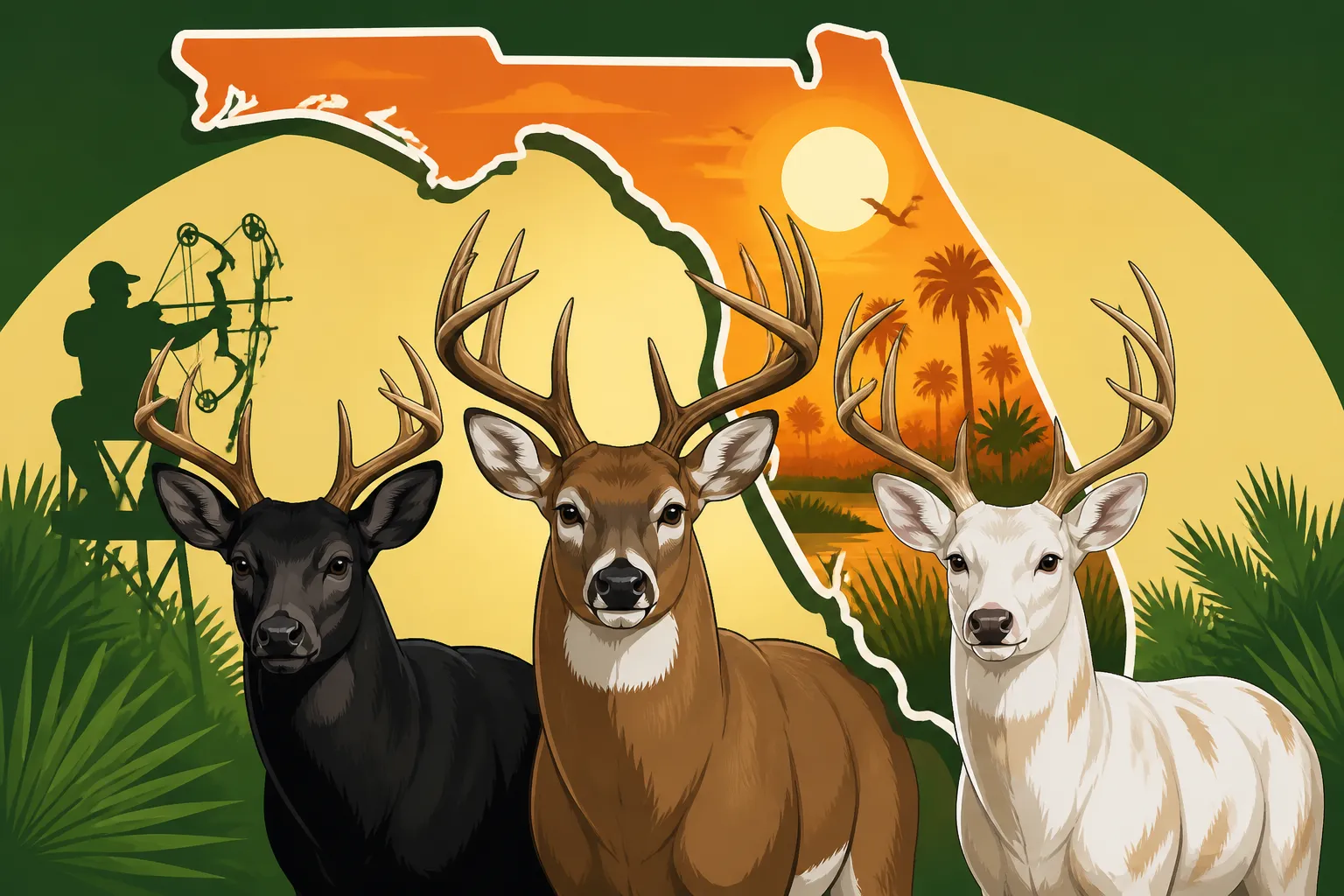
While true albinism is exceedingly rare, there are other, slightly more common, but still highly unusual, color variations you might encounter in Florida's whitetail population. These include leucism, which often manifests as piebaldism, and melanism. Each tells a different story about the deer's genetics and its life in the wild.
Leucism and Piebald Deer
Leucism is a genetic condition that results in a partial loss of pigmentation in an animal, leading to white, pale, or patchy coloration. Unlike albinism, leucistic animals typically have normal eye color, and their bodies produce some pigment, just not evenly or fully. Piebaldism is a specific form of leucism where the deer has irregular patches of white and normal-colored hair. Imagine a deer that looks like it's wearing splotches of white paint, almost like a pinto horse – that's a piebald.
These patches can vary wildly in size and distribution. Some piebalds might have just a small white patch on their leg or forehead, while others might be predominantly white with only a few brown spots. This mosaic pattern is a direct result of the incomplete genetic expression of pigment. Beyond the coat, piebald deer can sometimes exhibit other physical abnormalities, such as a Roman nose (a concave facial profile), short or deformed legs, bowed legs, an arched spine, or internal organ abnormalities. These additional traits can sometimes make life harder for them in the wild, impacting their mobility or overall health.
Spotting a piebald deer is often a memorable event for a hunter. Their unique appearance stands out dramatically against the natural backdrop, making them both beautiful and sometimes more vulnerable. If you're studying detailed satellite imagery on your GoHunt app, imagining how easily a piebald deer would stand out against the typical green and brown, it really puts into perspective how noticeable they are in person. They are truly one-of-a-kind.
Melanism: The Dark Opposite
On the opposite end of the spectrum from partial or full whiteness is melanism, a condition characterized by an excess of dark pigmentation. In deer, this means the animal's coat is unusually dark, often appearing almost black. While melanism is well-documented in other species, like jaguars (leading to what we call "black panthers"), it is extremely rare in white-tailed deer.
Melanistic deer typically have a uniformly dark coat, sometimes so deep that their natural markings, like the white throat patch or even the white underside of the tail, are significantly reduced or completely absent. Their eyes, however, remain a normal deer color, distinguishing them from truly black-eyed albinos. The increased melanin production is, again, due to a genetic mutation. While a darker coat might offer some camouflage advantages in certain dense, shadowy environments, it can make them stand out in lighter, open areas.
Encountering a melanistic deer in Florida is an exceptionally rare event, far less common than spotting a piebald. It's the kind of sighting that makes you question what you just saw, a fleeting dark shadow in the dappled sunlight of a deep swamp or a shadowy oak hammock. If you were comparing notes on deer movements after Hunting a Florida Green Swamp Slough, a report of a "black deer" would certainly spark conversation around the campfire. It just goes to show that Florida's deer herd, while generally consistent in appearance, holds incredible genetic surprises.
| Color Phase | Primary Pigmentation | Eye Color | Common Physical Traits Beyond Coat | Rarity |
|---|---|---|---|---|
| Standard | Brown/Reddish-Brown | Normal | None | Common |
| Leucistic | Partial pigment loss | Normal | White/pale patches, normal eyes | Uncommon |
| Piebald | Patchy white & normal | Normal | White splotches, possible deformities (Roman nose, bowed legs) | Uncommon |
| Melanistic | Excess dark pigment | Normal | Unusually dark/black coat, normal eyes | Very Rare |
| Albino | Complete lack of pigment | Pink/Red | Pure white coat, pink/red eyes, poor vision, sensitivity to light | Extremely Rare |
The True Rarity: Albinism in Deer
When we talk about true color phase rarities, albinism is often the first thing that comes to mind, and for good reason. It's perhaps the most striking and certainly the least common of all the deer color variations. An albino deer is a truly magnificent and almost mythical sight in the wild.
Defining Albinism in Deer
Albinism is a congenital condition characterized by the complete absence of melanin, the pigment responsible for skin, hair, and eye color. This isn't just a partial loss; it's a total inability to produce any pigment. As a result, an albino deer has a pure white coat, pink or reddish eyes (due to the blood vessels showing through the unpigmented iris), and often pink hooves and nose. It's a stark, almost ethereal contrast to the green and brown of its natural environment.
Genetically, albinism is also a recessive trait. For a deer to be truly albino, it must inherit the albino gene from both parents. This means that two normal-looking brown deer, if they both carry the recessive albino gene, could produce an albino fawn. This explains why they are so incredibly rare – the odds of two carriers breeding and then producing an albino offspring are quite low. This complete lack of melanin also brings with it certain challenges, particularly for an animal living in the wild.
The rarity makes them almost legendary. While you might occasionally see reports of a white squirrel or a white raccoon, a truly albino deer is on another level. It’s the kind of wildlife encounter that gets talked about for years at deer camp, almost like encountering a unicorn emerging from the fog on a chilly morning, perhaps on a late-season Hunting a Green Field Planted for Deer.
Encountering an Albino in Florida's Wilds
Spotting an albino deer in Florida is an experience few hunters or wildlife enthusiasts ever get to have. Florida's dense cover and the challenging nature of its terrain already make deer hunting a true test of skill and patience. Adding to that the extreme rarity of an albino, and you can understand why it's such a remarkable event.
Unfortunately, the very characteristics that make albino deer so visually stunning also pose significant survival challenges. Their pure white coat, while beautiful to us, makes them incredibly conspicuous against almost any natural background. This lack of camouflage makes them much more vulnerable to predators, from coyotes and bobcats to alligators and even black bears. Think about trying to hide a glowing white beacon in a field of brown and green – it's tough. Furthermore, the absence of melanin in their eyes often leads to poor vision and extreme sensitivity to sunlight. This can impair their ability to forage, detect danger, and navigate their environment effectively, especially in the bright Florida sun. For more on predators, consider Florida Predator Impact on Fawn Recruitment.
Because of these inherent disadvantages, albino deer often have lower survival rates compared to their normally colored counterparts. They might not live as long, and their chances of successfully reproducing and passing on their rare genetics can be diminished. This natural selection further contributes to their extreme rarity, making each sighting a truly special moment in the vast and vibrant wilderness of Florida.
Implications for Hunters and Wildlife: Survival and Ethics
The presence of these rare color phases, particularly piebald and albino deer, raises interesting questions for both the animals themselves and the hunters who encounter them. Their unique appearance often sparks debate and curiosity, influencing how we view and interact with these special members of the herd.
Survival Challenges for Color-Phased Deer
Life in the wild is already tough for a whitetail deer. They face constant threats from predators, disease, vehicle collisions, and the general struggle for food and water. For deer with color phase rarities, these challenges are often amplified. As mentioned earlier, the most significant hurdle is camouflage. A piebald deer with large white patches or a completely albino deer stands out dramatically in the natural environment. This makes them easier for predators to spot, whether it's a keen-eyed bobcat stalking through the palmetto or an alligator waiting by a watering hole. Their lack of natural blending severely compromises their primary defense mechanism.
Beyond visibility, some color-phase conditions, particularly severe piebaldism, can come with associated health issues. Deformities like a Roman nose, skeletal abnormalities, or internal organ defects can hinder a deer's ability to run, jump, or even feed effectively. Albinism, with its associated vision problems and light sensitivity, adds another layer of vulnerability. These factors often lead to a reduced lifespan for these unique individuals. It’s a harsh reality of nature, where "different" often means "disadvantaged."
Despite these challenges, the fact that these deer do survive to be seen is a testament to the resilience of the species and sometimes, perhaps, a bit of luck. A hunter committed to Scouting Florida Public Land Before Season might be lucky enough to see one survive for a few seasons, a truly unique individual making its way against the odds.
Ethical Considerations and Hunting Regulations
For hunters, encountering a color-phase deer presents a unique dilemma. There's an undeniable allure to these rare animals, a desire to photograph them, or perhaps even a deep respect that makes some hunters hesitant to harvest them. Many hunters consider an albino or heavily piebald deer a "trophy of a lifetime," while others feel a strong ethical pull to let such a rare creature live, almost out of a sense of conservation for a genetic anomaly. This ethical debate is common in hunting communities across the country.
In Florida, the general regulations for hunting white-tailed deer apply to all deer, regardless of their color phase. There are no specific state laws that protect albino or piebald deer from being harvested, unlike in some other states which might have specific regulations or local prohibitions. This means that if a color-phased deer meets all the legal requirements for antler size (if applicable in that zone), season dates, and license requirements, it is legal to harvest. However, hunters often apply their own personal ethics. Some clubs or private land leases might have their own rules regarding the harvest of such deer, often opting to protect them for their aesthetic and rarity value.
Ultimately, the decision to harvest a color-phase deer in Florida is a personal one, weighing legal permissibility against individual ethical considerations. It’s a moment that forces you to reflect on your own values as a conservationist and a hunter. Whether you choose to take a photo or fill your tag, such an encounter is bound to be unforgettable. When considering any deer hunt, it's always wise to refresh yourself on all regulations, including Florida Buck Bag Limit and Florida Deer Reporting Requirements, which apply to all legally harvested deer.
Disclaimer
This article is for general informational purposes only and does not constitute professional advice. Laws, prices and regulations vary by location and change over time. Consult a qualified professional for guidance on your specific situation.