Florida Sandhill Crane Nesting Sites
For many of us who love Florida's wild spaces, catching a glimpse of a sandhill crane is a true joy. Their majestic presence, unique calls, and graceful movements are iconic. But finding their nesting sites, those secluded havens where new life begins, can be a real challenge, often because they choose such specific, hard-to-reach places. This guide will walk you through understanding these incredible birds, identifying the crucial features of their nesting habitats, and learning how we can all help protect these vital areas.
The Enduring Allure of Florida Sandhill Cranes
Florida is home to both resident and migratory sandhill cranes, making them a fixture in our diverse landscapes throughout much of the year. These elegant birds, with their striking red crowns and long, graceful necks, are not just beautiful to observe; they play an important role in the wetland ecosystems they inhabit. Understanding their life cycle, particularly their nesting habits, is key to appreciating their resilience and the challenges they face in our ever-developing state.
Who Are Florida's Sandhill Cranes?
In Florida, we primarily encounter two populations: the Florida Sandhill Crane, a non-migratory subspecies that lives here year-round, and the Greater Sandhill Crane, which migrates south to Florida for the winter from northern breeding grounds. While they look quite similar, their seasonal movements differ significantly. Both rely heavily on our state's wetlands for survival, particularly when it comes to raising their young. They are incredibly attentive parents, and their commitment to their offspring begins long before the eggs hatch, with careful selection and construction of their nest.
Their diet is varied, consisting of seeds, grains, insects, small reptiles, and amphibians, which they forage for in shallow waters and open fields. This broad diet helps them thrive in various wetland-associated habitats. Their loud, resonant calls are unmistakable, often heard echoing across open prairies and marshes, a sound that truly connects you to the wild heart of Florida. While they are a protected species, many hunters encounter them while pursuing other game, offering a chance to witness these magnificent birds in their natural environment.
Why Nesting Sites Are So Important
A successful nesting season is absolutely critical for the health and stability of the sandhill crane population. These sites are not just places to lay eggs; they are nurseries where chicks are nurtured and taught the ways of the world. Factors like water levels, vegetation density, and protection from predators all contribute to a successful hatch and the survival of the young colts. Without suitable, undisturbed nesting habitats, the cranes' ability to reproduce effectively diminishes, posing a threat to their long-term presence in Florida.
The loss or degradation of wetlands, whether from development, changes in water flow, or invasive species, directly impacts where these birds can safely nest. It's a constant struggle for them to find that perfect, secluded spot, especially with increasing human encroachment. This makes every remaining quality nesting area invaluable. Even for hunters using tools like GoHunt to scout Scouting Florida Public Land Before Season, understanding what ideal sandhill crane habitat looks like can offer insights into the overall health of a wetland system, indicating good general wildlife potential.
Deconstructing the Ideal Sandhill Crane Nesting Habitat
Sandhill cranes are incredibly particular about where they choose to build their nests. They aren't just looking for any wet spot; they're seeking a very specific combination of water depth, vegetation, and seclusion that offers protection and resources for their eggs and young. Understanding these habitat preferences is the first step in appreciating and protecting these vital areas.
Water, Water, Everywhere (But Not Too Deep)
The presence of water is paramount for sandhill crane nesting. They are, after all, wetland birds. But it's not just any water; it's usually shallow, standing fresh water, typically ranging from a few inches to about a foot deep. This specific depth is crucial for several reasons. It's shallow enough for them to stand and move around comfortably while building their nest mound, and it provides a protective moat around the nest, deterring many terrestrial predators like raccoons, bobcats, and feral hogs.
Think of those vast, open marshes or the shallower edges of larger ponds and lakes you might encounter on public lands like the Florida Wildlife Management Areas. These areas, with their consistent water levels, are often prime real estate for nesting cranes. Fluctuating water levels, either too high or too low, can quickly render a chosen site unsuitable, forcing cranes to abandon nests or making them vulnerable to predation. A reliable water source also ensures a steady supply of aquatic insects, amphibians, and plant matter that the adults and eventually the chicks will feed on.
The Perfect Blend of Vegetation for Seclusion and Safety
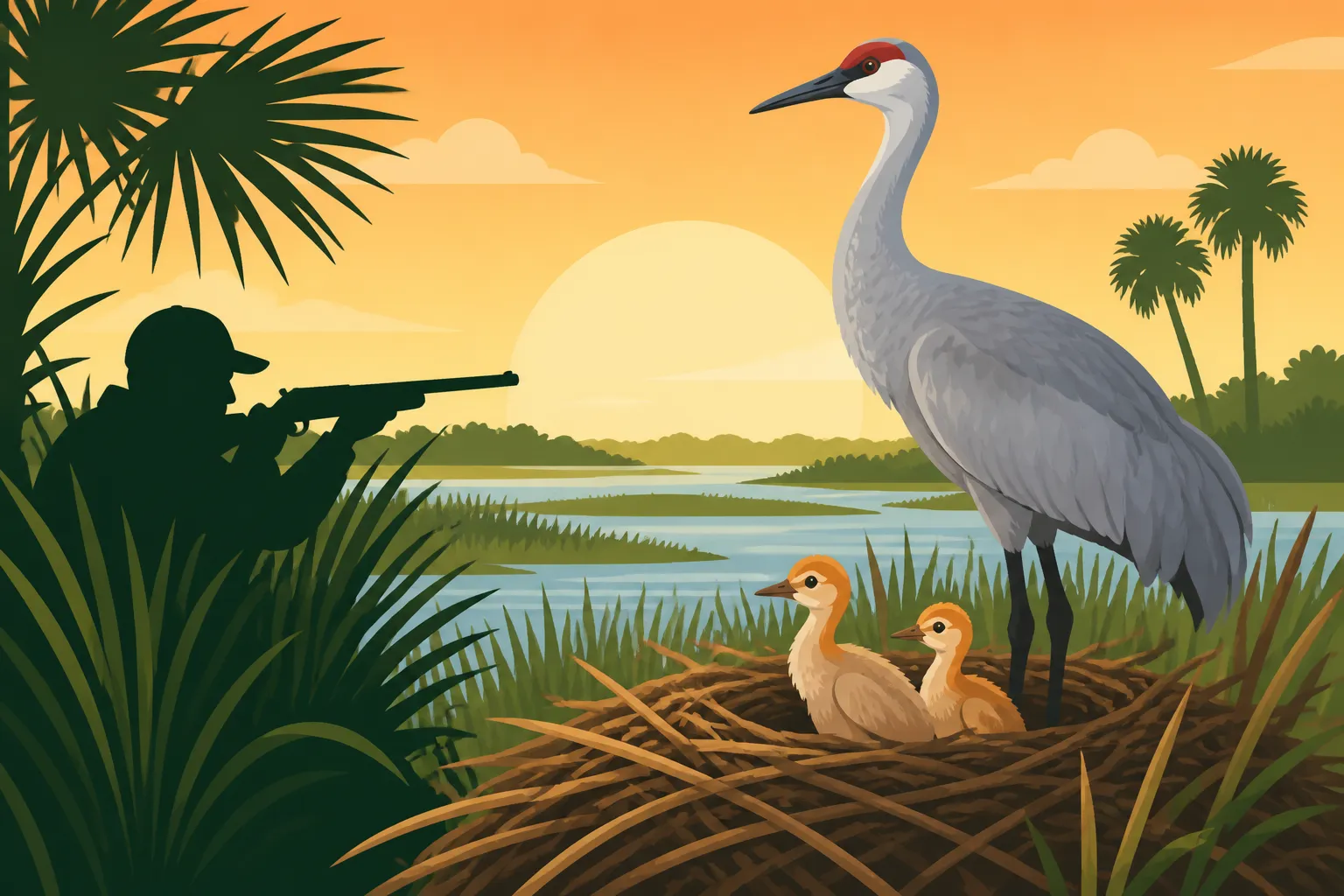
Beyond water depth, the type and density of vegetation are critical. Sandhill cranes prefer emergent vegetation like cattails, rushes, sedges, and sawgrass. They use this plant material to construct a substantial mound, typically about 2-3 feet in diameter and 6-12 inches high, rising just above the water line. This mound keeps the eggs dry and provides insulation. The surrounding vegetation then serves as crucial concealment.
Imagine a dense stand of tall grasses and reeds at the edge of a marsh, creating a natural screen. This cover helps hide the nest from aerial predators such as crows, ravens, and even some raptors. However, the vegetation can't be too dense right around the nest, as the cranes need clear sightlines to detect approaching threats from the ground or water. It's a delicate balance between concealment and visibility. You'll often find these nests tucked just within the edge of dense cover, but with a clear view outwards. This kind of habitat is similar to what you might look for when scouting for Florida Waterfowl and Dove, as many of these species also utilize emergent vegetation for nesting and cover.
The Importance of Seclusion and Minimal Disturbance
Perhaps the most critical, yet often overlooked, element of a good sandhill crane nesting site is seclusion. These birds are highly sensitive to disturbance, especially during the nesting period. Human activity, loud noises, or frequent intrusions can cause them to abandon their nest, leaving eggs vulnerable to predators or temperature extremes. This is why you rarely find successful nests right next to busy roads, trails, or residential areas.
They seek out quiet, remote areas, often deep within expansive wetlands or far from well-traveled paths on large tracts of land. These could be isolated pockets within a vast landscape, like a forgotten corner of Hunting Florida's Green Swamp or a seldom-visited cypress slough. This desire for solitude is a significant challenge for cranes in a state experiencing rapid growth, as their preferred quiet zones shrink. A mapping tool like GoHunt can be invaluable not just for hunters, but for anyone trying to identify large, undeveloped tracts with minimal road access that might offer the seclusion these cranes desperately need.
Regional Hotspots and Common Nesting Locations in Florida
While sandhill cranes are fairly widespread across Florida, certain regions and habitat types are more likely to host their nesting activities. Knowing where to focus your observations, and more importantly, where to exercise extra caution, can help everyone contribute to their conservation.
North and Central Florida's Wetland Prairies
Many of the prime nesting grounds for Florida's resident sandhill cranes are found in the extensive wetland prairies, vast marshes, and shallow lake systems of North and Central Florida. Areas like the Kissimmee River Basin, the upper St. Johns River watershed, and the numerous large, shallow lakes in the interior of the state are particularly important. These regions offer the expansive, undisturbed wetlands with the critical shallow water and emergent vegetation that cranes seek.
Consider parts of the Ocala National Forest Hunting area, or certain designated conservation lands within counties known for their agricultural landscapes. These often retain significant marshland habitat, sometimes nestled between pastures or pine plantations. The sheer scale of these landscapes provides the necessary solitude, and the relatively stable hydrology of many of these systems supports consistent nesting opportunities year after year. Hunters who spend time in these areas often report seeing cranes, which serves as a reminder of the rich biodiversity present.
The Role of Managed Wetlands and Conservation Lands
Florida's network of Wildlife Management Areas (WMAs) and other conservation lands plays an absolutely vital role in providing secure nesting habitat. These areas are specifically managed to protect wildlife and often include vast stretches of ideal wetland. The controlled access and habitat management practices on WMAs minimize disturbance and maintain the specific conditions cranes require.
For example, many of the WMAs that are excellent for Reading a Marsh for a Morning Flight or duck hunting, with their managed water levels and healthy stands of sawgrass and cattails, also inadvertently become crucial nesting grounds for sandhill cranes. These include state parks, national wildlife refuges, and even some large private ranches participating in conservation programs. Understanding the boundaries and regulations of these areas, perhaps by using the FWC app or a service like GoHunt, is essential for any outdoor enthusiast looking to explore Public Hunting Land in Florida responsibly, especially if you want to avoid disturbing nesting wildlife.
Here's a quick look at ideal nesting habitat characteristics:
| Characteristic | Ideal Condition | Less Ideal / Unsuitable Condition |
|---|---|---|
| Water Depth | 4-12 inches (shallow, standing fresh water) | Too deep (over 2 feet) or completely dry |
| Vegetation Type | Emergent plants: cattails, rushes, sawgrass | Open water, dense forests, manicured lawns |
| Vegetation Cover | Moderate density for concealment and visibility | Too sparse (no cover) or impenetrable thickets |
| Seclusion | Remote, minimal human activity, quiet | High human traffic, busy roads, noisy areas |
| Nest Substrate | Firm mound of plant material above water | Soft mud, unstable ground, underwater |
Responsible Observation and the Call for Conservation
Encountering a nesting sandhill crane is a truly special experience, a quiet testament to Florida's wild beauty. However, it comes with a significant responsibility to ensure we don't inadvertently harm these magnificent birds or their young. Responsible observation and active participation in conservation efforts are crucial for their future.
How to Observe Nesting Cranes Without Causing Harm
If you're fortunate enough to spot what appears to be a nesting crane, the most important rule is to maintain a significant distance. Cranes are sensitive, and getting too close can cause undue stress, potentially leading to nest abandonment. Use binoculars or a spotting scope to observe them from afar. If a crane changes its behavior, like standing up, calling, or looking directly at you, you are too close and need to back away immediately.
Avoid making loud noises or sudden movements. Do not attempt to approach the nest, even if it appears empty. The parent bird might simply be foraging nearby and will return. Disturbing a nest can expose eggs or chicks to predators or to harsh weather conditions. Remember, Florida's wildlife laws protect sandhill cranes, their nests, and their eggs, making it illegal to disturb them. This caution applies whether you're out looking for Florida Wood Duck Nesting Boxes or just enjoying a quiet hike.
Threats to Sandhill Crane Nesting Sites
The primary threat to sandhill crane nesting sites is habitat loss and degradation. As Florida's population grows, wetlands are drained, filled, or altered for development, agriculture, and infrastructure. This direct destruction of habitat leaves fewer and fewer suitable places for cranes to raise their families. Beyond outright loss, changes in hydrology—either too much water or too little—can also impact nesting success. For instance, prolonged droughts can expose nests to terrestrial predators, while excessive flooding can wash them away.
Predation is another significant challenge, especially from animals like raccoons, opossums, and feral hogs, whose populations can sometimes thrive in human-altered landscapes. Why Florida Hogs Have No Closed Season is partly due to their pervasive impact on native wildlife, including ground-nesting birds like cranes. Additionally, collisions with vehicles and power lines, particularly for young birds learning to fly, pose risks.
Supporting Sandhill Crane Conservation
There are many ways to support sandhill crane conservation. The most direct is to advocate for wetland protection and restoration. Supporting local land trusts and conservation organizations that work to acquire and manage critical wetland habitats is incredibly impactful. You can also participate in citizen science projects, reporting crane sightings, especially nesting pairs, to local Audubon chapters or state wildlife agencies. This data helps researchers monitor populations and identify key areas for protection.
Educating others about the importance of these birds and their habitats is also a powerful tool. By sharing what you've learned about Florida Sandhill Crane Nesting Sites, you can help foster a greater appreciation and understanding of these iconic Florida residents. Every effort, no matter how small, contributes to ensuring that future generations can continue to enjoy the majestic presence of sandhill cranes in our beautiful state.
Disclaimer
This article is for general informational purposes only and does not constitute professional advice. Laws, prices and regulations vary by location and change over time. Consult a qualified professional for guidance on your specific situation.