Booking a Bang Stick Alligator Hunt
There’s something undeniably primal about hunting a Florida alligator, and for many, the ultimate thrill comes from getting up close and personal. If you’ve been dreaming of that heart-pounding moment where you take down a gator with a bang stick, you know it's not a hunt you can just wing. This guide is here to walk you through the ins and outs of booking a guided bang stick alligator hunt in the Sunshine State, making sure you're prepared for an unforgettable and legal experience.
Understanding the Bang Stick Method for Alligators
Before you even think about booking a hunt, it’s crucial to understand what a bang stick is and why it's used in alligator hunting. It's not like deer hunting where you're aiming from a distance; this method is intensely close-quarters.
What Exactly is a Bang Stick?
A bang stick, often called a powerhead, is essentially a specialized tool designed for the humane dispatch of large game, particularly in aquatic environments. It’s a short pole with a cartridge-fired mechanism at one end. When the tip of the bang stick is pressed against a target, it discharges a bullet directly into the animal. In alligator hunting, it's used as a terminal device after the alligator has already been snared, harpooned, or otherwise restrained and brought boat-side. It’s not a primary hunting weapon in the sense of shooting a gator from afar, but rather a final, precise tool to ensure a swift and ethical harvest. Think of it as the ultimate close-range finisher, requiring nerve and precision.
Why Choose a Bang Stick for Alligator Hunting?
Choosing to harvest an alligator with a bang stick often comes down to the sheer adrenaline and traditional aspect of the hunt. It’s a very hands-on method, requiring you to be right there, often in a boat, face-to-face with a powerful reptile. For many hunters, it adds an extra layer of challenge and excitement compared to dispatching a gator with a firearm from a greater distance. It forces you to engage with the animal in its element, after a struggle to secure it. This method demands steady nerves and trust in your guide, as you'll be within arm's reach of a formidable creature. It also speaks to a certain authenticity of the hunt, reminiscent of older, more direct harvesting methods. This isn't a hunt for the faint of heart, but for those seeking an unparalleled thrill and a truly memorable experience.
Legalities and Regulations for Bang Sticks in Florida
Florida has very specific regulations governing alligator hunting, and the use of bang sticks is no exception. While bang sticks are a legal and accepted method for harvesting alligators, they are strictly classified as a "terminal device," meaning they can only be used after an alligator has been captured, harpooned, or otherwise restrained by a legal primary method. You can’t just go out and shoot a swimming alligator with a bang stick.
The Florida Fish and Wildlife Conservation Commission (FWC) outlines these rules to ensure both hunter safety and the humane taking of alligators. Your guide will be intimately familiar with these regulations, but it’s always wise to have a basic understanding yourself. For instance, understanding the general rules around Harvesting an Alligator With a Bang Stick is paramount. Make sure you're also aware of Florida's general Alligator Hunting Florida's Lakes and Rivers regulations, as these encompass broader aspects like hunting hours and acceptable locations. Any reputable guide will stress these points repeatedly.
Finding and Vetting a Guide for Your Bang Stick Hunt
Given the intense nature and strict regulations surrounding bang stick alligator hunts, securing a knowledgeable and experienced guide isn’t just recommended – it’s practically mandatory, especially for first-timers.
The Importance of an Experienced Alligator Guide
Let’s be honest, alligator hunting isn't something most of us grew up doing in our backyards. Florida's swamps and lakes are complex environments, and alligators are incredibly powerful and cunning creatures. Trying to tackle a bang stick hunt solo, or with an inexperienced partner, is not only dangerous but likely to lead to frustration and possibly legal trouble.
An experienced guide brings a wealth of knowledge to the table:
- Safety First: They know how to handle a live alligator, how to position the boat, and how to instruct you on the safe and effective use of a bang stick. Their primary concern will always be your safety and the ethical harvest of the animal.
- Local Expertise: Guides know the best spots, the gator habits in specific areas, and how to read the water. They can navigate waterways you wouldn't even know existed and find the gators when others can't. Knowing the nuances of Stalking an Alligator on a Freshwater Lake is an art form they've mastered.
- Regulatory Compliance: They ensure all aspects of the hunt comply with FWC regulations, from primary capture methods to the use of the bang stick and proper tagging. They'll have all the necessary permits and licenses for their operation.
- Equipment: Guides provide specialized equipment like harpoons, lines, and, of course, the bang stick itself. This gear is often expensive and requires specific maintenance and handling.
Without a seasoned guide, your chances of success and safety plummet. They are truly the unsung heroes of a successful Florida alligator hunt.
Questions to Ask Potential Guides
When you’re talking to potential outfitters, don't be shy about asking detailed questions. This is a significant investment of time and money, and your safety is on the line. Here’s a checklist of key questions to ask:
- Experience with Bang Sticks: How often do you specifically guide bang stick hunts? What's your success rate for this method?
- Safety Protocols: What specific safety measures do you have in place for close-quarters alligator hunting with a bang stick? What's the plan in case of an emergency?
- What's Included: Clarify exactly what the hunt package covers. Does it include your Florida Resident Alligator Permit Cost or Florida Nonresident Alligator Permit Cost (if applicable to an outfitter's permit), bait, fuel, equipment, and particularly, the How Many CITES Tags Come With a Permit? What about initial processing (skinning, gutting)?
- Carcass Handling: What happens after the harvest? Do they assist with transportation of the carcass, or is that your responsibility? Do they have relationships with local processors and taxidermists?
- Guide-to-Hunter Ratio: Will you be hunting one-on-one, or will there be multiple hunters in the boat? For a bang stick hunt, a lower ratio is often preferable for safety and instruction.
- References: Can they provide references from previous clients who have done bang stick hunts with them? This is critical for Vetting a Florida Hunting Outfitter.
- Deposit and Cancellation Policy: Understand their terms clearly, especially regarding weather delays or unforeseen circumstances.
Don't settle for vague answers. A professional guide will be transparent and happy to answer all your questions thoroughly.
How to Research and Compare Outfitters
Once you have a list of potential guides, it’s time to do your homework. The internet is a powerful tool for this, but remember that reviews can be subjective.
Start by looking at dedicated hunting and outfitter platforms. Websites like BookYourHunt and GoHunt often list reputable Florida alligator guides, complete with detailed descriptions, photos, and sometimes even verified reviews from past clients. These platforms can be a great starting point to compare services and costs at a glance. They act as a centralized hub, helping you narrow down options based on location, package offerings, and preferred hunting methods.
Beyond these platforms, dive into social media, online hunting forums, and Google reviews. Look for consistency in feedback. Pay attention to comments about safety, guide professionalism, and client satisfaction. Be wary of guides with little online presence or a disproportionate number of negative reviews.
Don't forget the power of word-of-mouth. If you know other hunters who have gone on guided alligator hunts, ask them for recommendations. Their firsthand experiences can be invaluable. Once you've identified a few top contenders, reach out to them directly. Pay attention to how quickly and thoroughly they respond to your inquiries. This often gives you a good indication of their professionalism and commitment to client service. Remember, you're not just booking a trip; you're building a temporary partnership for a high-stakes adventure.
What to Expect on a Guided Bang Stick Alligator Hunt
The actual hunt is where all your preparation culminates. Knowing what to expect can help ease nerves and ensure you're ready when the moment arrives.
The Hunt Itself: From Spotting to the Shot
Most guided alligator hunts, especially those geared towards bang stick use, take place at night. Alligators are often more active and visible after dark, as their eyes glow red when hit with a spotlight, making them easier to spot on the water.
Your guide will typically use an airboat or a flat-bottomed boat to navigate Florida's lakes and rivers. They'll scan the water with powerful lights, searching for those tell-tale glowing eyes. Once an alligator is spotted and deemed to be of legal size (guides are experts at Judging a Legal-Size Florida Alligator), the real work begins. The guide will slowly maneuver the boat closer, often using a trolling motor to minimize noise.
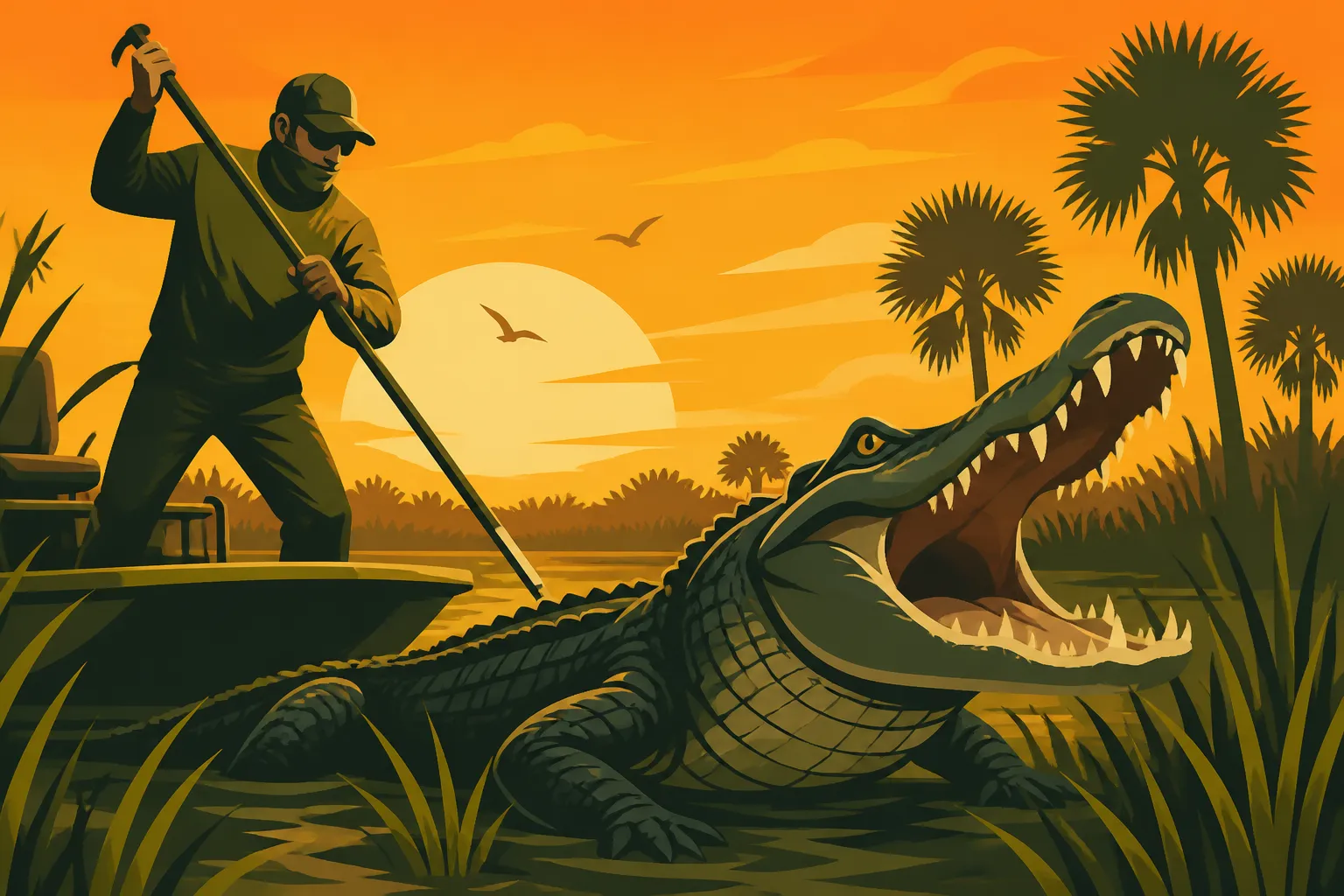
The primary method of capture usually involves a harpoon, snare, or heavy fishing tackle to secure the alligator. This can be a significant struggle, as a large gator can put up an incredible fight, thrashing violently. The guide and any assistants will work to bring the alligator boat-side and secure its head. Only once the alligator is fully controlled and positioned safely will the bang stick come into play. Your guide will instruct you precisely on where and how to deploy the bang stick for a quick, humane dispatch. It's a moment of intense focus and adrenaline, but with proper instruction, it's a very effective method. Afterward, the alligator will be secured to the boat, and the necessary Tagging an Alligator With a CITES Tag will take place immediately.
Safety Protocols and Best Practices
Safety is paramount on an alligator hunt, particularly with a bang stick. You'll be dealing with a powerful, wild animal and a firearm-like device in close quarters, often at night on the water.
Your guide will provide a thorough safety briefing before the hunt begins. Pay close attention. Key safety measures typically include:
- Staying Seated: Remain seated and keep your hands and feet inside the boat unless specifically instructed by the guide.
- Clear Communication: Always follow your guide's instructions precisely and immediately. They are the captain and the expert.
- Personal Flotation Devices (PFDs): You will likely be required to wear a PFD, or at least have one readily accessible.
- Bang Stick Handling: The guide will handle the bang stick until the critical moment, demonstrating how to use it safely and effectively. Never touch it or attempt to operate it without direct instruction.
- Alligator Control: The guide's priority will be to fully control the alligator before the bang stick is deployed. Do not attempt to touch or interact with the alligator until it is confirmed to be safely dispatched.
Trust your guide implicitly. They do this for a living and have your safety, and the ethical taking of the animal, as their top priority. Adhering to these best practices ensures a safe and successful hunt.
Post-Harvest: Processing, Taxidermy, and Logistics
The hunt doesn’t end when the alligator is in the boat. There’s still important work to be done. After the alligator is dispatched and tagged, the guide will likely assist with initial processing, which typically involves gutting the animal. This is often done to preserve the meat and hide, especially in Florida’s warm climate.
Many guides have arrangements with local processors who can skin the alligator, cut the meat, and prepare the hide for tanning. Discuss these options with your guide beforehand. Some packages include basic processing, while others will charge an additional fee. Given the size and unique nature of an alligator, trying to process it yourself without experience can be a real challenge.
If you plan on having your alligator mounted or tanned, your guide can usually recommend reputable taxidermists. They might even be able to transport the hide directly to one. This is an important consideration, as proper preservation of the hide immediately after the hunt is crucial for a quality mount. Make sure to clarify these logistics and associated costs with your guide when booking your What's Included in an Alligator Hunt Package. You'll want to know how you're getting that impressive trophy home!
Costs and Considerations for Your Trip
Understanding the financial commitment and logistical requirements upfront will help you plan effectively and avoid any surprises.
Understanding the Investment
A guided bang stick alligator hunt in Florida is an investment in a unique and thrilling experience. While specific numbers vary greatly depending on the outfitter, the size of the alligator targeted, and the inclusions in the package, you can generally expect a multi-component cost structure.
Typically, the primary cost is the guide fee, which covers their expertise, equipment, boat use, and sometimes initial processing. Beyond the guide fee, you'll need to account for your personal hunting licenses and the alligator permit itself. Florida's Statewide Alligator Permit Lottery determines who gets an alligator tag, and these tags often come with a fee separate from your general hunting license. Non-residents generally pay more for licenses and permits than Florida residents.
Other potential costs include:
- CITES Tags: While these are part of the permit, ensuring proper handling and understanding their role is key for legal transport.
- Meat Processing: Beyond the initial gutting, professional skinning, butchering, and freezing of the meat.
- Taxidermy: For mounts or hide tanning.
- Tips: It’s customary to tip your guide and any assistants for their hard work and expertise. This is an important part of Tipping a Florida Hunting Guide.
- Travel and Accommodation: Getting to your hunting location and staying overnight.
- Shipping: If you’re traveling from out of state and need to ship meat or trophies home.
Always get a detailed breakdown of costs from your guide to ensure transparency and avoid any hidden fees.
Licensing and Permit Requirements
Before you can even step foot in a boat, you’ll need to ensure you have the correct licensing. For alligator hunting in Florida, you'll generally need:
- A valid Florida hunting license: This is your base license for hunting in the state. The Florida Resident Base License Cost or Florida Nonresident Base License Cost will vary based on your residency.
- An alligator trapping license/permit: This is the big one. Florida operates a quota permit system, which means you typically apply through the Florida Alligator Application Period Dates for a chance to draw a permit. These permits are specific to a certain period and location. Sometimes, outfitters have landowner tags or their own permits they can use, which is a great option if you don't draw one yourself. Be sure to ask your guide if their package includes the permit or if you need to secure your own.
- Alligator CITES Tags: These tags are crucial for legal possession and transport of your harvested alligator. They are issued with your permit, and your guide will assist you in attaching it properly immediately after the harvest. Understanding these requirements, including Tagging an Alligator With a CITES Tag, is critical for legal compliance.
Ensure all your paperwork is in order well in advance of your hunt date. Your guide will be a great resource for navigating these requirements.
Gear You'll Need or the Guide Provides
One of the great advantages of booking a guided hunt is that the guide typically provides the specialized, expensive gear required for alligator hunting. This almost always includes:
- The Boat: An airboat or specialized flat-bottomed boat suitable for gator country.
- Primary Capture Gear: Harpoons, lines, snatch hooks, and heavy fishing rods.
- Spotlights: Powerful lights for night hunting.
- The Bang Stick: The terminal device itself, along with appropriate ammunition.
However, you'll still have personal gear you need to bring. Think about:
- Appropriate Clothing: Dress for warm, humid Florida weather, but also be prepared for cooler nights on the water. Quick-drying fabrics are your friend.
- Rain Gear: Florida weather can change on a dime.
- Insect Repellent: Mosquitoes are no joke, especially around water.
- Closed-Toe Shoes: For safety in the boat.
- Cooler and Ice: For transporting your alligator meat home (post-processing).
- Camera: To capture the experience, but ensure it’s waterproof or protected.
- Snacks and Drinks: While some guides provide these, it’s good to have your own.
- Sunscreen and Hat: Even at night, you can get sun exposure during daytime travel or setup.
Always check with your specific guide for their recommended packing list, as they know what’s best for their particular hunt setup and location. Being well-prepared ensures you can focus on the thrill of the hunt.
Disclaimer
This article is for general informational purposes only and does not constitute professional advice. Laws, prices and regulations vary by location and change over time. Consult a qualified professional for guidance on your specific situation.