Hunting a Prescribed-Burn Unit for Turkeys
Hunting turkeys in Florida's vast and diverse landscapes presents its own set of challenges, but few are as unique and rewarding as pursuing gobblers in a freshly prescribed-burn unit. Many hunters feel a bit lost when they see a huge tract of woods blackened by fire, wondering if the game simply vanished. But trust me, those seemingly desolate areas can quickly become prime turkey habitat, offering incredible opportunities if you understand why turkeys are drawn to them and how to adjust your tactics. This guide will help you decipher the secrets of hunting these dynamic environments, turning what looks like a moonscape into your next trophy spot.
The Allure of the Burn: Why Turkeys Love Freshly Scorched Earth
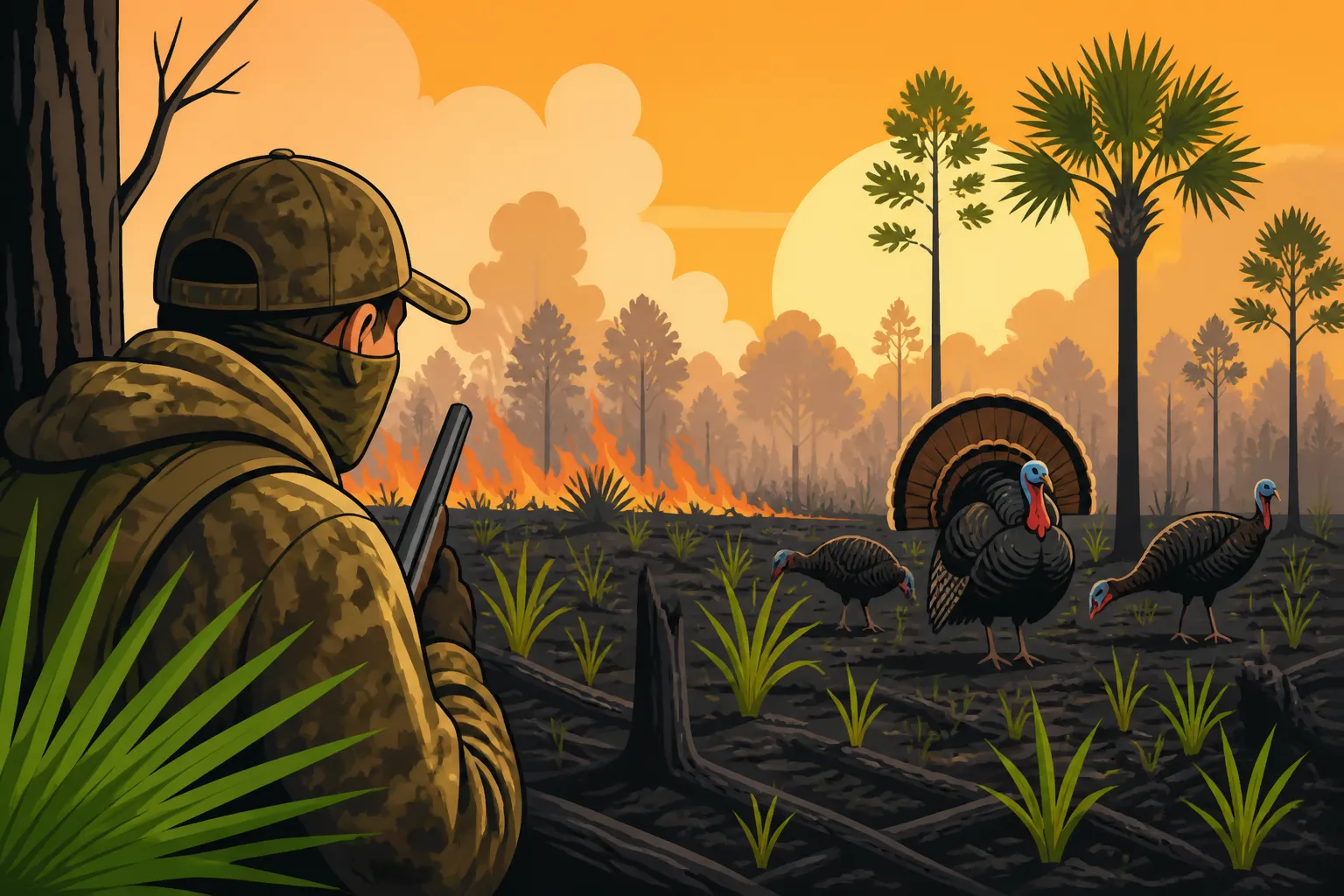
It might seem counterintuitive to hunt an area that just went through a fire, a place that looks like it's been stripped bare. However, prescribed burns are a vital part of Florida's ecosystem management, and wild turkeys are incredibly attuned to the benefits these fires bring. They don't see destruction; they see a buffet opening up and a safer place to be. Understanding this ecological dance is the first step to successful hunting.
Immediate Feast: Uncovering Seeds and Insects
One of the most immediate and impactful effects of a prescribed burn is the sheer availability of food. The fire clears away dense leaf litter, duff, and overgrown underbrush that has accumulated on the forest floor, exposing a wealth of seeds, nuts, and even tubers that were previously buried and inaccessible. Turkeys, being opportunistic foragers, quickly move in to capitalize on this readily available meal. Think of it like a giant supermarket opening its doors with everything on sale. Not only are plant foods exposed, but the fire also often brings to the surface, or at least makes easier to find, a huge population of insects, grubs, and other invertebrates. These protein-rich morsels are especially crucial for hens and poults, but gobblers certainly won't pass up an easy meal. This sudden abundance means turkeys often concentrate their feeding efforts in these burned zones, making them predictable spots to target.
Enhanced Visibility and Travel Corridors
Before a burn, many of Florida's pine forests, palmetto flatwoods, and scrub oak areas can be incredibly dense. Walking through them is tough, and seeing more than a few yards in any direction is a luxury. For a turkey, this means higher predator risk and more effort to simply move through the habitat. A prescribed burn dramatically changes this. By clearing out the understory, visibility improves exponentially. Turkeys can see predators, like coyotes or bobcats, from much further away, offering a sense of security. This improved visibility also translates to easier movement. Birds can walk, strut, and feed with less obstruction, creating natural travel corridors through the newly opened landscape. This can be a game-changer for a hunter, too, offering clearer lines of sight for spotting birds and better lanes for calling and shooting. Imagine trying to see a strutting gobbler in thick palmetto versus seeing him fan out in an open, burned pine stand. It’s night and day.
Long-Term Habitat Health and Regeneration
Beyond the immediate benefits, prescribed burns are crucial for the long-term health of Florida's ecosystems, which in turn benefits turkeys. These fires mimic natural processes, preventing the buildup of fuel that could lead to catastrophic wildfires and promoting the growth of native, fire-dependent vegetation. Many of the plants turkeys rely on for food and cover, like certain grasses, forbs, and berry-producing shrubs, actually thrive after a burn. The fire clears out invasive species and older, less productive plants, allowing new, tender growth to emerge. This regeneration provides a continuous supply of nutritious forage for turkeys throughout the year. Plus, the mosaic pattern that burns often create – patches of burned and unburned areas – provides diverse habitat, offering birds both open feeding grounds and dense pockets for roosting and escape cover. This cyclical renewal ensures a healthy, productive environment for generations of turkeys. It's a testament to good land management, and turkeys are quick to reap the rewards.
Mastering the Map: Pre-Season Scouting and In-Season Locating
Successfully hunting a burn unit isn't just about showing up. It requires a strategic approach, starting long before the season opener and continuing right up to the moment you set foot in the woods. Modern technology has made this process incredibly efficient, allowing you to narrow down your focus and maximize your time in the field. Effective scouting helps you understand the nuances of the burn and how turkeys might be using it.
Identifying Burn Units and Their Boundaries
The first step is to know where prescribed burns have occurred. State forestry agencies and local wildlife management areas (WMAs) often provide maps or online resources detailing recent burn activity. You can often find this information by checking the Florida Forest Service's website or the Florida Fish and Wildlife Conservation Commission's (FWC) WMA specific pages. Once you have a general idea, overlaying this information with a robust mapping app like onX Hunt becomes invaluable. With onX Hunt, you can zoom in and often see distinct burn lines, especially on satellite imagery, even months after the fact. Look for the darkened earth, the absence of dense canopy, or new green sprouts emerging. Knowing the exact boundaries of a burn unit is critical because turkeys will often use the edges where burned areas meet unburned cover for security. This creates natural funnels and transition zones that can be prime ambush points. Being able to visualize these boundaries on your phone or GPS unit is a huge advantage, particularly on large tracts of public land. Scouting Florida Public Land Before Season becomes much more effective when you know where recent burns have occurred.
Reading the Terrain for Turkey Hotspots
Not all burned ground is created equal. Even within a single burn unit, turkeys will favor certain features. As you scout, either virtually with satellite maps or boots on the ground, look for unburned pockets within the larger burned area. These "islands" of cover, often centered around low-lying wet areas, cypress heads, or dense creek bottoms, provide crucial roosting spots and immediate escape cover for turkeys. They'll venture out into the open burn to feed but retreat to these thicker areas for safety. Identifying subtle terrain changes like slight rises or depressions can also be key. A slight elevation might offer a gobbler a better vantage point to strut and survey his territory, while a depression might offer a slight thermal advantage or better concealment for approaching hens. Pay attention to edges, especially where different habitat types meet. For instance, a burn that runs up against a hardwood hammock or an agricultural field can be an absolute magnet. Consider how these features might influence turkey movement and set up accordingly. This kind of detailed analysis is where apps like onX Hunt really shine, allowing you to mark waypoints for potential roost trees, feeding areas, and travel routes.
Locating Fresh Sign and Active Birds
Once you've identified potential burn units and key terrain features, it's time to get out there and look for fresh sign. Turkeys are creatures of habit, and their activities leave clear clues. Look for tracks in the ash or sandy soil, noting their size and direction of travel. Droppings, particularly those from gobblers, are distinctive and can indicate recent presence. Perhaps the most exciting sign is scratching – where turkeys have raked through the exposed earth and leaf litter with their powerful feet, searching for seeds and insects. Extensive scratching indicates a regular feeding area. Don't forget to listen! Early morning listening for gobblers on the roost, or mid-day gobbling and clucking, can pinpoint active birds. During the day, you might even spot turkeys dusting in the sandy patches, another clear indicator of their presence. Take note of any areas where you see or hear turkeys and log them on your map. This information is gold for planning your in-season hunts. Knowing where the turkeys are, and how they’re using the newly burned landscape, will significantly increase your odds.
Calling, Concealment, and Commitment: Hunting Tactics for Burn Units
Hunting turkeys in burn units demands a slightly different approach than hunting in thick, unburned woods. The increased visibility and changed landscape require adjustments to your calling, decoy use, and overall strategy. It’s about leveraging the benefits of the burn while mitigating its challenges.
Adjusting Your Calling to Open Environments
In dense cover, a loud, aggressive call might be necessary to cut through the foliage and reach a distant bird. In a burn unit, with its cleared understory, sound travels much further and clearer. This means you might need to tone down your calling. Instead of hammering a locator call, try softer, more realistic hen yelps and clucks. Gobblers can hear you from a long way off, and an overly aggressive call might make them hang up, especially if they can see the open ground you’re trying to draw them across. Focus on sounding like a realistic, breeding hen rather than a competition caller. Let the natural acoustics of the open environment work for you. Furthermore, understanding the nuances of how a gobbler might respond in open terrain is critical. He might approach silently, using his enhanced vision to scan the area, rather than gobbling every few steps. Be patient, and don't overcall. Sometimes, a few soft clucks are all it takes to convince a wary tom to commit. Remember, the goal is to pique his interest, not to scare him away. Rattling Volume in Thick Florida Scrub might be different from a turkey call in open burn, but the principle of matching sound to environment applies.
Decoy Strategies and Camouflage in Sparse Cover
The open nature of a burn unit changes everything for decoy placement and hunter concealment. In dense woods, you might be able to get away with less-than-perfect camouflage or a simple natural blind. In a burn, you are exposed. Full camouflage, including face mask and gloves, is absolutely essential. Consider using a ground blind or even portable netting to break up your outline against the sparse background. When it comes to decoys, the increased visibility is a double-edged sword. Turkeys can spot your decoys from further away, which is great, but they can also spot you from further away if you move or aren't perfectly concealed. A single hen decoy or a jake and hen setup often works well. Place your decoys where a gobbler has a clear path to them, but also where you have a clear shot. Position them slightly downhill from you, if possible, to make yourself appear higher than the birds, a tactic often effective with wary gobblers. Crucially, set your decoys up far enough out that an approaching gobbler will be in good shotgun range when he spots them, but close enough that he doesn't have to cross an entire prairie to get there. Decoy Placement for Pressured Osceola Birds offers similar insights into how to fool wary turkeys.
| Decoy Type | Advantages in Burn Unit | Disadvantages in Burn Unit | Recommended Use |
|---|---|---|---|
| Single Hen | Realistic, easy to carry, less intimidating. | May not draw dominant gobblers as strongly. | Excellent for wary birds, light setups, or quick hunts. |
| Jake & Hen | Challenges dominant gobblers, realistic breeding scene. | Heavier to carry, can intimidate subordinate gobblers. | Effective for aggressive gobblers, especially during peak breeding season. |
| Strutter | Very aggressive, can infuriate dominant toms. | Most intimidating, can cause birds to hang up, very visible. | Best used when you know there are aggressive gobblers, or as a last resort. |
| Feeding Hen | Non-threatening, natural posture. | Less visually stimulating than other postures. | Good for drawing birds into a relaxed, feeding scenario. |
Run-and-Gun vs. Sit-and-Wait: Adapting Your Approach
The wide-open nature of burn units means you have more options for moving and seeing, but also less cover to hide in. This dictates a nuanced approach to whether you're going to Run-and-Gun Turkey Tactics on Florida Public Land or commit to a longer sit. If you're on a large burn unit, a "run-and-gun" strategy can be highly effective, especially early in the morning when gobblers are still on the roost. Move quickly and quietly from vantage point to vantage point, calling periodically to locate a bird. Once you get a response, you can then make a more strategic move to set up. However, once you've located a bird and he's moving, a "sit-and-wait" approach often becomes necessary. Find the best available cover, set your decoys, and be prepared to stay put. Because turkeys can see so far, any movement on your part can blow the hunt. Patience is your best friend in these open environments. If a gobbler hangs up far out, don't immediately try to move on him. Sometimes, soft calling and sheer patience will eventually entice him to close the distance. Always assess the specific situation: the bird's temperament, the available cover, and the time of day. Your ability to adapt your strategy will be key to punching your tag in a Florida burn unit.
Disclaimer
This article is for general informational purposes only and does not constitute professional advice. Laws, prices and regulations vary by location and change over time. Consult a qualified professional for guidance on your specific situation.