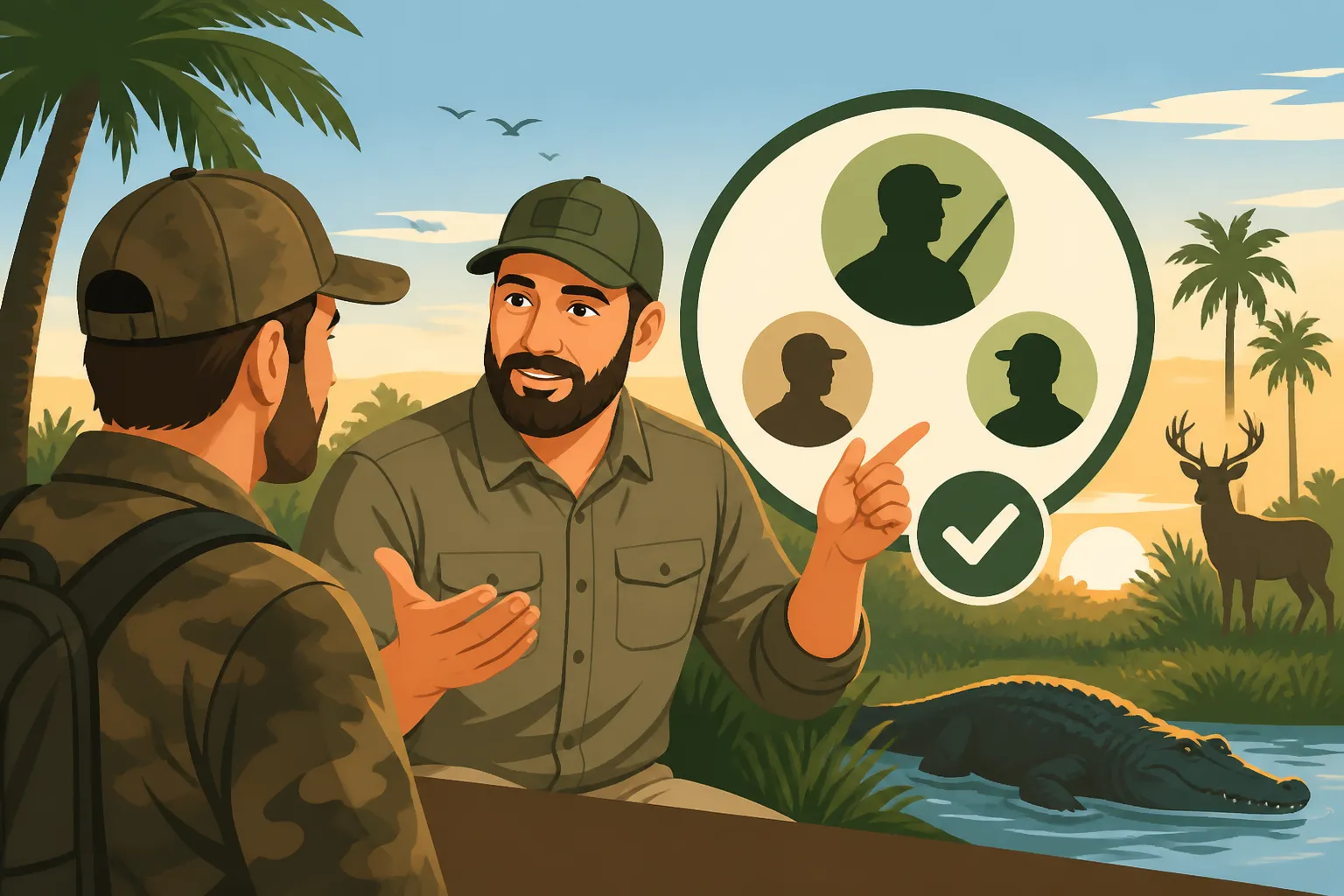
Asking an Outfitter for Hunter References
Look, the thought of dropping a significant chunk of change and precious vacation time on a hunting trip, only to arrive and find it’s not what you were promised, is enough to make anyone anxious. We’ve all heard those horror stories, or maybe even lived one ourselves – that guided hunt that sounded amazing on paper but turned out to be a total bust. This guide is all about giving you the confidence to book your next Florida hunting adventure by showing you exactly how to vet outfitters and guides through the powerful, yet often overlooked, step of asking for hunter references.
Why Hunter References Are Non-Negotiable
When you're looking at booking a hunt, especially in a state like Florida where the hunting opportunities are incredibly diverse – from chasing Osceola turkeys to wrangling alligators – the stakes are high. It's not just about the money, which can be substantial; it's about the anticipation, the time off work, and the dream of a successful trip. Skipping the reference check is like buying a used truck without looking under the hood. You might get lucky, but you're probably setting yourself up for disappointment.
Protecting Your Investment of Time and Money
Let’s be real, a guided hunt is an investment. You're putting down a deposit, often hundreds or thousands of dollars, and committing valuable time that you can't get back. Imagine showing up for a Booking a Guided Florida Alligator Hunt only to find the boat is broken, or the guide has minimal experience with the specific methods you were promised. Or perhaps you've saved for years for a chance at an Booking a Guided Osceola Turkey Hunt in the spring, only to discover the outfitter overbooked, and you're sharing a blind with strangers, or the prime turkey woods are already trampled.
Hunter references are your firsthand account of what it's really like to hunt with that outfitter. They can tell you if the camp accommodations were clean, if the food was good, if the transportation was reliable, and most importantly, if the outfitter delivered on their promises. This isn't just about whether you harvest an animal – sometimes that's out of anyone's control – but about the overall quality of the experience, the professionalism, and the effort put forth by the outfitter. Protecting your hard-earned cash and limited vacation days starts with hearing from those who've been there before.
Gaining Realistic Expectations for Your Hunt
Every outfitter's website is going to show you trophy pictures and talk about "high success rates." That's marketing, and while it's important for them to showcase their best, it doesn't always paint a complete picture. A reference, however, can provide a grounded, realistic perspective. They can tell you about the average size of animals seen, the actual hunting pressure, and the typical daily routine.
For instance, an outfitter might advertise fantastic Florida's Year-Round Hog Hunting Rules opportunities, but a reference can clarify if those hunts are primarily over bait, if dogs are used, or if it's more of a spot-and-stalk scenario. They can tell you if the "trophy" hogs are plentiful or if you're likely to see mostly smaller animals. When you're dreaming of chasing a big Florida buck on a Booking a Guided Florida Deer Hunt, a past client can tell you what kind of deer they actually encountered, not just the one giant that made it onto the brochure. This kind of transparency helps manage your expectations, ensuring that when you arrive, you're not hit with a harsh dose of reality that sours the entire trip.
Uncovering Potential Red Flags Early On
Sometimes, the little details that don't make it into a glossy brochure are the most telling. References are your early warning system. They might reveal issues like poor communication from the outfitter leading up to the hunt, guides who weren't knowledgeable about the local terrain or game, or unexpected fees that cropped up after arrival. They might even mention safety concerns that were overlooked, or a general lack of organization.
Think about it: if an outfitter consistently gets complaints about guides showing up late, or about promises made that weren't kept, a hunter who has experienced it will tell you. This invaluable insight allows you to spot potential problems before you're stuck in the middle of a remote Florida swamp or palmetto flat, realizing you've made a bad choice. Any hesitation from an outfitter to provide references, or only offering up a handful of references that are clearly cherry-picked, should immediately raise a red flag the size of a billboard on I-75. A truly reputable outfitter will be proud to share their client list.
Crafting Your Request for References
So, you've identified a few potential outfitters for your Florida hunting adventure. Now it's time to gather the intel. How you approach this request can set the tone and ensure you get the most useful information. Remember, this isn't an interrogation; it's a critical step in your due diligence.
What Information to Ask For
When you contact an outfitter, be polite but firm in your request. You'll want to ask for specific contact information from their past clients. Here’s what to look for:
- Names and Phone Numbers (or Email Addresses): You need direct contact. While some outfitters might offer to pass along your contact information, it's always better if they give you theirs so you can initiate the conversation on your own terms.
- Recent References: Ask for clients who have hunted with them within the last year or two. An outfitter who only provides names from five years ago might be trying to hide more recent issues or changes in their operation.
- References for Similar Hunts: If you're looking for an alligator hunt, ask for references from people who booked an alligator hunt. If you're interested in a bow hunt for deer, ask for bowhunters. This ensures their experience is relevant to yours. The outfitter may offer a wide range of services, such as Booking a Florida Hog Hunt or waterfowl trips, but their expertise can vary across species.
- A Mix of Successful and Unsuccessful Hunters: This might seem counterintuitive, but a truly transparent outfitter should be willing to provide contacts for clients who didn't fill their tags. The goal isn't just to see if people killed animals; it's to understand why they didn't, and how the outfitter handled the situation. Did they still have a great experience despite not harvesting? Did the guides work hard? This tells you a lot about the character of the operation.
Don't be shy about asking for at least three to five references. The more data points you have, the clearer the picture will become.
When and How to Make the Request
Timing is everything. You should make your request for references early in your communication with the outfitter, definitely before you send any deposit or sign any paperwork. This gives you time to make calls and process the information without feeling rushed.
The best way to make the request is in writing, typically via email. This creates a clear record of your communication. Start by expressing your strong interest in their operation and the specific hunt you're considering. Then, explain that as part of your decision-making process, you'd like to speak with several recent clients. Something like, "I'm very excited about the prospect of a Hunting Florida's Osceola Turkey with your outfit, and I'd appreciate it if you could provide contact information for 3-5 recent clients who've done a similar hunt, including a mix of successful and unsuccessful hunters if possible."
While platforms like BookYourHunt or GoHunt offer valuable aggregated reviews and can be a great starting point for finding outfitters, remember that direct references are a deeper dive. These platforms are excellent for discovering options and reading initial feedback, but they don't replace the direct, candid conversation you can have with a former client.
Dealing with Hesitation or Refusal
This is where your antennae need to be fully extended. If an outfitter hesitates, makes excuses, or flat-out refuses to provide references, consider it a giant red flag. There are very few legitimate reasons an outfitter shouldn't be able to provide references.
They might claim "privacy concerns," but a reputable outfitter will have already secured permission from past clients to share their contact information specifically for this purpose. If they say they can only pass your name along to past clients, push back. Explain that you prefer to initiate contact and need their information.
Any significant stalling, or an insistence that their online reviews are "enough," should be a deal-breaker. A good outfitter understands that providing references is a standard part of the booking process and a sign of their confidence in their service. If they're not willing to offer this basic level of transparency, it's time to move on and find another operation that values your trust. There are too many great outfitters in Florida to risk your money and time with one that seems less than upfront.
Making the Most of Your Reference Calls
Once you have those names and numbers in hand, the real work begins. These calls are your opportunity to get candid, unbiased feedback. Don't treat them as casual chats; approach them with a clear plan and a list of well-thought-out questions.
Preparing Your Questions
Before you pick up the phone, write down a comprehensive list of questions. This ensures you cover all your bases and don't forget anything important. Categorizing your questions can help you structure the conversation logically, moving from the pre-hunt experience to the actual hunt and post-hunt follow-up.
Here’s a table with some key questions you might consider asking:
| Category | Questions to Ask |
|---|---|
| Pre-Hunt | How was the communication from the outfitter leading up to your trip? |
| Was all the booking information clear (deposits, final payments, what to bring)? | |
| Did the outfitter accurately describe the type of hunt, terrain, and physical demands? | |
| During Hunt | Were the accommodations (camp, lodge, blinds) as described and clean? |
| How knowledgeable and professional was your guide? Did they work hard for you? | |
| Did you see the advertised game species (e.g., White-Tailed Deer Across Florida, American Alligators in Florida) in sufficient numbers? | |
| What was the typical daily routine like (wake-up, breakfast, hunting hours, meals)? | |
| How did the outfitter/guides handle unexpected situations or challenges (e.g., bad weather, equipment issues)? | |
| Were safety protocols followed? | |
| Were there any hidden costs or unexpected fees that weren't discussed upfront? | |
| Post-Hunt | What was the overall success rate for your group or the camp during your stay? (Not just your personal success) |
| How was game retrieval, processing, and trophy care handled? | |
| Would you book another hunt with this outfitter? Why or why not? | |
| Is there anything you wish you had known before going, or anything that surprised you? |
Remember, the goal is to get specific details. Instead of "Was it good?" ask "Can you describe a typical day in camp?" or "What was your guide's strategy for hunting in the palmetto flatwoods for Hunting Florida's Four Deer Zones?"
Listening Actively and Reading Between the Lines
During your calls, pay close attention not just to what is said, but how it's said. Does the reference sound genuinely enthusiastic, or are they hesitant and lukewarm in their praise? Are their answers consistent with the outfitter's marketing materials?
Look for patterns. If multiple references mention the same issue – for example, that the guides were great but the food was terrible, or that the hunting was fantastic but communication before the hunt was lacking – those are strong indicators of what you can expect. Don't expect perfection; every operation has its quirks. However, how the outfitter handled those imperfections is often the most revealing detail. A good outfitter will make efforts to rectify issues, while a poor one might dismiss them.
Be sure to ask if the outfitter has made any significant changes since their hunt. Perhaps they’ve hired new guides, acquired new property, or changed their catering service. This context can help you evaluate if a past experience is still relevant to what you’ll encounter.
Following Up and Making Your Decision
After each call, take detailed notes. Jot down the key takeaways, any red flags, and any particularly glowing reviews. Once you've spoken to all your references, review your notes. Look for common themes, both positive and negative. If you have any lingering questions, don't be afraid to call a reference back for clarification.
If you're comparing multiple outfitters, create a simple comparison chart based on the feedback you've received. This can help you weigh the pros and cons of each. Ultimately, this comprehensive due diligence should give you a clear sense of whether the outfitter is a good fit for you and if they can deliver the type of hunting experience you're seeking. This process is particularly crucial for highly sought-after experiences, like an Osceola turkey hunt, where the cost and unique nature of the species (What a Guided Osceola Hunt Costs) make a bad experience even more disappointing.
Beyond References: Additional Due Diligence
While hunter references are gold, they're not the only piece of the puzzle. A truly thorough vetting process involves a few more steps to ensure you're making the best decision for your Florida hunting trip.
Checking Online Reviews and Social Media
After you've spoken to references, it's a good idea to cross-reference their feedback with what you find online. Websites like BookYourHunt and GoHunt, and even an outfitter's social media pages, can provide a broader spectrum of opinions. While some online reviews can be less reliable than direct conversations, they can confirm or contradict what you've heard.
Look for consistency across different platforms. Are there any widespread complaints that the outfitter hasn't addressed? Be wary of an outfitter with only five-star reviews and no negative feedback at all – that can sometimes indicate a curated or less-than-authentic review presence. Also, check how the outfitter responds to reviews, both positive and negative. A professional response, even to criticism, shows good customer service. Pay attention to the photos and videos they share; do they match the descriptions and details provided by your references?
Verifying Licenses and Insurance
This is a critical, often overlooked step. You are putting yourself in a potentially remote and sometimes dangerous environment. You need assurance that the outfitter is operating legally and responsibly.
Ask the outfitter about their specific guide licenses and business permits required by the state of Florida. For instance, Florida Outfitter License Requirements will detail what's needed. A legitimate outfitter should be able to readily provide this information or point you to where it can be verified.
Equally important is verifying their insurance. Accidents can happen, and you want to know that the outfitter carries adequate liability insurance. This protects both you and the outfitter in the event of an unforeseen incident. Don't be shy about asking for proof of insurance. If they can't provide it, or get defensive about the request, it's a huge red flag that should prompt you to walk away.
Understanding the Contract and Cancellation Policy
Finally, before you sign on the dotted line or send that final payment, meticulously review the outfitter's contract and cancellation policy. This document legally binds you and outlines the terms of your hunt.
Pay close attention to details regarding deposits, final payment dates, and what happens if you need to cancel or if the outfitter has to cancel for reasons like weather or unforeseen circumstances. Our article on Florida Outfitter Cancellation and Weather Policies goes into more depth here. Are there refund provisions? Are there options to reschedule? What are the contingencies for not filling your tag?
Understand what is included in the price (e.g., meals, lodging, guide, trophy prep) and what is not (e.g., licenses, tags, gratuities, meat processing, taxidermy). Misunderstandings here can lead to unexpected costs and frustration. A clear, well-written contract protects both parties and ensures that everyone is on the same page before you embark on your Florida hunting adventure.
Disclaimer
This article is for general informational purposes only and does not constitute professional advice. Laws, prices and regulations vary by location and change over time. Consult a qualified professional for guidance on your specific situation.