Hunting Alligators at Night Legally
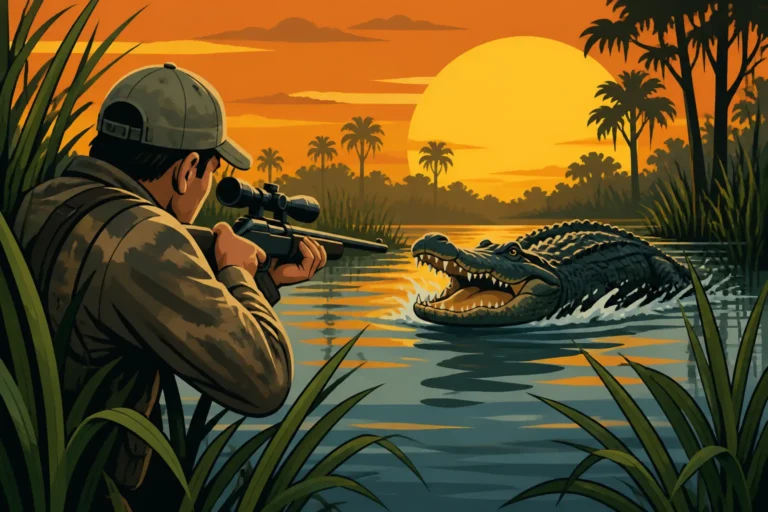
The thrill of chasing alligators under the cloak of darkness is an experience unlike any other, but it can feel incredibly daunting to figure out the maze of regulations and specialized techniques. Many hunters dream of harvesting a gator but get stuck wondering if they're even allowed to be out there after sunset, let alone how to do it safely and legally. This comprehensive guide is here to untangle all those complexities, walking you through Florida's rules, the essential gear, effective night tactics, and critical post-harvest steps, ensuring your alligator hunting adventure is both successful and fully compliant with state law.
Understanding Florida's Alligator Hunting Regulations
Navigating the rules for alligator hunting in Florida, especially when the sun goes down, can sometimes feel like trying to read a map drawn in the dark. The Florida Fish and Wildlife Conservation Commission (FWC) has specific guidelines to ensure both hunter safety and sustainable management of this incredible apex predator. It's not just about having a license; it's about understanding the nuances of the statewide hunt.
Permit Requirements for Alligator Hunting
First and foremost, you can't just decide to go gator hunting on a whim. Florida operates on a quota-based system for its recreational alligator harvest program. This means you'll need to participate in the Florida's Statewide Alligator Permit Lottery to even get a chance at a tag. This lottery typically opens in May, and if you're lucky enough to draw a permit, it will specify the harvest unit (a particular lake, river, or public water body) and a specific harvest period, which usually runs for several weeks between August 15 and November 1. Each permit comes with two CITES tags, allowing you to harvest two alligators. You might think, "What if I didn't draw a permit?" Don't despair! Many opportunities arise, like being designated as a sub-permittee by a primary permit holder, or even seeking out guides who operate on their own permits if your goal is just to experience the hunt.
Once you secure a permit, remember that anyone accompanying you on the hunt, including those helping with the harvest, must also possess a valid Florida hunting license and an alligator trapping license. Even if they aren't the primary permit holder, these licenses are non-negotiable for participation. The FWC makes it fairly straightforward to apply online or through a license agent, but you have to be proactive and apply during the designated windows. Details on Florida Alligator Application Period Dates are usually published well in advance by the FWC.
Legal Methods and Weapons for Night Hunting
When it comes to hunting alligators at night, the "how" is just as important as the "where" and "when." Florida law specifically dictates the methods you can use to initially capture an alligator, and these methods are explicitly allowed for nighttime operations. Unlike deer hunting where shining lights at night is strictly prohibited, alligator hunting relies heavily on spotlights to locate gators by their iconic red eye shine.
The legal methods for taking an alligator are:
- Harvesting an Alligator With a Bang Stick: This is a powerful, specialized device used for dispatching alligators once they are secured.
- Snare: A cable or rope loop designed to be placed around the alligator's neck or body.
- Harpoon: A handheld spear-like device with a detachable head, typically tethered to a float or line.
- Gig: A multi-pronged spear, also usually tethered.
- Bow and Arrow: A traditional or compound bow, often with a specialized arrow and line.
- Crossbow: Similar to a bow, but with a mechanical cocking mechanism.
- Muzzleloading gun: A firearm loaded from the muzzle, permitted for dispatching a secured alligator.
- Hand-held restrained capture devices: This broad category includes hook and line (often baited), which is a common and effective method for night hunting.
Crucially, you cannot use firearms (rifles, shotguns, handguns) for the initial capture of an alligator. Firearms can only be used to humanely dispatch an alligator after it has been captured and brought alongside the boat, or otherwise secured in a way that prevents it from escaping. This distinction is vital for safety and to prevent wounding and losing alligators. For many hunters, the "bang stick" (a specialized powerhead designed for humane dispatch) or a large caliber handgun (like a .44 Magnum or .45 Colt) is the preferred dispatch weapon once the gator is secured, often near the boat. Remember, your permit allows for Harvesting an Alligator With a Bang Stick, but only on a properly secured animal.
Permitted Hours for Alligator Hunting
One of the most exciting aspects of Florida's alligator hunting season is that it specifically allows for nighttime hunting. The official alligator hunting season typically runs from 12:01 a.m. on August 15 through 11:59 p.m. on November 1. Within this window, you are generally allowed to hunt alligators 24 hours a day, meaning alligator hunting at night legally is absolutely on the table. In fact, many experienced gator hunters will tell you that the cover of darkness is often the most productive time. Alligators become more active at night, moving freely across the water, and their eyes glow a distinct reddish-orange when illuminated by a spotlight, making them easier to locate. This nocturnal activity reduces their wariness compared to daytime hunting, where boat traffic and human presence can make them much more cautious. The cool night air can also make for a more comfortable experience in Florida's late summer heat.
Essential Gear and Preparation for Night Alligator Hunting
Hunting alligators at night isn't like stepping into a deer stand; it requires a specialized kit and meticulous preparation. The right gear not only increases your chances of success but, more importantly, ensures your safety and compliance with the law. Without the proper tools and a solid plan, a night hunt can quickly turn from thrilling to dangerous.
Must-Have Equipment for a Safe and Legal Night Hunt
When you're out on the water after dark, visibility is limited, and dealing with a powerful reptile requires robust equipment. Here’s what you absolutely need to bring:
- Powerful Spotlights: This is your most critical tool for finding gators. You'll want a bright, handheld spotlight (brands like GoHunt often have robust options for outdoor use) capable of cutting through the darkness and making those gator eyes pop. Bring at least two, preferably three, including a backup headlamp for hands-free work. The red eye shine of an alligator is unmistakable under a strong beam.
- Reliable Boat: A stable boat is non-negotiable. Whether it's a jon boat, airboat, or even a large canoe, it needs to be seaworthy, stable enough to handle the thrashing of a captured gator, and equipped with a motor that can handle both slow cruising and quick maneuvers. Remember, you'll often be in shallow, vegetated waters, so a mud motor or trolling motor can be very useful.
- Capture Equipment: Depending on your chosen method, this includes heavy-duty fishing rods and reels spooled with at least 80-pound test braided line, large treble hooks (barbless hooks are easier to remove but not strictly required), harpoons with detachable heads, gigs, or snares. Ensure lines are robust and floats are highly visible, even at night.
- Dispatch Weapon: As mentioned, this could be a bang stick, a large-caliber handgun (like a .44 or .45), or a muzzleloader. Whatever you choose, it must be easily accessible and in perfect working order.
- CITES Tags: Each alligator permit comes with specific CITES tags. You must have these on hand. Upon harvest, one CITES tag must be immediately attached to the alligator's tail. This is not a suggestion; it's a legal requirement. Failure to properly Tagging an Alligator With a CITES Tag can result in serious penalties.
- Safety Gear: Life jackets for everyone on board, a first-aid kit, an air horn or whistle, navigation lights, a fully charged cell phone, and a satellite messenger if you're in remote areas. Knives (sharp, fixed blade), bolt cutters, and heavy gloves are also crucial for handling lines, hooks, and the alligator itself.
- Cooler and Ice: Alligator meat spoils quickly in Florida's heat, even at night. Bring large coolers packed with ice to ensure your harvest is properly preserved.
- Measuring Device: A tape measure is essential for Judging a Legal-Size Florida Alligator, as minimum size limits may apply depending on your permit.
Pre-Hunt Scouting and Planning
Even though you'll be hunting at night, your success starts long before sunset with thorough scouting and planning. Just like you'd scout for deer sign, you need to scout for alligator activity.
- Daytime Reconnaissance: Spend time during the day on your assigned harvest unit. Look for alligator slides, basking spots, and areas where smaller alligators are seen—these are often indicators of larger gators nearby. Note potential hazards like submerged logs, shallow areas, or dense vegetation. Utilize mapping applications, such as the detailed topographic and hydrographic features often found in GoHunt, to mark potential hotspots and navigable channels.
- Understand Water Levels and Conditions: Florida's waterways are dynamic. Recent rains can raise levels, opening up new areas, while droughts can make areas inaccessible. Pay attention to current flow if you're on a river.
- Entry and Exit Points: Plan your boat launch and retrieval carefully, especially for night operations. Ensure the ramps are accessible in the dark and have adequate parking.
- Weather Check: Florida weather can be unpredictable. Always check the forecast for storms, high winds, or sudden drops in temperature. Hunting an alligator in a thunderstorm is incredibly dangerous and should be avoided at all costs.
- Inform Someone: Let a trusted contact know your hunting location, who you're with, and your expected return time. This is a basic but critical safety measure for any remote outdoor activity, doubly so for night hunting.
Tactics for a Successful Night Alligator Hunt
Night hunting for alligators is a game of stealth, precision, and quick action. It's a primal dance between hunter and hunted, where the darkness enhances the senses and challenges your resolve. Success hinges on your ability to locate, approach, and secure your quarry without spooking them.
Locating Alligators in the Darkness
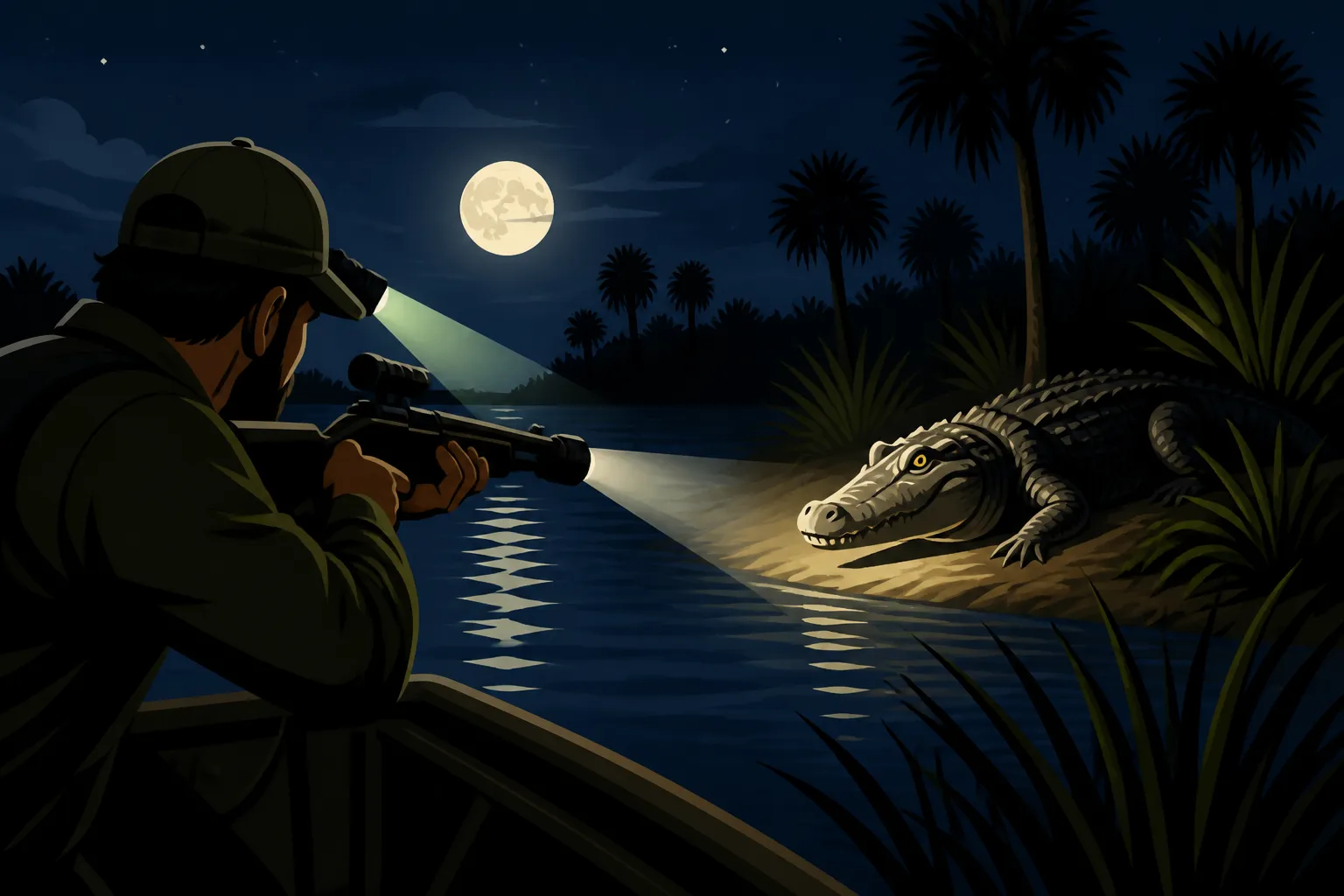
The primary technique for finding alligators at night is "eye shining." Alligators have a reflective layer behind their retinas, called the tapetum lucidum, which makes their eyes glow bright red or orange when illuminated by a strong light source.
- Slow and Steady: Navigate slowly through likely alligator habitat—creek channels, lake edges, marshy areas, and sloughs. Use your powerful spotlight to systematically scan the water from bank to bank. Keep the beam low to avoid blinding yourself with reflections off the water.
- Recognizing Eye Shine: Alligator eye shine is distinctive. It's usually a pair of reddish-orange dots, sometimes appearing as a single, larger glow if the gator is far away or angled. The distance between the eyes can give you a rough estimate of the gator's size; larger alligators will have eyes further apart. This is often how you begin Judging a Legal-Size Florida Alligator from afar.
- Distinguishing from Other Wildlife: Be mindful that other nocturnal animals, like raccoons or opossums, will also show eye shine, but it's usually a different color (often green or yellow) and typically higher off the water on the bank. Learn to differentiate the specific red glow unique to gators.
- Scanning Patterns: Develop a systematic scanning pattern. Don't just swing the light wildly. Move it slowly from left to right, then shift slightly forward, covering the water thoroughly. Patience is key; sometimes a large gator will emerge from seemingly nowhere.
Stealthy Approaches and Capture Techniques
Once you've spotted those glowing eyes, the real challenge begins: getting close enough for a shot or a harpoon. Alligators, despite their powerful appearance, can be surprisingly wary, especially after dark.
- Minimize Noise and Light: As you approach a target gator, reduce engine noise as much as possible. If feasible, switch to a trolling motor or paddle. Avoid direct, continuous light on the gator; instead, use quick, intermittent flashes to confirm its location while keeping most of your approach in darkness. Many hunters use a dimmer red filter on their main light or a secondary, less intense light during the final approach.
- Wind and Current: Pay attention to wind and current. Try to approach from downwind or upstream if possible to minimize scent or vibrations reaching the gator.
- Calculated Movement: Don't rush. Approach steadily and cautiously. A sudden burst of speed or a clumsy movement can send the gator submerging in an instant, often not to reappear for a long time. If the gator submerges, mark its last known location and wait. Sometimes they resurface nearby.
- Capture Strategy:
- Hook and Line: If using baited lines, deploy them in areas of high activity. When a gator takes the bait, you'll feel the tension. Play the gator carefully, much like a large fish, bringing it closer to the boat. This method is often employed by those who prefer to set lines and return later, but it can also be done actively.
- Harpoon/Gig: For harpooning or gigging, you need to get very close, typically within 10-20 feet. Once in range, aim for the thick hide behind the head or along the back. It’s a powerful throw, and the harpoon line needs to be securely attached to a float or heavy-duty line to prevent the gator from escaping. The float system is crucial for allowing the gator to tire itself out while remaining located.
- Snare: Snaring typically requires getting directly over the gator. A long pole with a snare loop is carefully maneuvered over the gator's head or around its body. This method is often used once the gator is already tired or otherwise restrained.
- Safety First: When a gator is hooked or harpooned, it will thrash violently. Keep all body parts inside the boat, and ensure everyone knows their role. Never attempt to grab or restrain a live alligator by hand unless you are a highly trained professional.
Humane Dispatch and Retrieval
Once the alligator is secured alongside your boat, humane dispatch is paramount.
- Secure the Gator: Before attempting dispatch, ensure the gator is tightly secured. A snaring pole or a grapple hook can help bring its head alongside the boat. The goal is to control its head and jaws to prevent injury to hunters.
- Precise Shot: The most humane and effective method is a precise shot to the brain. For this, a bang stick is ideal. It delivers a powerful charge into the brain, causing immediate death. If using a large caliber handgun, the shot must be placed exactly behind the skull plate, angled forward into the brain. Missing this spot will only wound the animal and make a dangerous situation even more so. Practice with your chosen dispatch weapon and know its capabilities and limitations.
- Post-Dispatch: Once dispatched, the alligator may still exhibit reflex actions. It’s important to give it a few minutes to ensure it is completely expired before attempting to bring it fully into the boat. This is where heavy gloves and strong hands come in handy. Slowly and carefully bring the gator aboard, tail first, or drag it to shore.
- Immediate Tagging: The moment the alligator is harvested and dispatched, you must attach a CITES tag to its tail. This is a federal and state requirement. Failure to do so immediately can result in your harvest being deemed illegal. Ensure the tag is securely fastened and visible.
Essential Night Alligator Hunting Gear Checklist
| Permits & Documentation | Florida Hunting License, Alligator Trapping License, Alligator Harvest Permit with CITES tags, Photo ID |
|---|---|
| Lighting | High-power handheld spotlight (x2), headlamps (x2), boat navigation lights |
| Boat & Navigation | Stable boat, reliable motor (including trolling or mud motor), fully charged battery, mapping GPS (e.g., GoHunt app), anchor |
| Capture & Dispatch | Heavy-duty rods/reels (80lb+ line), treble hooks, harpoon with rope/float, snare pole, bang stick (or large caliber handgun with appropriate ammo), bolt cutters, heavy gloves |
| Safety | Life jackets (for all aboard), first-aid kit, air horn/whistle, fully charged cell phone, satellite messenger (for remote areas), fire extinguisher |
| Post-Harvest | Large coolers with ample ice, measuring tape, sharp knives, strong rope/cable for securing/dragging, waterproof scale (optional) |
| Personal Comfort | Bug spray, appropriate clothing (long sleeves/pants), hat, water/snacks |
Post-Harvest Requirements and Responsible Practices
Successfully harvesting an alligator at night is a rewarding experience, but your responsibility doesn't end when the gator is in the boat. There are crucial legal and ethical steps you must follow to ensure your hunt is fully compliant and that you honor the animal.
Tagging, Reporting, and Transporting Your Harvest
Florida has strict rules about what happens immediately after you've harvested an alligator, especially concerning the CITES tags.
- Immediate Tagging is Law: As soon as you've dispatched your alligator, you must immediately attach one of the FWC-issued CITES tags to the alligator's tail. This tag must remain attached until the alligator reaches its final destination for processing and until the hide is tanned and the meat is processed. Don't remove it prematurely. This system ensures accountability and prevents illegal take.
- Harvest Reporting: While not all states require immediate reporting for all species, for alligators, the permit itself acts as a reporting mechanism. However, it is essential to record the harvest date and any other required information directly on your permit. The FWC monitors harvest numbers closely, and accurate data helps them manage the population effectively. Keep your permit and tags safe throughout the process.
- Transporting Your Alligator: You can transport your harvested alligator whole, but the CITES tag must remain affixed. If you plan to quarter or process the alligator in the field, you must keep the head and tail (with the CITES tag attached) together until you reach your final destination for processing. This ensures that law enforcement can verify your legal harvest. Make sure your vehicle and cooler are clean and ready for the transport. Consider bringing large tarps to protect your vehicle from blood and scales. For more details on what's required, review the FWC's official alligator harvest guidelines or inquire during the Applying for a Statewide Alligator Permit process.
Processing Your Alligator and Meat Care
Alligator meat is a delicacy, and the hide is a valuable resource. Proper handling ensures you get the most out of your harvest.
- Field Dressing vs. Full Processing: Depending on the size of the alligator and your setup, you might field dress it on the spot (removing entrails) or transport it whole to a dedicated processing facility. For larger gators, removing the entrails promptly helps cool the carcass and improves meat quality, especially in Florida’s warm climate.
- Cooling is Critical: Just like any other wild game, rapid cooling of alligator meat is crucial to prevent spoilage. Get the meat on ice or into a walk-in cooler as quickly as possible. Florida's high temperatures mean that even a few hours without proper cooling can compromise the quality.
- Meat Yield: Alligator meat comes from various parts of the animal, including the tail (the prime cut, often called "gator tenderloin"), jaw, legs, and body. It's a lean, white meat often compared to chicken or pork. Be prepared for a substantial amount of meat, especially from a larger gator. Don't waste it!
- Hide Care: If you plan to keep the hide, it needs immediate attention. Skinning should be done carefully to avoid cuts or damage, and the hide should be salted heavily and rolled up or frozen promptly. Contact a reputable taxidermist or tanner beforehand to understand their specific requirements for hide preparation. They can guide you through the initial steps to ensure the hide remains viable for a trophy.
- Finding a Processor: If you're not comfortable processing the alligator yourself, many butcher shops in Florida are experienced with wild game, including alligators. Research local options in advance, especially near your harvest unit. Some outfitters, if you engaged one for a Booking a Guided Florida Alligator Hunt, might offer processing services or connect you with local experts.
Ethical Hunting and Conservation
Participating in Florida's alligator harvest program is a privilege that comes with a responsibility to uphold ethical hunting standards and contribute to conservation.
- Respect the Resource: Alligators are an incredible success story in conservation, moving from endangered to a thriving, huntable population. Treat them with respect, ensuring a quick and humane harvest. Avoid unnecessary suffering.
- Know Your Limits: Stick to your allocated tags and the legal size limits. Don't be tempted to over-harvest or take undersized gators. The system is designed to sustain the population.
- Leave No Trace: Practice Leave No Trace principles. Pack out all your trash, including fishing lines, hooks, and any remnants of your hunt. Leave the environment cleaner than you found it.
- Be a Good Ambassador: Your actions reflect on all hunters. Conduct yourself professionally and legally, especially when interacting with other recreationists or the public. Educate others about the importance of regulated hunting for wildlife management.
- Support Conservation: The revenue from hunting licenses and permits directly funds wildlife conservation efforts in Florida. By participating legally and ethically, you're contributing to the health of the alligator population and other wildlife across the state. Whether it's the thrill of Stalking an Alligator on a Freshwater Lake or the satisfaction of a successful night hunt, remembering your role in the bigger picture is key.
Disclaimer
Please be aware that hunting regulations can change. While this guide provides comprehensive information, it is crucial to consult the official Florida Fish and Wildlife Conservation Commission (FWC) website or their current regulations handbook before embarking on any hunt. The FWC is the definitive source for all legal requirements, season dates, and permit information. Hunters are responsible for knowing and adhering to all applicable laws.