Setting Up Against a Big Live Oak
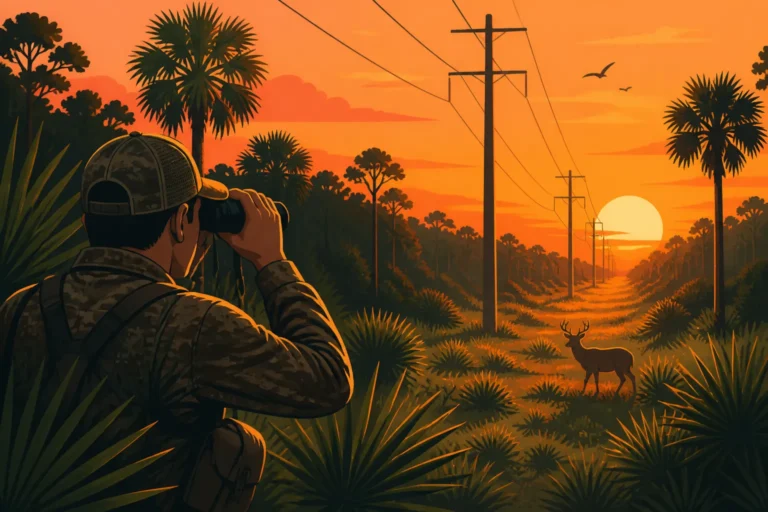
We've all been there: you're walking through a Florida hammock, eyes peeled, maybe following a fresh set of tracks or trying to get ahead of a gobbling bird, and suddenly, you need to set up now. Whether it's a whitetail buck slipping through the palmettos or an Osceola strutting into view, the difference between success and frustration often boils down to how quickly and effectively you can disappear into the landscape. This guide will walk you through the art of using one of Florida's most iconic trees—the venerable live oak—as your ultimate natural hunting blind, helping you vanish into its shade and maximize your chances.
The Unmatched Advantages of a Live Oak for Concealment
When you think about natural cover in Florida, dense palmetto thickets or cypress swamps often come to mind. While these certainly offer concealment, they can also limit visibility and movement. The live oak, with its sprawling, often low-hanging branches and dense, evergreen foliage, presents a unique and often superior alternative, offering both deep concealment and surprising versatility. It's a natural masterpiece of camouflage, right there in the wild, waiting for you to blend in.
Natural Camouflage and Form-Breaking Qualities
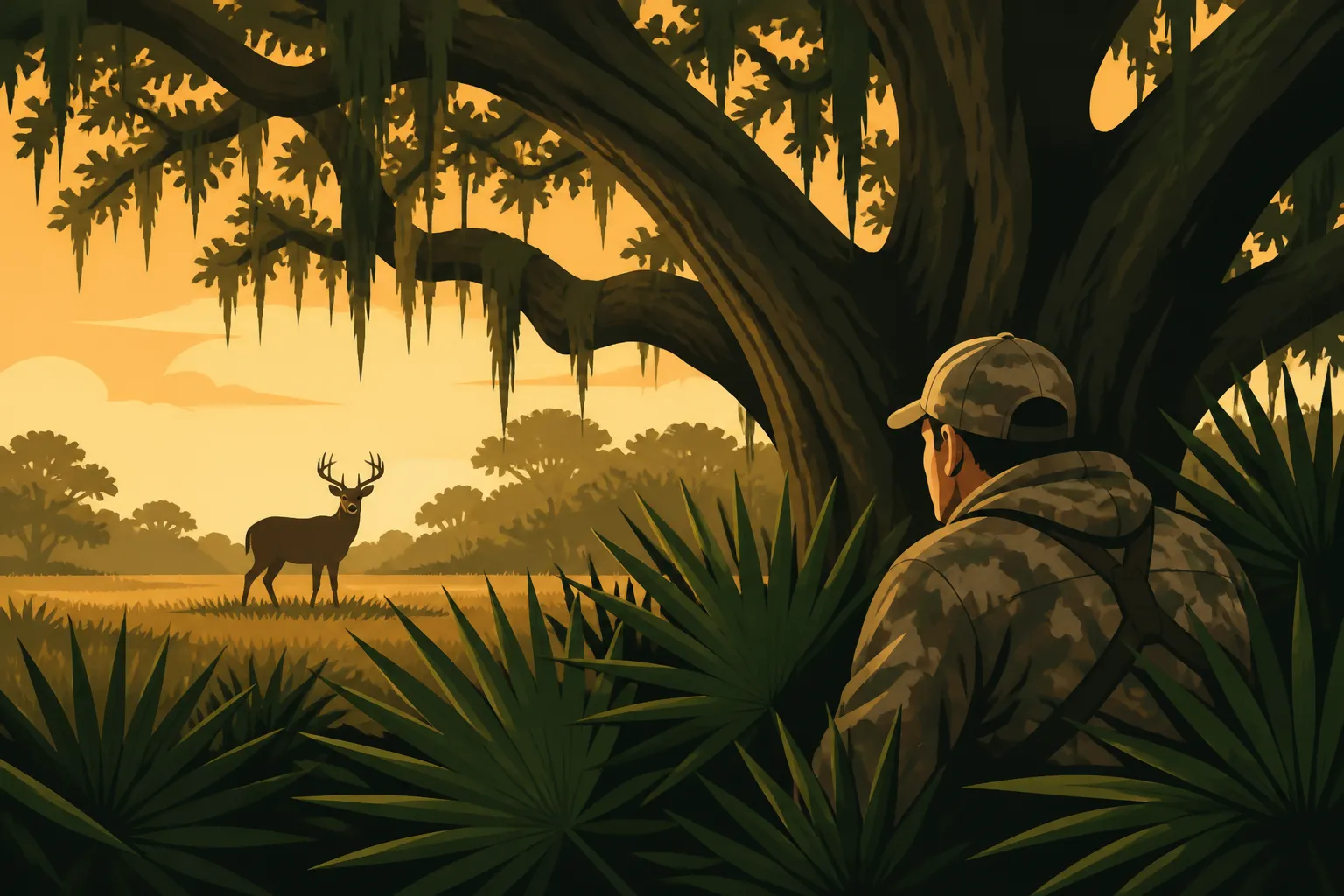
The magic of a live oak isn't just its leaves; it's the whole package. The massive, gnarled trunk, often covered in moss or lichen, breaks up your human silhouette like nothing else. Those low, twisted branches create layers of natural screening, making it incredibly difficult for a deer or turkey to pick you out, even at relatively close range. Unlike a straight pine, a live oak doesn't present a flat, predictable surface for an animal's eye to detect an anomaly. Instead, it’s a chaotic symphony of angles and textures, perfect for a hunter to become part of.
Imagine a mature live oak, its branches reaching out like ancient arms, dripping with Spanish moss in some areas. If you nestle in against the trunk, especially where a large branch forks, you essentially become another part of that complex structure. The dark, fissured bark provides a superb backdrop for your camouflage, absorbing light rather than reflecting it. This natural depth and varied texture are far more effective than any manufactured blind can replicate in terms of blending seamlessly into the environment. It also offers a distinct advantage over simply standing next to a single pine tree, where your profile might be more easily discernible against the uniform trunk.
Sound Dampening and Windbreak Capabilities
Beyond visual concealment, live oaks offer surprising acoustic advantages. The sheer mass of a large live oak, combined with its dense canopy, can actually dampen ambient sounds. This might seem minor, but when you're trying to remain undetected, every little bit helps. The rustle of your clothing, the slight creak of a gear adjustment, or even the subtle sound of your breathing can be mitigated by the natural acoustic dampening effect of the tree's heavy wood and thick foliage. This is particularly true on breezy days, when the leaves of the oak create their own soft, consistent rustle, providing a natural cover for any minor noises you might make.
Furthermore, a large live oak acts as a fantastic windbreak. Florida hunting can often involve unexpected cold fronts or persistent breezes, and staying comfortable is key to remaining still and focused. Setting up on the leeward side of a massive live oak can shield you from direct wind, helping to keep you warmer and reducing scent dispersion in unwanted directions. This comfort factor directly translates to increased patience and reduced fidgeting, both critical elements for a successful hunt. The stability of a large trunk also provides a solid anchor point, allowing you to settle in without worrying about swaying or creaking that might occur in a smaller, more flexible tree or bush. It’s not just about staying hidden; it’s about creating a micro-environment that works in your favor.
Strategic Positioning: Making Your Live Oak Setup Count
Finding a good live oak is one thing; using it effectively is another. Your success hinges on how you position yourself relative to the tree, the wind, the sun, and the expected movement of your quarry. This isn't just about hiding; it's about anticipating and reacting, all while remaining utterly invisible.
Wind Direction and Scent Control
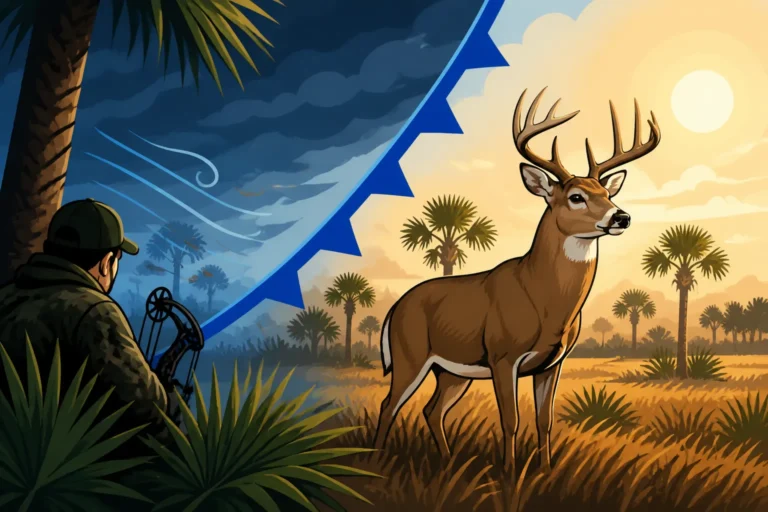
In Florida, with its often unpredictable breezes and swirling thermals, playing the wind is non-negotiable, especially for deer. Even with the best live oak cover, if your scent is wafting directly into a deer's nose, your hunt is over before it truly begins. Always approach your chosen live oak from a direction that keeps you downwind of where you expect game to appear. This often means making a wider circle to get to your spot, but it's time well spent. Use tools like the GoHunt app to check real-time wind conditions and plan your approach.
Once settled, position your body so that any air currents carry your scent away from the game's likely path. This might mean hugging one side of the trunk more than the other. Remember that Florida's flat terrain can lead to subtle thermal shifts, especially during sunrise and sunset, as the ground heats and cools. In an oak hammock, cooler air might funnel through depressions or along creek bottoms, carrying your scent with it. Pay close attention to these nuances. If the wind shifts unfavorably during your sit, be prepared to make a subtle adjustment, even if it means moving to the other side of the tree or seeking alternative cover nearby. Learning about Wind and Thermals in Flat Florida Terrain is crucial for any hunter in our state.
Sun Position and Sight Lines
The sun can be your friend or your enemy. Never set up where the rising or setting sun will be directly in your eyes, blinding you at critical moments. Likewise, avoid positioning yourself so that your silhouette is cast clearly against the sky or a bright background. A live oak, with its dense canopy, can often provide excellent shade, minimizing glare and keeping you out of direct sunlight, which also helps with comfort.
Think about your primary shooting lanes before a deer or turkey appears. Identify any small branches or vines that might obstruct a shot. While you want maximum concealment, you also need clear lines of sight to crucial areas where you expect game to pass. Sometimes, this involves making a small, quiet adjustment by breaking off a tiny twig, but do so sparingly and well in advance. Consider using an app like GoHunt to scout aerial photos beforehand, looking for oak hammocks that have natural openings or funnel points that lead into them. This can help you identify prime setup locations where you’ll have both cover and clear shooting.
Optimizing Your Live Oak Setup:
| Feature | Ideal Positioning | Considerations |
|---|---|---|
| Wind | Always downwind of expected game approach | Use scent elimination; be aware of thermal shifts |
| Sun | Avoid being backlit or having sun in your eyes | Utilize shade for concealment and comfort |
| Shooting Lanes | Pre-clear necessary lanes; wide view of travel paths | Focus on high-probability approach zones |
| Backdrop | Utilize dense foliage, dark trunk to break silhouette | Avoid open skies or bright, uniform backgrounds |
| Comfort | Seek natural depressions or use a portable seat | Minimizes fidgeting and movement; stay still |
Identifying and Clearing Shooting Lanes
Once you've picked your live oak and considered the wind and sun, it's time to fine-tune your shooting lanes. This is often the most overlooked aspect of a quick setup. You need to be able to raise your weapon, aim, and shoot without a branch or clump of Spanish moss deflecting your arrow or bullet. Take a few moments to slowly scan your surroundings from your seated or kneeling position. Visualize game approaching from different directions. Are there any small limbs directly in front of you that would impede a shot at a deer's vitals or a turkey's head?
Gently and quietly, clear any immediate obstructions. Sometimes, a simple break of a small branch is all it takes. For a bowhunter, this is even more critical; even a small twig can cause an arrow to kick off course. For rifle hunters, a clear line of sight is paramount. Don't go overboard and clear a wide, unnatural-looking hole in the cover. The goal is to create just enough space for your shot while maintaining the overall natural integrity of your blind. Remember, you're trying to blend, not build. It's often helpful to think about where a deer might stop to browse or where a turkey might strut, and focus on those specific areas for your clearest shots.
Essential Gear for Live Oak Hunting Setups
While the live oak provides incredible natural advantages, a few key pieces of gear can significantly enhance your comfort, concealment, and effectiveness when using one as your primary hunting location. These items aren't just luxuries; they're strategic tools for maximizing your time in the woods.
Portable Seating and Support
Sitting still for extended periods directly on the hard ground or against a rough tree trunk can quickly become uncomfortable, leading to fidgeting and unnecessary movement. A small, portable seat or cushion can be a game-changer. Something like a simple foam pad, a lightweight folding stool, or even a compact tripod seat can provide the comfort needed to remain motionless for hours. Look for options that are quiet to deploy and move. A comfortable hunter is a patient hunter, and patience is often rewarded.
Consider a model with a small backrest if possible, as it can help reduce fatigue in your lower back. For situations where you might be leaning against the broad trunk of a live oak, a thick seat cushion not only provides comfort but also a layer of insulation from the potentially damp ground or cold bark. This small investment can drastically improve your ability to stay focused and still, especially during those long, quiet periods when nothing seems to be moving. It’s a huge step up from trying to find a naturally level spot in the dirt.
Advanced Camouflage and Scent Control
Your personal camouflage, coupled with effective scent control, is paramount when relying on a natural setup like a live oak. While the tree breaks up your outline, your clothing needs to do its part to blend you into the intricate patterns of the Florida wilderness. Opt for camouflage patterns that mimic the natural environment: greens, browns, and grays that reflect the varied colors of palmetto, oak leaves, and shadows. A good face mask or face paint and gloves are non-negotiable, as exposed skin is highly reflective and stands out.
For scent control, there's a multi-pronged approach. Start with scent-free laundry detergent for your hunting clothes. Store them in airtight bags or containers with natural elements like pine needles or cedar. Before heading into the field, use a quality scent-eliminating spray on your clothes and gear. Pay particular attention to areas where you might sweat. Brands like ScentLok or Ozonics offer advanced scent management solutions that can be effective, though diligence with wind direction remains your most critical defense. Remember, even the best products are only aids; nothing completely eradicates your scent, but they can significantly reduce the "hot spot" that a deer's nose can detect. This attention to detail will help you remain undetected when a curious deer or turkey edges closer to your position.
Quiet Accessories and Optics
When hunting from a live oak, every piece of gear you carry needs to be quiet. Nothing spooks game faster than the metallic clang of a dropped binocular or the loud rip of Velcro. Choose accessories that are designed for silence: soft-sided cases for calls and optics, gear straps with silent buckles, and backpacks with quiet zippers. Practice handling your equipment beforehand to minimize noise. Your rangefinder, binoculars, and calls should be easily accessible but secured to prevent accidental drops.
Good optics are essential for identifying game in the often-shadowy understory of an oak hammock. A pair of 8x or 10x binoculars will allow you to scan for subtle movements, flicking ears, or the tell-tale glint of an antler without having to move your head excessively. Choose binoculars with good low-light performance, as prime hunting times are often at dawn and dusk. Remember to use them slowly and deliberately, scanning small sections of the landscape at a time. The more you can identify through your optics, the less you have to move your body, maintaining your invisible status against that ancient live oak.
Live Oak Hunting in Action: Real-World Scenarios
The beauty of a live oak setup is its adaptability to various Florida hunting scenarios. Whether you're chasing a wary gobbler or patiently waiting for a mature buck, the principles remain the same: become part of the tree.
Ambushing a Cruising Florida Buck
Imagine it's the peak of the rut in Zone B, November is here, and you've spent weeks Scouting Florida Public Land Before Season using tools like GoHunt, identifying a natural travel corridor between a bedding area in a dense palmetto head and a feeding area in a mixed oak hammock. A massive live oak sits right on the edge of this corridor, offering a perfect ambush point. You've walked in well before dawn, using the cover of darkness to silently position yourself against its gnarled trunk, facing the direction you expect the buck to come from, wind in your favor.
The morning unfolds slowly. You might hear the distant rustle of leaves or the soft footsteps of a squirrel, but no deer appear. Suddenly, a subtle flicker of movement catches your eye far down the corridor. It’s a buck, head low, scent-checking the ground, slowly cruising for does. Your heart pounds, but you remain utterly still, relying on the deep shadows and broken outline of the live oak to conceal you. You've already mentally rehearsed your shot, knowing exactly where the clear lanes are. As the buck approaches, you slowly raise your rifle, taking aim, a testament to the patience and stillness this natural setup affords. This approach is much like Hunting the Zone B Rut in November where careful positioning can make all the difference.
Setting Up on a Gobbling Osceola Turkey
Spring turkey hunting, especially for an elusive Osceola gobbler, often demands quick decisions and even quicker setups. You might be working a bird that's roosted on private land adjacent to public property, or perhaps you've just heard a booming gobble off a remote sand ridge. You hustle silently, using terrain and cover to close the distance. A group of live oaks ahead offers the perfect opportunity. You dart behind the largest one, melting into its dark embrace.
You're quickly on your knees, leaning against the rough bark. You pull out your calls, the friction call carefully placed on your lap. With a soft purr and a couple of clucks, you try to draw the bird in. The live oak provides critical cover when that gobbler finally commits and comes looking. Turkeys have incredible eyesight, and their ability to pick up on the slightest movement is legendary. The dense foliage of the live oak breaks up your outline, allowing you to subtly shift your gun for the shot as the bird struts into range, its vibrant colors popping against the green backdrop. This quick, silent setup, using natural cover, is often the key to Calling an Osceola Off the Roost or enticing a wary bird.
Adapting to Unexpected Game Movement
Sometimes, despite all your scouting and planning, game animals don't read the script. A deer might appear from an unexpected direction, or a turkey might skirt your setup. This is where the adaptability of a live oak becomes invaluable. Because you're not in a rigid blind, you have more flexibility to make subtle adjustments. If a deer starts to circle downwind, you might be able to slowly shift your position around the trunk, using its mass as a pivot point, always keeping the thickest part of the tree between you and the animal.
Similarly, if a gobbler hang-ups just out of range, the irregular shape of a live oak might allow you to make a small, quiet change in your decoy setup or even to stand and stretch slightly without being detected. The key is to move with extreme slowness, almost imperceptibly, as if you are merely a part of the tree itself, swaying gently in the breeze. While it requires patience and discipline, hunting from a live oak grants you a level of organic flexibility that a manufactured blind simply can't match, allowing you to react to the unpredictable nature of the wild.
Disclaimer
Please remember that hunting regulations, seasons, and licensing requirements can change. Always consult the latest Florida Fish and Wildlife Conservation Commission (FWC) regulations before planning any hunt. This guide is for informational purposes only and does not supersede official FWC guidelines.