Decoy Placement for Pressured Osceola Birds
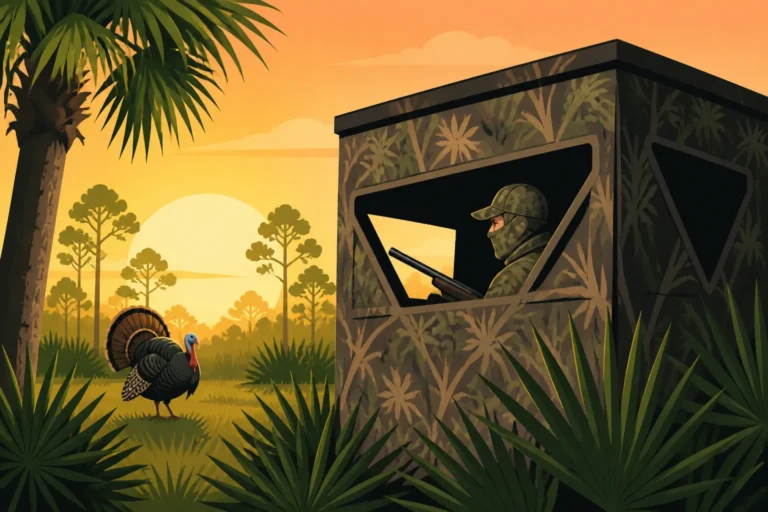
There's nothing quite as frustrating as working a gobbler, only to have him hang up just out of range, suspiciously eyeing your decoy spread before melting back into the palmettos. This common scenario is especially prevalent when you're hunting pressured Osceola birds in Florida, which have seen it all and are notoriously wary. This guide will walk you through the nuances of decoy placement specifically designed to outsmart these cautious turkeys, ensuring your setup is a magnet, not a deterrent.
Understanding the Wary Osceola
Florida's Osceola turkeys are a unique challenge, often considered the most difficult subspecies to tag, especially on public lands or areas with significant hunting pressure. They're not just any turkey; they're smart, they're cagey, and they learn quickly. Successfully luring a pressured gobbler requires a deep understanding of their behavior and an even deeper respect for their keen senses.
The Impact of Hunting Pressure on Turkey Behavior
Imagine you're a gobbler. You've heard countless calls, seen dozens of decoys, and perhaps even had a close call or two with a hunter. Over time, that kind of exposure changes how you react. Pressured Osceolas become less vocal, more reluctant to commit, and incredibly observant. They'll circle setups, looking for anything that seems "off" – a decoy too shiny, a lack of movement, or an unnatural spread. They've learned that a lone hen in an open field might be a trap, or that a strutting gobbler might not be worth fighting for if it feels too easy. This isn't just theory; veteran hunters consistently report these changes in behavior after the first few weeks of the Florida Osceola Spring Season Dates. Their wariness isn't a fluke; it's a survival mechanism honed by interacting with us.
Identifying Signs of a Pressured Gobbler
Before you even think about decoy placement, you need to confirm you're dealing with a truly pressured bird. A fresh gobbler on opening day might come charging in, but a bird that's been worked for weeks behaves differently. You'll hear distinct signs: gobbling from the roost but going silent on the ground, hanging up at 60-80 yards, or responding to calls with soft clucks and purrs instead of thunderous gobbling. Often, they'll gobble once or twice and then simply appear, silently stalking in, or more commonly, silently circling to get a visual from a safe distance. If you've been calling aggressively with no luck, or if birds are consistently "ghosting" you, that's a tell-tale sign. Even a reliable mapping tool like GoHunt can show you areas with high public land traffic, indicating potential pressure before you even step foot in the woods. These observations should inform your entire strategy, especially how you deploy your fakes.
The Osceola's Keen Senses and Caution
Florida's Osceolas possess incredibly sharp eyesight, even more so than deer, and they have an almost 360-degree field of vision. A subtle movement, a flash of unnatural color, or even the sun glinting off a decoy can send them packing. Their hearing is phenomenal too, but it's their eyesight that truly makes them cautious. When you're in the low, flat palmetto scrub or open pine forests where many Osceolas roam, there's often less broken terrain to hide your setup or approach. This means your decoys are going to be under intense scrutiny. They're looking for the slightest deviation from reality. If you're setting up in a location where you typically find Osceola Turkey Range and Genetics, you know how open these areas can be, making realistic placement even more paramount.
Fundamental Decoy Strategies for Shy Gobblers
When dealing with pressured Osceolas, the goal isn't just to put a decoy out; it's to create an illusion that is utterly convincing and non-threatening. This often means breaking away from conventional wisdom and embracing a more subtle, strategic approach.
Less is Often More: Minimalist Decoy Spreads
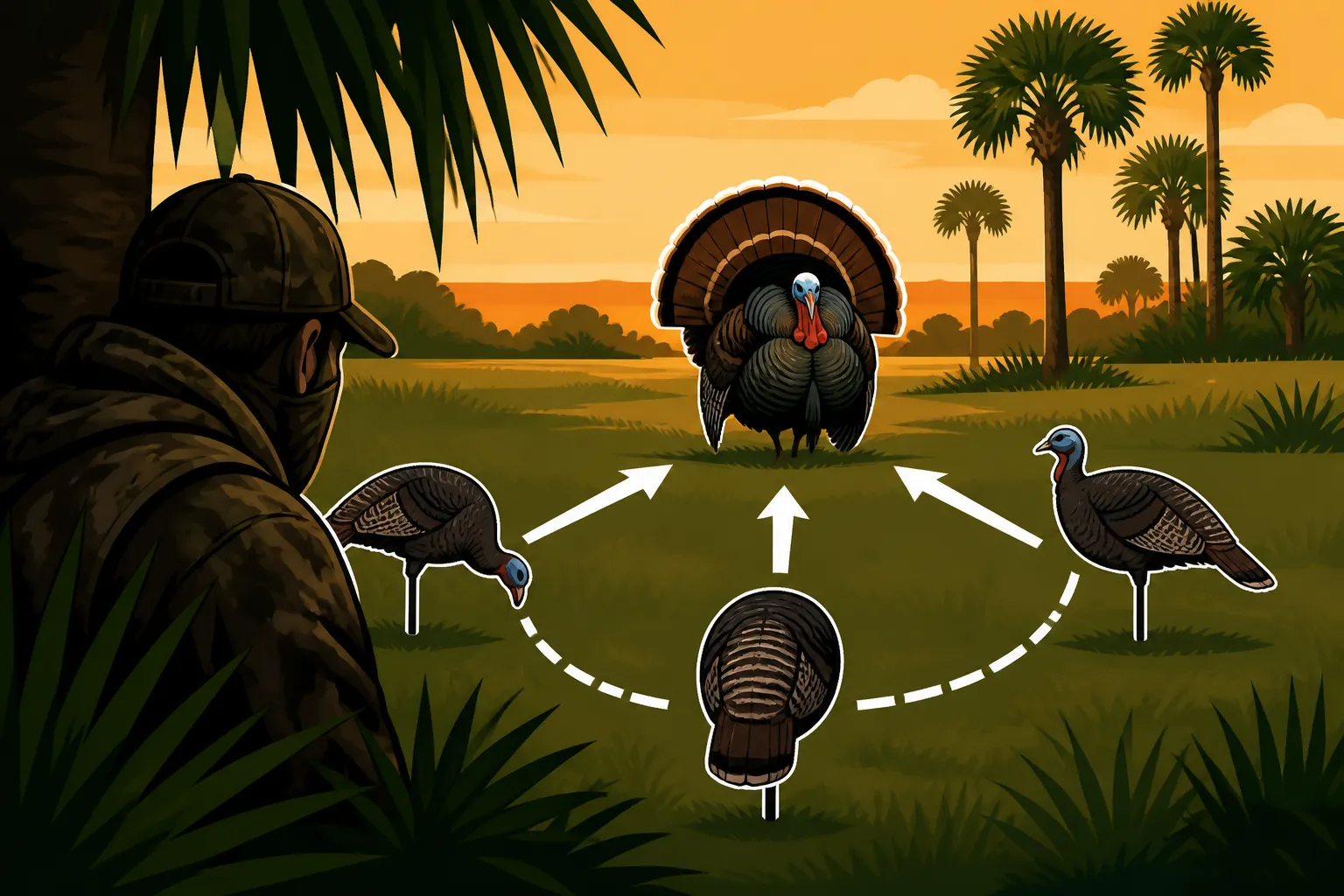
Forget the idea that you need a flock of five hens and two jakes to get a gobbler's attention. For pressured birds, a large spread can be a red flag, signaling an unnatural gathering or a trap. Think about it: a gobbler that's already wary might see a huge group of hens and assume competition is too high, or worse, that something isn't right. Instead, opt for a minimalist approach. One or two decoys, often just a single hen, can be incredibly effective. A lone hen portrays a sense of vulnerability and availability, something a cautious gobbler can't resist investigating. This lone hen should ideally be in a breeding or submissive pose, signaling readiness without appearing overly aggressive. This kind of nuanced setup is a stark contrast to the big, flashy spreads many hunters use, which is exactly why it can work on birds that have seen it all. When you're trying to Call an Osceola Off the Roost, a single, well-placed hen might be all it takes to seal the deal.
The Importance of Realistic Poses and Positioning
Realism is non-negotiable. Flimsy, shiny, or poorly detailed decoys are instantly recognized by wary birds. Invest in quality decoys that accurately replicate feather patterns, colors, and body postures. The pose itself is critical. For pressured birds, avoid aggressive strutters that can intimidate cautious gobblers, making them hang up. Instead, lean towards receptive or submissive hen poses. A "breeding hen" pose, low to the ground, looks vulnerable and inviting. A "feeding hen" or "upright hen" looking around naturally also works well. The goal is to make your decoys look so natural that a gobbler wouldn't think twice about approaching them.
Positioning is just as vital as the pose. Place your decoy(s) facing away from your shooting lane, or quartering slightly. This encourages the gobbler to circle around the decoy to get a better look, presenting a broadside or slightly quartering-away shot as he approaches. Also, ensure your decoys are clearly visible from the direction you expect the gobbler to approach, but not in a way that looks out of place. This means considering the natural openings in the Hunting an Osceola Gobbler in Palmetto Scrub where a bird would typically walk.
Locating Decoys for Optimal Visibility and Approach
Where you place your decoys can make or break your hunt. For pressured birds, you want them visible, but also in a spot that feels safe for the gobbler to approach. Think about natural travel corridors – old logging roads, field edges, or openings in the scrub. Often, putting your decoys 20-30 yards from your actual setup is ideal. This creates enough space for the gobbler to confidently approach and positions him perfectly within shotgun range. Placing them too close can make your setup look crowded and prevent the gobbler from circling for a better look.
Also, consider line of sight. If you're in a relatively open pine flat, a decoy placed on a slight rise or at the edge of a small clearing will be more visible from a distance. However, avoid putting them in the absolute wide open if the birds are particularly shy. Sometimes, the edge of a small palmetto head or a clump of pines provides just enough perceived cover for the gobbler to feel comfortable making his final approach. Remember, these birds are scrutinizing everything, so an obviously fake setup will send them running.
Advanced Tactics for Decoy Deployment
Once you've mastered the fundamentals, it's time to layer in more advanced techniques. These nuances can make all the difference when a gobbler has seen every trick in the book.
Playing the Wind and Sun to Your Advantage
Many hunters overlook the effects of wind and sun, but a pressured Osceola turkey doesn't. Just like deer, turkeys often use the wind to their advantage, especially when approaching a potential breeding opportunity. They might try to circle downwind to get a scent check or simply to approach from a less exposed angle. Place your decoys so that a gobbler approaching downwind will still need to expose himself to your shooting lane.
The sun can be your best friend or worst enemy. Positioning your decoys with the sun at their back, or at your back, can make them "pop" more vividly and appear more natural, especially with a quality decoy brand like Avian-X or Dave Smith Decoys. However, avoid setting up with the sun directly in the gobbler's eyes if he's approaching from that direction, as it can make him squint, causing him to hesitate or divert. Conversely, a decoy glinting unnaturally in direct sunlight can also spook a bird. Always scout your morning and afternoon sun angles.
Utilizing Terrain and Natural Cover
Florida's varied terrain, from dense cypress swamps to open pine uplands, offers unique opportunities for decoy placement. Instead of simply sticking your decoys in the middle of a field, look for subtle features that can enhance the realism and draw the gobbler in. A slight dip in the terrain, the edge of a brush line, or a fallen log can serve as a natural focal point for your decoy spread.
If you're hunting in a palmetto flat, placing a decoy just outside a patch of thicker cover can make it appear as though the hen has just emerged, enticing the gobbler to investigate. In areas with scattered live oaks, such as where you might typically be Setting Up Against a Big Live Oak, consider placing a decoy near the trunk of a tree to simulate a hen feeding or resting. These natural elements provide context and make your setup appear less artificial. Using the GoHunt app to study topographical maps and aerial photos can give you an edge in identifying these subtle terrain features beforehand.
Adjusting for Mid-Day Lulls and Changing Conditions
Pressured gobblers often become quiet and less active during the mid-day hours. This doesn't mean they've disappeared; it means they've become even more cautious. This is when your decoy strategy might need to change. If your morning setup featured a jake, you might consider removing it and switching to a single, very submissive hen. This conveys a less confrontational vibe, potentially appealing to a gobbler that's less inclined to fight during a mid-day lull.
During these quieter periods, subtle movement can be key. A slight breeze making a soft decoy feather quiver, or a fanning motion decoy, can add realism that static decoys lack. Just be incredibly judicious with movement – too much, or unnatural movement, will immediately alert a wary bird. For birds that have been called to heavily, especially during those times When Osceola Gobblers Go Quiet in April, a visual stimulus that doesn't scream "hunter" can often be the only thing to draw them in.
Decoy Types and Their Role in Fooling Pressured Birds
The type of decoy you choose plays a significant role in your overall strategy, particularly when targeting turkeys that are inherently cautious. Each decoy serves a purpose, and knowing which one to deploy and when can drastically improve your odds.
Hen Decoys: The Allure of a Reluctant Mate
For pressured Osceolas, hen decoys are often your most consistent performers. A single hen, especially a breeding or receptive pose, can be incredibly effective. The appeal of a lonely hen, seemingly uninterested in the gobbler's initial advances, can be a powerful draw for a bird that's hesitant to commit to a full-blown flock. The key here is subtlety and realism. A hen that's too upright or aggressive might not convey the right message.
Consider using a submissive or feeding hen decoy. These poses indicate a relaxed, available bird that isn't challenging or intimidating. The gobbler's natural instinct is to breed, and a submissive hen presents an irresistible, low-risk opportunity. A single hen placed 20-25 yards from your position, facing slightly away, can often be enough to get a wary gobbler to step into range. Remember, these birds have seen plenty of action, so a simple, convincing visual often works better than an elaborate setup.
Jake Decoys: Tapping into Dominance and Competition
Jake decoys can be effective, but they come with a higher risk for pressured birds. An upright, aggressive jake can either draw a dominant gobbler in for a fight or, more often with wary birds, make him shy away, not wanting the confrontation. For pressured Osceolas, if you use a jake, consider a smaller, less aggressive posture, perhaps one that's feeding or just observing. The goal is to suggest a young, non-threatening rival that a dominant gobbler can easily run off.
If you choose to use a jake, position it a few yards behind a receptive hen decoy, facing her. This simulates a young male trying to breed a hen, which can ignite a territorial response in a mature gobbler. However, use this setup sparingly and only if you're confident the gobblers in your area are still somewhat aggressive. If they're extremely wary, a jake can be a deal-breaker. Sometimes, leaving the jake out and focusing purely on the hen's allure is the smarter play, especially when you encounter birds that have become quiet after extensive calling, as discussed in When Osceola Gobblers Go Quiet in April.
Strutter Decoys: High Risk, High Reward
Strutter decoys, while visually impressive, are usually best reserved for early season or unpressured birds. For seasoned, pressured Osceolas, a full strutting gobbler can be a massive red flag. They've likely seen enough fake strutters to know something is amiss, or they simply don't want to engage in a confrontation that feels too easy. A dominant gobbler might even try to circle incredibly wide to avoid the perceived threat, giving you no shot opportunity.
However, if you're going for a high-risk, high-reward situation, a realistic full-strut decoy with actual fanning motion can sometimes work if deployed carefully. The motion adds a layer of realism that a static decoy can't replicate. The key is to place it where the gobbler will see it from a distance, giving him time to make up his mind, and ensure it's positioned to force him into your shooting lane. But honestly, for most pressured Osceola scenarios, I'd leave the full strutter at home and rely on the subtle power of hen and less-aggressive jake decoys. If you're hunting public lands where birds get hammered every season, like some areas listed in Hunting Florida's Green Swamp, that strutting decoy might be doing more harm than good.
| Decoy Type/Strategy | When to Use (Pressured Birds) | Why it Works / Considerations |
|---|---|---|
| Single Receptive Hen | Most of the time, especially on public land. | Appears vulnerable and available, minimal threat. |
| Single Feeding Hen | When birds are extremely wary or in mid-day. | Natural, non-threatening, suggests contentment. |
| Pair (Receptive Hen & Submissive Jake) | Occasionally, if birds show some aggression. | Simulates a young male trying to breed, can provoke a dominant gobbler without extreme threat. Jake should be small, non-aggressive. |
| No Decoys (Calling Only) | When birds are completely decoy shy, or in thick cover. | Eliminates any visual red flags, relies solely on auditory appeal. Useful for Run-and-Gun Turkey Tactics on Florida Public Land. |
| Motion Decoy (Fan) | Very sparingly, in open areas, with caution. | Adds realism, but unnatural movement will spook birds immediately. |
| Full Strutter Decoy | Rarely, high risk, perhaps only for truly dominant, aggressive birds if identified. | Can intimidate or spook pressured birds, often makes them hang up or circle excessively wide. |
When you're out there chasing those elusive Florida Osceolas, remember that every bird is an individual, and every hunt is a puzzle. By understanding the impact of pressure and adjusting your decoy tactics accordingly, you'll be well on your way to punching that tag.
Disclaimer
Hunting is an activity with inherent risks. Always follow all local, state, and federal hunting regulations. Ensure you have the proper licenses and permits before hunting. Practice responsible firearm and archery safety. This guide is for informational purposes only and does not guarantee hunting success.