Quail Hunting Behind Pointing Dogs
The thrill of chasing wild bobwhite quail across Florida's diverse landscape is truly something special, but anyone who's tried knows how incredibly challenging it can be to locate these elusive birds. You can walk for miles through prime cover and never kick up a single covey, leading to endless frustration and wasted effort. This comprehensive guide will walk you through everything you need to know about successfully Quail Hunting Behind Pointing Dogs in the Sunshine State, making your next hunt more productive and rewarding.
Understanding Florida Quail and Their Habitat
For many of us, the distinct "bob-white!" call of a quail is synonymous with the wild Florida outdoors. But finding these birds, especially wild ones, often feels like searching for a needle in a haystack. Their populations have seen their ups and downs, but with the right knowledge and a good dog, you can still experience the magic of a covey rise.
The Elusive Bobwhite Quail in Florida
The northern bobwhite quail (Colinus virginianus) is the only quail species native to Florida, and it's a bird of immense beauty and incredible evasive abilities. These small, ground-dwelling birds are masters of camouflage, blending seamlessly into their surroundings. They live in coveys, which are family groups or small social groups, typically numbering from 8 to 20 birds. When a covey is flushed, they explode into the air with a sudden, thunderous whir of wings, scattering in all directions. This explosive flush is precisely what makes hunting them so exciting and why a well-trained pointing dog is an absolute game-changer.
Historically, Florida's landscape was teeming with bobwhites, but habitat loss and fragmentation over decades have certainly taken a toll. If you've spent any time researching the topic, you've likely come across discussions on Florida Bobwhite Quail Decline. However, there are still pockets of excellent habitat, particularly on large private lands managed for quail, and certain public lands where restoration efforts are underway. Understanding where these birds thrive and how they behave is the first step toward a successful hunt.
Prime Florida Quail Habitats
Florida's varied terrain offers a range of habitats that bobwhite quail call home. The key to finding them is looking for a mosaic of open pine woodlands with a good understory of grasses and forbs, interspersed with thicker cover for roosting and escape. Think about pine flatwoods that have been managed with prescribed burns, which are absolutely crucial for maintaining the open, grassy conditions that quail need. These burns remove dense brush, allow sunlight to reach the forest floor, and stimulate the growth of beneficial native plants.
You'll also find quail in areas like improved pastures, agricultural field edges (especially those bordering natural cover), and areas with dense palmetto or gallberry thickets providing overhead protection. The critical factor is a mix of cover, food (seeds, insects), and nesting sites. When you're scouting, whether in person or using tools like aerial maps on platforms such as GoHunt, look for these transitions – the edges where open pines meet dense palmetto or where a field gives way to a brushy fencerow. Knowing Where Florida Quail Numbers Hold Up Best will direct you to the most promising hunting grounds.
The Art of Hunting with Pointing Dogs
Hunting quail without a dog is often a lesson in futility. These birds hold tight, are incredibly difficult to see, and if you flush them manually, you rarely get a good shot. This is where the magic of a pointing dog truly shines, transforming a frustrating walk into an exhilarating dance between hunter, dog, and bird.
Why Pointing Dogs are Essential for Quail
Pointing dogs are specifically bred and trained to locate game birds by scent and then "point," indicating the birds' exact location by freezing in a statuesque pose. This allows the hunter to walk in, flush the birds, and get a clean shot. Without a pointing dog, you'd be blindly walking through cover, likely flushing birds out of range or not flushing them at all. The dog's superior nose can pick up the subtle scent of a quail covey long before you ever would, even if the birds are holding tight in dense vegetation.
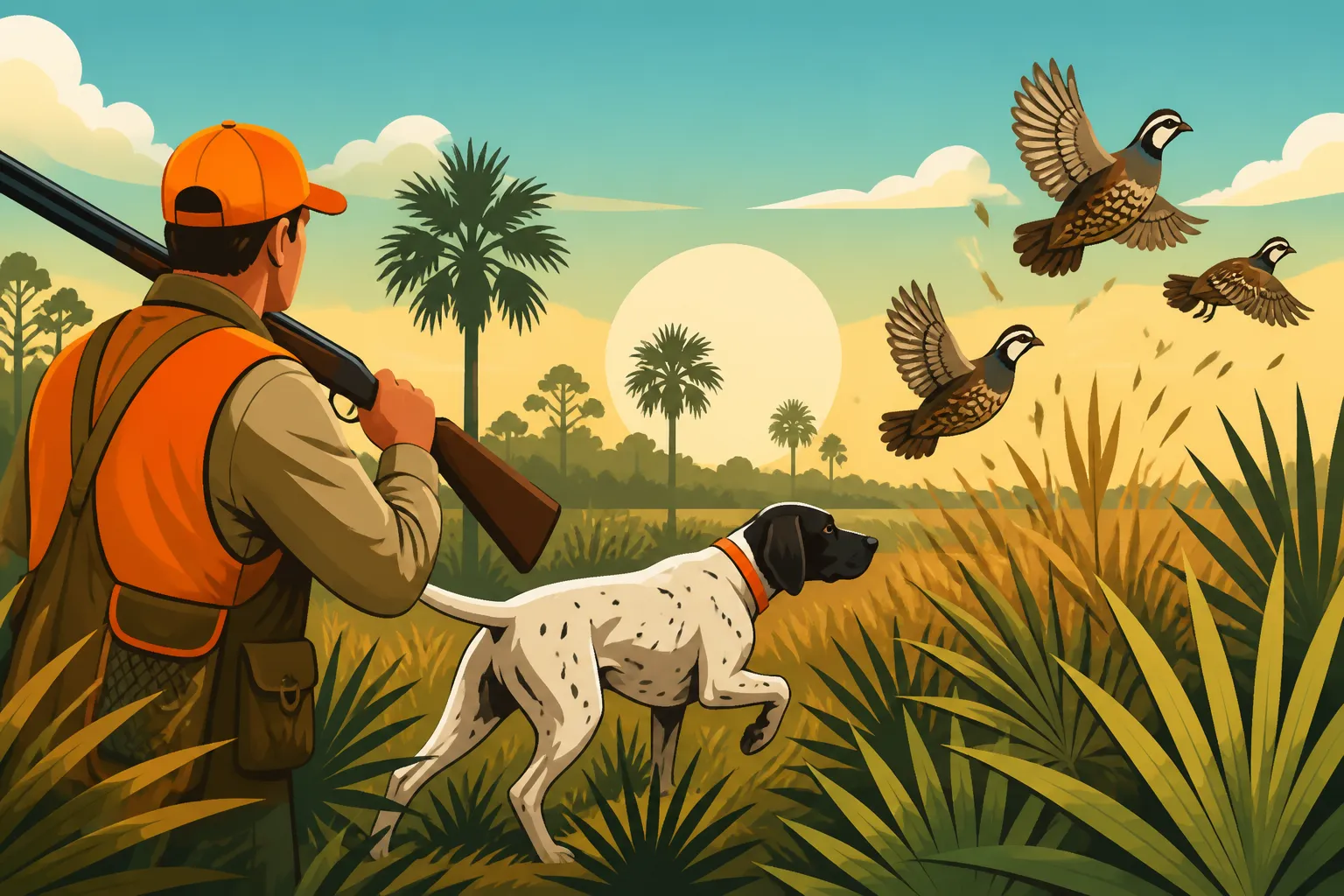
Imagine a crisp Florida morning: your dog, a lean English Pointer, is quartering diligently through a pine savannah. Suddenly, he slams on point, rigid as a statue, nose aimed directly into a clump of wiregrass and palmetto. You walk in slowly, heart pounding, preparing for the flush. A moment later, a dozen bobwhites explode from the cover, wings beating furiously. That moment, facilitated entirely by your dog, is the essence of upland hunting. It’s an experience that truly connects you to the historical methods of Small Game and Predator Hunting in Florida.
Training and Handling Your Quail Dog
Bringing a well-trained pointing dog into the field is a partnership. It takes time, patience, and consistency to develop a reliable quail dog. Puppy selection is critical; look for breeds known for their pointing instincts, such as English Pointers, German Shorthaired Pointers, Brittanys, and Setters. While some hunters prefer to train their own, many opt for professional trainers, especially for nuanced tasks like honoring another dog's point, steadying to flush, and retrieving.
A good quail dog needs to cover ground efficiently, hunt into the wind, and have a strong desire to find birds. Crucially, they must be biddable, meaning they respond to your commands even when their instincts are screaming "bird!" E-collars are an invaluable tool for communication and reinforcement in the field, allowing you to direct your dog, correct undesirable behavior, and ensure their safety. Understanding your dog's capabilities and limitations, and communicating effectively, are paramount to a successful hunt. Remember, your dog isn't just a tool; they're your most important hunting partner.
Gear and Tactics for Florida Quail Hunts
Beyond your canine companion, having the right gear and understanding specific tactics for Florida's environment will significantly increase your odds of success. Florida quail hunting often involves walking substantial distances in varying terrain, so comfort and preparedness are key.
Essential Equipment for a Successful Day
First, your shotgun. A fast-swinging, lightweight shotgun in 20 gauge or 28 gauge is ideal for the quick, close-range shots quail often present. Chokes like Improved Cylinder or Skeet are perfect for opening patterns quickly in dense cover. Ammunition should be a light load of 7.5 or 8 shot. Don't forget your hunting vest or strap vest, which should have ample space for shells, water for you and your dog, a whistle, and a game bag for your harvest.
Footwear is crucial. Invest in comfortable, waterproof upland boots, as Florida's terrain can be wet and uneven, with sand, palmetto roots, and occasional cypress knees. You'll be covering ground, so blisters are your enemy. Eye protection and blaze orange are non-negotiable for safety. While Florida only requires Florida Blaze Orange Requirements on public lands during general gun season, it's always a good idea when hunting with dogs and other hunters. A GPS device or a mapping app like GoHunt on your phone can be a lifesaver for navigating unfamiliar territory, especially if you're exploring Florida Wildlife Management Areas.
Here's a quick overview of essential gear:
| Item | Description | Why It's Essential |
|---|---|---|
| Shotgun | 20 or 28 gauge, lightweight, fast-swinging, IC or Skeet choke | Quick shots on flushing birds, comfortable for long walks |
| Ammunition | Light loads, 7.5 or 8 shot | Effective on small birds, minimizes meat damage |
| Upland Vest | Comfortable, plenty of pockets, game bag, water bottle holders | Carries essentials, distributes weight, holds birds |
| Water & Bowl | Ample supply for dog and hunter | Prevents dehydration, critical in Florida's heat |
| E-collar | Reliable, waterproof, with sufficient range | Dog communication, safety, and control |
| Whistle | Pealess design for consistent sound | Long-range dog commands, especially in wind |
| GPS/Mapping App | Handheld GPS unit or smartphone app (e.g., GoHunt) with downloaded maps | Navigation, marking points, preventing getting lost |
| Waterproof Boots | Comfortable, ankle support, good traction | Protects feet from moisture and rough terrain, prevents fatigue |
| Blaze Orange | Vest, hat, or other outerwear | High visibility for safety, especially with multiple hunters |
| Eye Protection | Shooting glasses or sunglasses | Protects eyes from brush, errant pellets, and UV light |
Working Cover and Approaching the Point
Once your dog is on point, the real tactical game begins. You need to approach the dog carefully, observing its body language to anticipate the flush. Walk past the dog, positioning yourself between the dog and where you expect the birds to fly, if possible, allowing your dog to remain steady. As you near the suspected location of the covey, be ready. Quail can hold incredibly tight, sometimes even letting you step almost on top of them before flushing.
When the covey explodes, focus on a single bird. Resist the urge to "coot" at the entire group. Swing through the bird smoothly, pull the trigger, and be ready for a second shot if necessary. After the initial covey rise, mark where the birds scattered. This is where your dog's retrieve comes in, and potentially, opportunities for singles. Singles often hold even tighter than coveys, offering excellent follow-up hunting. Look for isolated cover, brush piles, or dense clumps of palmetto where a single bird might hide. Always be mindful of your shooting lanes and the location of your hunting partners and, of course, your dog.
Ethical Considerations and Conservation
As hunters, we are stewards of the land and its wildlife. Our actions in the field directly impact the future of hunting and the health of game populations. This is especially true for bobwhite quail, whose populations require thoughtful management.
Respecting the Resource and Landowners
Florida's wild quail population, while resilient, is not limitless. Practicing good sportsmanship means knowing your limits, adhering to bag limits (which are generally very conservative for wild quail), and ensuring every bird you shoot is accounted for. It's not just about the harvest; it's about the entire experience and respecting the animals we pursue. Leave no trace, pack out what you pack in, and dispose of any trash properly.
If you're fortunate enough to hunt on private land, whether through an informal agreement or on a dedicated Quail Hunting Florida Plantation Country, landowner relations are paramount. Always ask permission, respect their property, and follow any specific rules they may have. A positive relationship with a landowner can open up incredible hunting opportunities for years to come. Even on public lands, such as those found on Florida Wildlife Management Areas, always be respectful of other users and the regulations specific to that area.
Supporting Quail Habitat Restoration
Perhaps the most significant contribution we can make as quail hunters is to support habitat restoration efforts. Habitat loss is the primary driver behind the decline of wild bobwhite quail. Organizations like Tall Timbers Research Station & Land Conservancy are doing incredible work in the Florida-Georgia region, pioneering fire ecology and promoting land management practices that benefit quail. When you purchase hunting licenses, a portion of those funds often goes towards conservation efforts, so by participating in hunting, you're already contributing.
Beyond that, consider volunteering with local conservation groups, participating in habitat workdays, or advocating for responsible land management policies. Understanding Florida Quail Habitat Restoration Efforts is key to ensuring that future generations can also experience the thrill of hunting these magnificent birds with pointing dogs. The health of the bobwhite quail population is a direct reflection of the health of Florida's wild lands, and as hunters, we have a vital role to play in its preservation.
Disclaimer
Hunting is an inherently dangerous activity. Always prioritize safety, understand and follow all Florida Fish and Wildlife Conservation Commission (FWC) regulations, and consider completing a Florida Hunter Education Requirements course. This guide is for informational purposes only and does not supersede official hunting regulations or safety guidelines.