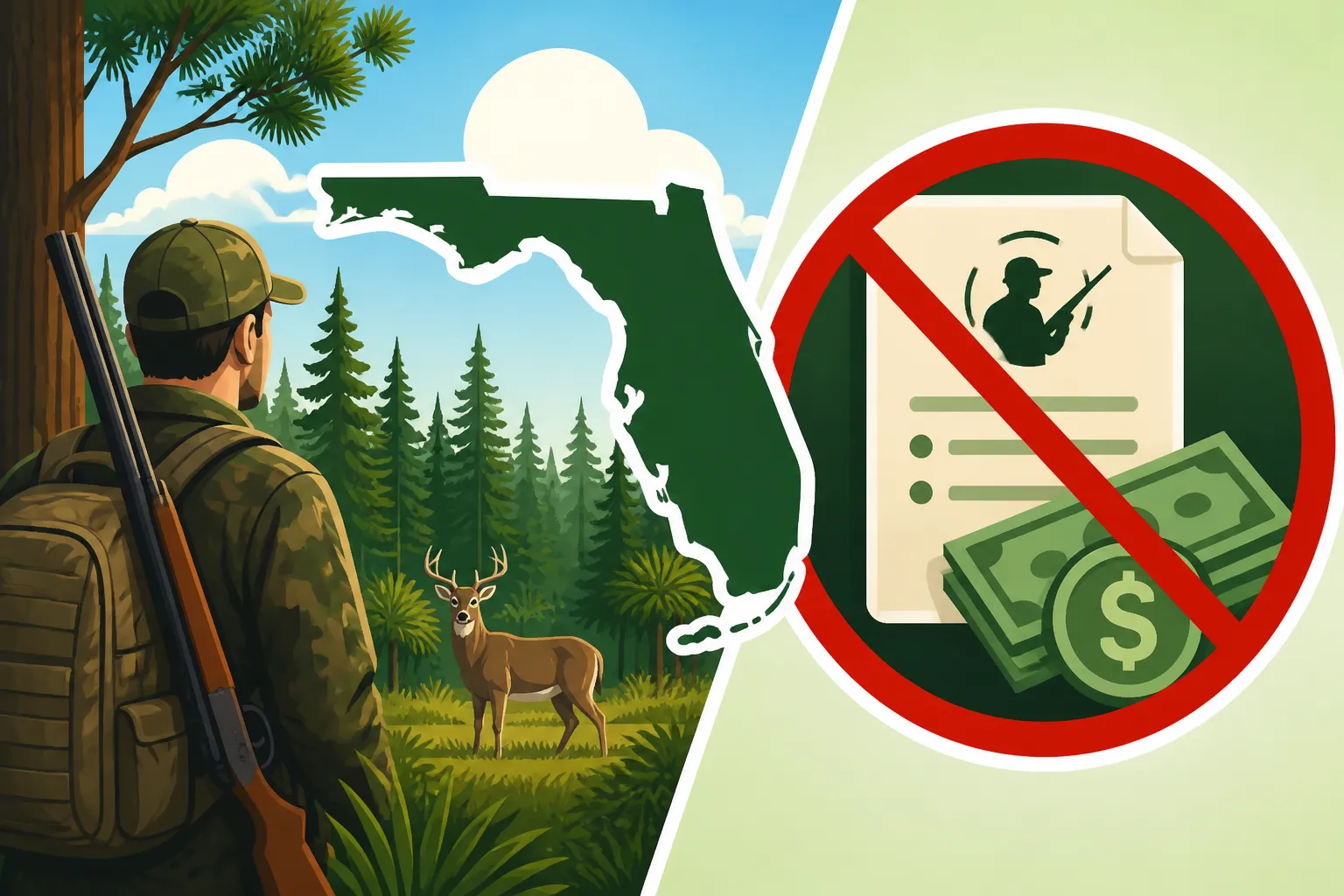
Why National Forests Skip the WMA Permit Fee
It can feel like you need a law degree to understand all the different permits and rules for hunting Florida's public lands. One of the most common head-scratchers for new and even experienced hunters is the distinction between Wildlife Management Areas (WMAs) and National Forests, especially when it comes to the dreaded WMA Management Area Permit. This guide will walk you through exactly why you don't need that state-level WMA permit when you're pursuing game in one of Florida's beautiful National Forests, helping you navigate the system with confidence and less confusion.
Understanding Florida's Public Land Jigsaw Puzzle
Florida offers an incredible array of public hunting opportunities, a true blessing in a state often associated with crowded beaches and theme parks. However, this wealth of access comes with a somewhat complex system of land management. You've got state lands, federal lands, county lands, and even private lands enrolled in public access programs. Each one often has its own set of rules, seasons, and, yes, permit requirements. It's like trying to put together a puzzle where half the pieces come from different boxes, but once you understand the core differences, it all starts to make sense.
Diverse Land Management Agencies
Imagine a sprawling buffet of public lands, but each serving station is run by a different chef with their own recipes and ingredients. In Florida, our public hunting grounds are primarily managed by a few key agencies. We have the Florida Fish and Wildlife Conservation Commission (FWC), which oversees the state's vast network of Wildlife Management Areas. Then there's the U.S. Forest Service, responsible for our National Forests. Beyond that, you might encounter lands managed by the Florida Forest Service (State Forests), Water Management Districts, or even local county parks departments.
Each of these agencies operates under a different mandate and funding structure, which directly impacts how they manage hunting access and what permits they require. The FWC, for instance, focuses on managing wildlife populations and providing recreational opportunities on lands specifically designated for wildlife management. The U.S. Forest Service, on the other hand, manages national forest lands for multiple uses, including timber production, recreation, and wildlife, all under federal guidelines. This fundamental difference in oversight is the root cause of why certain permits apply to one type of land but not another.
The Importance of Knowing Who Manages What
Getting to know the specific managing agency for the parcel of land you intend to hunt is paramount. It’s not just about permits; it's about understanding season dates, allowable weapons, vehicle restrictions, camping rules, and even what species you can pursue. Forgetting to check the specific regulations for a particular WMA or National Forest can lead to fines, citations, or, worst of all, a ruined hunt.
For example, a blanket rule for one type of public land in Florida might not apply to another. Archery season dates, for instance, can vary significantly between a state WMA and a National Forest, even if they're geographically close. You might find that a certain WMA has a quota system for deer, requiring a drawn permit, while a nearby National Forest allows general public access with just a base license. Tools like Using the FWC Public Hunting Map or digital mapping apps become indispensable here, as they often layer this crucial information, helping you quickly discern whose rules you're playing by. Before you even pack your truck, a quick check of the FWC website or the specific National Forest's site is always a smart first step.
The Role of Wildlife Management Areas WMAs and Their Permits
Many Florida hunters are familiar with Wildlife Management Areas, or WMAs. These are the workhorses of public hunting in our state, offering a huge amount of access across diverse habitats. But with that access often comes a specific permit requirement that can sometimes confuse hunters looking at other public lands, like our National Forests. Let's break down what WMAs are and why their permit system is in place.
What Exactly is a WMA?
Think of a WMA as a dedicated space, managed by the state, where wildlife conservation and public recreation – especially hunting – are primary goals. These areas come in all shapes and sizes, from vast tracts of swamp and pinelands to smaller, intensively managed plots. While some WMAs are owned outright by the state, many are actually leased from private landowners or managed cooperatively with other public entities like Water Management Districts or even the U.S. Military. This collaborative approach allows the FWC to stitch together a mosaic of habitats, creating opportunities for hunters from the Panhandle down to the Everglades.
The FWC invests significant resources into managing these WMAs. This includes habitat improvements like prescribed burns, planting food plots, controlling invasive species, and maintaining access roads and infrastructure. All of this work is designed to enhance wildlife populations and ensure a quality hunting experience for Floridians and non-residents alike. When you step onto a WMA, you're stepping onto land that is actively managed with hunting in mind, which is a wonderful thing for those of us who cherish our time afield. You can find more details about these important areas in Florida Wildlife Management Areas.
The Purpose of the WMA Management Area Permit
So, why the extra permit for WMAs? It boils down to funding and management. The revenue generated from the sale of the WMA Management Area Permit directly contributes to the operational costs of these areas. This includes everything from biologist salaries and law enforcement patrols to equipment maintenance and habitat restoration projects. It’s a critical funding mechanism that helps keep these lands productive and accessible.
Beyond funding, the permit helps the FWC manage hunter numbers and gather important data. While many WMAs offer general public access during specific seasons, some employ quota systems to prevent overcrowding and maintain a quality hunting experience, particularly for popular species like deer and turkey. The WMA permit is often a prerequisite for applying to these quota hunts, and it ensures that anyone actively hunting on a WMA has contributed to its ongoing management. It's an investment in the future of Florida hunting, directly supporting the lands we enjoy.
When and Where You Need This Permit
The rule of thumb is quite simple: if you are hunting on a designated Wildlife Management Area, you need a valid WMA Management Area Permit. This is in addition to your regular hunting license and any species-specific permits or stamps you might require, like a deer permit or a turkey stamp. This permit applies across the board, whether you're chasing squirrels, ducks, deer, or hogs on WMA land. It’s essentially your admission ticket to hunt within that specific management system.
There are very few exceptions to this rule for WMAs. Even if you're on a multi-use area that also has hiking trails or fishing access, if you're there to hunt during open season, the WMA permit is required. Don't confuse it with other federal passes or licenses; this one is specific to the FWC's WMA program. If you're unsure whether a piece of property falls under the WMA umbrella, always check the FWC's official public hunting map or their website. The cost is usually quite reasonable, especially when you consider what it contributes to public hunting access. You can learn more about this specific requirement in The Florida WMA Management Area Permit.
National Forests: A Different Federal Beast
While WMAs are managed by the state, Florida is also home to three magnificent National Forests: Ocala, Apalachicola, and Osceola. These are vast expanses of federal land, managed by the U.S. Forest Service, and they operate under a distinct set of rules and a different permit structure. Understanding this difference is key to knowing why the WMA permit isn't necessary here.
Ocala, Apalachicola, and Osceola: Florida's National Forests
Let's talk about our federal treasures. The Ocala National Forest, located in the heart of the state, is famous for its sandy pine scrub, numerous springs, and a good population of deer and hogs. It’s a popular spot for everything from camping and hiking to, of course, hunting. Ocala National Forest Hunting details some of the unique aspects of hunting this area. To the west, in the Panhandle, lies the Apalachicola National Forest, a massive, diverse ecosystem featuring longleaf pine forests, swamps, and river bottoms. This area is known for excellent deer, turkey, and hog hunting, and it's a completely different experience than the Ocala. You can find more about it in Apalachicola National Forest Hunting. Finally, the Osceola National Forest, also in North Florida, offers a more remote and rugged hunting experience, with dense forests and swampy areas that challenge even the most seasoned hunter. Osceola National Forest Hunting delves into its unique opportunities.
These three National Forests collectively offer hundreds of thousands of acres of public hunting land, each with its own character and hunting opportunities. They represent a significant portion of our public land resources, and their federal designation is crucial to understanding their permit requirements.
Federal Management and Funding
Unlike WMAs, which fall under Florida's state management, National Forests are managed by the U.S. Forest Service, an agency within the U.S. Department of Agriculture. This means their policies, regulations, and funding come from the federal government, not the state of Florida. The U.S. Forest Service has a broad mission, encompassing sustainable forestry, conservation, recreation, and wildlife management across the nation's 154 national forests and 20 national grasslands.
The funding for National Forests comes from congressional appropriations, various user fees (like campground fees or special permits for activities like timber harvesting), and revenue generated from natural resource sales. This federal funding structure means they don't rely on state-specific permits like the Florida WMA Management Area Permit to cover their operational costs for general access. They operate on their own budget, separate from Florida's state wildlife agencies. This distinction is the core reason why their access permit requirements differ so significantly.
The Federal Recreation Pass vs. State Permits
Sometimes, hunters new to federal lands might get confused by the concept of "federal recreation passes" like the America the Beautiful Pass. It's a fair question to ask if this is needed for hunting. Generally, these passes cover entry fees to national parks, national wildlife refuges, or access to specific developed recreation sites (like picnic areas or boat launches) within national forests.
However, for general hunting access in Florida's National Forests, these federal recreation passes are not required. Your base Florida hunting license, along with any necessary state stamps or permits for specific species, is typically sufficient. While you might need to pay a small fee for certain designated campgrounds or specific recreation areas within a National Forest, simply walking into the woods to hunt during an open season usually doesn't require an additional federal pass. It's a common misconception, but rest assured, you typically won't need to break out your National Parks Pass to chase a deer in the Ocala.
Why the WMA Permit Doesn't Apply to National Forests
This is the million-dollar question for many hunters, and the answer is rooted in the fundamental differences between state and federal land management. It's not about making things complicated; it's about two distinct government entities managing their respective lands.
Separate Jurisdictions, Separate Rules
The most straightforward answer is simply that National Forests and Wildlife Management Areas fall under entirely different jurisdictions. National Forests are federal property, governed by federal laws and managed by a federal agency (the U.S. Forest Service). Wildlife Management Areas, on the other hand, are state property (or state-managed property), governed by Florida state laws and managed by a state agency (the FWC).
Think of it like this: your driver's license lets you drive in any state, but if you want to fish in a specific lake, you need that state's fishing license. The WMA Management Area Permit is a state-level requirement for state-managed lands. The federal government, through the U.S. Forest Service, has its own rules for hunting within its boundaries. While hunters still need a valid Florida hunting license to hunt in a Florida National Forest (because hunting is regulated by the state), the WMA permit is irrelevant to federal land. The FWC has no authority to levy an access fee on federally managed property, and the U.S. Forest Service doesn't require a state-specific WMA permit for its lands. It's a clear line of demarcation between state and federal authority.
Funding Mechanisms for National Forests
As we touched on earlier, the funding for National Forests operates independently of state-level hunting permits. The U.S. Forest Service receives its appropriations from the federal government, along with revenue from various federal programs and activities on forest lands. These funds cover the extensive management costs, including forest health initiatives, trail maintenance, fire suppression, and wildlife habitat projects.
Because the National Forests have their own, federally sourced budget to manage the land and wildlife, they don't rely on the WMA Management Area Permit to support their operations. The permit you purchase for a WMA helps fund state-level initiatives and management specifically for those state-designated areas. It's not a general "public land access" permit for all of Florida; it's specifically for lands managed under the WMA program. This separate financial infrastructure is why you can enjoy the vastness of Ocala or Apalachicola without needing to buy an FWC WMA permit.
What You Do Need to Hunt in a National Forest
Okay, so you don't need the WMA permit. That's a huge relief for many! But what do you need to hunt legally and ethically in a Florida National Forest? The requirements are actually quite simple and similar to what you'd need for most other hunting scenarios in the state:
- Florida Hunting License: This is your foundational permit, required for anyone pursuing game in Florida, whether on private or public land. There are options for residents and non-residents, and various durations. You can check out Florida Resident License Options for more information.
- Deer Permit (if hunting deer): A separate permit for taking deer, which is usually included in certain license packages or purchased separately.
- Turkey Stamp (if hunting turkey): Required in addition to your license if you're pursuing Florida's turkeys.
- Migratory Bird Permit & Federal Duck Stamp (if hunting waterfowl): If you're chasing ducks or geese in the sloughs and swamps of a National Forest, these federal and state requirements are still mandatory.
- Hunter Education: If you were born after May 31, 1975, you'll need to have completed a hunter education course or be hunting under a valid Florida Apprentice Hunter License Rules. This is a state-wide requirement.
- Respect for Regulations: Always, always, always check the specific regulations for the particular National Forest you plan to hunt. While they are federal lands, Florida's FWC sets the statewide hunting seasons and bag limits, which the National Forests adhere to. However, each National Forest might have specific local rules regarding vehicle access, camping, target shooting, or even certain areas that are temporarily closed to hunting. A quick visit to the FWC website's specific National Forest section or the U.S. Forest Service site is always a good idea.
In essence, your Florida hunting license and species-specific permits are your primary requirements. The federal government manages the land, but the state of Florida regulates the actual taking of game.
| Feature | Wildlife Management Areas (WMAs) | National Forests (NF) |
|---|---|---|
| Managing Agency | Florida Fish and Wildlife Conservation Commission (FWC) | U.S. Forest Service (USDA) |
| Jurisdiction | State of Florida | Federal Government |
| Permit Required | Florida WMA Management Area Permit + Base License | Base Florida Hunting License + Species Permits |
| Funding Source | State appropriations, WMA permit fees | Federal appropriations, various federal user fees |
| Primary Goal | Wildlife conservation, public hunting access | Multiple-use management (timber, recreation, wildlife) |
| Examples | Green Swamp WMA, J.W. Corbett WMA | Ocala NF, Apalachicola NF, Osceola NF |
Navigating Regulations and Planning Your Hunt
The difference between WMAs and National Forests regarding permit fees is just one piece of the puzzle. Successfully navigating Florida's public lands requires diligent research and smart planning. It can feel overwhelming at first, but with the right tools and mindset, you can unlock incredible hunting opportunities.
Essential Tools for Public Land Hunters
In today's world, technology has made public land hunting much more accessible, but you still need to know how to use it wisely. Gone are the days of relying solely on paper maps, though a physical map is still a fantastic backup. Digital mapping applications have become indispensable for public land hunters.
For instance, onX Hunt is a powerful tool that overlays land ownership, public land boundaries, and even specific unit boundaries onto satellite imagery. This means you can see exactly where you are in relation to WMA lines, National Forest boundaries, and private property, preventing accidental trespass – a huge peace of mind for any hunter. These apps also allow you to mark waypoints, track your movements, and scout from your couch, identifying potential access points and bedding areas before you ever set foot in the woods. Similarly, platforms like GoHunt offer comprehensive data, analysis, and mapping features that can give you an edge, especially when planning a more complex trip or scouting for specific species. While these tools aren't a substitute for boots-on-the-ground scouting, they drastically improve efficiency and safety on unfamiliar terrain.
Always Check the Latest Regulations
I cannot stress this enough: regulations change. Season dates, bag limits, and specific area rules can be updated annually, or even mid-season if conditions warrant. Never rely on last year's regulations or hearsay from a buddy. Always go directly to the source. For Florida, that means the official Florida Fish and Wildlife Conservation Commission (FWC) website. They publish annual hunting regulations booklets, often broken down by specific WMAs and National Forests, that are absolutely essential reading.
The FWC website also has dedicated sections for each National Forest, outlining the specific hunting seasons and rules that apply within those federal boundaries. It’s also wise to check the U.S. Forest Service website for the particular National Forest you're interested in for any non-hunting-related closures or alerts, such as prescribed burns or road closures. A few minutes of research before your trip can save you a lot of headache and potentially a citation. Scouting Florida Public Land Before Season is a great resource to help you plan your pre-hunt research.
Respecting the Resource and Other Users
Hunting on public land is a privilege, and it comes with the responsibility to respect the land, the wildlife, and your fellow outdoor enthusiasts. While you might be focused on deer or turkeys, remember that others are often using these same public lands for hiking, birdwatching, horseback riding, or simply enjoying nature. Be mindful of their presence, and always practice ethical hunting behaviors. This includes knowing your target, being absolutely certain of your shot, and understanding the rules about Florida Firearms Discharge Setback Rules and minimum distances from residences or roads.
Leaving no trace is another critical aspect. Pack out everything you pack in, and perhaps even a little more. Dispose of game carcasses responsibly according to regulations. Keep noise levels down, especially near designated campsites or trails. Public land is a shared resource, and the more we show respect for it and for each other, the more likely these valuable hunting opportunities will remain available for generations to come. Your actions out there reflect on all hunters, so let's make it a good reflection.
Disclaimer
This article is for general informational purposes only and does not constitute professional advice. Laws, prices and regulations vary by location and change over time. Consult a qualified professional for guidance on your specific situation.