Decoying Wood Ducks in a Cypress Slough
Hunting wood ducks in the thick, often impenetrable cypress sloughs of Florida can be an incredibly frustrating experience if you don't know where to start. These birds are notoriously fast, agile, and masters of concealment, often disappearing into the dense canopy or slipping away through the cypress knees before you even get a shot. This guide is here to unravel the mysteries of decoying these beautiful birds in their preferred cypress slough habitat, offering detailed strategies from scouting to setup to ensure your next outing is more productive and a whole lot less disheartening.
Understanding the Cypress Slough Ecosystem for Wood Ducks
Florida's cypress sloughs are truly unique environments, characterized by their slow-moving, tannin-stained waters, towering bald cypress trees, and a rich understory of diverse vegetation. For wood ducks, these sloughs aren't just a place to visit; they're home, a critical part of their annual lifecycle, providing everything they need to thrive. Understanding this complex ecosystem is the first step to successfully decoying them.
Why Wood Ducks Love Sloughs
Wood ducks are distinctively adapted to forested wetlands, and cypress sloughs perfectly fit their bill. These areas offer an abundance of food sources, unlike the open marshes preferred by many other duck species. Acorns, especially from water oaks and other mast-producing trees, are a primary draw, as are various aquatic insects, seeds, and plants. The dense canopy provides incredible cover from avian predators like hawks and owls, making them feel secure. Furthermore, the numerous tree cavities within the cypress and other hardwoods offer ideal nesting sites, a crucial factor for their reproductive success. It's a combination of food, cover, and nesting opportunities that makes these sloughs irreplaceable for wood ducks. They're not just passing through; they're ingrained in the fabric of this habitat, even more so during periods like the early teal season.
Seasonal Changes and Water Levels
The dynamic nature of Florida's weather, particularly rainfall, directly impacts water levels in cypress sloughs, which in turn dictates wood duck behavior. During the fall and winter hunting seasons, lower water levels can concentrate ducks into smaller, deeper pools, making them easier to locate. Conversely, high water levels can scatter birds across vast areas, making them harder to pinpoint. Early season rains might flood new areas, creating fresh feeding opportunities that wood ducks will quickly exploit. Monitoring these water level fluctuations is crucial for scouting. A slough that was teeming with birds one week might be bone dry or too spread out the next, completely changing their patterns. This constant change is part of the challenge and excitement of Waterfowl Hunting Florida's Marshes, including these cypress ecosystems. You might find that a slough is prime after a good rain, drawing birds in to feed on newly submerged vegetation and invertebrates.
Essential Gear for Cypress Slough Decoying
Decoying wood ducks in a slough requires a specific arsenal of gear. This isn't your typical open-water duck hunt, and showing up with the wrong equipment can quickly turn a promising morning into a miserable slog. From the right decoys to proper concealment, every piece of your setup needs to be tailored to the unique demands of this environment.
Decoy Selection and Placement Strategies
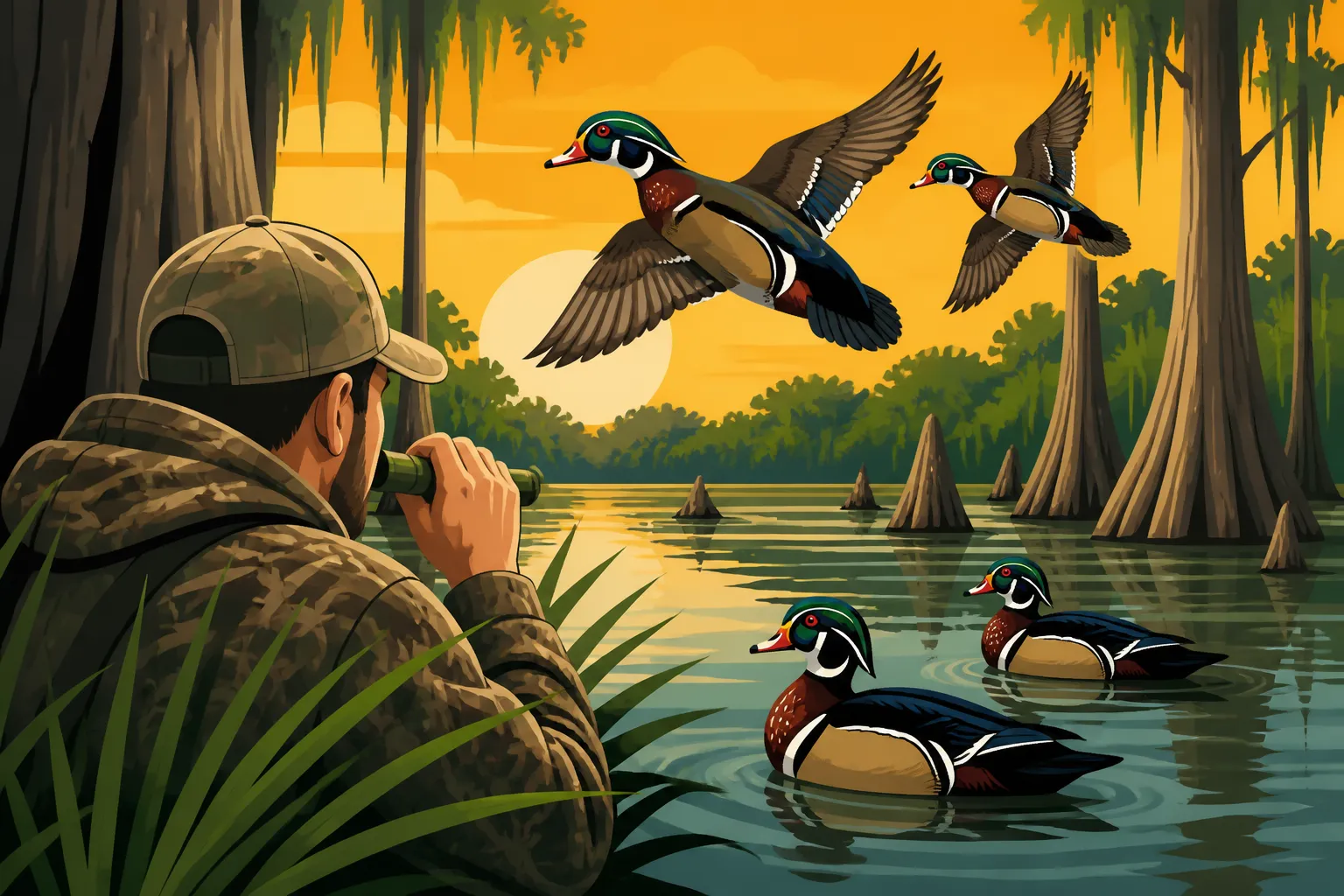
When it comes to wood duck decoys, realism is key, but so is variety and proper placement. You'll want a spread that mimics a natural gathering of wood ducks. For numbers, a dozen to two dozen decoys is often sufficient for these smaller, more intimate settings, but sometimes as few as six well-placed decoys can do the trick. A mix of drakes and hens, with perhaps a few preener or feeder decoys, adds to the lifelike appearance. Placing decoys too tightly can look unnatural, so spread them out a bit, leaving a clear landing zone. Consider using a few motion decoys, like a spinner, on a tree branch just above the water line or a jerk string to create ripples, mimicking activity. Position some decoys right up against the cypress knees or partially submerged logs, reflecting where actual wood ducks would naturally loaf and feed. Remember, the goal is to make your spread look inviting and safe.
Waders, Boats, and Blinds for Slough Hunting
Navigating and setting up in a cypress slough usually means getting wet and staying hidden. Quality chest waders are non-negotiable, often insulated given the cooler morning temperatures during duck season. For getting your gear in, a small, quiet boat like a canoe, kayak, or even a specialized duck boat designed for shallow water is invaluable. These allow you to transport decoys, guns, and blinds without making too much noise or disturbing the birds. As for blinds, natural cover is often your best bet. A simple net blind or ghillie suit can work wonders when tucked into existing vegetation. Don't underestimate the power of simply standing motionless amongst the cypress trees, especially if your camouflage blends seamlessly. Remember, wood ducks are excellent at spotting anything out of place, so absolute concealment is paramount. Think about how you'll access the hunting area without spooking birds, often needing to move through shallow, sometimes muddy water. Many hunters rely on detailed aerial maps, like those available through GoHunt, to identify potential boat access points or areas with dense enough tree cover to build a makeshift natural blind.
Mastering Decoy Spreads and Calling Techniques
Effective decoying and calling are an art form, especially when targeting the wary wood duck in their slough strongholds. It's not just about throwing out some blocks or blowing a call; it's about understanding the nuances of their behavior and replicating them to draw birds into shooting range.
Realistic Decoy Spreads for Different Scenarios
The ideal decoy spread isn't a one-size-fits-all solution; it adapts to the specific slough conditions you're facing. If you're hunting a tight, winding slough, a small, natural-looking spread might be best, mimicking a few birds quietly feeding. In a slightly wider area, you might use a J-hook or U-shaped spread, leaving an open "landing strip" for incoming ducks. Always consider the wind direction, as ducks prefer to land into the wind. Place your landing zone so that incoming birds will present broadside or slightly quartering shots as they cup their wings.
| Spread Type | Description | Best Use Case | Key Consideration |
|---|---|---|---|
| Loose Cluster | 6-12 decoys, spread naturally with 3-5 feet between each. | Small pockets, tight sloughs, mimicking feeding activity. | Focus on natural spacing, mix drakes/hens. |
| J-Hook / U-Shape | Decoys form a J or U, leaving a clear landing zone in the curve. | Wider sloughs, open water pockets, directing birds to a specific spot. | Landing zone should be downwind from your blind. |
| Buddy System | Small groups of 2-3 decoys placed together, separated by distance. | Very sparse cover, mimicking pairs or small family groups. | Use with minimal decoys for a less intimidating look. |
| Edge Spread | Decoys placed directly against cypress knees, stumps, or logs. | Mimicking birds loafing and feeding in shallow cover. | Blends into the natural environment, enhances realism. |
Don't forget to include a few "feeder" decoys with their heads down, as this posture signals safety and a good food source to passing birds. Strategically placing a few decoys just out of the main spread can also make the group look larger and more inviting. This kind of nuanced setup is what makes a difference when Hunting Florida Cypress Swamp Edges.
Effective Wood Duck Calling and Timing
Wood duck calling is often misunderstood. Unlike mallards or pintails that respond to loud, aggressive calling, wood ducks are typically more subtle. Their calls are less complex, consisting primarily of a "whistle" or "squeal" and a "squealing flight call." The key is knowing when and how much to call. Often, a few soft contented calls are all that's needed to reassure birds already in the area or to grab the attention of a distant flock. When you see birds flying overhead, a series of quick, sharp "squeals" can be effective at turning them. Once they commit and start to drop, go silent or offer just a soft, reassuring "peet" call. Overcalling can easily spook these shy birds. Listening to actual wood ducks in the wild can greatly improve your timing and tone. Remember, the goal is to sound like another wood duck, not a distressed bird. Understanding the seasonal patterns of Florida Duck Season Split Dates can also influence calling, as early season birds might be less pressured than those later in the year.
Scouting and Setup for Success
You can have the best gear and calling skills in the world, but if you're not in the right place, it won't matter. Scouting is absolutely paramount when hunting wood ducks in cypress sloughs. These birds are creatures of habit but can also be incredibly opportunistic, moving to new feeding grounds as conditions change.
Pre-Season Scouting for Active Sloughs
Successful wood duck hunting starts long before opening day. Pre-season scouting involves identifying which sloughs are actively being used by wood ducks. Look for signs like droppings on logs or cypress knees, feathers on the water's edge, and disturbed vegetation from feeding. Most importantly, spend time glassing (from a distance!) at dawn and dusk to observe flight patterns. Where are they flying into? Where are they coming from? Note any consistent flight corridors. Look for mature cypress trees with cavities, which indicate potential roosting or nesting sites. Also, scout for key food sources like submerged acorns or buttonbush seeds. A good app, like GoHunt, can be invaluable for identifying potential slough areas on public land, helping you zoom in on specific pockets of cypress and evaluate terrain. Pay close attention to water levels and try to find sloughs with stable, accessible water.
Approaching and Setting Up Your Blind Quietly
Wood ducks are incredibly sensitive to disturbance, so your approach and setup must be as stealthy as possible. Arrive well before first light, giving yourself ample time to navigate the slough and get settled. Minimize noise at all costs – no splashing, no loud talking, no clanging of gear. If you're using a boat, paddle or pole silently. When choosing your blind location, prioritize natural cover. A blind built into a dense cluster of cypress knees or a thick stand of cattails will be far more effective than an exposed pop-up blind. Ensure your blind breaks up your silhouette and offers good shot angles over your decoy spread and the likely approach path of the ducks. Once in your blind, remain absolutely still and quiet. Any movement, especially against the bright morning sky, will be immediately noticed by these sharp-eyed birds. Hunters often find that the first half-hour of daylight is when the most action occurs, making early, quiet setup vital, especially when considering Decoying Wood Ducks at First Light.
Hunting Strategies and Safety Considerations
Once you've done your homework and set up your perfect spread in a prime slough, it's time to execute the hunt. But even with the right strategy, factors like weather and safety can make or break your day. Cypress sloughs, while beautiful, can also present unique challenges for hunters.
Best Times of Day and Weather Conditions
Wood ducks are notorious early risers, often moving at first light and again just before sunset. The first hour of legal shooting light is almost always the most productive, as birds leave their roosts to feed. If you miss the early morning flight, a mid-morning lull is common, but don't give up entirely; sometimes small groups will continue to filter in. Overcast days and light drizzles can often be ideal, as they tend to keep ducks flying lower and longer. Strong winds can also be beneficial, forcing birds to fly lower and creating choppy water that helps your decoys look more natural. Cold fronts can trigger migratory movements, pushing new birds into your area. However, extreme cold can freeze sloughs, making hunting impossible. Always check the weather forecast and adjust your plans accordingly. This often means being adaptable, a key lesson in all types of Florida hunting.
Navigating the Slough and Retriever Considerations
The uneven, often soft bottom of a cypress slough, combined with numerous cypress knees, stumps, and submerged logs, makes navigation challenging. Always move slowly and deliberately, testing the depth with your waders or a long stick. Be aware of your surroundings to avoid stumbling or falling into deeper pockets. If you bring a retriever, ensure they are conditioned for this type of terrain. The sharp edges of cypress knees can cut paws, and thick vegetation can quickly tire out a dog. Train your dog to respond to hand signals and verbal commands even when out of sight, as they may disappear into the thick cover after a retrieve. Always have a whistle ready. It's important to remember that retrieving a downed bird in such thick cover can be incredibly difficult, even for a well-trained dog. Make sure your dog is up-to-date on all vaccinations and has a well-fitting, brightly colored vest for visibility. Knowing how to properly navigate these environments is crucial for your safety and success, and it's a skill you build over many outings, perhaps refining it further with insights from articles like Reading a Marsh for a Morning Flight.
Disclaimer
Always consult the Florida Fish and Wildlife Conservation Commission (FWC) regulations before engaging in any hunting activities. Seasons, bag limits, and specific area rules can change, and it is the hunter's responsibility to be aware of and comply with all current regulations.