Grunt Calls in a Florida Oak Hammock
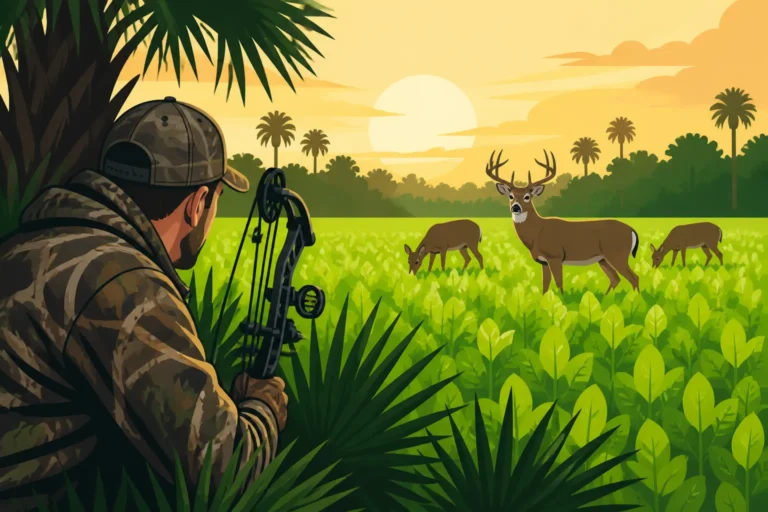
The frustration of trying to communicate with a wary Florida buck can be immense, especially when you're tucked deep within a dense oak hammock. The thick cover, swirling thermals, and the sheer elusiveness of these swamp ghosts make it feel like your calls simply vanish into the humid air. This guide will dive deep into the art of using grunt calls effectively in Florida's challenging oak hammock environments, helping you draw those elusive bucks into your range.
Understanding the Florida Oak Hammock Environment
Florida's oak hammocks are unique ecosystems, often feeling like islands of higher ground amidst the swamps, palmetto flats, and pine uplands. These areas are magnets for deer, providing critical food, water, and bedding cover. However, their very nature also presents significant hurdles for hunters relying on vocalizations.
The Unique Challenges of Hammock Hunting
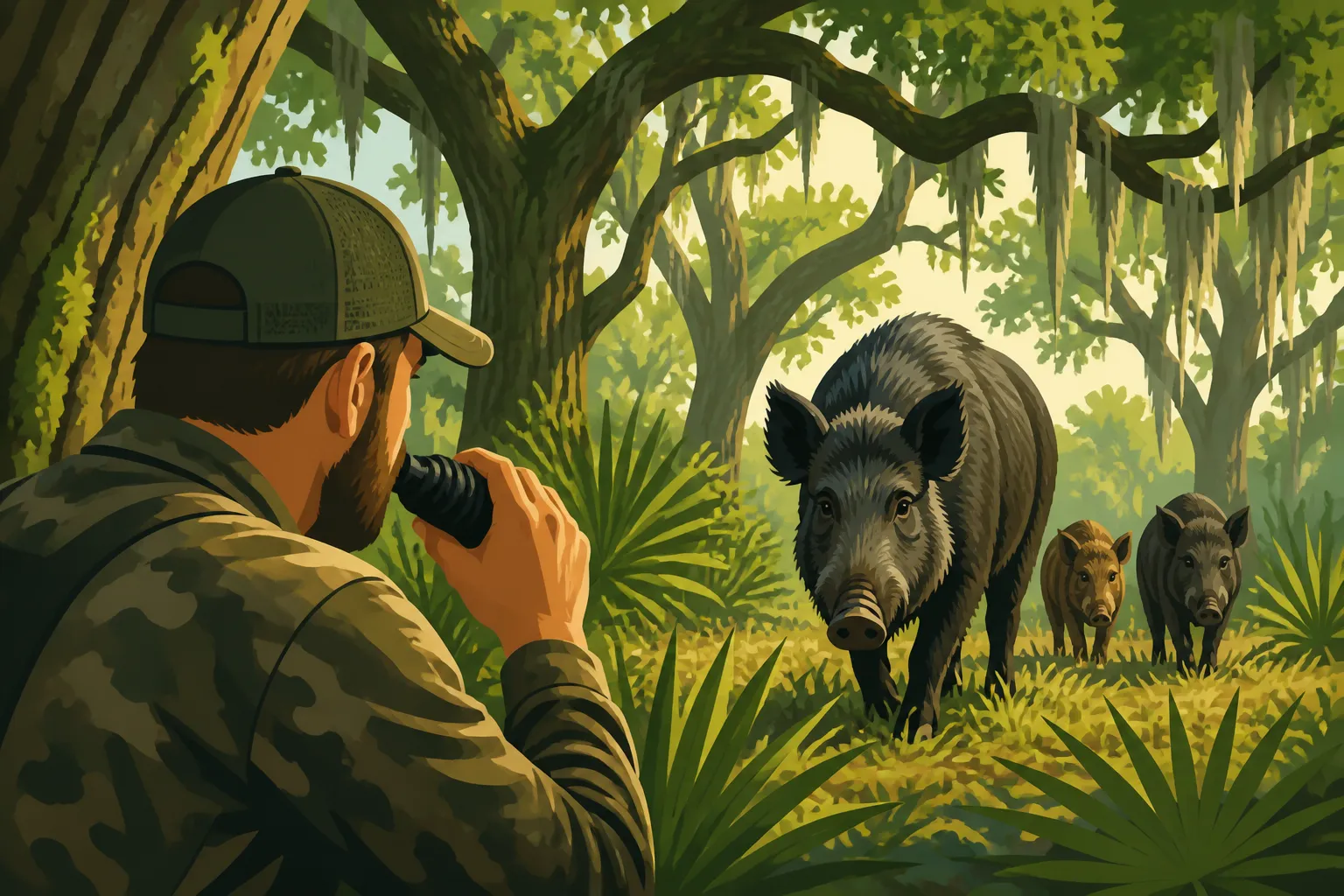
Imagine being in a typical oak hammock – towering live oaks draped in Spanish moss, a thick understory of saw palmetto, ferns, and sometimes dense titi or gallberry bushes. Visibility is often limited to a few dozen yards, even on a clear day. This dense vegetation is fantastic for deer to hide in, but it can be a nightmare for a hunter trying to project sound or pinpoint the exact location of a responding buck. Humidity also plays a role, sometimes dampening sound transmission and making it harder for calls to carry. A buck might be just 50 yards away, but the sound of your grunt could be muffled or distorted, making it difficult for him to zero in on you.
Furthermore, a buck responding to your call isn't always going to march right out into the open. He's more likely to circle downwind, trying to catch your scent before committing. In a dense hammock, he can slip through the palmettos and thickets like a ghost, completely unseen until he's either busted you or you've missed your shot opportunity. This means your setup, call volume, and sequence need to be incredibly precise and adaptable to these specific conditions. It’s not like calling in an open Midwestern timber stand; here, every rustle of leaves could be a deer, or just a squirrel.
How Deer Use Oak Hammocks
Deer, particularly mature bucks, rely heavily on oak hammocks throughout the year. These areas provide sanctuary, offering excellent thermal cover during the heat of the day and protection from predators. During the cooler months, especially when acorns drop, hammocks become prime feeding zones. The varied diet available, from acorns to tender new growth, keeps deer coming back.
During the rut, these hammocks transform into critical staging and breeding grounds. Bucks will cruise through them, scent-checking for does, creating scrape lines along sandy roads, and establishing their dominance. A mature buck might bed down in the thickest part of a hammock, only venturing out during low light to feed or check scrapes. This makes them ideal places to use a grunt call because you're targeting a buck who is already in a receptive, territorial, or curious mindset. A well-placed grunt can either challenge a dominant buck or pique the curiosity of a younger one looking for an easy doe. Remember, when you're deep in one of these areas, you're often right in their living room, so subtlety can be key.
Mastering Grunt Call Techniques in Hammocks
Using a grunt call isn't just about making noise; it's about creating a conversation that speaks directly to a buck's primal instincts. In the close confines of an oak hammock, this requires finesse and an understanding of the local deer dialect.
Choosing the Right Grunt Call for Florida Conditions
When you're hunting in Florida's humid and often wet conditions, the type of grunt call you choose can make a difference. Many calls on the market are designed for drier, colder climates. For Florida, you want something that's durable, waterproof or water-resistant, and capable of producing a range of realistic sounds without getting gummed up by moisture or debris. Brands like Primos and Flextone offer a variety of options that perform well. Look for calls with adjustable reeds or tubes that allow you to change the pitch and tone easily. A versatile call lets you mimic a young buck, an aggressive mature buck, or even a doe bleat if needed.
Consider calls with a soft, rubberized exterior that won't make noise if it bumps against your stand or gear. Electronic calls are generally not legal for deer hunting in Florida, so stick to mouth-blown or shake-style calls. A good starting point is a simple, open-reed grunt tube that allows for varied volume and tone. For finding the right gear and making informed choices, many hunters use resources like GoHunt to research and compare different products. The key is to practice with your call until the sounds you produce are indistinguishable from real deer vocalizations.
Optimal Grunt Sequences and Volume
Volume control is paramount when calling in a Florida oak hammock. Unlike open fields where you might try to project sound for hundreds of yards, a hammock hunt requires a much more conservative approach. Start with soft, subtle grunts. Think of a curious buck easing through the palmettos rather than a full-on challenge. If a buck is close, even a slightly too loud grunt can send him bolting.
Typical Grunt Sequences:
- Soft, Searching Grunts: 2-3 short, soft grunts, followed by 30-60 seconds of silence. Repeat. This mimics a buck cruising and looking for does. Ideal for blind calling.
- Challenge Grunts: If you've spotted a buck that's not responding to softer calls, or you want to provoke a territorial response, try a slightly louder, longer grunt, sometimes followed by a snort-wheeze if your call allows (or a separate snort-wheeze call). Use sparingly.
- Doe in Estrous Bleat (followed by grunts): A doe bleat can sometimes pique a buck's interest, especially during the peak of the rut. Follow it with a few soft grunts, as if a buck is trailing her.
The timing of your calls also matters, depending on Florida's varied deer zones. For instance, if you're Hunting Florida's Zone B Late Rut, bucks are likely to be more responsive to aggressive challenge grunts as they're actively competing for does. Conversely, during the pre-rut or early season in Zone A, soft, social grunts might be more effective as bucks are still establishing dominance and not yet in a full-blown chasing frenzy. Always give a buck plenty of time to respond, especially in thick cover. They might be circling downwind or slowly approaching through dense vegetation.
Situational Grunting: When and How to Adapt
The most effective grunt callers are those who can adapt their technique to the specific situation unfolding in front of them. It's not a one-size-fits-all approach, especially not in a dynamic environment like a Florida oak hammock.
- Buck Hung Up in Sight: This is a classic scenario. You see a buck, but he's standing just out of range, perhaps behind a curtain of palmettos, or simply refusing to come closer. In this instance, your best bet is a very soft, subtle grunt. Just one or two short "blaaat" sounds, barely audible, as if the buck he's hearing is close and trying to entice him to take a few more steps. Avoid anything aggressive; you don't want to spook him. Sometimes, a single, drawn-out "lost fawn" bleat, if your call can make it, can sometimes provoke a doe or a curious buck to investigate.
- Blind Calling in Dense Cover: When you're in a promising area – maybe you've identified a good travel corridor or you're positioned near Finding Sign in a Florida Oak Hammock – but haven't seen any deer, blind calling can be productive. Start with a series of soft, social grunts (2-3 grunts, then silent for a minute or two). Vary the pitch occasionally to mimic different bucks. The goal isn't to draw a deer in quickly, but to make your presence known subtly. Think about how a buck might slowly cruise through an oak hammock. You want to emulate that natural soundscape.
- Responding to Natural Deer Sounds: Always be listening. If you hear a deer moving, a rustle in the leaves, or even a distant snort, adjust your calling strategy. If a deer snorts, it might be a warning sign, so back off for a bit. If you hear rustling, a short, soft grunt can sometimes stop a deer in its tracks, allowing you a shot opportunity. If you hear another buck grunt naturally, try to mimic his grunts, either with a slightly more aggressive tone to challenge him or a softer tone to invite curiosity, depending on the situation and your desired outcome. This responsiveness is what truly sets apart experienced callers.
Setting Up for Success: Location and Wind
Even the most realistic grunt call won't work if you're not in the right spot or if the wind betrays your position. In Florida's often-flat terrain and dense cover, these elements become even more critical.
Identifying Prime Grunt Call Locations
To maximize your chances, you need to be where the bucks are, and where your call can be heard without giving you away. Oak hammocks typically have natural travel corridors within them, often subtle trails winding through the palmettos or along slight rises in elevation. Look for these "pinch points" or funnels where deer movement is concentrated. These are ideal ambush spots. If you've done your Scouting Florida Public Land Before Season, you might have already located these.
Furthermore, focus on the edges of oak hammocks, especially where they transition into pine flats, cypress swamps, or old clear-cuts. Deer often stage along these edges before entering open areas or using them as highways to move between different bedding and feeding zones. A buck traveling along a hammock edge might be more likely to respond to a grunt call, as he's already in motion and potentially looking for action. Scrape lines are another goldmine; a grunt near an active scrape can often trigger a territorial response from the buck that made it. Using mapping tools, like those provided by GoHunt, can help you pinpoint these topographical features and transition zones before you even step foot in the woods, allowing you to formulate a more effective game plan.
Playing the Wind and Thermals in Flat Terrain
Florida's relatively flat landscape means that wind patterns and thermals can be tricky and unpredictable. Unlike mountainous regions where thermals predictably rise in the morning and fall in the evening, here they can swirl, especially within the confines of a dense hammock. Always hunt with the wind in your favor, meaning your scent should be blowing away from where you expect deer to approach. This often means being extremely patient or repositioning if the wind shifts.
In the early morning, as the air warms, thermals will generally start to rise. This means your scent will be carried upward and away. As the day cools in the evening, thermals tend to fall, carrying your scent downwards. However, dense vegetation and variations in elevation, even subtle ones, can create microclimates that cause localized swirls. Pay close attention to leaves, fine dust, or a scent indicator to constantly monitor the wind direction. If a buck responds to your grunt, he will almost certainly try to circle downwind to scent-check the source of the call. Anticipate this movement and set up accordingly, placing yourself in a position to intercept him before he winds you. Utilizing a ground blind can also help contain your scent and obscure your movement, especially when Using a Ground Blind on Florida Public Land.
Common Mistakes and Advanced Tips
Even seasoned hunters can fall into traps when it comes to calling. Being aware of these pitfalls and incorporating advanced strategies can significantly improve your success rate in Florida's unique hunting environment.
Avoiding Overcalling and Unrealistic Sounds
One of the biggest mistakes hunters make, especially with grunt calls, is overcalling. Think about it: how often do bucks truly grunt intensely for extended periods? Not usually. If you're constantly blowing on your call, you sound unnatural, like a robot, or worse, you might make deer call-shy. Deer are incredibly intelligent and quickly learn what's genuine and what's not. If a buck hears an incessant stream of grunts from one spot, he’s likely to become suspicious and avoid the area entirely. Instead, use your call sparingly and purposefully. Let a few soft grunts hang in the air for a minute or two, then be quiet and listen intently.
Another crucial aspect is producing realistic sounds. Many commercially available grunt calls can sound generic or even outright fake if not used correctly. Spend time listening to actual deer grunts – there are plenty of recordings online. Practice mimicking those sounds with your call. The pitch, duration, and cadence of your grunts should sound like a living, breathing deer. Avoid anything that sounds too shrill, too monotone, or too loud. The more natural you sound, the more confident a buck will be in approaching. If you are struggling with realism, try different calls or watch instructional videos to refine your technique.
Pairing Grunts with Other Tactics
While grunt calls are powerful tools, they are often most effective when used in conjunction with other hunting tactics. Integrating these elements creates a more compelling and realistic scenario for a curious or territorial buck.
- Scent Control is Non-Negotiable: This cannot be stressed enough, especially in Florida's hot and humid climate. Even the best grunt call won't overcome human scent. Use scent-eliminating sprays, wash your clothes in scent-free detergent, and store them properly. Play the wind as diligently as possible. If a buck comes in and catches your scent, your hunt is over.
- Rattling in Conjunction: A combination of grunts and rattling can be incredibly potent, particularly during the pre-rut and rut phases. A few light clacks of antlers, followed by some subtle grunts, can mimic a sparring match between two bucks, often drawing in other deer curious about the commotion. Just remember that Rattling Volume in Thick Florida Scrub needs to be adjusted for the dense cover; you don't need to crash antlers together like you're clearing a football field.
- Visual Cues (Decoys): While not always practical in dense hammocks, if you have a slightly more open area within or on the edge of a hammock, a buck decoy can be a game-changer. A visual stimulus, combined with realistic grunts, can be irresistible. A simple bedded doe or a small buck decoy can be enough to draw a dominant buck in for a closer look, especially if he hears grunts suggesting another buck is with a doe. Always position your decoy to offer a clear shot opportunity to you, with the decoy facing away from you, as the buck will likely approach the decoy head-on.
- Scrapes and Rubs: If you're hunting an area with active scrapes and rubs, a grunt call can be particularly effective. Grunting near a scrape can trigger a territorial response, as if another buck is invading his turf. You can also apply scent to mock scrapes to further enhance the realism. Pay attention to Scrape Lines Along a Sand Road and set up downwind of them.
Ultimately, the goal is to create a believable scenario. A lone grunt might work, but a subtle grunt followed by the rustle of leaves, maybe a little rattling, and a visual of another deer can be far more convincing to a wary Florida buck. It's about becoming part of the natural environment, not just an intruder making noise.
Florida Grunt Call Guide
| Call Type/Method | Best Use in Hammocks | Optimal Timing | Notes for Florida Conditions |
|---|---|---|---|
| Soft Grunts | Blind calling, stopping a moving deer, curious buck in sight | Pre-rut, Rut, Post-rut | Low volume, frequent pauses. Less likely to spook. |
| Challenge Grunts | Wary buck in sight not responding to soft calls, provoking a territorial response from a dominant buck. | Peak Rut | Use sparingly, combine with aggressive body language (if a decoy is present). |
| Doe Bleats | Piquing curiosity, enticing a buck during the rut. | Pre-rut, Rut | Often followed by soft grunts to mimic a buck trailing a doe. |
| Grunt/Rattle Combo | Simulating a sparring match, challenging dominant bucks. | Pre-rut, Rut | Keep rattling volume low in dense cover. |
| Contact Grunts | Encouraging deer to reveal themselves, subtle communication. | All Season | Short, infrequent grunts. Good for blind calling in thick areas. |
Disclaimer
Hunting is an inherently dangerous activity. Always prioritize safety, understand and adhere to all local, state, and federal hunting regulations, and ensure you have the necessary licenses and permits. The information provided here is for educational purposes only and should not replace proper hunter education or professional guidance. Be aware of your surroundings, respect wildlife, and know your target and what is beyond it.