Calling an Osceola Off the Roost
There’s a unique kind of heartache that comes with listening to a booming Osceola gobble from his roost tree, only to have him fly down the opposite direction, or worse, just glide silently away without a peep once his feet hit the ground. It’s a frustration many Florida turkey hunters know all too well. Unlike their Eastern cousins in denser woods, Osceola gobblers often roost in tall, open pines or cypress trees, giving them a commanding view and an inherent wariness that makes coaxing them directly to a call right off the limb an art form. This guide is all about tackling that challenge head-on, giving you the strategies to convince that roosted bird to come your way.
Understanding Osceola Roosting Behavior
Calling an Osceola off the roost is arguably one of the most challenging aspects of hunting these unique birds. They're smart, they're wary, and Florida's diverse habitats play a huge role in how they choose to start their day.
Why Osceolas Are So Challenging Off the Roost
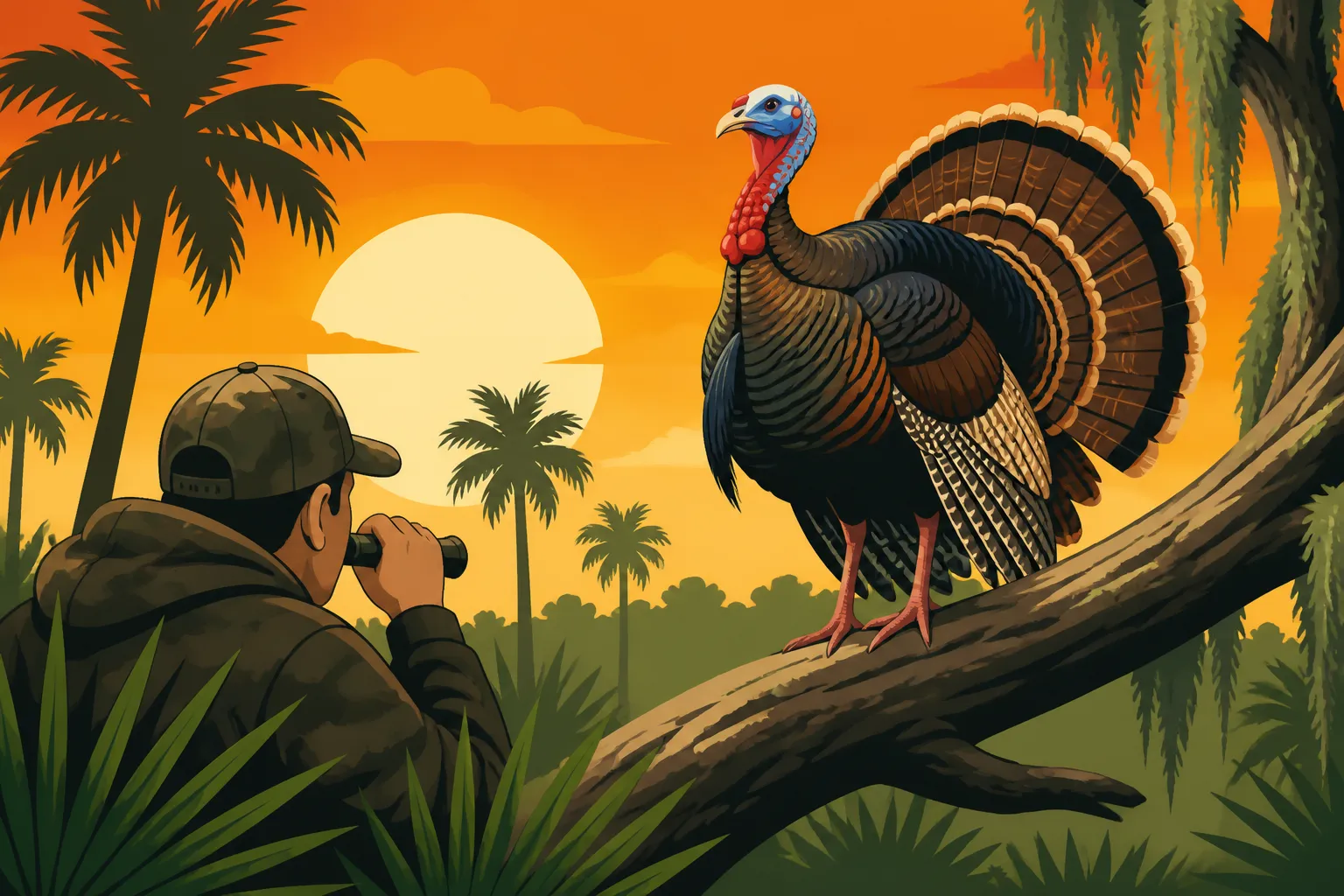
Osceolas, endemic to peninsular Florida, have a reputation for being one of the toughest turkeys to tag, and their roosting habits are a big reason why. They often pick the tallest pine, cypress, or even a prominent live oak with an open canopy, giving them an expansive view of their surroundings. From this vantage point, they can survey the land for predators like bobcats and coyotes, and also assess potential dangers from two-legged critters – us hunters! When you set up under a roosted bird, they can often see far more than you realize once the sun starts to climb.
Another factor is their tendency to fly down and gather hens. A lone gobbler might be more susceptible to a convincing call, but if he's roosted with a harem of hens, he's far less likely to abandon his flock for a single distant call. He knows those hens are coming down with him, and he might just want to meet them on the ground before he commits to anything. They'll often pitch down silently, gather their flock, and then start moving, leaving you high and dry wondering what went wrong. The dense Florida scrub, palmetto heads, and thick cypress swamps also provide plenty of visual barriers, allowing them to slip away undetected if they feel pressured or suspicious.
Typical Roosting Habits and Locations
Osceola gobblers are creatures of habit, especially when it comes to their nightly routine. They'll typically fly up to roost in the same general areas, often favoring tall stands of pine, especially those on the edges of open fields, clear-cuts, or cypress swamps. These elevated perches offer security and a clear flight path up and down. You'll often find them roosting over water, like along creek bottoms or swamp edges, as another layer of defense against ground predators. Knowing these preferred spots is half the battle when you're trying to locate a bird the evening before your hunt.
The flight path an Osceola takes off the roost is usually quite predictable. They'll drop down from their perch, often gliding for a considerable distance before touching down. This means they aren't necessarily landing right under the tree, but rather 50 to 100 yards or more away, depending on the terrain and what they see. They prefer clear landing zones where they can quickly assess their surroundings before committing to walking. Identifying these likely fly-down zones the evening before is critical to a successful morning setup. A smart hunter will consider these flight patterns, especially if they’ve been Scouting Florida Public Land Before Season to learn the lay of the land.
Pre-Dawn Scouting and Setup for Roosted Birds
Success on a roosted Osceola starts long before the first hint of daylight. It requires diligent scouting and a meticulously planned, stealthy approach.
Locating the Roost the Evening Before
You simply can't consistently call a roosted Osceola unless you know exactly where he's sleeping. This means putting in the time the evening before your hunt. As the sun begins to set, head to areas where you've seen or heard turkeys before. Park your vehicle well away from where you expect to hear them. Then, quietly slip into position, listening intently. Just before they fly up to roost, gobblers will often let out a final string of gobbles. Even better, listen for the distinct sound of wings beating heavily as they fly up into the trees. It’s an unmistakable sound. Once they’re settled, they might gobble a few more times before dark.
You can use locator calls like an owl hoot or a crow call sparingly to try and provoke a shock gobble, helping you pinpoint their exact tree. However, be careful not to overdo it, as you don't want to alert the birds to your presence. Many hunters use mapping applications like GoHunt to mark potential roost trees or areas where they've heard birds in the past. This digital scouting can be invaluable for identifying prime Florida Turkey Roost Tree Preferences in advance, allowing you to narrow down your search in the evening. Don't be afraid to put some miles on your boots the day before to confirm where the birds are.
Strategic Early Morning Approach and Setup
Once you've pinpointed a roosted bird, the real chess match begins. Your early morning approach needs to be as quiet and stealthy as a Florida panther on the prowl. Arrive at least an hour before first light, giving you ample time to navigate in the dark without bumping the bird. Every rustle, every snapped twig, every cough can ruin your hunt. Use a good headlamp with a red or green light setting to preserve your night vision and minimize spooking wildlife.
As you approach, constantly think about the bird's likely fly-down path. Where will he land? Where are the obstacles? What's the wind doing? Position yourself so that the gobbler will have to come past you, or directly to you, rather than landing behind you or off to the side, giving him an escape route. Aim to set up 75-150 yards from the roost tree, depending on the terrain and how thick the cover is. You want to be close enough to hear him and for him to hear your subtle calls, but not so close that he can spot you the second he opens his eyes.
Utilize natural cover. A thick palmetto clump, the base of a large cypress, or a sprawling Setting Up Against a Big Live Oak can offer concealment. Remember to clear out any small sticks or leaves from around your feet so you can shift without making noise. Once you're in position, sit still and soak in the pre-dawn atmosphere. The next few minutes could define your hunt for an Osceola, a truly magnificent bird of the Florida wilderness.
Calling Tactics to Entice an Osceola Off the Roost
Calling a gobbler off the roost is a delicate dance, requiring precision, patience, and the ability to read the bird's mood. It's not about volume; it's about subtle persuasion.
The Art of the Soft Wake-Up Call
When an Osceola first stirs on his limb, the last thing he wants to hear is a hen screaming at him. Think about what a turkey sounds like naturally waking up. It's soft, almost sleepy. Your initial calls should mirror this. Start with very soft tree yelps – just two or three soft, inquisitive notes, maybe a minute apart. Follow that with a few quiet clucks and purrs, mimicking a hen still on her roost, stretching and looking around. The goal is to let the gobbler know there's a hen in the vicinity, but not to pressure him. You're simply a part of the morning chorus, not an urgent invitation.
Timing is key here. Wait until you hear the gobbler's first natural gobble from the roost. This signals he's awake and receptive. After his gobble, wait a few minutes, then offer your soft calls. Don't respond to every gobble; let him wonder where that hen is. If he gobbles again, wait. This builds anticipation and makes him believe he's doing the seeking. Sometimes, less is truly more when you're trying to Calling an Osceola Off the Roost without spooking him.
Decoy Placement for Roosted Gobblers
Decoys can be incredibly effective, but their placement for a roosted bird is critical. Many hunters make the mistake of placing decoys too close or directly under the roost tree. Instead, think about where the gobbler will want to land. As he descends, he's looking for a clear, safe spot. Place your decoy, or decoys, in that likely fly-down zone, visible from his roost, but far enough away that he has to make an effort to get to them. A single hen decoy is often sufficient; an Osceola will come to check out a lonely hen. If you choose to use a jake or gobbler decoy, position it further from your hen decoy, creating a scenario where the gobbler feels he needs to come in and assert dominance.
A common setup is placing a single hen decoy about 20-30 yards in front of your setup, in a clear shooting lane, but perhaps 70-100 yards from the roost tree. This gives the gobbler something to focus on once he hits the ground and helps him commit. Make sure the decoy is positioned facing you, as gobblers tend to approach a hen from the front. If you're hunting particularly wary birds, check out specific tips on Decoy Placement for Pressured Osceola Birds to fine-tune your approach. Remember, the decoy is there to provide a visual confirmation of the hen he's hearing, sealing the deal once he’s on the ground.
Reading the Bird's Response and Adjusting Calls
Turkey hunting is all about adapting, and calling a roosted bird is no exception. Pay close attention to the gobbler's responses. Is he gobbling frequently and intensely? Is he gobbling less, but from the same spot, indicating he's thinking? Or has he gone silent? If he's gobbling consistently, keep your calls soft and sporadic. You've got his attention; now let him work. If he starts sounding softer or less frequent, he might be losing interest or getting suspicious. Try a few more soft clucks or yelps, or even go completely silent for 10-15 minutes. The silence can sometimes be more enticing, making him believe the hen has moved off.
If you hear him fly down, which is often a heavy flapping sound followed by a soft thud, immediately stop calling. Give him a few minutes to get his bearings. Once he's on the ground, he's a different bird. If he gobbles, you can respond with slightly more confident calls, maybe a series of five or six yelps, as if the hen is now actively moving around. If he's still hanging up, consider a subtle movement, like scratching in the leaves near your position, to mimic a real turkey. It's a game of patience and observation, and the ability to adapt your calling cadence is paramount to sealing the deal on a Florida gobbler.
Common Mistakes and Advanced Strategies
Even experienced hunters can make mistakes when trying to call an Osceola off the roost. Knowing what not to do can be as important as knowing what to do.
Avoiding Pressure and Spooking Roosted Birds
One of the most common mistakes is over-calling or calling too aggressively, especially before the bird has even flown down. Imagine waking up to someone shouting at you; you'd likely retreat, right? Turkeys are no different. Too much volume or too many yelps will often make a roosted Osceola suspicious and send him flying off in the opposite direction. Stick to those soft, subtle calls mentioned earlier. Another critical error is making too much noise during your approach. Every rustle of leaves, every branch snapped underfoot, sends a clear warning signal. Osceolas have incredible hearing, and they’re on high alert from the moment they wake up.
Setting up too close to the roost tree is another frequent misstep. If you're within 50 yards, you risk being spotted as soon as the bird stretches his neck or even before he's fully awake. Give him his space. Also, avoid unnecessary movement while calling. Your goal is to be a ghost, a sound without a visible source. If you feel the bird has spotted something or is getting wary, it’s often best to go completely silent and still. Sometimes, the best call is no call at all. Knowing the intricacies of Hunting Florida's Osceola Turkey means understanding their deep-seated wariness.
Post-Fly-Down Tactics
So, the gobbler flew down, but he's "hung up" at 100 yards, gobbling his head off but refusing to budge. This is a common scenario with Osceolas. Don't panic and don't over-call. Instead, consider what might be holding him up. Is there a fence, a creek, or an open field he doesn't want to cross? Or is he waiting for a hen that he knows is out there (which could be you!)? Try a few very soft clucks and purrs, almost as if you’re losing interest and scratching for food. Sometimes, a subtle change in cadence, like a few excited hen yelps followed by silence, can pique his interest.
If he truly won't commit, and you have the terrain to allow it, a quiet, strategic move might be necessary. This is where advanced tactics, similar to Run-and-Gun Turkey Tactics on Florida Public Land, can come into play. If he's hung up on a ridge, you might try slipping around to the other side to get ahead of him or try to cut off his likely travel path. However, this is a high-risk, high-reward maneuver and should only be attempted if you're confident you won't spook him. Often, the best course is to stay put, call sparingly, and let his natural curiosity, or frustration at the "silent hen," eventually pull him closer.
Using Locator Calls Effectively
Locator calls, such as owl hoots, crow calls, or even coyote howls, aren't meant to attract a turkey. Their purpose is to provoke a shock gobble, revealing the bird's location without putting direct pressure on him. This is particularly useful when you're trying to locate a bird the evening before, or if you've lost track of a bird's exact position in the morning.
Use locator calls sparingly and strategically. An owl hoot is excellent in the dark, just before first light, as it mimics a common predator. A crow call works well once the woods start to lighten, as crows are very vocal in the morning. If you get a response, mark the location and then switch to your hen calls, or plan your stalk. The key is to use them just enough to get a response, then put them away. You don't want to sound like an entire zoo of animals; you're trying to be a discreet hen. For specific guidelines on securing the right to pursue these magnificent birds, understanding the Florida Osceola Zone Turkey Permit Rules is a must.
Osceola Roost Calling Do's and Don'ts
| Do's | Don'ts |
|---|---|
| Scout roost locations the evening before. | Approach the roost tree loudly or without caution. |
| Arrive at your setup location well before first light. | Over-call, especially with loud, aggressive yelps from the start. |
| Start with soft, subtle tree yelps and clucks. | Set up too close to the roost tree, risking being seen. |
| Use decoys strategically in likely fly-down zones. | Move or fidget excessively once in your setup position. |
| Read the bird's response and adapt your calling. | Give up too early if the bird hangs up; patience is often rewarded. |
| Use locator calls sparingly to pinpoint location. | Chase a bird that flies down and immediately moves away; sometimes, it's better to reset for later or try to cut him off if the terrain allows. |
| Remain silent and still after the bird flies down. | Expect the bird to land directly under his roost tree. |
Disclaimer
Always consult the latest regulations from the Florida Fish and Wildlife Conservation Commission (FWC) before hunting. Hunting laws and seasons can change, and it is the hunter's responsibility to be aware of and comply with all current rules.