Hunting Small Woodlots Near Orlando
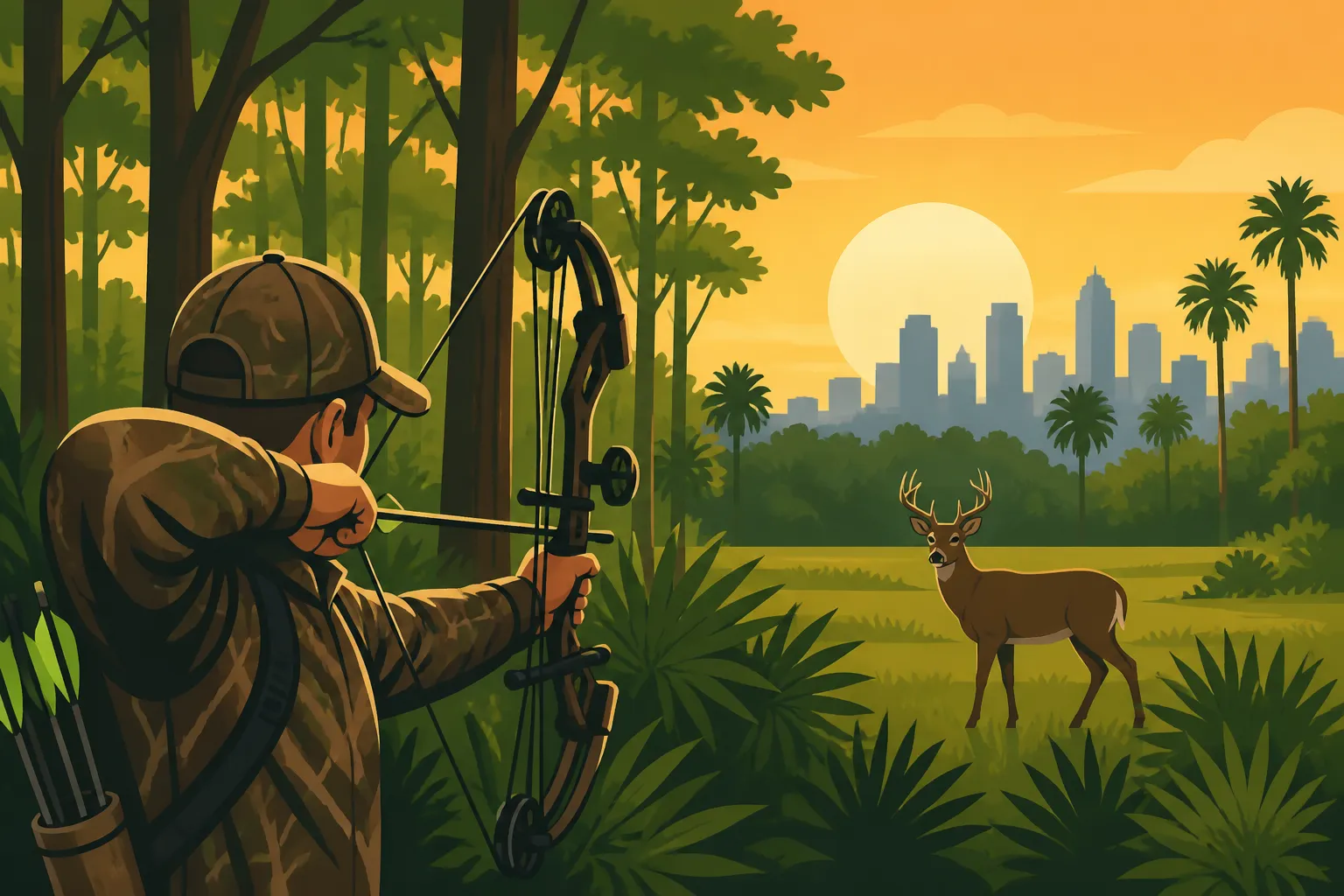
Trying to find a place to hunt near a bustling metropolitan area like Orlando can feel like searching for a needle in a haystack. The concrete jungle seems to sprawl endlessly, and the thought of finding a patch of woods big enough to hold a deer, let alone hunt one, often feels like a pipe dream. But don't despair; this guide will walk you through the often-overlooked opportunities for hunting small woodlots around Orlando, helping you understand how to locate, scout, and successfully hunt these compact, yet productive, pockets of Florida wilderness.
Understanding the Challenges and Opportunities of Urban-Fringe Hunting
Hunting in the shadow of a city like Orlando presents a unique set of circumstances. You're not looking at vast tracts of remote wilderness, but rather fragmented habitats that require a different mindset and strategy. It's easy to get discouraged, believing that all the good land is either developed, private, or impossibly crowded. However, with a keen eye and a strategic approach, these small woodlots can offer surprisingly rewarding experiences.
The Reality of Limited Acreage and Pressure
The most apparent challenge when hunting small woodlots near Orlando is the sheer lack of space. Instead of miles of unbroken forest, you're often dealing with parcels ranging from a few acres to perhaps a couple hundred. This limited acreage means deer don't have endless room to roam, and their movement patterns can be highly concentrated and predictable, if you know what to look for. Compounding this is the human presence. You might be hunting near residential areas, busy roads, or recreational trails. This means noise, scent, and visual disturbances are often higher, making stealth and careful planning paramount. Deer in these areas are often more wary and nocturnal, adapting to the constant human activity. However, this pressure can also work to your advantage; deer learn to find the densest, most overlooked pockets of cover, creating sanctuaries that can become hotspots for observant hunters.
Identifying Overlooked Pockets of Habitat
Believe it or not, even amidst the suburban sprawl, nature finds a way. Small woodlots can pop up anywhere—along undeveloped creek bottoms, tucked behind industrial parks, bordering power line easements, or even as remnants of larger forests now surrounded by housing developments. These might seem insignificant at first glance, but they often serve as crucial travel corridors and bedding areas for deer, connecting larger, more fragmented pieces of habitat. Think of a deer moving from a larger preserve to a small, isolated patch of oaks dropping acorns, or using a finger of woods to skirt a residential area to reach an agricultural field. Identifying these subtle connections is key. These overlooked pockets might be narrow strips of dense palmetto, thickets along a drainage ditch, or small, overgrown hammocks. They might not look like prime hunting ground on a grand scale, but for a deer trying to survive near human populations, they are vital.
Essential Scouting Techniques for Small Orlando Woodlots
Successfully hunting these small, urban-fringe woodlots demands meticulous scouting. You can't just blindly walk in and expect to find sign. It requires a blend of modern technology and old-fashioned boots-on-the-ground detective work, all done with an emphasis on low-impact, discreet observation.
Digital Scouting with Advanced Mapping Tools
Before you even step foot in the woods, the best scouting begins at home, in front of your computer or phone. Digital mapping applications have revolutionized how hunters approach new ground, especially in fragmented landscapes like those around Orlando. Tools like GoHunt, onX Hunt, and even Google Earth allow you to virtually explore properties, identify potential hotspots, and understand terrain features.
Start by zooming in on areas outside the immediate Orlando metropolitan area but still within a reasonable driving distance. Look for green spaces, even small ones, adjacent to agricultural fields, major drainages, or larger protected areas. Pay close attention to property lines (many apps will show these, which is crucial for determining public vs. private land, or if you need to Ask a Florida Landowner for Permission). Identify natural funnels—places where topography or dense cover forces deer movement into a narrow corridor. These could be small strips of woods between two subdivisions, a thick fencerow leading to a food source, or a narrow land bridge across a swampy area. Look for bedding cover, which in Florida might mean dense palmetto thickets, cypress heads, or impenetrable briar patches, particularly those close to food sources. Reading Aerial Photos for Florida Deer can reveal these details easily. Identifying these elements digitally helps you prioritize your ground scouting efforts, saving you valuable time and minimizing your disturbance in sensitive areas.
Boots-on-the-Ground Reconnaissance
Once you've narrowed down potential areas digitally, it's time for some old-school footwork. Ground scouting in small woodlots near Orlando is critical, but it needs to be done carefully. The goal is to gather information without alerting the deer to your presence or creating unnecessary pressure.
During the off-season or well before hunting season, walk the perimeters and discreetly enter promising areas. Look for fresh deer tracks, rub lines, and scrape lines, which can indicate active travel routes and buck activity. In these smaller parcels, a single significant rub or a well-used trail can be a goldmine. Pay attention to how deer are utilizing the available cover. Where are they bedding? Where are they feeding? Even a small patch of acorns or wild persimmons can be a major draw. Look for pinch points—areas where deer are naturally funneled. This could be a narrow strip of woods bordered by water on one side and a road on the other, or a small gap in a dense thicket. These are prime locations for stand placement. Also, observe other human activity. Are there dog walkers? ATV trails? Knowing these patterns helps you predict when deer might be most active (often dawn, dusk, or through the night) and allows you to plan your hunt around minimal human disturbance. When Scouting With the Florida FWC App, you can often layer satellite imagery with property boundaries to identify these small features. Remember to move slowly, quietly, and leave as little trace as possible.
Strategic Hunting Approaches for Compact Areas
Hunting small woodlots isn't just about finding them; it's about executing a precise, low-impact strategy. These deer are often pressured and highly sensitive to intrusion, so every move counts.
Maximizing Entry and Exit Routes
In small woodlots, your entry and exit routes are perhaps the most critical component of your hunt. A careless approach can blow your hunt before it even begins, spooking deer out of the limited habitat. Always choose routes that keep you out of the deer's line of sight and downwind. This might mean walking a longer path, using natural contours of the land, or even waiting for specific wind conditions to access your stand.
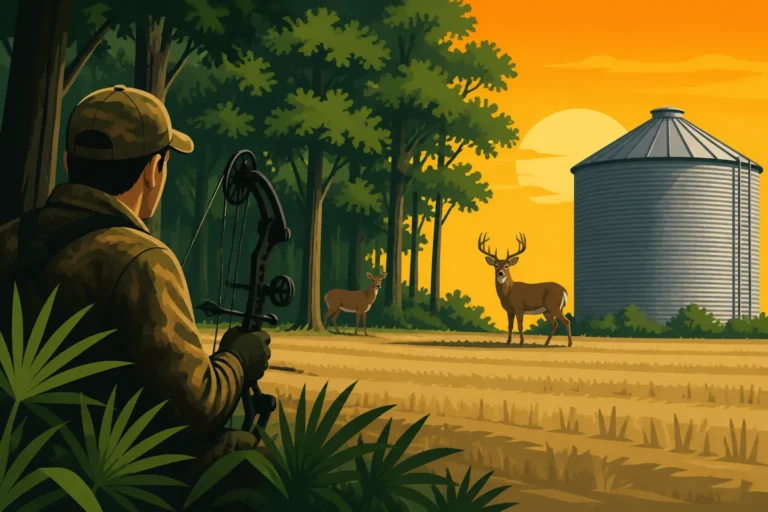
Consider approaching from an unexpected direction if possible, perhaps where deer are less likely to be looking or smelling. If the woodlot borders a busy road, you might use the road noise to mask your approach. Minimize sound and light; leave the headlamp off if you can see, and walk with deliberate, quiet steps. Avoid walking through known bedding areas or across active food plots unless absolutely necessary. For instance, if you're Hunting a Green Field Planted for Deer, you'll want to circle widely to approach from an unseen angle. Your goal is to be a ghost, entering and exiting without leaving a trace or warning the deer that you were ever there. In these small spaces, a single spooked deer can clear the entire area.
Stand Placement and Wind Considerations
Stand placement in small woodlots needs to be precise and tactical. You don't have the luxury of moving your stand around frequently without pressuring the area. Focus on pinch points, funnels, and areas of dense cover adjacent to food sources. A stand overlooking a subtle natural funnel between two palmetto heads can be incredibly effective, especially if it offers a clear shooting lane.
Always hunt with the wind in your favor. This might sound obvious, but in small, often irregularly shaped woodlots, prevailing winds can swirl unpredictably. Use a wind checker frequently, both on your approach and while on stand. Since deer are often traveling through these areas rather than residing there full-time, they might be moving quickly. Your shot opportunities could be fleeting. Position your stand to maximize your shooting window, considering both the likely direction of deer movement and the wind. For hunting during the colder months, a well-placed stand near Late-Season Food Sources for Florida Whitetails might be your best bet, especially if those food sources are in a secluded corner of the woodlot.
Choosing the Right Weapon and Tactics
Given the tight quarters and potential for close-range encounters in small woodlots, your choice of weapon and hunting tactics can significantly impact your success.
Many hunters find that a crossbow is an excellent choice for these scenarios. Crossbow Hunting During Florida's Archery Season is legal and offers several advantages: less movement to draw, which can be critical when a wary buck suddenly appears close by, and impressive accuracy at the typical short ranges you'll encounter. Shotguns loaded with slugs are also highly effective for close-range deer hunting in Florida's gun seasons. If you're using a rifle, ensure it's sighted in for precision at 50-100 yards, as long shots are rare, and over-penetration into surrounding developed areas could be a concern.
Tactically, still-hunting can be very productive. Moving slowly and deliberately, pausing often to scan and listen, allows you to cover ground while remaining stealthy. Ground blinds are another excellent option, especially if you need to get in and out discreetly. Brushing in a blind on a field edge can offer fantastic concealment. These blinds provide excellent cover for movement and scent containment, crucial for wary urban deer. Consider using scent control diligently, showering with unscented soap and storing hunting clothes in carbon bags, especially when hunting close to human activity.
Public Land Options and Permission for Small Tracts Near Orlando
While most small woodlots near Orlando might be private, there are still public land opportunities, and understanding how to gain access to private land is invaluable.
Navigating Local WMAs and State Forests
Even near Orlando, Florida offers an impressive amount of public hunting land through its Wildlife Management Areas (WMAs) and State Forests. While many of these are large, sprawling properties, some have smaller, less-pressured corners or specific units that fit the "small woodlot" description. For instance, the Green Swamp Wilderness Preserve, while substantial, has various entry points and diverse habitats that might offer more secluded pockets. Similarly, areas like the Seminole State Forest, within a reasonable drive, feature multiple accessible sections that, when broken down, can function like larger woodlots, offering deer and even turkey hunting.
It's crucial to familiarize yourself with the specific regulations for each WMA or State Forest, as rules can vary greatly regarding hunting dates, legal weapons, and even vehicle access. The FWC website and Florida WMA Management Area Permit requirements are your best friend here. Don't be afraid to focus on these areas during weekdays, or during less popular seasons, when pressure is typically lower. Many hunters overlook the fringes of these larger areas, creating prime opportunities for those willing to scout thoroughly. For example, some WMAs might have areas where you're restricted to archery or muzzleloader, which often translates to less competition.
Gaining Private Land Access in Developed Areas
Securing permission to hunt small private woodlots is often the holy grail for urban-fringe hunters. It allows for much lower pressure and the ability to tailor your hunting strategy without worrying about other hunters. However, it requires respect, persistence, and excellent communication skills.
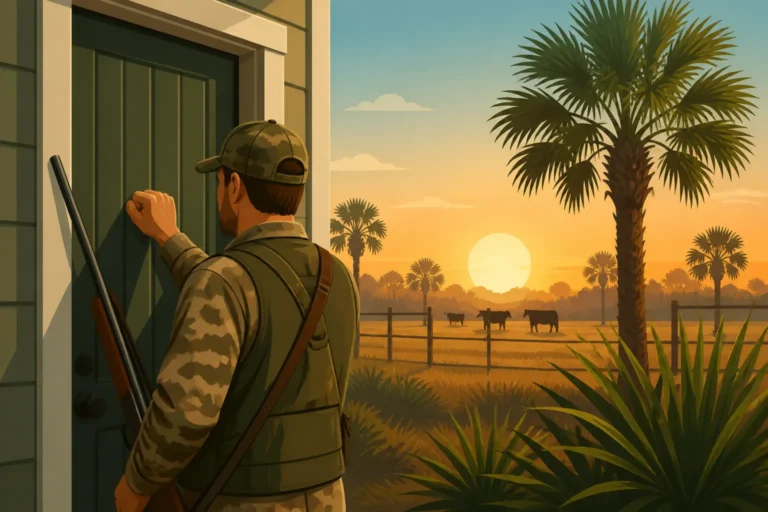
Start by identifying promising properties on your mapping apps. Look for landowners who might be dealing with deer damage to landscaping or crops. When approaching landowners, always be polite, well-dressed, and professional. Introduce yourself, explain your interest in ethical hunting, and offer to help with any deer-related issues. Emphasize safety and your commitment to respecting their property. Offer to share venison or help with other tasks around the property. Many landowners are hesitant due to negative past experiences or concerns about liability. Be prepared to discuss your hunting insurance (if you have it), show your hunter education card, and offer a written agreement outlining the terms of your permission. Sometimes, simply offering to keep an eye on the property or help clear brush can go a long way. Building a relationship is key. Remember that Hunting Small Private Tracts in Florida often hinges on trust and proving you're a responsible individual.
| Aspect | Public Land (Small Sections of WMAs/Forests) | Private Woodlots (with permission) |
|---|---|---|
| Accessibility | Generally open with required permits/licenses. Might require walking. | Requires landowner permission; can be difficult to obtain. |
| Hunter Pressure | Variable; can be high on popular days, lower in less accessible corners or during less popular seasons. | Generally much lower, sometimes exclusive. |
| Deer Acclimation | Deer are often highly pressured, more nocturnal, and very wary. | Deer may be less pressured, potentially more active during daylight. |
| Flexibility | Bound by WMA/State Forest rules; limited ability to modify habitat. | More freedom in stand placement, timing, and potentially small habitat improvements. |
| Effort Required | Significant scouting to find unpressured spots. | Significant effort to gain permission; then focused scouting. |
| Cost | License and WMA permit fees. | Potentially free or could involve lease fees or reciprocal favors. |
Disclaimer
Please remember that hunting regulations and land access can change. Always consult the latest Florida Fish and Wildlife Conservation Commission (FWC) regulations and obtain all necessary licenses and permits before heading into the field. Ensure you have explicit permission before hunting on any private land and always adhere to ethical hunting practices and safety guidelines.