Sitting a Creek Crossing at First Light
There’s nothing quite like the anticipation of a new day breaking, especially when you’re nestled into a prime hunting spot in the pre-dawn dark. For many Florida hunters, however, finding that perfect spot can feel like a lifelong quest, especially when trying to pinpoint consistent deer movement in our often-dense and watery landscape. This guide is all about honing in on one of the most consistently productive areas you can target at first light: a creek crossing. We’ll explore why these spots are deer magnets and how you can effectively hunt them.
The Irresistible Pull of Creek Crossings for Florida Deer
Creek crossings might seem like simple bottlenecks, but to a whitetail, they represent a complex interplay of survival needs – safety, efficiency, and resource access. Understanding why deer prefer certain crossing points is the first step to successfully hunting them. It’s not just about finding water; it’s about finding the path of least resistance that offers security.
Natural Funnels and Travel Corridors
Think about the Florida landscape for a moment. We've got swamps, palmetto thickets, pine flatwoods, and often, winding creeks and drainages dissecting it all. Deer, like all animals, are creatures of habit and efficiency. They’re looking for the easiest, safest routes between bedding areas and food sources, or just moving from one patch of cover to another. A creek, especially one with soft, muddy banks or a narrow pinch point, naturally funnels movement. It acts like a highway exit, channeling deer traffic into predictable lanes.
Deer will often follow the edges of these waterways, using the dense vegetation along the banks for cover, until they find a suitable place to cross. These natural funnels are particularly pronounced in areas where the terrain subtly changes, perhaps a slight rise in elevation that creates a drier crossing, or a section where the creek narrows considerably. They might avoid deeper, wider sections if shallower, firmer ground is available nearby. This preference makes a well-scouted crossing a high-percentage location, especially during periods of increased movement like the rut or when bucks are cruising for does. It’s about being in the right place when deer choose the path of least effort and most security.
Water Sources and Security Cover
While deer don't typically bed right at a creek crossing, the presence of the water itself and the surrounding habitat provides critical elements for their daily survival. Creeks offer a consistent water source, which is especially vital during Florida's hot early seasons or extended dry spells. Deer often pause for a drink before or after crossing, adding another layer of predictability to their movements. More importantly, the vegetation that thrives along Florida's creek bottoms—be it cypress, oaks, or thick palmetto and saw palmetto—provides dense security cover.
Deer feel safe moving through these corridors of thick vegetation, especially at dawn and dusk. They can vanish into the shadows and dense foliage instantly if they sense danger. This combination of reliable water and robust cover makes creek crossings a vital part of a deer's habitat. When a deer approaches a crossing, they're often doing so with caution, using the available cover to screen their approach, offering you a brief window to observe and make a move. This is also why you often find rubs and scrapes along these edges, particularly where a buck might feel secure enough to leave his mark. If you’re hunting in some of Florida's prime turkey country, like the Big Bend, these creek bottoms are also magnets for longbeards looking for easy travel and water.
Scouting Creek Crossings for Prime Spots
You can’t just walk up to any creek and expect a deer to magically appear. Effective hunting begins long before the season, with thorough scouting. This is where you put in the legwork, observing, reading the land, and interpreting the subtle signs deer leave behind. A good scout can turn a seemingly random piece of woods into a productive hunting ground, and creek crossings are no exception.
Reading the Sign
Finding a creek crossing is one thing, but identifying an active and preferred crossing takes careful observation. You’re looking for the subtle clues that tell you deer are using this particular spot regularly. Start by walking the creek banks, looking for trails leading into and out of the water. Fresh tracks in the mud are gold – they tell you deer have been through recently. Pay attention to the size and direction of the tracks; a mixture of doe and fawn tracks with a few larger, deeper buck tracks is a great indicator of consistent activity.
Beyond tracks, keep an eye out for other classic deer sign. Rubs on saplings and small trees, especially if they’re fresh and scraped clean, indicate a buck has passed through and marked his territory. Scrape lines along the bank or just on the approach to the crossing are even better, signifying a communication hub for deer, particularly during the pre-rut and rut phases. Droppings are another tell-tale sign – the more scat you find, especially if it looks fresh, the more active the crossing. Also, look for disturbed vegetation or well-worn paths leading away from the crossing into thicker cover or toward known food sources. Using mapping tools like GoHunt can be a game-changer here, allowing you to mark every piece of sign you find, visualize travel corridors, and even check property lines if you're hunting smaller private tracts in Florida.
Identifying Active Crossing Points
Not all creek crossings are created equal. Deer will gravitate towards specific spots for very good reasons. Often, it's the path of least resistance: a shallower section, a fallen log they can walk across, or banks that aren't too steep or muddy. Look for areas where the banks are worn down, indicating repeated use. Sometimes, there might be a narrow point in the creek where it's only a few feet wide, making for an easy hop. In other places, a sandbar or a gravel bed might offer a firmer footing through the water.
Consider the surrounding terrain as well. Is there a dense palmetto head or a thick oak hammock nearby that deer might be coming from or going to? Does the creek connect two distinct habitat types, like a pine plantation to a hardwood swamp, providing a necessary travel route? Also, think about the wind and thermals. Deer often prefer to cross in areas where they can use the prevailing wind to their advantage, scent-checking the area before committing. If you can find a crossing point that's naturally sheltered from strong winds or one that offers consistent thermals at first light, you've hit a jackpot. This kind of detailed scouting takes time and effort, but it pays dividends when you're perched in your stand or blind before dawn, confident that deer are likely to pass through your chosen spot.
Optimal Setup and Approach for First Light
Once you've identified your prime creek crossing, the next crucial step is planning your approach and setup for that first-light hunt. This isn't just about showing up; it's about minimizing your disturbance and maximizing your chances of seeing deer. Early morning hunts are often the most productive, as deer are moving from nocturnal feeding to daytime bedding, and you want to intercept them as they traverse these natural choke points.
Wind and Thermal Considerations
Florida’s often-flat terrain can make wind and thermals tricky, but they are absolutely critical when hunting creek crossings, especially at first light. As the sun begins to warm the ground, thermals will generally start to rise, pulling your scent upward. However, in low-lying areas like creek bottoms, cooler, heavier air can drain into these depressions, causing scent to hang low or even drift downhill against the overall rising thermal pattern in the immediate vicinity. You need to be acutely aware of how your scent is behaving.
Before you even consider your stand location, check the forecast for the prevailing wind direction. Then, when you arrive, use a wind checker (a small bottle of powder or milkweed seeds works great) to see what the air is actually doing in the creek bottom itself. You want your stand or ground blind setup to be downwind or crosswind of the expected deer approach, ensuring your scent is carried away from where deer are likely to be. Remember that deer will often approach a crossing with caution, stopping to scent-check the area. If they hit your scent cone, the game is over. If you're Hunting Florida Cypress Swamp Edges, these considerations become even more critical due to the dense, damp air. Pay attention to how the thermals might shift as the sun climbs higher, as this could change the deer's approach or their lingering behavior at the crossing.
Concealment and Vantage Points
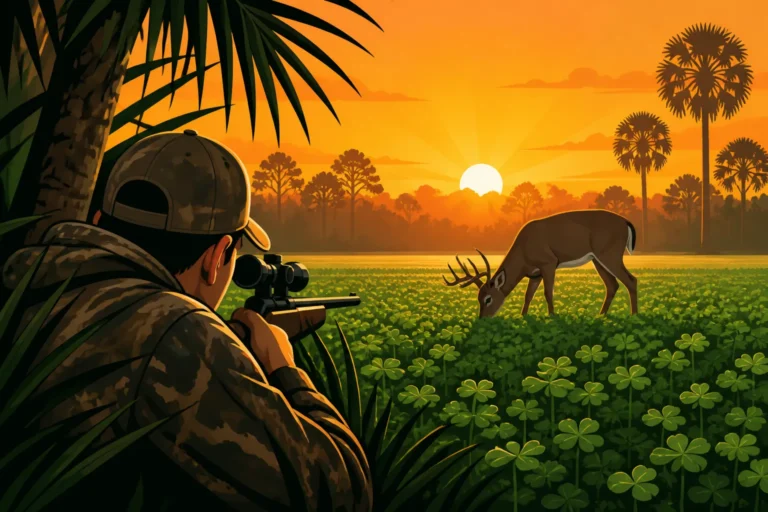
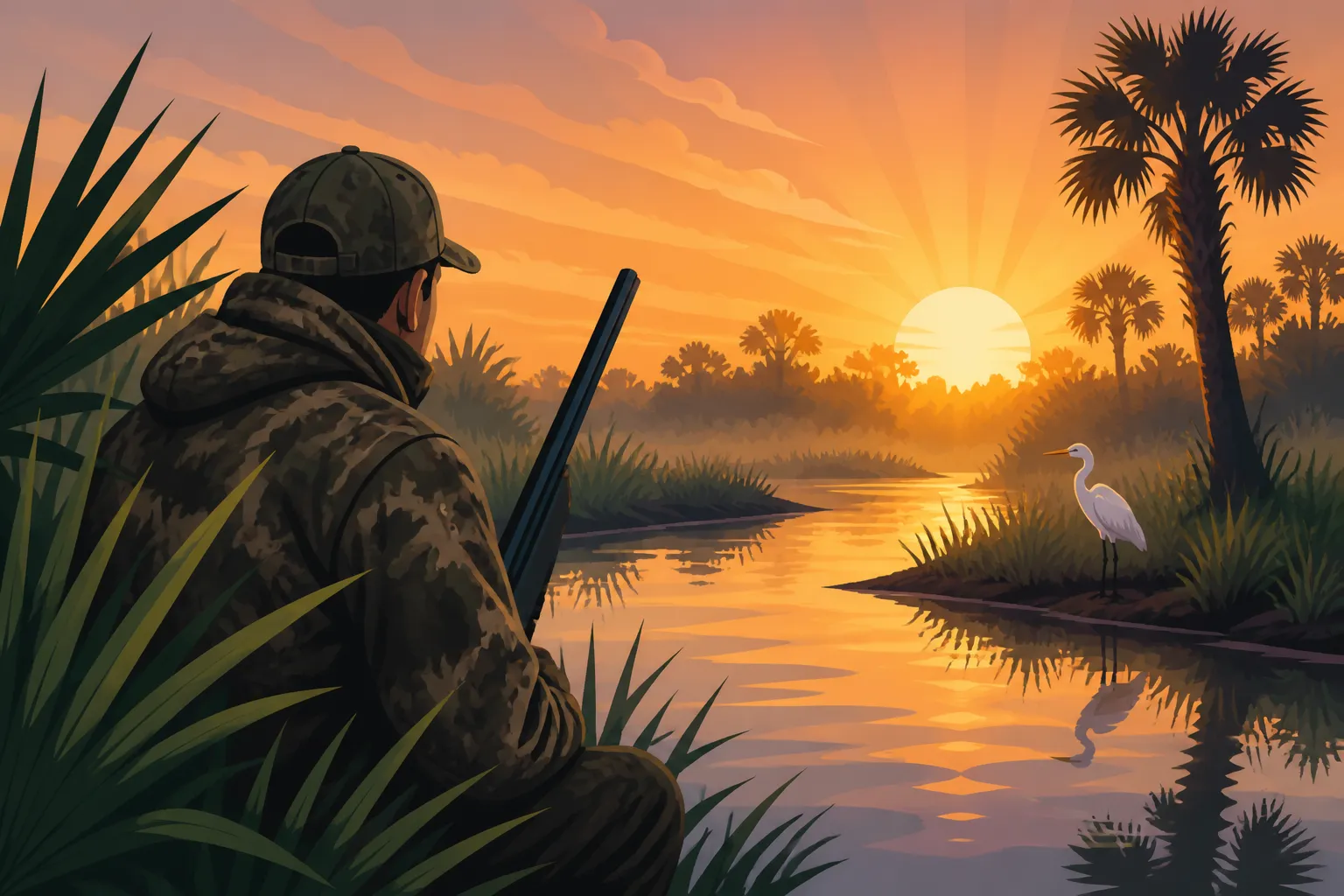
The key to successfully hunting a creek crossing at first light is to be completely invisible and provide yourself with the best possible view. This means careful consideration of your chosen concealment and vantage point. Many hunters opt for treestands along creek banks, as the elevated position allows you to see over the dense underbrush and observe deer approaching from a distance. Look for a sturdy tree that offers good cover from both behind and in front, breaking up your outline against the sky. Think about the sun's position at first light; you want it at your back, if possible, to illuminate approaching deer while keeping you in shadow.
Alternatively, a well-brushed-in ground blind can be incredibly effective, especially if the terrain doesn't offer suitable trees or if you prefer a more concealed approach. Make sure your blind blends seamlessly with the natural vegetation. Drag in palmetto fronds, cypress branches, or whatever natural cover is abundant in the area to break up the blind's outline. When you're Using a Ground Blind on Florida Public Land, remember to set it up early, preferably a week or two before the hunt, to allow deer to get accustomed to its presence. Whether elevated or on the ground, ensure you have clear shooting lanes to the crossing point and along the expected approach routes. Don't forget that deer often follow paths parallel to the creek before committing to a crossing. Having a view of these approach lanes is just as important as having a clear shot at the crossing itself.
Tactical Strategies for Success at the Crossing
Getting to your spot undetected and having a great setup are monumental steps, but the hunt isn't over until you’ve punched your tag. The early morning hours at a creek crossing demand patience, sharp observation, and sometimes, a little proactive calling to seal the deal.
Patience and Observation
This might sound like a broken record, but patience truly is a virtue, especially when waiting at a creek crossing at first light. Deer movement can be sporadic, and sometimes it feels like they know exactly when you're getting fidgety. Your job is to be a silent, motionless observer, scanning the surrounding cover continuously. Pay attention to every sound – a twig snap, a rustle in the palmetto, the distant call of a bird. These often precede a deer sighting. In Florida's often-thick woods, you might hear a deer long before you see it.
Don't just stare at the crossing point itself. Deer will often skirt the edges, cautiously approaching before committing. Look for movement in the shadows, a flick of an ear, or a patch of hide through the dense foliage. Use your binoculars to pick apart the cover, checking every dark spot and suspicious shape. Remember, deer are masters of camouflage, and they can seemingly appear out of nowhere. Many times, if you wait just a little longer, that deer you thought was coming from one direction might suddenly appear from another. The earliest hours of daylight, from just before sunup to about 9 or 10 AM, are usually the most productive for deer movement. Stick it out during this window; your persistence will often be rewarded. For deeper understanding, consider consulting the Florida Deer Herd Size data to grasp the general population dynamics in your chosen area.
Calling and Decoying Strategies
While patience is paramount, sometimes a little well-timed calling can tip the scales in your favor at a creek crossing. The key is subtlety and knowing when to call. At first light, deer are often less wary and more responsive to soft, inquisitive calls. A few subtle doe bleats or soft grunts can pique the interest of a buck cruising for does or even a doe leading her fawns. If you're Rattling and Grunting Florida Bucks in an oak hammock near a crossing, ensure your volume matches the thick cover, avoiding over-calling which can alert or spook deer.
However, don't just blindly call. Observe deer behavior first. If you spot a deer moving purposefully towards the crossing, or if you hear something you can't quite see, a soft call might just draw them into view or encourage them to commit. Avoid aggressive calls unless you are certain a buck is within earshot and showing interest. Decoys can also be effective, especially a lone doe or a small buck decoy placed within clear view of the crossing. The visual stimulus can draw a deer in for a closer look, especially if they are already on a travel path. Positioning a decoy so it looks like it's just about to cross, or has just crossed, can be very convincing. Always consider the wind direction when using a decoy – you want its scent to be carried away from your position, not towards it, and you want the deer to approach facing the decoy, not directly looking at you. Keep your movements minimal and controlled when calling or adjusting a decoy, remembering that deer are incredibly attuned to their environment.
Seasonal Creek Crossing Dynamics
The behavior of deer at creek crossings isn't static; it changes throughout the year based on the seasons, food availability, and breeding cycles. Understanding these dynamics can significantly increase your success rate, allowing you to tailor your strategy to the specific time of year you're hunting.
Early Season Adjustments
Florida's early archery season, particularly in zones like Zone A where it opens in August, can be brutally hot and humid. During this time, deer behavior is heavily influenced by the heat and the need for water. Creek crossings become even more vital as a source of hydration, and deer activity will typically be concentrated during the cooler periods of the day: very early morning and late evening. During the middle of the day, deer will often seek the thickest, shadiest cover, which often happens to be right along the cool, damp creek bottoms.
When hunting early season, focus on shaded crossings with dense overhead canopy. Deer might linger longer in these cooler microclimates. Pay close attention to water entry and exit points that offer immediate access to thick cover, as deer will want to quickly get in and out. Also, consider the specific food sources available. If early mast crops like early-dropping acorns are present near a creek, deer will be drawn to that combination. This is a time when subtle approaches and minimizing your scent are more critical than ever, as deer are hypersensitive to any anomaly in their already challenging environment. For hunters facing these conditions, understanding Hot-Weather Sitting Strategy in Florida can make all the difference.
Rut-Phase Magnets
When the Florida rut kicks into gear, creek crossings transform into veritable deer highways. Bucks are on the move, constantly searching for does, and does are trying to elude them or find receptive mates. These crossings become crucial pinch points where you're much more likely to intercept a cruising buck. The timing of the rut varies by zone, but knowing when the Florida Rut Peaks by Zone is key.
During the rut, bucks will often scent-check crossings, looking for signs of does that have recently passed through. This is when rubs and scrapes around crossings become extremely active. Bucks will also chase does across these waterways, sometimes making bold movements they wouldn't normally risk. Your calling strategies can become a bit more aggressive during the rut; rattling antlers or more insistent grunts can challenge a dominant buck or attract an inquisitive one. Keep an eye out for fresh sign every time you enter or exit your stand, as a sudden burst of rut activity could mean you need to adjust your setup slightly to capitalize on fresh movement. A well-placed stand overlooking a high-traffic creek crossing during the rut can offer some of the most exciting hunting opportunities in Florida.
Safety and Ethical Considerations
No matter how good the hunting, safety must always come first. The unique challenges of Florida's terrain, especially around water, mean you need to be extra vigilant. Ethical considerations also play a huge role in ensuring a positive experience for everyone and maintaining the integrity of our hunting heritage.
Water Crossings and Equipment
Hunting around water in Florida, especially at first light, introduces specific safety concerns. Creeks can be deeper than they appear, and the bottoms can be soft, muddy, or uneven. Always scout your entry and exit points carefully in daylight. If you need to cross the creek to access your spot, plan your route. Consider bringing waterproof boots, waders, or even a small canoe or kayak if the crossing is particularly challenging. GoHunt's satellite imagery can help you identify deeper sections and potential dry crossings beforehand, but nothing beats boots on the ground.
Be aware of slippery banks, submerged logs, and uneven terrain that could lead to a fall in the dark. Carry a reliable headlamp with fresh batteries and consider a backup. Your hunting gear should be secured in a waterproof bag, especially electronics. If you're using a treestand, always wear a safety harness, starting from the moment your feet leave the ground until you're back on solid earth. This is non-negotiable. Furthermore, remember that Florida is home to alligators. While they typically avoid humans, especially during colder months, they are a year-round presence. Be mindful of your surroundings, especially if you're retrieving game from the water. Always be prepared and prioritize your safety over getting "just one more look."
Respect for the Land and Wildlife
As hunters, we are stewards of the land and its wildlife. This responsibility means adhering to all regulations and practicing ethical hunting. When hunting creek crossings, be mindful of your impact on the natural environment. Pack out everything you pack in – leave no trash behind. If you're setting up a ground blind, use natural materials and take them down when the season is over, or if you're finished with the spot.
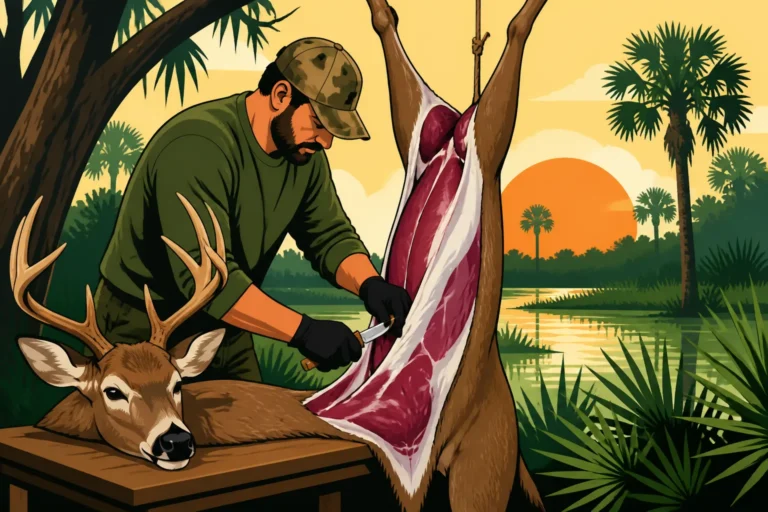
Respect private property boundaries; ensure you know exactly where you are hunting, especially if a creek borders private land. Retrieving game from private land requires permission, so know the Florida Trespass and Permission Law beforehand. Always be sure of your target and what's beyond it before taking a shot. Ethical shot placement minimizes suffering and ensures a swift, clean harvest. Proper Field Dressing a Deer in Hot Weather immediately after the shot is also critical for meat quality, especially in Florida's climate. By practicing responsible and ethical hunting, we ensure that these cherished traditions can continue for generations to come, and that wildlife populations thrive within our beautiful state.
Disclaimer
The information provided in this guide is for general informational purposes only and does not constitute legal advice. Hunting regulations in Florida are subject to change, and it is the hunter's responsibility to review and comply with all current Florida Fish and Wildlife Conservation Commission (FWC) rules and regulations. Always prioritize safety, respect wildlife, and obtain the necessary licenses and permits before engaging in any hunting activities.