Florida Record Book Gobblers
For many Florida turkey hunters, the dream isn't just about tagging a gobbler; it's about the challenge of pursuing a truly exceptional bird, one that might just earn a spot in the record books. Florida offers a unique opportunity with its two distinct subspecies, the elusive Osceola and the more widespread Eastern, each with its own set of characteristics that make them a worthy adversary. This guide will walk you through what separates a big gobbler from a "record book" gobbler in the Sunshine State, covering everything from the intricate scoring system to strategies for finding and ethically harvesting such a magnificent bird.
Understanding Florida's Record Book Gobblers: Osceolas vs. Easterns
Florida is a special place for turkey hunting, not just for its beauty, but because it's home to two of the five North American wild turkey subspecies. These birds present distinct challenges and hold unique places in the record books, making the pursuit of a record-class gobbler here particularly rewarding.
The Distinctive Challenges of Florida's Subspecies
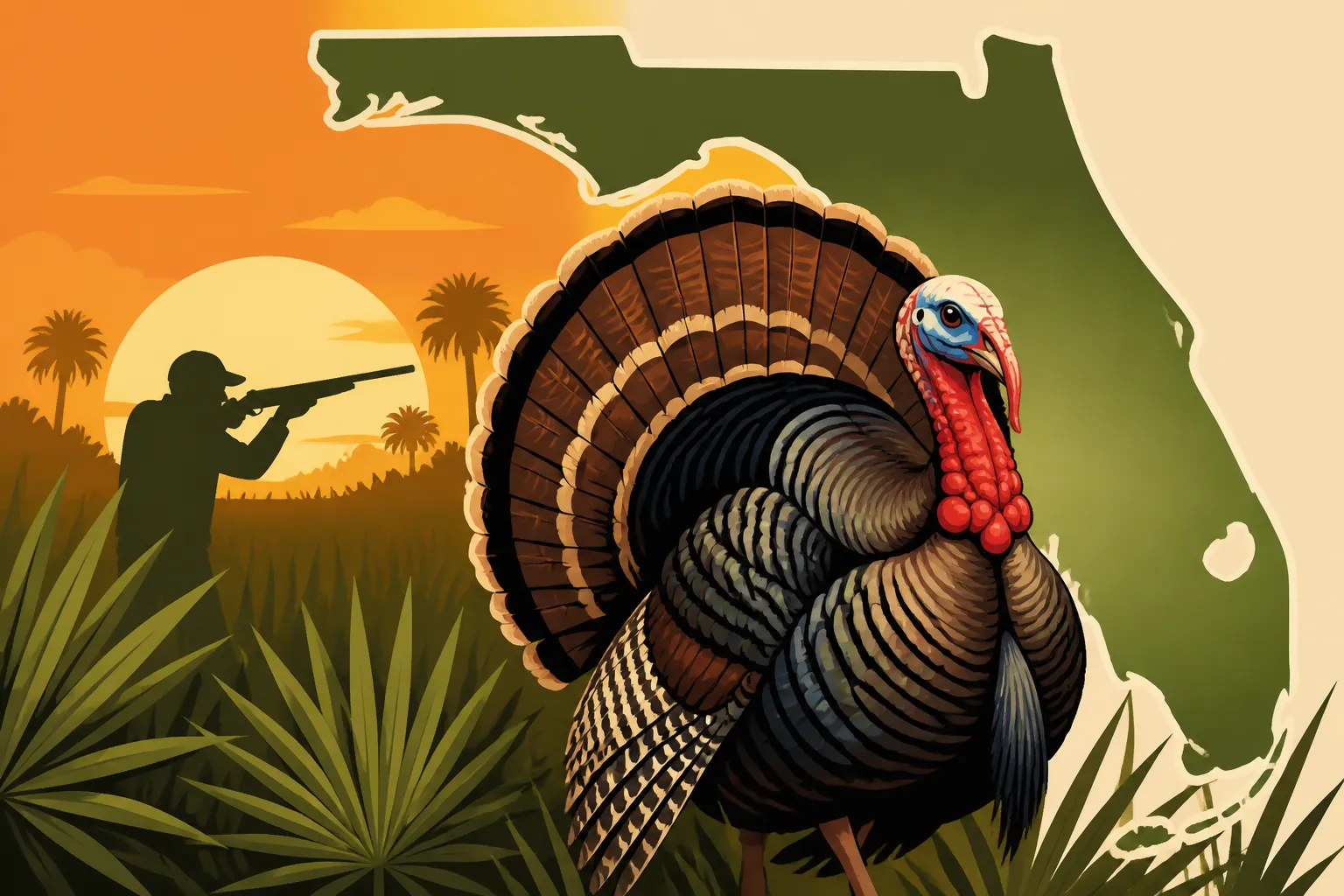
When we talk about Florida gobblers, we're really talking about two different animals. First, you have the magnificent Osceola turkey, a subspecies found exclusively in peninsular Florida. These birds are renowned for their dark, iridescent plumage, long legs, and often impressive spurs. They are incredibly wary, living in a mix of palmetto scrub, pine flatwoods, and cypress swamps, making them a true trophy for any hunter. The challenge with an Osceola is often less about finding birds and more about coaxing a mature, often pressured, gobbler into range in their dense, unforgiving habitat. Many hunters travel from across the country specifically to complete their Grand Slam with an Osceola, recognizing the difficulty and unique experience of Osceola Turkeys in Peninsular Florida.
Then, there's the Eastern turkey, which inhabits the Florida Panhandle. While sharing some traits with their Osceola cousins, Easterns typically boast richer coloration, often with more prominent white barring on their wingtips, and tend to be a bit larger in overall body size than Osceolas. Their habitat in the Panhandle, characterized by vast pine plantations, hardwood hammocks, and creek bottoms, presents a different set of tactical puzzles. Hunters pursuing Easterns in this region will find themselves navigating dense timber and hilly terrain, a stark contrast to the flat, swampy lands of central and south Florida. Understanding the nuances of Eastern Turkeys in the Florida Panhandle is key to success. Both subspecies can produce record-book birds, but their environments and typical behaviors dictate different hunting approaches.
The NWTF Scoring System Explained
For a wild turkey gobbler to be considered for the record books, it needs to be scored by an official measurer using the system established by the National Wild Turkey Federation (NWTF). This isn't just about how big the bird looks on the ground; it's a precise mathematical formula that accounts for three key attributes: weight, beard length, and spur length.
The NWTF's scoring formula is: (Weight x 2) + (Beard Length x 10) + (Spur Length x 2). Let's break down each component:
- Weight: This is measured in pounds and ounces. For the calculation, ounces are converted to a decimal (e.g., 20 lbs, 8 oz would be 20.5 lbs). The NWTF doubles this number in the formula, emphasizing the bird's overall size and robustness. Accurately weighing a bird in the field can be tricky, but it’s a critical component.
- Beard Length: Measured from the skin where the beard emerges to the very tip of the longest strand, measured to the nearest 1/16th of an inch. Each beard segment is measured, and all measurements are summed. A bird with multiple beards can accrue a significant score here, as each beard is measured individually and added to the total. For example, a gobbler with a 10-inch main beard and a 5-inch secondary beard would contribute 150 points (15 inches x 10) to its score.
- Spur Length: Measured along the outside curve from the point where it emerges from the scaled leg skin to the tip, to the nearest 1/16th of an inch. Each spur is measured individually, and then the lengths of both spurs are added together. Long, sharp, and unbroken spurs are highly prized. A bird with spurs measuring 1.5 inches and 1.25 inches would add 5.5 points (2.75 inches x 2) to its score.
Minimum scores vary by subspecies and whether the bird is a typical or non-typical entry. For example, a typical Eastern gobbler might need a total score of 50 to qualify for the NWTF state record, while an Osceola might have a slightly different threshold. The NWTF keeps detailed records that highlight Florida Turkey Population Trends and individual bird achievements, allowing hunters to see where their bird stands.
The Quest for Inches and Ounces: What Makes a Florida Gobbler a Record Contender
So, you've got a gobbler on the ground, and it feels heavy, and those spurs look long. But what truly makes it record book material? It's a combination of specific physical characteristics, all stemming from age and good habitat, and careful attention to detail during and after the harvest.
Unpacking Spur and Beard Characteristics
When it comes to spurs, length is king, but curvature and sharpness also play a role in their aesthetic appeal and perceived "trophy" quality. A true record-book gobbler will often sport spurs that are not only long—typically 1.25 inches or more for an Osceola or Eastern—but also sharp, needle-like, and with a pronounced inward curve. These are the hallmarks of an older, dominant tom. Sometimes, you'll encounter a "non-typical" spur, like a gobbler with double spurs on one leg, or perhaps a spur that's broken and regrown unusually. While fascinating, it's the clean, unbroken length measured along the outside curve that counts most in the NWTF scoring system. Hunters often find themselves comparing notes on Florida Turkey Roost Tree Preferences in areas where they've seen gobblers with impressive spurs, understanding that a prime roosting site often indicates an older, established bird.
Beard length is another crucial component, and Florida gobblers can definitely carry some impressive ones. While the average beard on a mature gobbler might be 9-10 inches, a record contender will often push into the 11-13 inch range, sometimes even longer. What really boosts a score, however, is the presence of multiple beards. It's not uncommon for older Florida gobblers, particularly Osceolas, to grow two, three, or even more distinct beards. Each of these is measured from its base at the skin to its longest tip, and all measurements are added together. This can quickly inflate a bird's score, turning an already impressive single-bearded gobbler into a true record contender. It's vital to measure these accurately, ensuring you get the maximum possible length from each strand.
Weight and Age: The Overlooked Factors
While long spurs and bushy beards are visually striking, a gobbler's live weight contributes significantly to its NWTF score. A heavy bird indicates a healthy, mature tom that has successfully navigated Florida's wild landscape for several seasons. While typical Florida gobblers might weigh in the 15-20 pound range, a record-book contender will often tip the scales at 20 pounds or more. This isn't always easy to achieve in Florida's often nutrient-poor sandy soils compared to other states, making a heavy Florida bird particularly noteworthy. The challenge for hunters is accurately weighing the bird as soon as possible after harvest to get its true live weight, as dehydration can quickly reduce it. A good digital scale is an essential piece of gear for any serious trophy hunter.
Ultimately, all these factors—spur length, beard length, and weight—are directly tied to the bird's age. It takes several years for a gobbler to develop those inch-and-a-half spurs, grow multiple long beards, and reach a substantial body weight. A 4 or 5-year-old gobbler, having survived countless hunting seasons and natural predators, is much more likely to be a record contender than a younger, two-year-old bird. When Scouting Florida Public Land Before Season, look for signs of mature birds: larger tracks, deeper droppings, and consistent gobbling from a specific area known for holding older birds. Tools like GoHunt can provide invaluable insights into habitat types and potential low-pressure areas where these older birds might thrive, helping you pinpoint those elusive, mature toms.
Strategies for Finding and Tagging Your Record-Book Bird
Harvesting a record-book gobbler in Florida isn't just luck; it's a culmination of meticulous scouting, strategic hunting, and precise execution. These older, wiser birds don't come easy.
Scouting and Habitat for Trophy Turkeys
The foundation of any successful record-book turkey hunt lies in thorough scouting. You need to understand where these older, bigger birds live and what makes that habitat appealing to them. In Florida, this often means focusing on areas with a good mix of mature pine and oak timber for roosting, interspersed with palmetto flatwoods or open pine savannahs for feeding and strutting. Look for consistent food sources like acorns (when available), palmetto berries, and insects. Water sources are also crucial, especially during dry spells.
Using modern mapping tools like GoHunt can give you a significant advantage. You can layer satellite imagery with public land boundaries and even identify potential roosting areas, feeding flats, and travel corridors before you even step foot in the woods. Pay close attention to subtle changes in elevation, creek bottoms, and dense cover that might offer security for older birds. For Osceolas, this means keying into the cypress strands, oak hammocks, and vast palmetto prairies found in central and south Florida. Understanding how to navigate Hunting an Osceola Gobbler in Palmetto Scrub can be the difference between success and frustration. For Easterns, focus on the expansive pine forests and river bottoms of the Panhandle, where they can roam large territories. When scouting, always be looking for fresh tracks, droppings, and strut marks – these are telltale signs of active gobblers. Finding Ground That Sees Fewer Hunters can often lead to less pressured, older birds who have survived multiple seasons.
Patience and Precision in the Field
Once you've located a potential record-book gobbler, the real work begins. These older birds are incredibly wary, having learned from previous encounters. Aggressive calling might work on younger birds, but a seasoned tom often responds better to subtle, realistic hen sounds. Sometimes, the best call is no call at all, just patience. Mastering the art of Calling an Osceola Off the Roost requires understanding their morning routine and often positioning yourself strategically before they even hit the ground.
Your setup is paramount. You need to be completely concealed, whether in a ground blind or backed up against a wide tree like a majestic live oak. The importance of Setting Up Against a Big Live Oak cannot be overstated, providing both cover and a solid rest. Movement will almost always spook a mature gobbler. Be prepared for a long wait and be ready to shoulder your gun smoothly when the opportunity arises. When the bird finally commits and steps into range, take a calm, deliberate shot. A clean harvest not only ensures an ethical kill but also preserves the beard and spurs in their best condition for accurate measurement. Remember, a broken spur from a bad fall or a tattered beard from a poor shot can impact your final score.
Post-Harvest Care and Official Measurement
After you've successfully tagged your gobbler, the care you take in the immediate aftermath is critical for preserving its record-book potential. Handle the bird carefully to avoid damaging the spurs or breaking beard strands. It's best to keep the bird cool and protected from physical damage.
To get your bird officially entered into the NWTF record book, you'll need to find an NWTF-certified measurer. You can typically find a list of official measurers on the NWTF website or by contacting your local chapter. They will need to verify the species, measure the weight (which should be taken as soon as possible after the kill), and carefully measure the spurs and beards. Make sure you don't trim or alter the spurs or beards in any way before the official measurement. The measurer will document all the details and submit the score to the NWTF. This process ensures accuracy and maintains the integrity of the record system, giving due credit to both the bird and the hunter.
Navigating the Record Books and Legacy
Achieving a record-book entry is more than just a number; it's a testament to dedication, skill, and the quality of Florida's wild turkey populations.
What it Means to be in the Book
Having your gobbler recognized in the NWTF record books is a significant accomplishment that extends far beyond personal bragging rights. It connects you to a community of passionate turkey hunters and contributes to a broader understanding of wild turkey populations and genetics across the continent. Each entry helps wildlife biologists track trends, identify regions producing exceptional birds, and highlights the success of conservation efforts that have allowed these magnificent creatures to thrive. It validates the countless hours spent scouting, the early mornings, the mosquito bites, and the frustration of missed opportunities. It's a symbol of persistence and a deep respect for the game we pursue.
Tools and Resources for Aspiring Record Holders
For those aspiring to chase a Florida record-book gobbler, there are invaluable resources available. The NWTF is the primary organization, providing not only the official scoring system but also a wealth of information on turkey biology, conservation, and hunting ethics. Their website is a treasure trove of data, including current record listings, which can give you an idea of the caliber of birds being harvested in Florida.
Beyond the NWTF, modern hunting tools can significantly aid your quest. Digital mapping applications, like GoHunt, offer detailed satellite imagery, public land boundaries, and even historical weather patterns, which can be critical for planning your hunt. These tools help you visualize the landscape and identify potential hotspots before you even set foot in the woods, making your scouting efforts more efficient. Furthermore, local NWTF chapters and online forums are fantastic places to connect with experienced hunters, share knowledge, and learn about specific regional tactics for Florida's unique turkey subspecies. Don't underestimate the power of local wisdom and shared experiences when pursuing such a challenging and rewarding goal.
| Characteristic | Osceola Turkey (Typical Record) | Eastern Turkey (Typical Record) | NWTF Scoring Notes |
|---|---|---|---|
| Average Weight | 17-20 lbs (Record birds often 20+ lbs) | 20-24 lbs (Record birds often 23+ lbs) | Weight is doubled in NWTF formula. Live weight preferred. |
| Spur Length | 1.0-1.5 inches (Record birds 1.25+ inches) | 1.0-1.5 inches (Record birds 1.25+ inches) | Measured to nearest 1/16th inch, summed, then doubled. |
| Beard Length | 9-11 inches (Record birds 11+ inches) | 10-12 inches (Record birds 12+ inches) | Measured to nearest 1/16th inch, summed, then multiplied by 10. Multiple beards count. |
| Typical Score Range | 60-75 points for official entry | 65-80 points for official entry | These are general ranges; consult NWTF for exact minimums. |
Disclaimer
This article is for general informational purposes only and does not constitute professional advice. Laws, prices and regulations vary by location and change over time. Consult a qualified professional for guidance on your specific situation.