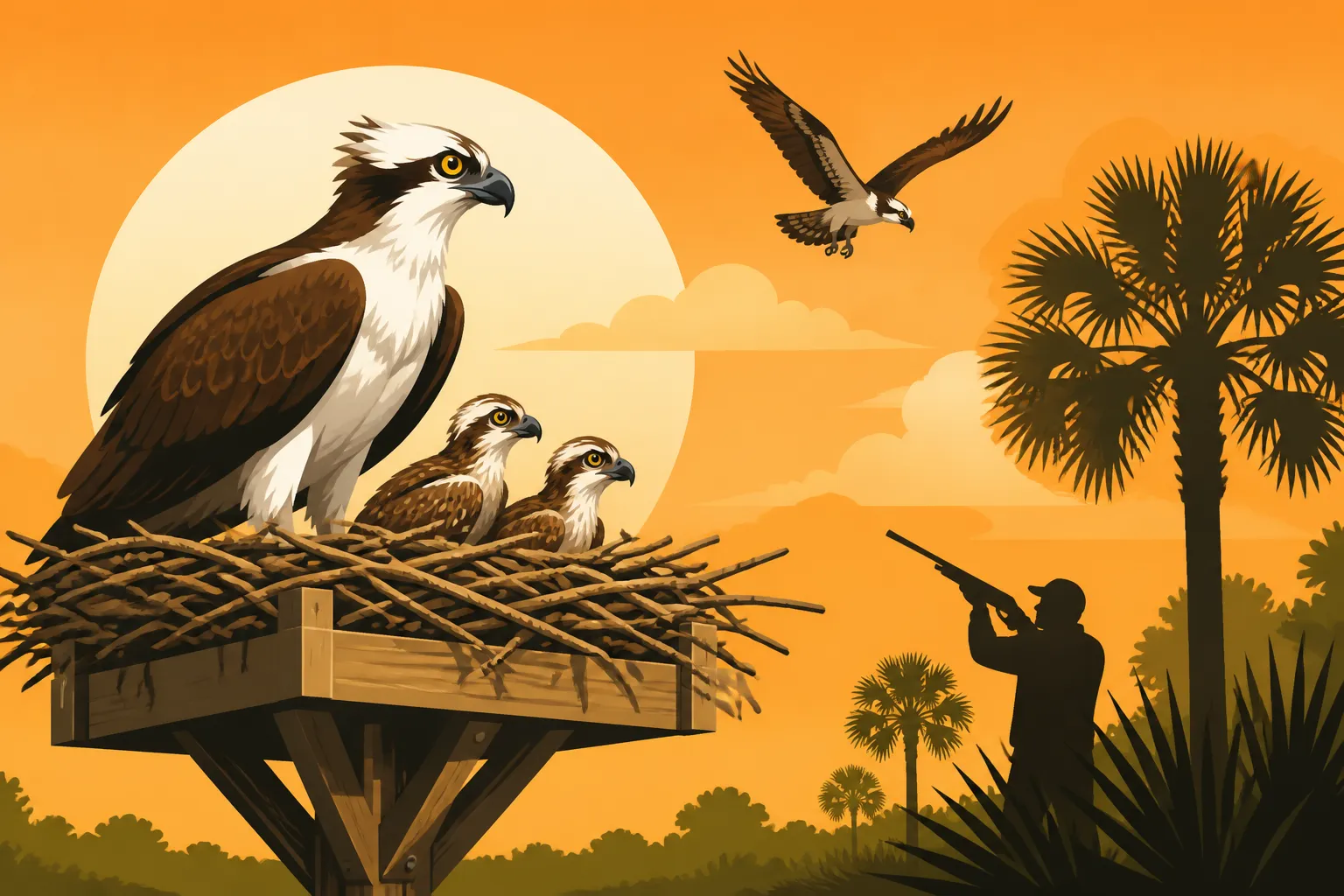
Florida Osprey Nesting Platforms
It's easy to get caught up in the hustle and bustle of daily life, but sometimes, when you’re out in the wilds of Florida, whether you're scouting for deer or calling in ducks, a flash of white and dark against the blue sky can stop you dead in your tracks. That's often our magnificent osprey, a true sentinel of Florida's waterways. While we often think about hunting game, understanding and supporting the broader ecosystem, like through osprey nesting platforms, helps ensure our wild spaces remain vibrant for all species, including those we pursue. This guide dives into why these platforms are so vital and how they fit into the bigger picture of Florida's thriving wildlife.
The Osprey's Place in Florida's Ecosystem
Ospreys are truly captivating birds, embodying the wild spirit of Florida's vast and varied aquatic landscapes. For anyone who spends time outdoors, especially near water, their presence is almost a given. But these impressive raptors face unique challenges, making human-assisted conservation efforts like nesting platforms incredibly important.
Why Ospreys Love Florida
Florida is, in many ways, an osprey paradise. We're blessed with an incredible abundance of freshwater and saltwater environments, from the sprawling Everglades to the intricate network of rivers, lakes, and coastal estuaries. This means one thing above all else for an osprey: fish. Their diet consists almost entirely of fish, and Florida’s waters are teeming with them, providing a consistent and readily available food source year-round. You'll see them circling overhead, often at a great height, before folding their wings and plunging talons-first into the water with astonishing precision.
The warm climate also plays a significant role. Unlike some migratory species that only visit Florida for the winter, many ospreys are year-round residents, establishing territories and raising their young right here in the Sunshine State. For hunters, observing a healthy osprey population in a particular area, especially near a significant body of water, often signals a robust aquatic ecosystem – an indicator that other wildlife, including game species that rely on healthy wetlands or abundant food chains, are likely thriving too. It's all connected, and the osprey is a very visible part of that connection. You might see them fishing the same waters you'd scout for Alligator Hunting Florida's Lakes and Rivers or watching for Florida Waterfowl and Dove.
Natural Nesting Habits and Challenges
Naturally, ospreys prefer to nest in tall, prominent structures that offer a wide view of their hunting grounds. Historically, this meant the tops of large, dead trees—known as snags—or sturdy, isolated live trees near water. These elevated perches provide safety from ground predators like raccoons and snakes, and a clear flight path to and from the nest.
However, Florida's rapid development over the years has led to a significant loss of these natural nesting sites. Old-growth trees are cut down for construction, and even in more wild areas, dead snags eventually decay and fall. This has forced ospreys to adapt, often choosing less-than-ideal spots. You’ve likely seen an osprey nest precariously balanced on a power pole or a communication tower. While these offer height, they come with their own set of dangers, primarily the risk of electrocution for the birds or potential fire hazards from the nests themselves. Severe weather, a common occurrence in Florida, can also easily destroy nests built in less stable locations, leading to significant breeding failures. The simple truth is, natural nesting opportunities, especially safe and durable ones, are becoming scarcer, and this directly impacts the osprey's ability to successfully reproduce and maintain strong populations.
Understanding Osprey Nesting Platforms
When natural homes dwindle, sometimes we need to step in and offer a helping hand. That's exactly where osprey nesting platforms come into play, providing a crucial lifeline for these magnificent raptors.
What is an Osprey Nesting Platform?
At its core, an osprey nesting platform is a human-made structure designed to mimic and improve upon the natural nesting sites ospreys seek out. Imagine a sturdy pole, often made of treated wood or galvanized steel, standing anywhere from 20 to 40 feet tall, firmly anchored in the ground. At the very top, there’s a flat, wide platform – usually a square or circular wooden or composite surface, sometimes with a rim or a wire basket to help contain nesting material. Often, conservation groups or even individuals will add a few starter sticks and branches to the platform, signaling to prospecting ospreys that this is a ready-made home.
These platforms are deliberately placed near productive waterways, offering ospreys a safe, elevated, and stable foundation for their bulky nests. They're built to withstand the elements, including strong winds and heavy rains, far better than many natural structures or makeshift nests on utility poles. The goal is to provide a reliable, long-term solution where natural options are either nonexistent or pose significant risks to the birds.
How Platforms Aid Conservation
The impact of well-placed nesting platforms on osprey conservation is nothing short of remarkable. One of their primary benefits is redirecting nesting activity away from hazardous utility poles. By providing an attractive and safe alternative, platforms significantly reduce the risk of electrocution for adult ospreys and their young, and prevent power outages that can occur when nests interfere with electrical infrastructure. This is a win-win for both wildlife and human communities.
Beyond safety from electrocution, these platforms offer increased protection from ground predators. With the nest elevated high above the reach of raccoons, bobcats, and other potential threats, the eggs and chicks have a much better chance of survival. The stable construction also means nests are less likely to collapse during heavy storms, a particularly important consideration in Florida's tropical climate. Many platforms are also part of larger community science efforts, allowing volunteers and researchers to monitor nesting success, track populations, and collect valuable data without disturbing the birds. This grassroots involvement fosters a deeper appreciation for wildlife and reinforces the interconnectedness of our ecosystems, benefiting not just ospreys but the overall health of the environment, something that resonates with anyone scouting Shed Hunting on Florida Public Land or Finding Ground Others Walk Past for game.
Siting and Constructing Effective Platforms
Putting up an osprey nesting platform isn't just about sticking a pole in the ground. There's a real art and science to ensuring it's not only safe and durable but also genuinely appealing to its intended residents. The right location and construction make all the difference for a successful nest.
Ideal Locations for Platforms
When considering where to place an osprey nesting platform, proximity to water is king. Ospreys are fish-eating machines, so a platform needs to be within easy flight distance of lakes, rivers, large ponds, coastal estuaries, or expansive marshes where they can reliably hunt. Think about areas you'd consider for Reading a Marsh for a Morning Flight or Hunting Florida's Big Bend Coast; these are often ideal for ospreys too.
Beyond water access, visibility is key. Ospreys like an unobstructed view of their surroundings, both for spotting prey and for detecting potential threats. This means avoiding areas completely surrounded by dense, tall trees, though a few scattered trees nearby are fine. It's also important to consider human disturbance. While some ospreys tolerate a degree of human activity, platforms are best placed a reasonable distance from busy roads, heavy boat traffic, or constantly used recreational areas. On the flip side, they shouldn't be so remote that they become impossible to monitor. Lastly, always consider the safety of the birds in relation to power lines or other hazards. The whole point is to move them away from danger, not closer to it.
Here’s a quick rundown of ideal siting factors:
| Factor | Ideal Condition | Why It Matters |
|---|---|---|
| Water Access | Within 1/4 to 1/2 mile of a productive fishing ground. | Ospreys are primarily piscivorous (fish-eaters). |
| Visibility | Clear, unobstructed view for hunting and predator detection. | Essential for successful hunting and safety. |
| Height | Tallest structure in the immediate vicinity (20-40 ft). | Deters ground predators, provides broad vantage. |
| Human Activity | Moderately isolated from heavy disturbance. | Reduces stress on nesting birds. |
| Safety | Well away from active power lines or tall communication towers. | Prevents electrocution and entanglement risks. |
| Accessibility | Reachable for future monitoring or maintenance. | Facilitates conservation efforts and repairs. |
Key Construction Considerations
Durability and safety are paramount when building an osprey platform. For the pole itself, treated lumber or heavy-gauge galvanized steel are common choices. These materials can withstand Florida's humidity, salt air (if coastal), and the occasional hurricane. The height is critical, generally between 20 and 40 feet. This elevation provides necessary protection from predators like snakes and raccoons, and gives the ospreys the commanding view they prefer.
The platform at the top needs to be robust. Typically, a square platform of about 3 feet by 3 feet, or a circular one of similar diameter, is adequate. It should have a sturdy base and often a shallow rim or a wire mesh bottom to provide good drainage and prevent eggs or chicks from falling out. A rough surface on the platform can help the birds grip their nesting materials. Many successful platforms begin with a small amount of "starter" nesting material—a few sticks and branches—to make the site instantly appealing to prospecting ospreys. Installation is also a major undertaking, often requiring specialized equipment and always needing extreme caution, especially if working near any existing utility lines.
Permitting and Regulatory Aspects in Florida
This isn't a "throw it up anywhere" situation, especially in a state like Florida where wildlife and environmental regulations are robust. Before you even think about sinking a pole into the ground, it's absolutely crucial to do your homework and check with the proper authorities. The Florida Fish and Wildlife Conservation Commission (FWC) is the primary state agency responsible for wildlife, and they are an excellent resource for information. You'll likely need to consult with them, especially if you're planning to install a platform on public lands like Florida Wildlife Management Areas, state forests like Florida State Forests and Environmental Areas, or within an environmental protection district.
Local county and municipal governments may also have their own permitting requirements, especially concerning construction and land use. This is particularly true if the land is privately owned but subject to certain zoning or environmental overlays. Remember, ospreys and their nests are protected under federal and state laws, including the Migratory Bird Treaty Act. Disturbing an active nest is illegal, so planning is essential. These regulations are in place to ensure that any human intervention truly benefits the species and doesn't inadvertently cause harm or conflict with other conservation goals. A little upfront research can save a lot of headaches later on and ensures your efforts contribute positively to Florida’s wildlife conservation.
Observing Ospreys and the Hunter's Connection
There's more to wildlife observation than just spotting game. For many of us who hunt and spend countless hours in Florida's outdoors, understanding the entire ecosystem is paramount. Ospreys, with their prominent nests and distinctive hunting style, offer a fantastic lens through which to view the health of our environment.
Ospreys as Ecological Indicators
Think of ospreys as highly visible natural thermometers for our aquatic ecosystems. Because their diet is almost exclusively fish, a thriving osprey population is a strong indicator of healthy fish stocks and clean waterways. When you see multiple osprey nests, particularly successful ones with fledglings, around a lake, river, or estuary, it's a good sign that the water quality is good and the food chain below the surface is robust. This insight is incredibly valuable, not just for bird watchers but for hunters as well.
For instance, if you're scouting for waterfowl in a marsh or looking for signs of alligators, the presence of ospreys confirms that the aquatic environment is productive. Healthy fish populations support a myriad of other species, including raccoons, otters, and even alligators, all of which are part of Florida's hunting landscape or intertwined in the same food web. Seeing ospreys indicates a vibrant food web, which can correlate with good habitat for other game animals that might feed along those same water bodies or utilize nearby cover. It means the area you're exploring is likely a healthy, functioning ecosystem, capable of supporting diverse wildlife, which is always a promising sign for any hunter looking for productive ground. This goes hand-in-hand with broader efforts in Florida Wildlife Disease Monitoring Program and understanding the overall health of our game species.
Using Technology for Observation and Understanding
In today's world, technology has become an invaluable tool for outdoor enthusiasts, whether you're chasing game or simply observing wildlife. For hunters, apps like GoHunt have revolutionized scouting, allowing us to pour over aerial maps, property lines, and terrain features from the comfort of our homes or out in the field. But don't limit these tools solely to game species!
You can absolutely leverage the same technology to enhance your understanding and observation of ospreys and their nesting platforms. As you're scouting a new WMA or a piece of private land, you might mark down the location of an active osprey platform you discover. This isn't just for curiosity; it's another layer of environmental data. By noting these locations, and perhaps even observing the success of the nest over time (without disturbing the birds, of course!), you're gathering information on areas that consistently support high levels of aquatic productivity. This could lead you to new insights about water flow, fish migrations, or specific habitat types that might also be attractive to other game. For example, a wetland supporting a thriving osprey colony might also be a prime spot for Early Teal Season Tactics in Florida or Hunting a Florida Green Swamp Slough. It helps paint a more complete picture of the area's ecological richness. Just remember, responsible use of technology and respecting wildlife are always paramount.
Disclaimer
This article is for general informational purposes only and does not constitute professional advice. Laws, prices and regulations vary by location and change over time. Consult a qualified professional for guidance on your specific situation.