Florida Hog Trapping Success Rates
One of the biggest headaches for landowners and wildlife managers in Florida is the sheer abundance of wild hogs, and it's completely understandable to feel frustrated when you've invested time and effort into trapping them only to feel like your efforts aren't paying off. Trapping feral hogs in Florida isn't a magical, one-size-fits-all solution, and understanding the realistic success rates is crucial for setting expectations and improving your strategy. This guide will walk you through what truly defines success in hog trapping and the critical factors that can make or break your efforts, helping you boost your chances of getting those destructive pigs off your property.
Understanding What "Success" Means in Hog Trapping
When we talk about "success rates" in hog trapping, it's easy to picture a trap overflowing with pigs every single time you check it. The reality, however, is often a bit more nuanced, especially here in Florida with our diverse habitats and wily hogs. Before you can even begin to measure your success, you really need to define what success looks like for you and your specific situation.
Defining Your Trapping Goals
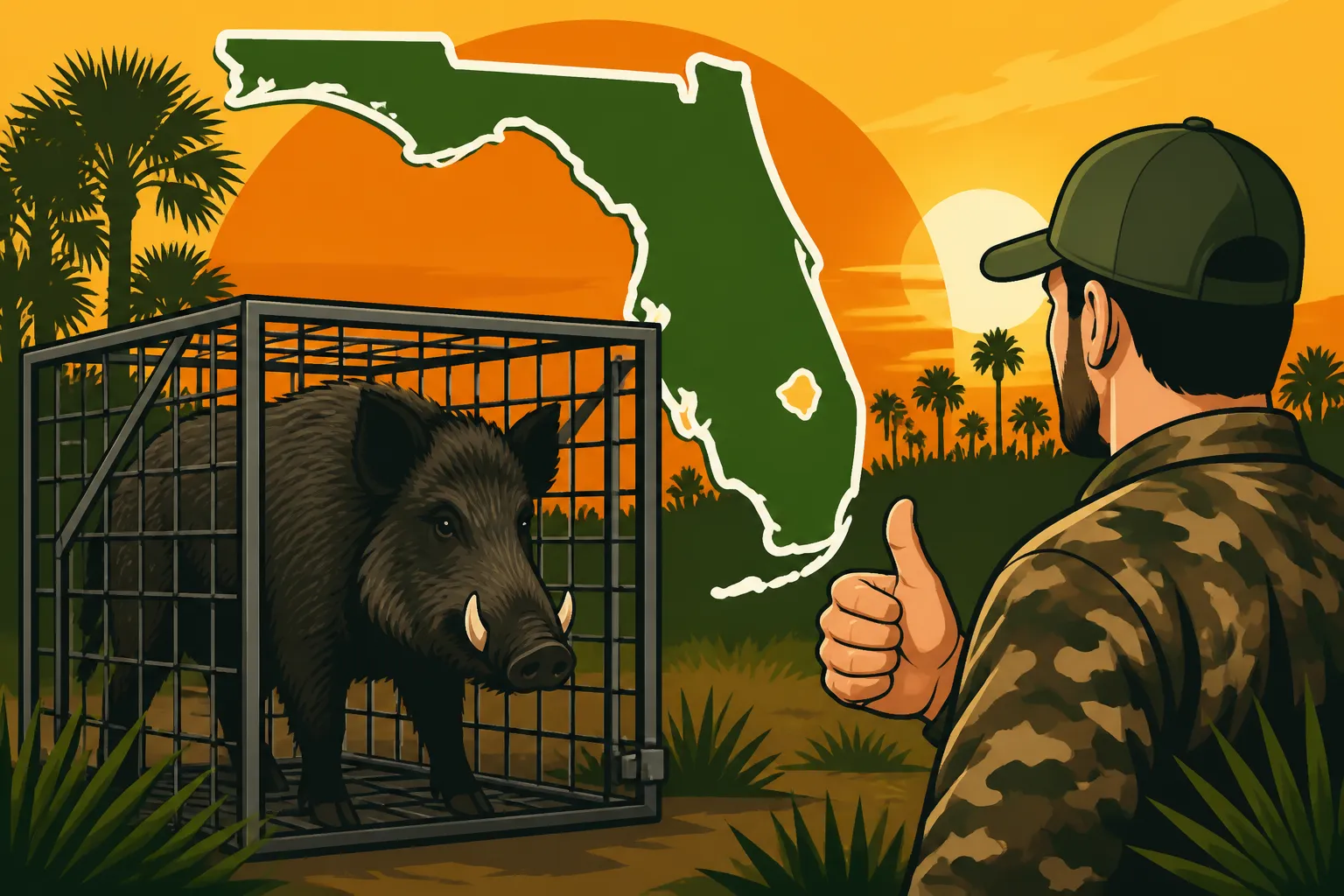
For some folks, success might mean removing an entire sounder that's been tearing up their backyard or agricultural fields. They're looking for total eradication from a specific parcel of land. For others, it might be more about consistent control—reducing the numbers enough to mitigate damage over time, rather than a single, dramatic catch. A large, multi-door corral trap that catches a dozen pigs at once might feel like a massive success if you're trying to clear out a large area before planting a food plot, while a small live trap catching one or two nuisance hogs near a garden could be equally successful for a homeowner. It truly boils down to the scale of the problem you're tackling and what specific outcome you're hoping to achieve. Setting clear goals upfront, like aiming to reduce rooting damage by 50% or removing a specific sounder identified by trail cameras, helps you evaluate your Florida Hog Trapping Success Rates realistically.
The Difference Between Catching Any Hog and All Hogs
This is a critical distinction that many new trappers overlook. It's relatively easy to catch a hog, especially if you're dealing with a curious, less-pressured individual. These single catches can certainly be satisfying, and every hog removed is a win, but they don't necessarily address a larger population problem. The real challenge, and where true success rates come into play, is consistently catching multiple hogs, especially entire sounders, and getting those notoriously trap-shy older sows and boars. Hogs learn quickly, and if they see a trap sprung on one of their kin, or if they have a negative experience with a poorly set trap, they can become "trap-smart." Catching all hogs in an area often requires more sophisticated trapping systems, longer pre-baiting periods, and a deeper understanding of hog behavior. Sometimes, a combination of trapping and other methods, such as Night Hunting Hogs With Lights in Florida or Dog Hunting Hogs in Florida, becomes necessary to achieve comprehensive control.
Key Factors Influencing Florida Hog Trapping Success
There's no magic bullet for hog trapping, but there are definitely key ingredients that drastically improve your odds. Think of it like a recipe – if you miss a few crucial steps, your dish might still be edible, but it won't be a culinary masterpiece. The same goes for trapping; attention to detail in these areas can significantly impact your Florida Hog Trapping Success Rates.
Trap Type and Setup
This might sound obvious, but the kind of trap you use and how you set it up are paramount. A small box trap designed for raccoons isn't going to cut it for a mature Florida boar. We're talking about heavy-duty equipment. For consistently high success rates, especially when targeting entire sounders, a large corral trap is often your best bet. These circular or square enclosures, usually 15-20 feet in diameter, allow multiple hogs to enter freely before the gate triggers. Drop gates, root gates, or guillotine style gates all have their place, but the key is that they should be reliable and humane.
When setting up, concealment is critical. Hogs are smart, and they'll approach anything new with suspicion. Brush in your trap walls with natural vegetation, hide the gate mechanism, and make sure the entrance feels inviting. Avoid shiny new metal that glares in the sun. Consider using a remote camera, or checking out the mapping layers on an app like GoHunt, to help identify natural travel corridors or cover where you can discretely place your trap. Don't forget anchoring: a determined hog can and will destroy or move a poorly anchored trap. Drive T-posts deep into the ground to secure the panels. Also, think about the gate trigger itself. A trip wire that's too sensitive might catch a small pig but spook a whole sounder. A root-style trigger, where hogs have to physically root the ground to activate it, can be very effective as it mimics their natural feeding behavior.
| Trap Type | Best Scenario | Pros | Cons |
|---|---|---|---|
| Corral Trap | Catching entire sounders; large acreage | High capacity, can catch multiple hogs, less trap-shy | Labor-intensive setup, expensive, requires large vehicle |
| Box Trap (Large) | Nuisance animals, smaller sounders, confined areas | Relatively portable, good for single problem hogs | Limited capacity, hogs can become trap-shy, harder for large boars |
| Snare/Cable Restraint | Targeted removal, specific travel lanes | Inexpensive, highly portable, good for specific hogs | Less humane, requires specific training/permitting, often illegal for hogs |
| Walk-Through Trap | Highly trap-shy hogs, pre-baiting | Can get hogs accustomed to entering, very effective when triggered | Requires remote trigger, hogs can sometimes escape before trigger |
Baiting Strategy and Pre-Baiting
Baiting is where you truly earn your stripes as a trapper. You can't just toss some corn out and expect miracles. The secret to good Baiting Hogs Legally in Florida is consistency and patience. Start with a pre-baiting phase, where you condition the hogs to associate the trap area with a reliable food source. For at least 5-7 days, scatter bait around and inside the unset trap, with the gate tied open. This allows them to come and go freely, building trust and habit. They need to feel completely comfortable entering and exiting the trap without fear.
What kind of bait? Fermented corn is a classic for a reason – the smell carries far, and hogs absolutely love it. You can mix it with fruit scraps, stale pastries, or even a commercial hog attractant. The key is to keep it fresh and plentiful during the pre-baiting phase. Once you observe them consistently feeding inside the trap, and even see larger boars and sows entering, that's when you set the gate. Some trappers swear by "sour corn," which is simply corn soaked in water for several days until it ferments. Others add a little yeast or sugar to speed up the process. A strong, distinctive smell is your best friend in attracting them from a distance. Just remember to replenish the bait regularly; if they show up and the bait is gone, they'll quickly lose interest.
Location, Location, Location
You can have the best trap and the sweetest bait, but if it's in the wrong place, your Florida Hog Trapping Success Rates will plummet. Hogs are creatures of habit, and they typically follow established travel routes between bedding areas, feeding grounds, and water sources. Look for fresh sign: rooting, tracks, scat, and rubbed trees. Dense cover like palmetto thickets, cypress swamps, or oak hammocks often provide bedding, while adjacent open fields or food plots are prime feeding areas. A natural funnel, like a narrow strip of woods between two pastures or a choke point along a creek, is an ideal place to set a trap. Using satellite imagery or topographic maps, perhaps through a platform like GoHunt, can help you identify these natural travel routes and potential bedding areas before you even step foot on the property.
Pay attention to water sources too. Hogs need water daily, especially in Florida's heat, and wallows are clear indicators of hog activity. Setting a trap near a wallow or a creek crossing can be incredibly effective. Consider the prevailing winds as well; you want the scent of your bait to carry into areas where hogs are likely to be. If you're unsure where to start, begin by placing trail cameras in suspected areas. The intelligence gathered from these cameras—which direction they're coming from, what time they're moving, and the size of the sounders—will be invaluable in pinpointing the perfect trap location. Remember, hogs often avoid open areas during the day, so placing your trap near dense cover that offers them security will make them more comfortable approaching it.
Seasonal and Environmental Considerations
Florida's unique climate means that trapping strategies need to adapt throughout the year. During cooler, drier months, hogs might congregate more around permanent water sources and depend more heavily on supplemental food like corn or acorns. In the hotter, wetter months, natural food sources like berries, tubers, and roots are abundant, and hogs might be less interested in your bait. They might also be more spread out due to plentiful water everywhere.
Rain can also impact your success. Heavy rains can wash away bait scent and make travel difficult, potentially slowing hog movement to your trap. Conversely, a prolonged dry spell might make a water source near your trap irresistible. Understanding hog behavior in response to weather patterns is key. For example, after a cold front, hogs might be more active, seeking out food to replenish energy. If there's a poor acorn year, they'll be much more likely to hit your bait hard. You might even find success Hunting Deer After a Cold Front, applying similar observations of increased animal movement. Monitoring local mast crop failures and successes can give you a significant advantage in knowing when hogs will be most receptive to your bait.
Maximizing Your Trapping Success Rates
Even with the perfect setup and bait, trapping requires ongoing effort and a willingness to adapt. It's not a "set it and forget it" operation. Consistent monitoring and understanding the nuances of Florida's hunting regulations are crucial for sustained success.
Monitoring and Adaptation
Once your trap is set, consistent monitoring is non-negotiable. Ideally, you should check your traps daily, or at least every other day, to ensure humane treatment of captured animals and to prevent damage to your trap. Trail cameras are an absolute game-changer here. Place cameras near your trap entrance (not directly pointing at the bait pile inside, but rather at the approach) to observe hog behavior. Are they approaching the trap but not entering? Are they entering but not tripping the gate? Are they skirting the trap entirely? This feedback is invaluable.
If you're not getting results, don't be afraid to change things up. Maybe the bait needs to be refreshed or changed entirely. Perhaps the gate trigger is too stiff, or the trap itself is too exposed. Sometimes moving the trap just 50 yards can make a world of difference. Observe, learn, and adapt. If a sounder has become trap-shy, consider a different bait or even a different type of trap. You might need to go back to a longer pre-baiting phase or move the trap to a completely new location if they've learned to avoid it. Using tools like GoHunt can help you scout and monitor areas more effectively, giving you the data needed to make informed adjustments to your trapping strategy. Remember, feral hogs are intelligent and constantly learning, so your approach needs to be dynamic.
Legalities and Ethical Considerations
While Why Florida Treats Hogs as Unprotected means you can hunt them year-round on private land without a license, trapping them still comes with responsibilities. When hogs are caught, they need to be dispatched humanely and efficiently. Florida regulations typically allow for humane dispatch in the trap. Always double-check the latest FWC regulations, especially if you plan to hunt Year-Round Hog Hunting in Florida on public land or use methods like snares, which may have specific restrictions. If you're trapping on private land, ensure you have explicit permission from the landowner.
The ethical treatment of trapped animals is paramount. Leaving animals in a trap for extended periods, especially in Florida's heat, can cause unnecessary stress, injury, or even death. This is why daily checks are so important. Additionally, if you're not consuming the meat, consider donating it if possible, though you'll want to review rules around venison donation. Properly disposing of carcasses is also important to prevent attracting scavengers or spreading disease. Your actions reflect on all hunters and trappers, so conduct yourself with respect for the animals and the land.
Learning from Your Experiences
Every trapping attempt, successful or not, is a learning opportunity. Keep a log of your trapping efforts: dates, locations, bait used, trap type, weather conditions, and the outcome. Note what worked and what didn't. Did a particular type of bait attract more hogs? Did a specific location yield better results? Was there a time of year when trapping was more effective? Over time, this data will help you develop a more robust and effective trapping strategy tailored to your specific property and the hogs in your area. This continuous learning cycle is what ultimately refines your approach and significantly improves your overall Florida Hog Trapping Success Rates. Whether you're aiming to remove a single problem hog or manage a large population to reduce Florida Hog Damage to Agriculture, consistent effort and an analytical mindset are your greatest assets. Eventually, you'll be able to consistently Trapping a Sounder on Private Land, making a real impact on the local hog population.
Disclaimer
This article is for general informational purposes only and does not constitute professional advice. Laws, prices and regulations vary by location and change over time. Consult a qualified professional for guidance on your specific situation.