Florida Burrowing Owl Habitat
It's easy to get caught up in the pursuit of game in Florida, whether you're chasing a wary Osceola gobbler or patterning a mature buck. But sometimes, as you navigate the vast landscapes of our state, you stumble upon a creature that reminds you just how diverse and unique Florida truly is. One such marvel is the Florida burrowing owl, a charismatic little bird that lives right under our feet, yet often goes unnoticed until you know what to look for. This guide will dive deep into understanding their unique habitats, where you might find them, and how their existence ties into the broader picture of Florida's wild spaces.
The Unmistakable Florida Burrowing Owl: A Ground-Dwelling Marvel
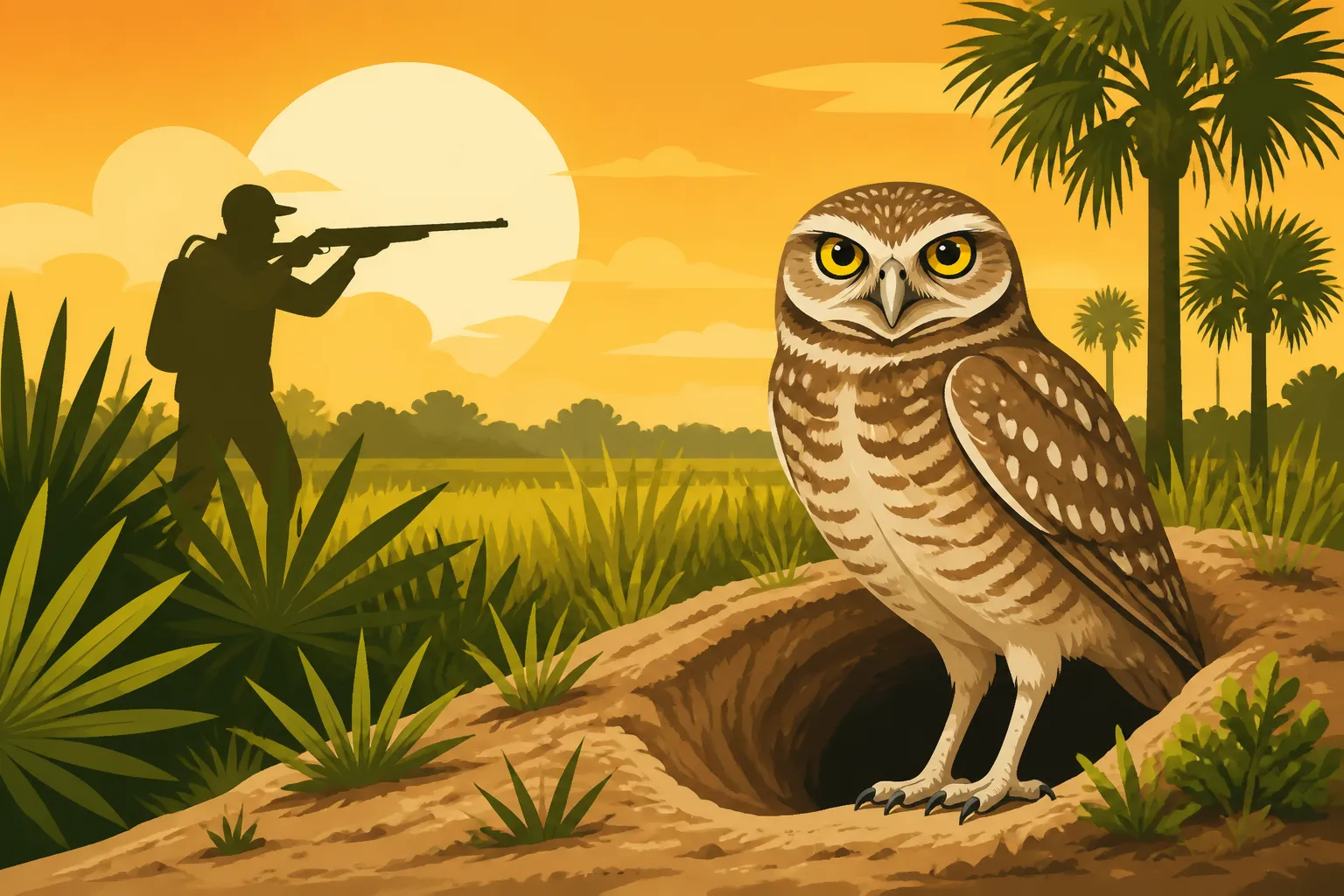
When most people think of owls, they imagine nocturnal hunters perched high in trees, peering down with piercing eyes. The Florida burrowing owl, however, breaks that mold entirely. These fascinating birds are mostly diurnal, meaning they are active during the day, and true to their name, they live in burrows in the ground. They're not your typical forest dwellers; instead, they prefer wide-open, treeless spaces, a habitat type that's becoming increasingly precious in our rapidly developing state. Their small size, long legs, and intense yellow eyes give them an almost cartoonish charm, making them a favorite among birdwatchers and a delightful surprise for any outdoorsman.
Why They Prefer the Ground Life
Living underground isn't just a quirky preference for these owls; it's a vital survival strategy. Florida's climate, with its intense heat and frequent thunderstorms, makes a subterranean home a perfect refuge. The burrows provide insulation from the scorching sun and protection from heavy rains and strong winds, creating a stable microclimate for raising their young. They’re also surprisingly good at camouflaging themselves against the sandy or grassy soil near their burrow entrances, making them difficult for predators to spot. This ground-dwelling lifestyle sets them apart from virtually all other owl species in North America, highlighting their unique evolutionary path.
A Bird of the Open Field and Urban Edge
Unlike the deep woods preferred by many game species, burrowing owls thrive in environments that feel distinctly un-Florida-like to many of us. Think short-grass prairies, pastures, golf courses, and even vacant lots in suburban areas. These aren't the cypress swamps or thick palmetto heads you might associate with our state's wild character. Instead, they seek out areas where the soil is loose enough for digging burrows and the vegetation is short, allowing for clear lines of sight to spot prey and predators. It’s this preference for open, dry ground that often puts them in direct conflict with human development, yet also allows them to coexist in unexpected places. You might be scouting for deer on a piece of private land using your GoHunt app, checking the topography, and suddenly realize those small mounds in a pasture are actually owl homes!
Key Characteristics of Florida Burrowing Owl Habitat
Understanding what makes ideal burrowing owl habitat is crucial, not just for conservationists, but for anyone who spends time outdoors in Florida. These birds are particular about their homes, and knowing their preferences can help you identify potential sightings or simply appreciate the nuances of the landscapes you traverse. It's a stark contrast to thinking about something like Hunting Florida Cypress Swamp Edges, where dense cover is key. For owls, it's all about exposure.
Short-Grass Prairies and Pasturelands
Historically, Florida's vast dry prairies and expansive pasturelands formed the backbone of burrowing owl habitat. These areas, often characterized by sandy soils and sparse, low-lying vegetation, offer the perfect conditions for burrow construction and open hunting grounds. The short grass allows the owls to easily spot insects, small rodents, and reptiles—their primary food sources—and to keep a watchful eye for hawks or other aerial predators. When ranchers manage their pastures for cattle, keeping the grass clipped short, they inadvertently create prime real estate for these owls. It’s a delicate balance, as overgrazing can destroy burrows, but well-managed grazing often mimics the natural prairie conditions the owls prefer.
Sandy Soils and Well-Drained Terrain
The foundation of any good burrow is the soil itself. Florida burrowing owls need sandy, well-drained soils that are easy to dig into and won't flood during heavy rains. This is why you won't find them in marshy areas or thick, mucky wetlands. They need ground that can hold the structure of a burrow without collapsing, providing a secure home for their eggs and chicks. Areas with a slight elevation or natural slopes are often favored because they offer better drainage. Imagine the sandy ridges you might find while Hunting Florida Central Ridge Sandhills; these same well-drained, open characteristics are attractive to the owls, even if the surrounding scrub is too dense for them.
Urban and Suburban Adaptations
Perhaps one of the most surprising aspects of Florida burrowing owls is their ability to adapt to human-modified landscapes. While many species flee development, these owls have found niches in cities and suburbs, particularly in areas like Cape Coral. Here, they've learned to colonize vacant lots, sports fields, and even along roadsides, often digging burrows in the sandy fill dirt. They might use existing culverts or pipes, or simply dig their own, showcasing an incredible resilience. This urban adaptation is a double-edged sword: it allows them to persist despite habitat loss elsewhere, but it also puts them in closer proximity to human disturbances and threats like domestic pets or vehicle traffic. It truly highlights how different their needs are compared to, say, game animals that rely on remote areas for Hunting Pressure on Florida Public Land.
| Habitat Characteristic | Importance for Burrowing Owls | Example Locations |
|---|---|---|
| Short, Sparse Vegetation | Clear line of sight for hunting prey and spotting predators; easy movement. | Pastures, golf courses, vacant lots |
| Sandy, Well-Drained Soil | Easy to dig burrows; prevents flooding of nests; structural integrity for burrows. | Dry prairies, sandy ridges, disturbed urban lots |
| Open, Treeless Areas | Crucial for aerial hunting; reduced perching sites for avian predators. | Large fields, airstrips, newly cleared land |
| Absence of Dense Cover | Limits concealment for ground predators; maximizes visibility for owls. | Fallow fields, suburban developments |
| Availability of Prey | Abundance of insects, small rodents, and reptiles. | Any of the above, especially managed grounds |
Threats to Florida Burrowing Owl Habitat and Conservation Efforts
Despite their adaptability, Florida burrowing owls face significant challenges, primarily stemming from habitat loss and fragmentation. Their preference for open, dry ground often puts them in the crosshairs of residential and commercial development, turning prime owl real estate into new neighborhoods or shopping centers. Understanding these threats is the first step toward appreciating the conservation efforts in place and realizing that every acre of suitable habitat preserved makes a difference.
The Impact of Development and Agriculture
Florida's booming population and rapid development are the biggest threats to the burrowing owl. Every new housing subdivision, shopping mall, or industrial park reduces the amount of available open, dry land these owls depend on. Even agricultural changes, such as converting traditional pastureland to row crops or dense orchards, can eliminate suitable habitat. Imagine a vast field, once perfect for owls, now becoming a dense citrus grove; it's a permanent change that displaces these birds. This constant pressure means that even areas that seem remote today could be under threat tomorrow, highlighting the importance of tools like GoHunt to stay informed about changing land uses or potential new public access points where conservation might be a priority.
Indirect Threats: Pesticides, Predators, and Human Disturbance
Beyond direct habitat loss, burrowing owls contend with a range of indirect threats. The use of pesticides in agricultural and urban areas can reduce their insect prey base, impacting their food supply. Increased human presence brings with it more domestic animals, and cats and dogs can be significant predators of ground-dwelling owls and their young. Vehicle collisions are also a concern, especially for owls that establish burrows near roadsides. Furthermore, unintentional disturbance from people getting too close to burrows can stress the birds and lead to nest abandonment. Education is key, as many people simply aren't aware that these small owls are nesting in their local park or vacant lot.
Conservation Strategies: Preserving and Creating Habitat
Conservation efforts for Florida burrowing owls focus on two main areas: protecting existing suitable habitats and, where possible, creating new ones. In places like Cape Coral, local ordinances often protect burrowing owls and their nests, requiring buffers around active burrows during nesting season. Many golf courses and private landowners are also educated on how to manage their properties to be more owl-friendly. For hunters, knowing this can even influence how you view land – realizing that diverse ecosystems often support a wider array of wildlife, even beyond your target game. For instance, good habitat for burrowing owls might overlap with areas you'd consider for Hunting a Standing Peanut Field or Hunting a Green Field Planted for Deer, where open spaces are also common.
Another crucial strategy involves the installation of artificial burrows. Where suitable habitat exists but natural burrows are scarce, conservation groups and volunteers will dig starter burrows and install artificial burrows to encourage owls to nest. These efforts, combined with public awareness campaigns, are vital for ensuring that these charming, ground-dwelling owls continue to be a part of Florida's unique wildlife tapestry. The Florida Fish and Wildlife Conservation Commission (FWC) works to identify and monitor owl populations, and their public land maps, which you might use for Scouting Florida Public Land Before Season, sometimes even note sensitive wildlife areas.
How to Spot and Appreciate Florida Burrowing Owls Ethically
One of the great joys of spending time in Florida's outdoors is encountering its diverse wildlife. Spotting a Florida burrowing owl is a truly special experience, given their unique appearance and behavior. However, it's essential to do so ethically, ensuring you don't disturb these birds, especially during their nesting season. Whether you're intentionally birdwatching or just out enjoying a day on Public Hunting Land in Florida, a little knowledge goes a long way.
Where and When to Look
Your best bet for spotting burrowing owls is in the open, short-grass areas we've discussed: pastures, fallow fields, golf courses, and even vacant lots in sandy, developed areas like parts of Southwest Florida. They are most active during the day, particularly in the early morning and late afternoon, when they can be seen perched near their burrow entrances, scanning for prey or predators. They're surprisingly bold, sometimes allowing a closer approach than many other wild birds, but always maintain a respectful distance. If you're using an app like GoHunt to scout aerial photos for potential Entry Routes Through a Florida Food Plot, keep an eye out for tell-tale circular disturbances in open fields that might indicate a burrow.
Identifying Active Burrows
An active burrow typically has a clear, well-worn entrance, often with a mound of excavated dirt around it. You might see "scat" (owl droppings) or pellets (regurgitated undigested food) around the entrance, which are good indicators of recent activity. Sometimes, the owls will decorate their burrow entrances with bits of trash or other shiny objects, a behavior thought to attract prey or simply to mark their territory. The presence of these small signs can confirm you've found a burrowing owl home. Remember, these birds are small, so their burrows aren't massive.
Ethical Observation and Photography
If you're lucky enough to find an active burrow, remember to observe from a distance. A good pair of binoculars or a spotting scope will allow you to enjoy their antics without causing stress. If you're taking photos, a long telephoto lens is your friend. Never approach a burrow too closely, especially during nesting season (typically February through July), as disturbing the parents can cause them to abandon their nest or expose their young to predators. Look for signs of distress, such as repeated alarm calls, bobbing, or flying away, and if you see them, back off immediately. We want to enjoy these birds, but their well-being comes first. Just as we respect other species, we must extend that same courtesy to these unique Florida residents.
Disclaimer
This article is for general informational purposes only and does not constitute professional advice. Laws, prices and regulations vary by location and change over time. Consult a qualified professional for guidance on your specific situation.