How Close a Florida Mentor Must Stay
It's a fantastic feeling to introduce someone new to the woods, especially when that someone is a young hunter eager to learn the ropes. But if you're like many seasoned outdoors folks, you might find yourself a little confused about the exact legal requirements for supervising a youth hunter in Florida. There's a fine line between giving them space to learn and ensuring they're always safe and compliant with state regulations. This guide will walk you through Florida's specific rules on how close a mentor must stay, along with practical advice to make those precious outdoor experiences both legal and enriching for your mentee.
Understanding Florida's Mentored Youth Hunting Program
Florida’s Mentored Youth Hunting Program is a wonderful initiative designed to get more young people involved in hunting by making the entry barrier a little lower. It allows young folks to experience hunting before completing a full hunter education course, under the direct supervision of an experienced adult. This program recognizes that hands-on experience, guided by a knowledgeable mentor, is often the best way to learn the nuances of hunting safely and ethically.
Who Qualifies as a Mentored Youth Hunter
First things first, who exactly falls under this "mentored youth hunter" umbrella? In Florida, any youth under the age of 16 can participate in the Mentored Youth Hunting Program. The beauty of this program is that these young hunters do not need to possess a hunter safety certification or even purchase a hunting license. This removes a couple of initial hurdles that can sometimes deter parents or guardians from introducing their children to hunting. It's a fantastic way for them to test the waters, get a feel for what hunting entails, and decide if it's something they want to pursue long-term. The focus is squarely on learning and experiencing the outdoors with a trusted adult.
The Purpose Behind Mentored Hunting Regulations
The regulations surrounding mentored youth hunting aren't just arbitrary rules; they exist for very good reasons. Primarily, they are about safety. Introducing firearms, archery equipment, and the responsibilities of hunting to a young person requires careful guidance. The mentor acts as a critical safety net, ensuring the youth understands weapon handling, target identification, and ethical shot placement. Beyond immediate safety, these regulations also aim to instill a strong sense of ethical hunting. It's about teaching respect for wildlife, understanding seasons and bag limits, and responsible behavior in the field. The goal is to cultivate a new generation of informed, responsible conservationists, and the mentor's role in this is absolutely pivotal.
License Requirements for Mentors and Mentees
While the youth hunter doesn't need a license or hunter education, the adult mentor certainly does. The supervising adult must possess a valid Florida hunting license. This isn't just a formality; it ensures that the person doing the supervising is legally entitled to hunt themselves and is familiar with the state's hunting laws. Additionally, if the mentor was born on or after June 1, 1975, they must also have a valid hunter safety certification. This ensures they've gone through the proper training and understand the fundamental principles of safe hunting. It’s a checks-and-balances system designed to keep everyone safe and compliant. Remember, the mentor is ultimately responsible for any legal infractions committed by the mentored youth, so knowing the rules, like those detailed in Florida Hunter Education Requirements and Florida Youth Deer Hunt Rules, is paramount.
Defining "Close Proximity" for Mentors
This is where the rubber meets the road for many mentors. How close is "close enough"? Florida's regulations are pretty clear on the matter, but it still requires some common sense and adherence to the spirit of the law rather than just the letter. The goal is direct supervision, which implies an immediate ability to intervene.
The FWC's Specific Guidelines on Distance
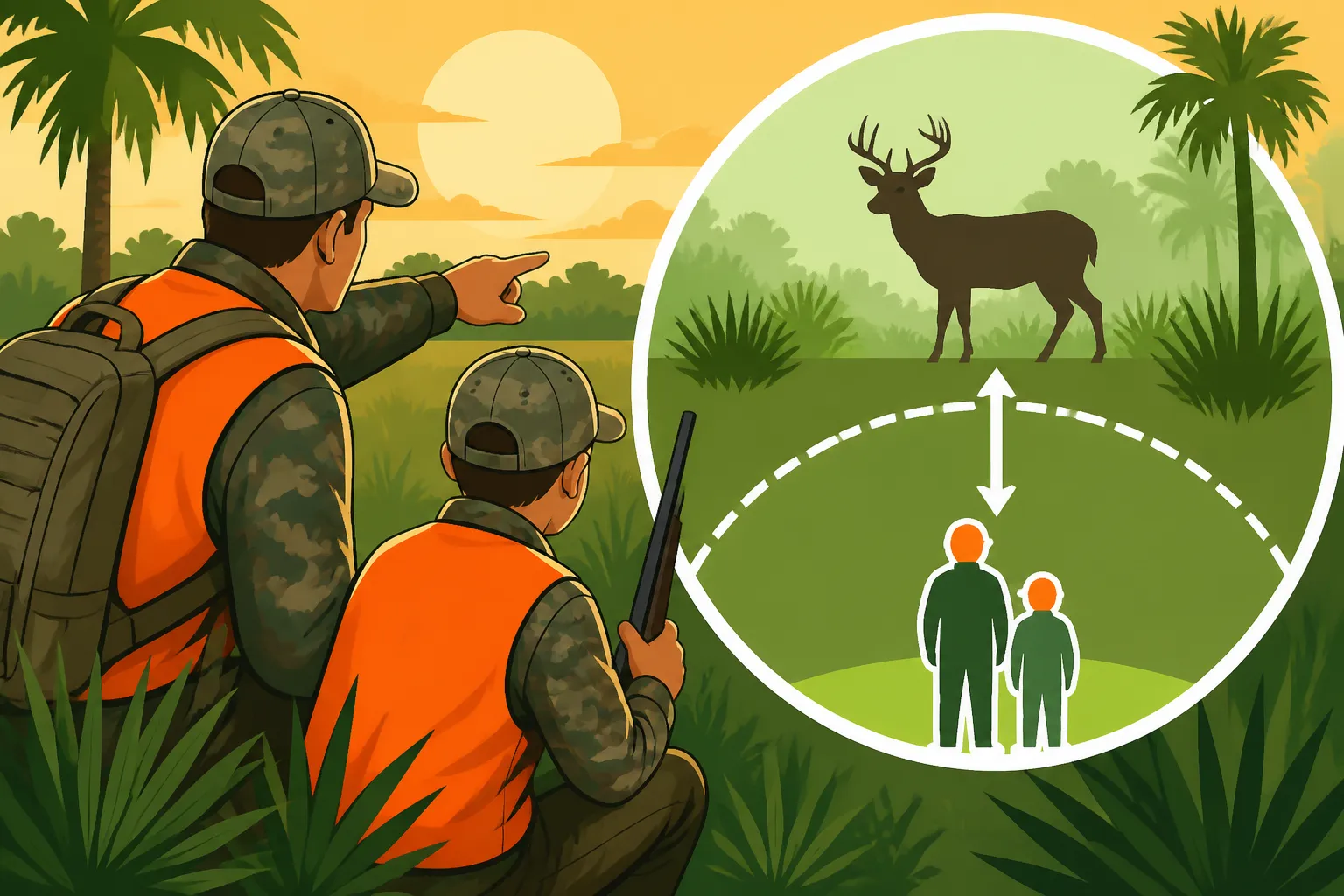
The Florida Fish and Wildlife Conservation Commission (FWC) states that the supervising adult must be "within an arm's reach" of the mentored youth while hunting. Now, "arm's reach" might sound a bit subjective, but in practical terms, it means you should be close enough to physically assist or take control of the firearm or bow at a moment's notice. This isn't just about standing a few feet away; it's about being actively engaged in their hunting experience, ready to guide their aim, prevent an unsafe shot, or help them with a difficult situation. For example, if you're in a ground blind together, the youth should be right next to you, not on the other side of the blind where you can't easily reach them.
Factors Influencing "Direct Supervision"
Beyond just physical distance, "direct supervision" encompasses several factors that mentors need to consider. It's not just about how many feet separate you; it's also about your line of sight, the communication you can maintain, and your ability to intervene. If you're hunting in thick palmetto scrub, being 10 feet away might feel like 100 feet if you can't see your mentee clearly. Conversely, in an open field, 10 feet might be perfectly fine. The type of weapon also plays a role – a youth handling a powerful rifle might require even closer vigilance than one using a small game air rifle, though all require constant attention. Weather conditions, terrain, and the specific hunting scenario (e.g., still-hunting vs. sitting in a blind) all factor into what constitutes truly "direct" and safe supervision.
The Importance of Communication and Line of Sight
Even if you're technically within arm's reach, if you're not actively communicating or maintaining line of sight, you're not fulfilling the spirit of direct supervision. This means constant dialogue: whispering instructions, pointing out movement, checking for confirmation on target identification, and always being aware of where the muzzle is pointed. If your mentee is looking through their scope, you should be looking over their shoulder or through binoculars, confirming everything they see. Effective communication also means teaching them to communicate with you, to ask questions, and to voice any uncertainties they have. Consider scouting apps that allow you to share locations, like what you might find using a tool like GoHunt, to pre-plan setups and ensure good line of sight and communication areas. This planning phase, even before you step into the field, is crucial for both safety and success.
Practical Scenarios and Best Practices for Mentors
Understanding the rules is one thing; putting them into practice in the dynamic environment of a Florida hunt is another. Different hunting situations present unique challenges and opportunities for effective mentorship.
Mentoring in Different Florida Habitats
Florida offers a rich tapestry of hunting habitats, from dense cypress swamps to open pine flatwoods, and each requires a slightly different approach to mentoring.
- Ground Blinds: These are often ideal for mentored youth. You can sit side-by-side, talk softly, and maintain that crucial "arm's reach" proximity easily. Ensure the blind is set up for two people comfortably, allowing the mentee a clear shot window while you maintain oversight. You might find great success using a ground blind on Florida public land for deer or hogs.
- Still-Hunting: This can be more challenging. When Still-Hunting Florida Palmetto Flatwoods, you'll need to move slowly and deliberately together, with the youth always just a step or two in front or beside you, maintaining physical proximity and visual contact. This is excellent for teaching tracking and observation but demands constant vigilance.
- Treestands: Many treestand setups are not conducive to the "arm's reach" rule, especially if the stand only fits one person or is designed for solo hunting. If you use a two-person ladder stand or a double-sized stand, ensure the mentee is securely harnessed and positioned directly next to you. Your ability to physically intervene quickly is paramount. Always prioritize safety over convenience.
Safety Considerations Beyond Legal Distances
While "arm's reach" is the legal benchmark, a good mentor goes above and beyond. Safety isn't just about distance; it's about preparation, education, and instilling good habits.
- Weapon Familiarity: Before you even get to the hunting area, ensure the youth is thoroughly familiar with their weapon. Practice extensively at the range. Teach them the four fundamental rules of firearm safety until they are second nature:
- Treat every firearm as if it's loaded.
- Always point the muzzle in a safe direction.
- Keep your finger off the trigger until ready to shoot.
- Be sure of your target and what is beyond it.
- Blaze Orange: Florida has specific Florida Blaze Orange Requirements for hunters on public lands. Ensure both you and your mentee are wearing the required amount of blaze orange, even if you are on private land, as an added layer of safety.
- First Aid and Emergency Preparedness: Always carry a well-stocked first-aid kit. Know how to use it. Discuss emergency procedures with your mentee: what to do if you get separated, how to call for help, and basic survival tips. Having a detailed plan for any unforeseen circumstances, like a lost phone or an unexpected injury, is critical for hunting in remote areas.
Using Technology to Enhance Mentorship and Safety
Modern technology can be a powerful ally in enhancing both safety and the learning experience for youth hunters.
- GPS and Mapping Apps: Tools like GoHunt or similar GPS mapping applications are invaluable. Before the hunt, use them to show your mentee the boundaries of the hunting area, potential hazards, and escape routes. During the hunt, use the app to track your movement, mark important spots like game sightings, and ensure you're always aware of your precise location. This teaches valuable navigation skills and provides a safety net.
- Two-Way Radios/Walkie-Talkies: While not a substitute for direct proximity, two-way radios can be useful for brief separations (e.g., if one of you needs to step away for a moment) or for communication when scouting. Always ensure clear channels and teach proper radio etiquette.
- Trail Cameras: While not directly related to proximity, trail cameras can significantly enhance the learning experience. Use them to scout animal movement and patterns, teaching your mentee about wildlife behavior and sign. This is a great way to show them how to interpret what they're seeing in the woods, tying into topics like Scouting Florida Public Land Before Season.
Beyond Proximity: Mentor Responsibilities and Ethics
The role of a mentor extends far beyond just enforcing proximity rules and safety protocols. It's about shaping a young hunter's entire outdoor philosophy.
Instilling Ethical Hunting Practices
A true mentor teaches not just how to hunt, but why we hunt and how to do it ethically. This means discussing topics like fair chase, responsible harvest, and respect for the animals you pursue.
- Shot Placement: Emphasize ethical shot placement to ensure a quick, humane kill and minimize suffering. Explain the anatomy of game animals and the importance of waiting for the right shot angle.
- Game Recovery: Teach perseverance in tracking and recovering game, even when it's tough, like Blood Trailing After Dark in Florida. This is a crucial ethical responsibility.
- Respect for Regulations: Explain why regulations exist – for conservation, public safety, and managing healthy game populations. Help them understand Florida's Four Deer Management Zones Explained and why seasons and bag limits vary.
Comprehensive Hunter Education Requirements
While the Mentored Youth Hunting Program allows youth to hunt without a hunter education certificate, it's really meant to be a stepping stone. As a mentor, you should strongly encourage your mentee to complete their hunter education course once they decide hunting is something they truly enjoy and want to pursue independently. Florida offers both online and in-person options for these courses, which cover a broader range of topics than any single mentor can realistically convey in the field. This education empowers them to become fully licensed, independent hunters in the future. Once they turn 16 and successfully complete hunter education, they'll be able to hunt unsupervised, adhering to rules like the Minimum Age for Unsupervised Florida Hunting.
Emergency Preparedness in the Field
Being prepared for emergencies is a non-negotiable aspect of responsible hunting, especially when guiding a youth.
- Knowing Your Location: Always know exactly where you are. Share your location with a trusted contact who isn't hunting with you. A mapping app can be a lifesaver here.
- Communication Devices: Carry fully charged cell phones (though service can be spotty in many Florida hunting areas). Consider a satellite messenger for truly remote locations.
- Basic Survival Skills: Teach your mentee basic survival skills: how to build a simple shelter, start a fire, and purify water. Even if you never need them, the knowledge builds confidence and respect for the wilderness.
- Wildlife Encounters: Discuss how to react to encounters with dangerous wildlife, such as Florida black bears or alligators. Knowing when to stand your ground, make noise, or slowly retreat is critical.
Teaching a young person to hunt is one of the most rewarding experiences an outdoors enthusiast can have. By adhering to Florida's mentor proximity rules and embracing the broader responsibilities of mentorship, you're not just creating a hunter; you're nurturing a future steward of Florida's incredible natural resources.
Disclaimer
This article is intended for informational purposes only and should not be considered legal advice. Hunting regulations can change, and interpretations may vary. Always consult the most current Florida Fish and Wildlife Conservation Commission (FWC) regulations or contact FWC directly to ensure full compliance before engaging in any hunting activities. The author and publisher are not responsible for any actions taken based on the information provided herein.