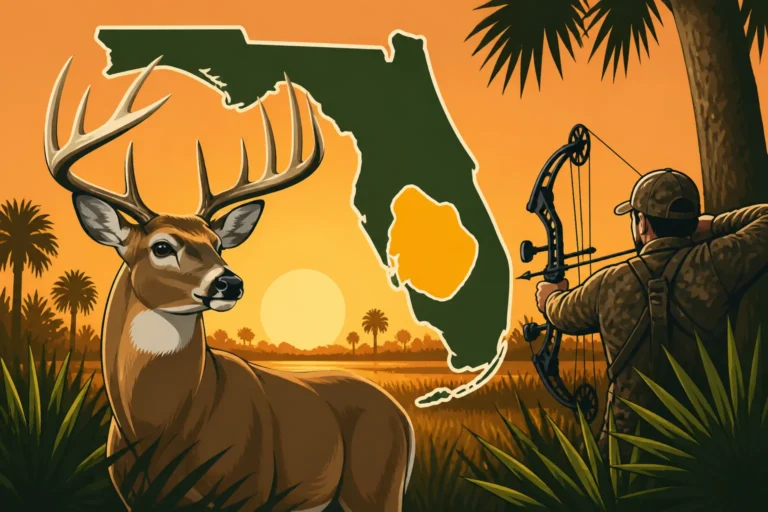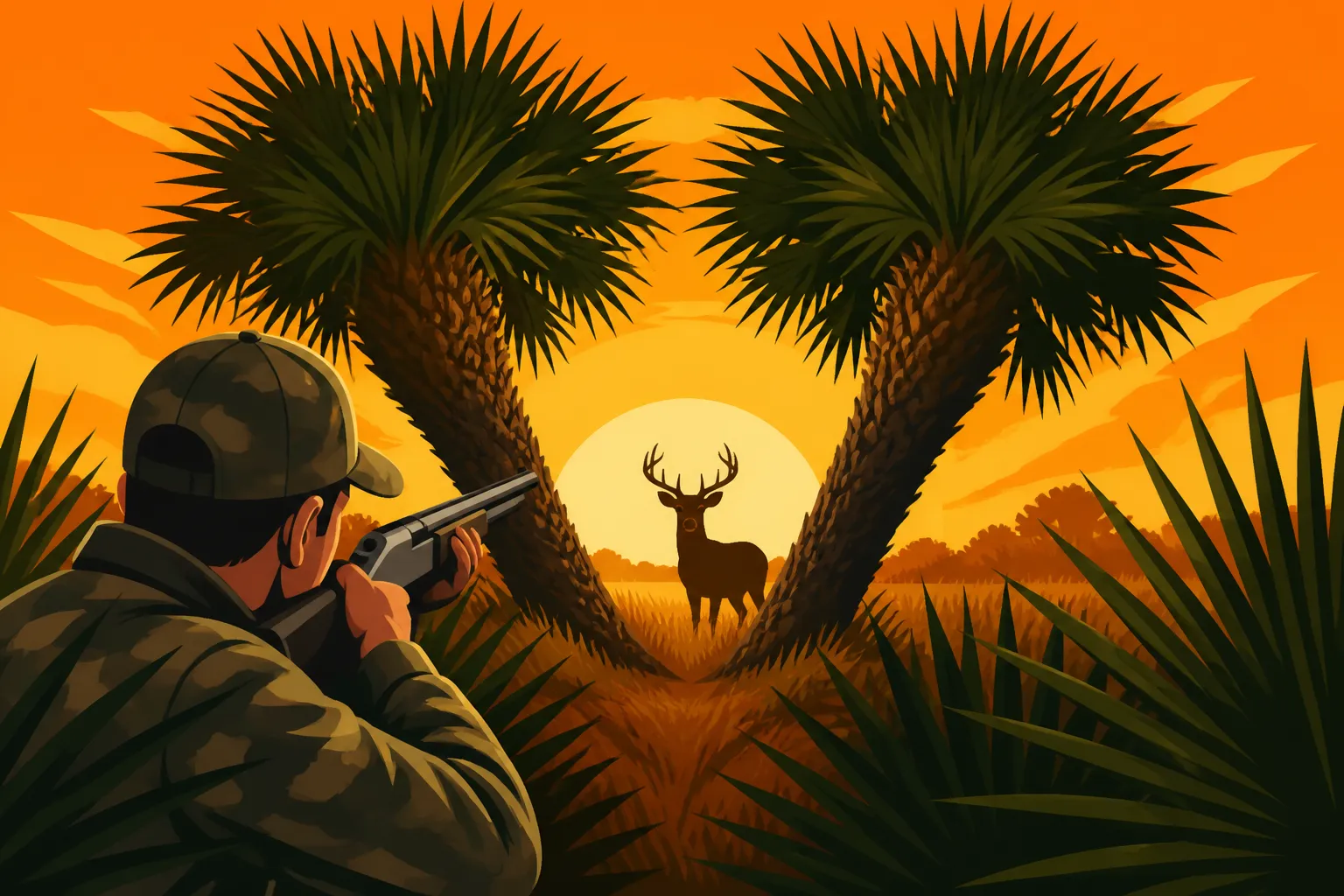
Hunting a Funnel Between Two Palmetto Heads
Trying to find consistent deer movement in Florida's vast, often featureless palmetto country can feel like searching for a needle in a haystack. Deer don't just wander aimlessly; they're creatures of habit, constantly looking for the path of least resistance or the most secure route between bedding and feeding areas. This guide will dive deep into a highly effective, yet often overlooked, strategy for ambushing those elusive whitetails: hunting a funnel between two palmetto heads.
Understanding Palmetto Head Funnels and Deer Behavior
Florida's landscape is unique, and nowhere is that more evident than in its palmetto flatwoods. These seemingly impenetrable seas of saw palmetto can be daunting, but hidden within them are key travel corridors that deer depend on. A "palmetto head" is essentially an elevated island of dense, mature palmetto, often mixed with small oaks, pines, or cypress, offering thick cover. When two such heads are relatively close to each other, but not completely grown together, they create a natural constriction – a funnel – that deer frequently use.
What Constitutes a Palmetto Head Funnel
Imagine two dense, dark green blobs of palmetto, each maybe an acre or more in size, separated by a slightly more open strip of land, perhaps 20 to 50 yards wide. This strip might be a subtly lower elevation, have sparser palmetto, or feature slightly different vegetation like wiregrass or sparse pines. Deer, being efficient travelers, will instinctively navigate this clearer, easier path rather than pushing through the dense, thorny palmetto on either side. This natural alleyway becomes a prime pinch point, directing deer movement right where you want it. It's not always a clear-cut path; sometimes it's just a less-dense section of palmetto, but deer will still seek out that easier travel. These funnels often connect larger blocks of bedding cover to feeding areas like oak hammocks, agricultural fields, or even small food plots.
Why Deer Prefer These Specific Travel Corridors
Deer, especially mature bucks, prioritize security and energy conservation. Pushing through thick palmetto is noisy, exposes them to predators, and expends a lot of energy. A funnel between two palmetto heads offers a balance: it provides relatively easy movement compared to the surrounding thickets, while the dense palmetto on either side still offers a sense of security and concealment. They can move through without being fully exposed in wide-open spaces. During the rut, these funnels become even more critical as bucks scent-check for does, and does use them to travel between smaller pockets of cover. In areas like the Green Swamp Wilderness Preserve, where palmetto is king, understanding these micro-terrain features is paramount to consistent success.
Scouting and Identifying Productive Funnels
You can't just stumble upon these funnels and expect success. Effective scouting, both from afar and on the ground, is crucial to pinpointing the most active corridors. This isn't just about looking for tracks; it's about understanding the entire landscape and how deer use it.
Using Aerial Imagery and Topographic Maps
Before you ever set foot in the woods, spend significant time studying satellite imagery and topographic maps. Services like GoHunt are invaluable for this, allowing you to zoom in and identify potential funnels between dense patches of palmetto. Look for areas where the vegetation changes slightly, or where two darker, denser blocks of cover almost meet. These might indicate a lower, more open corridor. Pay attention to subtle elevation changes too; even a foot or two can influence water drainage and vegetation patterns, creating those preferred travel lanes.
When you're Reading Aerial Photos for Florida Deer, key in on the transition zones. Often, palmetto heads will form around slightly higher ground, creating natural drainage patterns between them. Deer will utilize these lower, slightly wetter, or simply less dense paths. Mark several potential funnel locations on your digital maps. Look for clusters of these funnels, as deer might use multiple options depending on the time of day, wind, or hunting pressure. Don't just look for obvious trails; sometimes, a faint, almost invisible opening on satellite maps is exactly what you're looking for.
On-the-Ground Reconnaissance and Reading Sign
Once you've identified potential funnels on your maps, it's time to hit the ground. This is where the real work begins. Your goal is to confirm deer movement and identify fresh sign. When you're Scouting Florida Public Land Before Season, focus on walking through these suspected funnels.
Look for:
- Deer Trails: Are there worn paths? In sandy Florida soil, these might not be deeply cut, but you'll see matted vegetation and displaced sand.
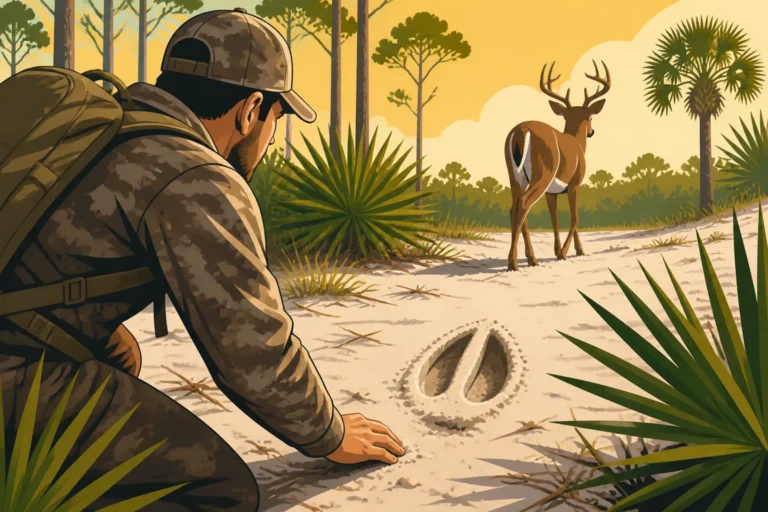
- Tracks: Are there fresh deer tracks? Pay attention to the size and direction of travel. Are they mostly does and fawns, or are you seeing larger buck tracks?
- Scrapes and Rubs: While less common directly in the funnel, scrapes and rubs might be found on the edges or at either end, indicating where bucks enter or exit the dense cover. Bucks will often create Scrape Lines Along a Sand Road or the edges of these funnels.
- Droppings: Fresh droppings confirm recent deer activity.
- Bedding Areas: If you can safely penetrate the palmetto heads themselves, look for Where Florida Bucks Bed in Thick Palmetto. If the funnel connects directly to or through bedding cover, it's gold.
The fresher and more concentrated the sign, the better the funnel. Don't be afraid to put in the miles; finding these hot spots requires legwork. Remember, deer are creatures of habit, and they'll often continue to use these funnels year after year, especially if hunting pressure isn't too extreme.
Effective Hunting Strategies for Palmetto Funnels
Once you've located a promising palmetto funnel, the next step is to strategize your hunt. This involves careful consideration of stand placement, wind direction, and your approach and exit routes.
Optimal Stand Placement and Concealment
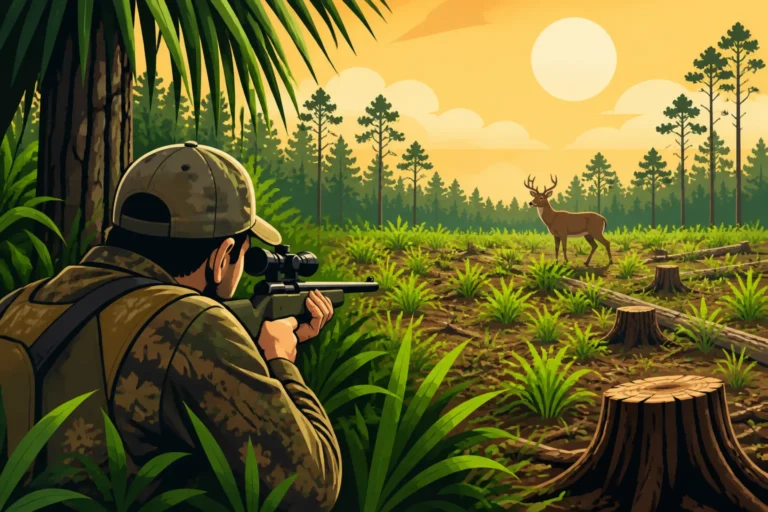
Your stand placement is critical. You want to be close enough to cover the funnel effectively, but far enough not to be detected. Typically, setting up 20-30 yards off the edge of the funnel, slightly inside the palmetto head or sparse pines, offers a good balance. This allows you to shoot into the funnel without being silhouetted against the open sky.
- Tree Stands: If suitable trees are available, a climbing stand or hang-on stand is excellent for getting above the palmetto, offering a clearer shot and better scent dispersion. Choose a tree that provides some broken backdrop, not one that stands out like a sore thumb.
- Ground Blinds: If mature trees are scarce, a ground blind can be incredibly effective. Make sure to brush it in thoroughly with natural vegetation. When Using a Ground Blind on Florida Public Land, set it up well in advance if possible to allow deer to get used to its presence. Place it where it commands a view of the funnel but is tucked into the surrounding cover. A natural fold in the terrain, or the base of a dense palmetto cluster, can provide ideal concealment.
- Natural Blinds: Sometimes, a simple natural blind built from palmetto fronds and other brush is all you need. Again, prioritize concealment and breaking up your outline.
Think about the sun's position throughout the day. You don't want to be staring directly into it, and you certainly don't want it silhouetting you. Consider shot angles carefully; you want clear lanes into the funnel itself, and perhaps some lanes along the edges of the palmetto heads if deer might hug the thicker cover.
Playing the Wind and Thermals
In Florida's flat terrain, Wind and Thermals in Flat Florida Terrain are your biggest allies and potential betrayers. Wind direction is paramount when hunting a funnel. Always position yourself downwind or crosswind of the expected deer movement. Deer will almost always approach a suspected danger zone from downwind, using their nose to detect threats.
- Steady Winds: On days with a consistent breeze, setting up directly downwind of the funnel is ideal. Your scent will be carried away from the deer's likely approach.
- Variable Winds: Florida often has light, swirling winds, especially in dense cover. In these conditions, try to choose a setup that minimizes your scent cone, perhaps elevated to allow your scent to dissipate higher, or deep within natural cover. A ground blind can sometimes help contain your scent more than an open stand.
- Thermals: In the mornings, thermals tend to drop downhill, while in the evenings, they rise. Even subtle elevation changes can create a thermal drift. If your funnel is in a slight depression, morning thermals might carry your scent into it, so adjust your approach or consider an evening hunt.
Always have a scent checker, like a small bottle of powder or a milkweed pod, to constantly monitor wind direction. A slight shift can completely ruin your hunt.
Entry and Exit Routes
Your approach and exit routes are just as important as your stand placement. You absolutely cannot spook deer on your way in or out.
- Minimize Disturbance: Plan a route that avoids crossing fresh deer sign, known bedding areas, or other active feeding zones. Walk slowly, quietly, and use existing cover to conceal your movement.
- Use Natural Barriers: Roads, deeper sections of palmetto, or even small creek beds can act as natural barriers for your approach, guiding you in undetected.
- Time Your Movement: For morning hunts, arrive well before first light, allowing time for any remaining thermals to settle or to establish your position before deer start moving. For evening hunts, stay until well after dark to let the woods settle before you exit.
- Concealment: Wear appropriate camouflage, and carry your gear in a way that minimizes noise. Consider a change of clothes if your entry route involves walking through scent-heavy areas.
If you spook deer going into or out of a funnel, it could render that spot unproductive for days, or even weeks. Patience and discipline in your entry and exit are key.
Gear and Equipment for Palmetto Funnel Hunting
Having the right gear makes a significant difference when you're navigating and hunting Florida's unique palmetto environment. From navigation to shot placement, a few key items can enhance your success and comfort.
Navigation and Mapping Tools
A reliable GPS unit or a smartphone with a dedicated hunting app like GoHunt is absolutely essential. The featureless nature of palmetto flatwoods can be disorienting, even to experienced woodsmen.
- Offline Maps: Ensure your app has offline map capabilities. Cell service can be spotty, or nonexistent, in some of Florida's wilder WMA lands. You'll want detailed aerial imagery and topographic maps stored directly on your device. This allows you to pinpoint your exact location, navigate to your marked funnels, and track your entry/exit routes without a signal.
- Waypoints and Tracks: Use waypoints to mark your stand location, potential bedding areas, or fresh sign. Track your path in and out to ensure you can replicate it, or find your way back in the dark.
- Public Land Boundaries: Most modern hunting apps display Florida WMA Management Area Permit boundaries and other public/private land lines, which is crucial for staying legal.
These tools are not just for finding your way; they're indispensable for Reading Aerial Photos for Florida Deer on the fly and making informed decisions about stand placement based on terrain features you might not notice on the ground.
Bowhunting and Firearm Considerations
Hunting in tight palmetto funnels often means shots will be relatively close, but visibility can still be limited.
- Bowhunting: If you're Bowhunting Florida's Zone A August Opener or during any archery season, a compound bow set for accuracy is ideal. Practice shooting at various distances, including close-range, and from elevated positions if using a tree stand. Broadhead selection is critical for quick, humane kills. Fixed-blade broadheads are often preferred for their reliability, especially when punching through potentially denser hide or bone.
- Firearms: For gun season, a rifle chambered in a common deer caliber (e.g., .308, .270, 6.5 Creedmoor) is standard. However, due to the potentially thick cover, some hunters prefer a lever-action rifle or a shotgun with slugs, which can be quicker handling in dense brush. Ensure your scope is clear and set for relatively close shots, and practice quick target acquisition. Florida also allows specific shotgun gauges for deer, so be sure to check those regulations. When hunting with a firearm, always be aware of your backdrop; ensure you have a safe shot that won't endanger others or property beyond your target.
Regardless of your weapon, always practice in realistic scenarios. Simulate shooting from your stand height, or from a kneeling position if you're in a ground blind.
Scent Control and Bug Protection
Florida is hot, humid, and buggy. Scent control is paramount, and bug protection is essential for comfort and focus.
- Scent Control: Wear scent-eliminating clothing, use scent sprays, and shower with unscented soap before your hunt. Store your hunting clothes in airtight bags with natural scent absorbers like pine needles or activated carbon. Remember, sweat is a major scent contributor, so minimize exertion on your way to the stand. This is especially true when hunting in the hot, humid conditions often found throughout White-Tailed Deer Across Florida's range.
- Bug Protection: Mosquitoes, ticks, and gnats are persistent. Permethrin-treated clothing is a game-changer for ticks and mosquitoes, offering long-lasting protection. Combine this with a good insect repellent containing DEET or picaridin for exposed skin. A Thermacell unit can also provide a small, scent-free zone of protection around your stand, allowing you to focus on the hunt instead of swatting bugs.
Staying comfortable and undetected are two sides of the same coin in Florida hunting. Neglecting either can quickly ruin your chances of success in these productive palmetto funnels.
| Feature | Palmetto Head Funnel | Open Pine Flatwoods | Hardwood Hammock Edge | Advantages | Disadvantages |
|---|---|---|---|---|---|
| Visibility | Moderate-Limited | High | Moderate | Forces deer into clear lanes | Can limit long-range shot opportunities |
| Cover for Hunter | Good | Limited | Excellent | Easy to blend in | Can obstruct view and shot lanes |
| Deer Security | High | Low | Moderate-High | Deer feel safe moving through | Can be harder to spot deer approaching |
| Sign Concentration | High | Low-Moderate | High | Easier to pinpoint deer travel | Requires careful scouting to find true funnels |
| Wind Impact | Moderate-High | High | Moderate | Requires constant monitoring | Swirling winds can be problematic |
| Thermals | Moderate | Low | Moderate | Subtle shifts can be critical | Can be unpredictable in slight depressions |
Advanced Tactics and Considerations
Beyond the basics, there are several advanced tactics and nuanced considerations that can elevate your success when hunting these specific funnels in Florida.
Utilizing Calls and Decoys
While Florida deer aren't always as responsive to calls as their northern counterparts, certain vocalizations can still be effective, especially during the rut.
- Grunt Calls: A subtle grunt or two can sometimes stop a buck in a funnel, giving you a shot opportunity, or pique his curiosity to investigate. Don't overdo it; Florida bucks can be call-shy. A soft tending grunt or a single contact grunt might be enough. Pay attention to how the deer are acting; if they're cruising, a grunt might just make them pause. If they're actively chasing, a deeper, more aggressive grunt could get a response. You might also try Rattling and Grunting Florida Bucks if the funnel is wide enough to conceal your movements.
- Doe Bleats: A soft doe bleat can sometimes attract a cruising buck or calm a nervous doe.
- Decoys: A small doe decoy, especially during the pre-rut and rut, can draw a buck's attention. Position it slightly away from the funnel but visible to deer traveling through it. Make sure it's placed to allow for a clear, ethical shot. Given the thick palmetto, full-size decoys can be difficult to deploy and move effectively, so consider smaller, more portable options or even just a tail-flicker.
Always be mindful of hunting pressure. If deer in your area are heavily pressured, calling less is often more.
Hunting Timing and Weather Patterns
Timing is everything. Understanding when deer are most likely to use these funnels based on time of day, season, and weather can drastically improve your odds.
- Time of Day: Deer often use these funnels during the early morning and late evening, traveling between bedding and feeding. However, during the rut, bucks might cruise these funnels throughout the day searching for does. Mid-day movement can also occur on cooler, overcast days.
- Seasonality:
- Early Season: Deer might be more nocturnal due to heat. Focus on first and last light.
- Rut: This is prime time for funnels. Bucks will be actively moving, scent-checking, and chasing does. You'll want to know When the Florida Rut Peaks by Zone for your specific area.
- Late Season: After initial hunting pressure, deer often become more reclusive and rely heavily on thick cover. Funnels become even more critical for secure movement.
- Weather:
- Cold Fronts: A passing cold front in Florida is a deer hunter's dream. Deer often become much more active, especially right after the front passes.
- Rain: Light rain can get deer moving, as it dampens sound and washes away human scent. Heavy rain usually shuts them down, but they'll often move immediately after it stops.
- Heat: Avoid midday hunts in extreme heat. Deer will be largely bedded. Focus on the coolest parts of the day.
Keep a detailed hunting log to track what works and when. Over time, you'll develop a pattern specific to your hunting area. If you're Hunting a Palmetto Flatwoods Edge, remember that deer will typically prefer to stay within the thicker cover when possible.
Adapting to Pressure and Changing Conditions
Florida public lands can see significant hunting pressure, especially in popular WMAs. Deer quickly adapt to this pressure, making them even more challenging.
- Find Unpressured Areas: Use your mapping tools to identify areas deep within the palmetto, far from roads and obvious access points, where other hunters might be less willing to go. These funnels often hold less pressured deer.
- Hunt Mid-Week: Weekends often see a spike in hunter numbers. If possible, hunt during the week when pressure is lighter.
- Shift Tactics: If deer are becoming completely nocturnal in a specific funnel, you might need to adjust. Perhaps the funnel is now being used primarily for bedding, and you need to set up on a feeding area it connects to, or vice-versa. Or, consider pushing deeper into the palmetto to find more secure, less disturbed funnels.
- Fresh Sign: Always rely on fresh sign. Just because a funnel was hot last week doesn't mean it is this week. Keep scouting, even during the season. Deer patterns can change with food availability, water levels, and hunting pressure.
Remember, deer are survivors. They will always seek the path of least resistance and greatest security. Your job, as a hunter, is to anticipate that movement and place yourself strategically. Hunting these often-overlooked palmetto funnels offers a fantastic opportunity to do just that in the unique wilds of Florida.
Disclaimer
Hunting is a challenging and potentially dangerous activity. Always prioritize safety, understand and adhere to all Florida Fish and Wildlife Conservation Commission (FWC) regulations, and obtain proper licenses and permits before venturing into the field. This guide provides general information and tactics; individual success will depend on skill, preparation, and local conditions.