Baiting Hogs Legally in Florida
Dealing with feral hogs in Florida can feel like a constant battle, and when you start looking into hunting them, the rules, especially around baiting, can feel like a confusing mess. You hear whispers about "anything goes" for hogs, but then you remember how strict Florida is about baiting for deer and turkey, and suddenly you're wondering if you're going to accidentally break a law just trying to manage these destructive creatures. This guide is here to clear up that confusion once and for all, offering a comprehensive look at the legalities, best practices, and effective strategies for baiting hogs in the Sunshine State, ensuring you stay on the right side of the law while making a real impact on your hog problem.
Understanding Florida's Stance on Feral Hogs
Before we dive deep into the nitty-gritty of baiting, it's crucial to understand why feral hogs are treated so differently from virtually every other animal you might hunt in Florida. This isn't just a quirk of the law; it's a reflection of the significant ecological and agricultural damage these animals inflict. Many hunters initially approach hog hunting with the same mindset they apply to deer or turkey, only to find the rules completely inverted, and this difference is key to understanding the baiting regulations.
Why Hogs are Different from Other Game Animals
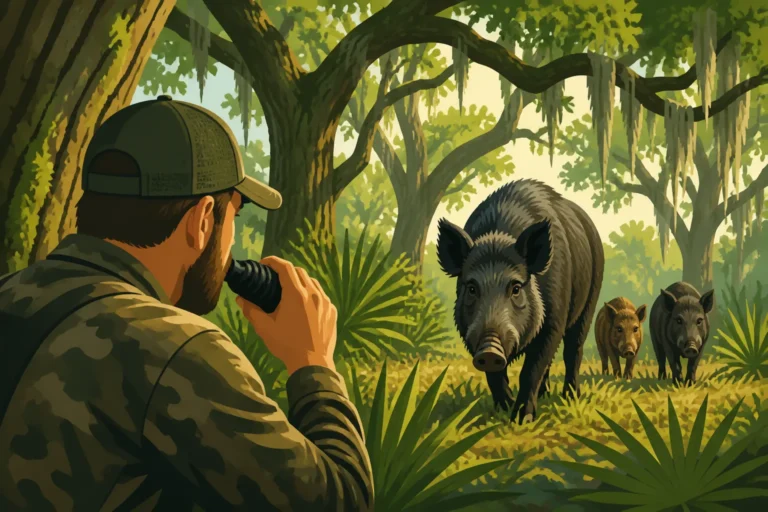
Feral hogs, often called wild hogs, are not native to Florida. They're an invasive species, descendants of domestic pigs brought over centuries ago by early explorers and settlers. Without natural predators in sufficient numbers to control their populations, and with an incredible breeding rate, they’ve exploded across the landscape. This isn't just an inconvenience; it's a full-blown crisis for Florida's delicate ecosystems and agricultural industry.
These destructive rooters tear up pastures, crops, and even manicured lawns, leaving behind what looks like a rototilled field in a single night. Beyond the visible damage, they prey on native wildlife, including ground-nesting birds, sea turtle eggs, and small mammals, and compete with native species like deer for food sources. They also carry diseases that can affect livestock and even humans, making their unchecked proliferation a serious public health concern. Because of this relentless negative impact, Florida's wildlife management philosophy treats them as pests to be controlled, rather than a managed game species with strict seasons and bag limits. If you want to learn more about the unique status of these animals, it's worth understanding Why Florida Treats Hogs as Unprotected.
The Legal Framework for Hog Hunting in Florida
Given their invasive status, feral hogs in Florida are essentially an unprotected species. This means that on private land, where the vast majority of hog hunting occurs, there are very few restrictions. There's no closed season, no bag limit, and you don't even need a hunting license if you're a Florida resident hunting on your own land or land you have permission to hunt. Non-residents will still need a Florida hunting license for private land, but the "unprotected" status largely removes the typical game animal regulations.
This stark contrast to regulated game species like white-tailed deer or Osceola turkeys often surprises new hunters or those visiting from out of state. For species like deer, specific seasons, antler point restrictions, and bag limits are carefully managed to ensure sustainable populations. For hogs, the goal is reduction and control, which explains the relaxed rules. This also extends to methods; while certain methods are universally prohibited for ethical or safety reasons (like using poison), many tools available for hog control are off-limits for traditional game. You can dive deeper into the general guidelines by reading about Florida's Year-Round Hog Hunting Rules.
Legal Baiting Practices on Private Land
Now, let's get down to the core of the matter: baiting. For many hunters looking to control hog populations on private land, baiting is an incredibly effective tool. The good news is that on private land, the rules regarding baiting for feral hogs are remarkably permissive, especially when compared to deer or turkey. This is where the "anything goes" mentality often originates, but it's important to understand the nuances to apply it effectively and responsibly.
What Constitutes Legal Baiting Material
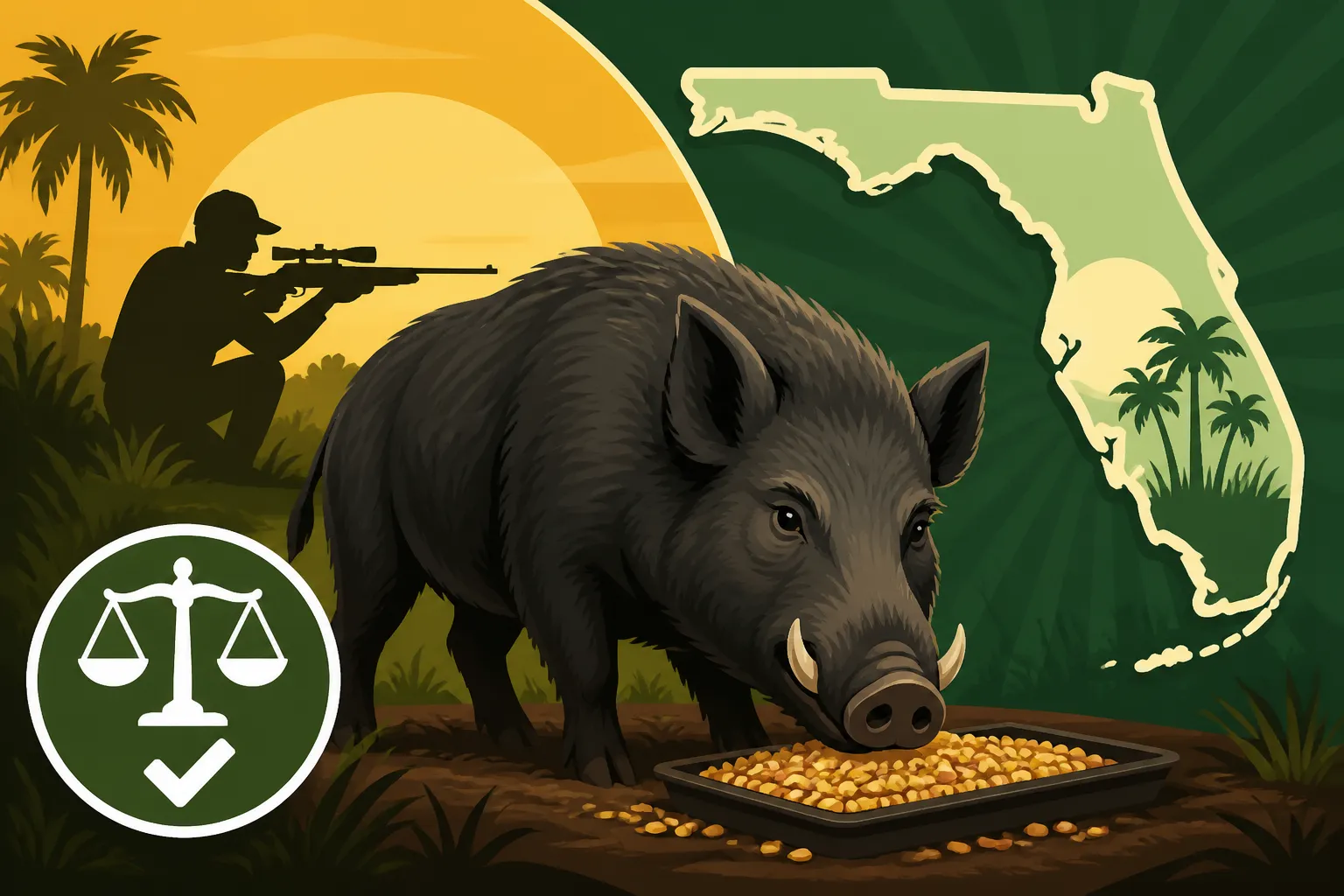
When it comes to baiting feral hogs on private land in Florida, you essentially have free rein on the type of bait you can use. This flexibility is a huge advantage, as hogs aren't particularly picky, but they do have preferences that can make your baiting efforts more successful. The most common and widely used bait is, without a doubt, corn. It's affordable, readily available, and hogs are strongly attracted to its smell and taste. Many hunters will buy it in 50-pound bags from feed stores or even agricultural co-ops.
Beyond plain corn, many hunters experiment with various enhancements to make their bait even more irresistible. Fermented corn, for example, emits a stronger, more pungent aroma that can draw hogs from a greater distance. You can achieve this by soaking corn in water for a few days, allowing it to sour. Other popular choices include sweet feed (a mixture of grains, molasses, and other sugary ingredients), discarded food scraps (though be mindful of spoilage and cleanliness, especially in warm Florida weather), and even commercially produced hog attractants designed to mimic natural scents or food sources. There are no legal restrictions on the type of bait you use, so feel free to experiment to see what works best in your specific area and for the hogs you're targeting.
Placement and Setup of Bait Stations
While the type of bait is flexible, the placement and setup of your bait stations require a bit of thought for maximum effectiveness and to ensure you're hunting safely and responsibly. On private land, there are no specific legal requirements regarding distance from property lines when baiting for hogs. However, it's always good practice to place your bait far enough from neighboring properties to avoid drawing hogs onto their land, especially if they aren't keen on having them, or to prevent any accidental cross-boundary hunting issues.
Effective baiting revolves around consistency and strategic placement. Hogs are creatures of habit, and once they discover a reliable food source, they'll return repeatedly. Start by identifying areas with existing hog sign—rooting, tracks, wallows, or rubs—as these indicate active travel corridors or bedding areas. Place your bait in relatively open areas where you can get a clear shot, but still close enough to cover for the hogs to feel comfortable approaching. Feeders can be simple gravity feeders, which require minimal maintenance, or automatic feeders that can dispense bait at specific times, allowing you to pattern hog movements more precisely. These can be particularly useful for managing a consistent supply of bait, which is crucial for establishing a pattern. If you're thinking about larger scale hog management, especially for taking out whole groups, using bait within a trap is highly effective, which you can learn more about by looking into Trapping a Sounder on Private Land.
Baiting Hogs on Public Lands in Florida
This is where the rules take a sharp turn, and understanding this distinction is absolutely critical to avoid legal trouble. While private land offers immense flexibility for hog baiting, public hunting lands in Florida, such as Wildlife Management Areas (WMAs) and National Forests, operate under a much stricter set of regulations. The general rule of thumb for these public areas is that baiting for any game animal, including hogs, is prohibited.
The Strict Rules Against Baiting on WMAs and National Forests
The Florida Fish and Wildlife Conservation Commission (FWC) and federal land management agencies have clear rules against baiting on public lands. This prohibition isn't meant to make hunting harder; it's a foundational principle of fair chase and wildlife management. The primary reasons include preventing the concentration of animals (which can increase disease transmission), ensuring that hunting success is based on skill and scouting rather than artificial attractants, and protecting other species that might be inadvertently drawn to bait. For example, while you're targeting hogs, deer, bears, or even protected species could be attracted to the same bait, creating unintended consequences.
There are virtually no exceptions to the "no baiting" rule for hunting hogs on Florida's WMAs or National Forests. While hogs are considered unprotected on private land, on public land, they fall under the general hunting regulations that prohibit the use of bait. This means no corn piles, no sweet feed, no fermented grains, and no commercial attractants specifically placed to draw hogs to a hunting spot. Violating these rules can lead to significant fines, loss of hunting privileges, and confiscation of equipment. It's a risk simply not worth taking. For specifics on these areas, you might find valuable insights into Hunting Hogs on WMA Land in the Off-Season where these rules are often detailed.
Permissible Attractants and Strategies on Public Land
Since direct baiting is off-limits on public land, hunters must rely on different strategies to locate and harvest hogs. This often means a return to more traditional hunting methods, focusing on scouting, understanding hog behavior, and utilizing natural attractants. Instead of creating a food source, your goal is to find where the hogs are naturally feeding or traveling.
Successful public land hog hunting involves extensive scouting. Look for fresh rooting activity, hog tracks along trails or near water sources, and wallows (muddy depressions where hogs cool off). Hogs gravitate towards natural food sources like acorns during the fall and early winter, or they might frequent swamp edges and sloughs where they can find tender roots and tubers. A good hunting app, like GoHunt, can be incredibly useful here. While it won't show you legal baiting spots (because there aren't any on public land!), it can help you pinpoint areas with favorable habitat, track historical hog movement patterns, or even mark natural food sources you discover during scouting. Identifying these natural feeding areas and ambushing hogs as they move to and from them is the name of the game on public ground. You might also consider using calls, such as hog grunts or distress calls, which can sometimes bring curious hogs into range.
Effective Strategies for Baiting and Hunting Hogs
So, you've got your private land, you understand the legality of baiting, and you're ready to get started. Baiting isn't just about dumping corn; it's a strategic process that, when done correctly, can dramatically increase your success rate. It involves understanding hog behavior, using technology wisely, and knowing when and where to set up your ambush.
Integrating Trail Cameras for Scouting Success
Trail cameras are an absolute game-changer when it comes to baiting hogs. They take the guesswork out of patterning these often-nocturnal animals. Instead of sitting for hours on end hoping a hog shows up, your cameras can do the scouting for you, 24/7. When setting up a bait station, place at least one trail camera overlooking the bait. The insights you gain are invaluable.
Your cameras will tell you how many hogs are visiting the bait, whether they're solitary boars or an entire sounder, and most importantly, when they are visiting. Hogs, especially mature boars in high-pressure areas, often become primarily nocturnal. Your camera might reveal that hogs are only hitting your bait between midnight and 4 AM. This information is crucial for planning your hunts, saving you from wasted hours sitting during daylight when no hogs are present. You can also use camera data to identify specific hogs, such as a large boar you're targeting. Mapping tools, like the ones offered by GoHunt, can really elevate this by allowing you to plot your camera locations, log observations, and see how hog activity corresponds to different areas of your property or specific times. This kind of systematic approach, rather than just random camera placement, makes a huge difference. For tips on camera placement in general, even for deer, many of the same principles apply as discussed in Where to Hang a Camera on a Sand Road.
Timing Your Hunts Around Bait Sites
Once your trail cameras have started to tell a story about hog activity, you can begin to time your hunts for maximum effectiveness. As mentioned, many hogs become nocturnal, especially in Florida's warm climate and in areas with hunting pressure. If your cameras show hogs primarily moving at night, you'll need to consider legal night hunting options on your private land, which often involves the use of artificial lights or thermal imaging (where legal). Always double-check local ordinances regarding light use for hunting, as state laws can be broad but county rules might add restrictions. You can often learn more about such methods by exploring topics like Night Hunting Hogs With Lights in Florida.
For daylight hunting, focus your efforts on the fringes of nocturnal activity—dawn and dusk. Hogs might linger around bait just after sunrise or arrive just before sunset, offering brief windows of opportunity. Weather can also play a role; cooler fronts might encourage more daytime movement, while hot, humid conditions will often push hogs into the thickest cover during the day, making them even more nocturnal. Consistency in baiting is key to establishing a reliable pattern. Don't let your bait run dry; hogs will quickly move on if the buffet closes.
Choosing the Right Equipment for Baited Hogs
Hunting over bait offers the advantage of relatively close-range shots, allowing for a variety of weapon choices. The most common choice for hogs is a rifle, typically chambered in a cartridge with good knockdown power like .223/5.56, .308, or 6.5 Creedmoor. A well-placed shot is always paramount, and a cartridge that delivers sufficient energy to anchor a hog quickly is important for ethical harvesting. Shotguns loaded with slugs are also effective at close range.
For bowhunters, baiting provides excellent opportunities for consistent close encounters. A compound bow, recurve, or even a crossbow (which is legal for hog hunting throughout Florida) can be incredibly effective. Regardless of your weapon, focus on durable, sharp broadheads for bows, and appropriate ammunition for firearms. Because hogs are tough and often covered in a thick layer of hide and muscle, shot placement, ideally targeting the shoulder or behind the ear for a quick kill, is crucial. If you're interested in general gear for hunting in Florida, exploring resources like GoHunt's reviews or forums can give you an idea of popular and effective equipment used by other hunters for various species, which might include recommendations applicable to hog hunting.
Beyond Baiting: Other Legal Hog Hunting Methods
While baiting is highly effective on private land, it's not the only way to hunt hogs in Florida, nor is it always applicable (remember public land restrictions!). Florida offers a diverse range of legal methods to pursue these prolific animals, each with its own advantages and challenges. Understanding these alternatives can make you a more versatile and successful hog hunter.
Trapping as a Population Control Method
For serious hog management, especially when dealing with large sounders or trying to significantly reduce populations over an area, trapping is often the most efficient method. Bait is central to trapping, but it's used within a contained system rather than for a direct hunting shot. Traps allow you to capture multiple hogs at once, often an entire sounder, which is vital for effective population control as hogs reproduce incredibly quickly.
Common trap types include large panel traps, which are essentially circular or rectangular enclosures with a gate system, and the popular "hog panel" traps made from heavy-duty livestock panels. These traps are baited heavily, often with large quantities of corn, to entice hogs to enter repeatedly before the trigger is set. Once hogs are accustomed to feeding freely in the trap, the gate mechanism is activated, allowing for the capture of many animals simultaneously. This method is incredibly effective for removing numerous hogs from an area quickly. For detailed instructions on constructing and deploying these effective tools, a look into Trapping Feral Hogs on Florida Private Land can be incredibly helpful.
Dog Hunting Hogs
Another traditional and exciting method of hog hunting in Florida is with dogs. This practice involves using trained dogs to locate, pursue, and bay (corner and hold at bay) feral hogs, allowing hunters to move in for the kill, often with a knife or spear, or sometimes a handgun. Dog hunting is deeply rooted in Florida's hunting culture and is a highly active and immersive way to pursue hogs.
The legality of dog hunting for hogs in Florida varies slightly depending on whether you're on private or public land. On private land, it's widely accepted, though hunters must always have permission from the landowner. On public lands, specific WMAs or National Forests may have designated dog hunting seasons or areas, or outright prohibitions, so it's crucial to check the specific regulations for the area you plan to hunt. Dog hunting is a specialized skill, requiring well-trained dogs, often breeds like Catahoulas, curs, or various hound crosses, and a good understanding of canine behavior and hog dynamics. This method definitely has its own unique set of challenges and rewards, which is explored further in Dog Hunting Hogs in Florida.
Spot and Stalk and Still Hunting
For hunters who prefer a more stealthy and traditional approach, or when hunting on public land where baiting isn't an option, spot-and-stalk and still-hunting are excellent methods. These techniques rely on observation, tracking, and patient movement through hog habitat. Spot-and-stalk involves actively searching for hogs from a distance, then carefully approaching them to get within shooting range. This is particularly effective in more open areas or agricultural fields where hogs might be seen from afar.
Still-hunting, on the other hand, is a slower, more deliberate method where the hunter moves very slowly through cover, pausing frequently to observe and listen. This is ideal for dense palmetto thickets, cypress swamps, or oak hammocks where visibility is limited. Success with these methods hinges on understanding hog movement patterns, their preferred bedding and feeding areas, and using the wind to your advantage to avoid detection. You'll be looking for fresh sign like tracks, rubs, and rooting, and then moving quietly into those areas. If you're tackling specific Florida terrains, consider reading about Still-Hunting Florida Palmetto Flatwoods to hone your stealth game.
Common Misconceptions and Legal Pitfalls
Even with Florida's relatively relaxed rules for hog hunting on private land, there are still crucial nuances that hunters sometimes misunderstand, leading to potential legal issues. The biggest pitfall usually arises from the desire to hunt other game animals concurrently, or a lack of understanding of property lines. It's essential to keep these distinctions clear in your mind.
Baiting for Other Species While Hog Hunting
This is arguably the most critical point to remember: while you can legally bait for feral hogs on private land, you absolutely cannot hunt regulated game animals like white-tailed deer, wild turkey, or migratory birds over that same bait. Florida law strictly prohibits baiting for these species. The moment you place bait, that area becomes off-limits for hunting deer or turkey, typically for at least 10 days after all bait has been removed.
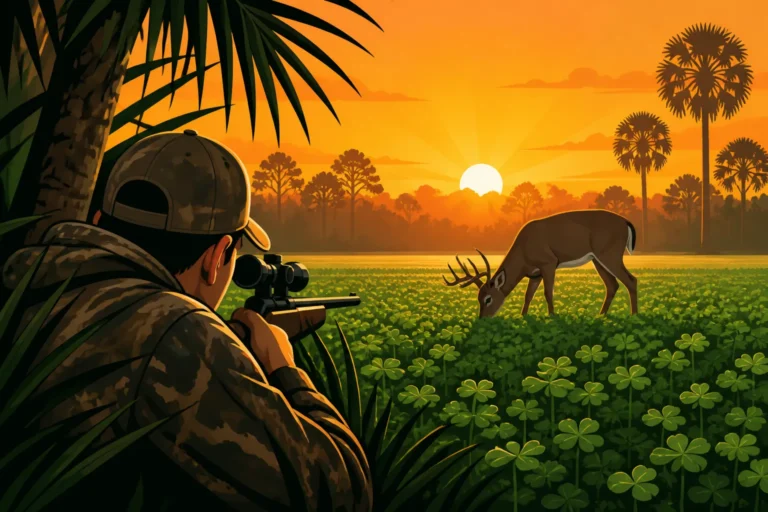
The danger comes when hunters try to combine efforts. For example, if you have a corn feeder out for hogs, and then a trophy buck walks into the opening, it is illegal to shoot that deer. Your intent matters here. If you're sitting in a stand overlooking a bait pile, and you're legally licensed for both hogs and deer, but there's bait present, you can only legally shoot a hog. This can be incredibly frustrating for hunters who see a prime buck, but the law is crystal clear on this separation. To avoid any ambiguity, if you intend to hunt deer or turkey in a particular area, you must not have bait present. Understanding the differing regulations for various species, such as those found in Florida's Four Deer Management Zones Explained, helps illustrate why this distinction is so important.
The Importance of Property Boundaries
While hog hunting on private land offers flexibility, it does not grant you permission to trespass or to draw hogs onto land where you don't have permission to hunt. You must always be aware of your property boundaries. A hog feeder placed too close to a property line, for example, could draw hogs from a neighbor's land onto yours, or even from adjacent public land. While this isn't illegal in itself, shooting a hog that crosses back onto your neighbor's property, or even retrieving a hog that expires across a boundary, could lead to a trespass charge if you don't have prior permission.
Using a reliable mapping app is highly recommended for any hunter operating near property lines. Tools like GoHunt allow you to precisely see land ownership and property boundaries, ensuring you always know where you stand. This is invaluable, not just for baiting but for all hunting activities. It helps prevent accidental trespassing and ensures that when you're hunting over bait, you're confident that any animal you shoot and recover is legally taken within your permitted hunting area. Remember, just because a hog is an invasive pest doesn't mean you can chase it wherever it goes without consequence—respect for private property remains paramount.
| Feature / Rule | Private Land (Hogs) | Public Land (Hogs) | Regulated Game (Deer/Turkey) |
|---|---|---|---|
| Baiting Legality | Generally legal and unrestricted | Strictly prohibited | Strictly prohibited |
| Hunting License Needed | FL Residents: Not on own land/w/permission; Non-residents: Yes | Yes (plus WMA permit usually) | Yes |
| Season/Bag Limits | No closed season, no bag limit | No closed season, no bag limit | Yes, specific seasons/limits |
| Weapon Restrictions | Few, varied by locale | FWC/WMA rules apply | FWC rules apply |
| Night Hunting | Often legal with lights/thermal | Generally prohibited for hunting | Prohibited |
| Trail Cameras | Legal and recommended | Allowed in some WMAs, check rules | Allowed in some WMAs, check rules |
| Required Permissions | Landowner permission always needed | WMA permit, public land rules | License/tags required |
Disclaimer
Please remember that hunting regulations can change, and interpretations may vary. It is your responsibility to always check the latest Florida Fish and Wildlife Conservation Commission (FWC) regulations and local ordinances before engaging in any hunting activities. This guide is for informational purposes only and should not be considered legal advice.