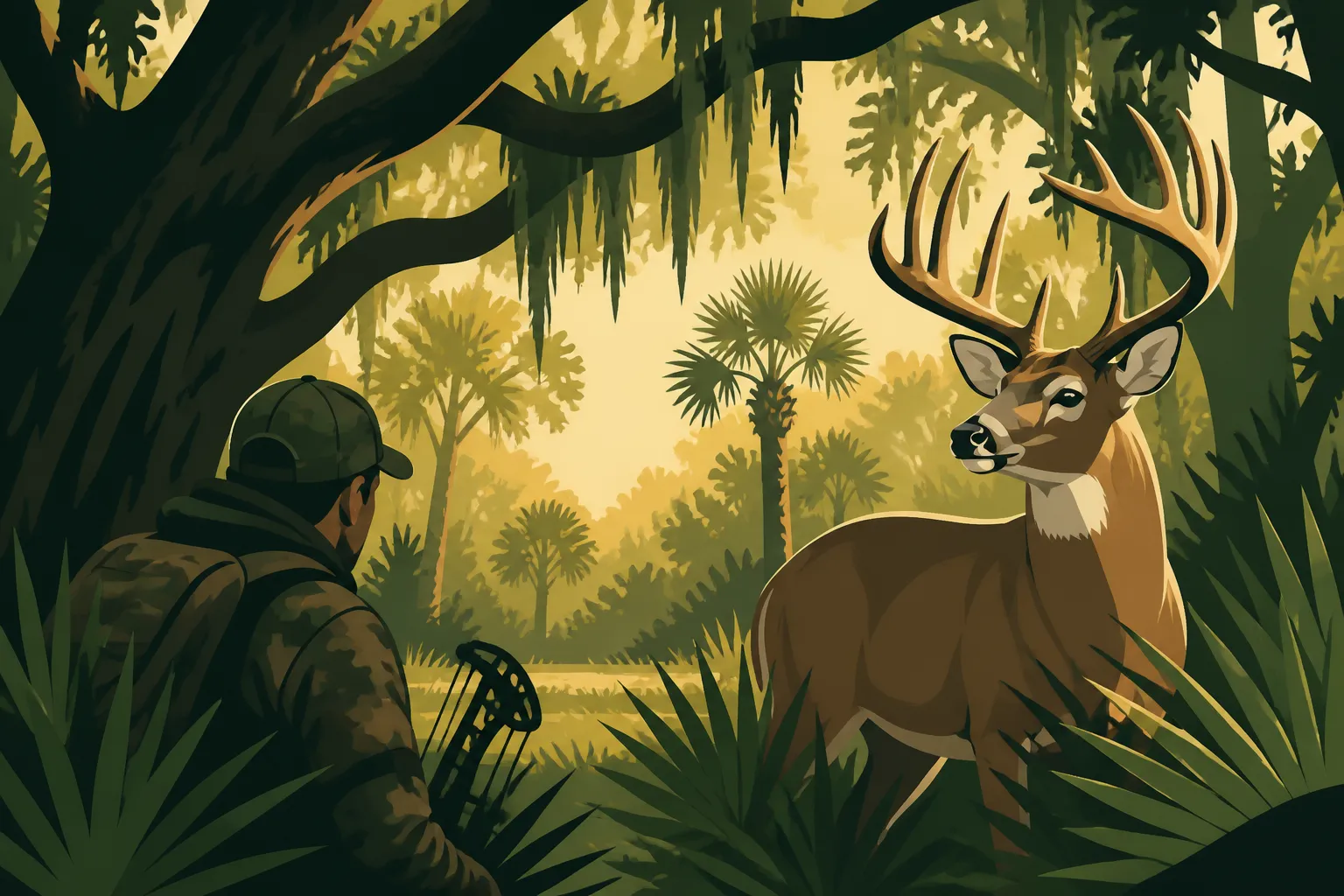
Finding Sign in a Florida Oak Hammock
Ah, the Florida oak hammock. If you've spent any time hunting in our beautiful, often dense, Sunshine State, you know these pockets of hardwoods can be absolute magnets for deer. But they can also be incredibly frustrating to hunt. The thick canopy, the tangled undergrowth, and the sheer number of places a deer can hide make it feel like finding a needle in a haystack. Knowing how to read the subtle clues, the sign, that deer leave behind is absolutely crucial for success. This guide is all about peeling back the layers of these unique habitats and teaching you how to pinpoint where those elusive whitetails are truly spending their time.
Understanding the Oak Hammock Ecosystem
Florida’s oak hammocks are truly special places. Unlike the vast pine flatwoods or palmetto scrub, these areas burst with life, offering a unique blend of food, water, and cover that makes them irresistible to deer, especially when other areas are less inviting. You might have driven past them a hundred times on a country road, just a dark, dense patch of woods, but step inside, and you’re in a deer paradise.
What Makes Oak Hammocks Prime Deer Habitat?
First and foremost, it's the sheer diversity and abundance of resources. Oak hammocks typically feature a mix of live oaks, laurel oaks, water oaks, and sometimes even huge ancient granddaddy oaks, all dropping vital acorns that deer absolutely gorge themselves on during the fall and winter. But it’s not just the acorns; the understory is often packed with a variety of forbs and shrubs that provide year-round browse. Think about the intense Florida heat; hammocks offer crucial shade and cooler temperatures, a sanctuary during those scorching midday hours. Add to that the often impenetrable tangle of vines, saw palmetto, and dense brush that grows beneath the oaks, and you've got perfect bedding and escape cover. Deer can simply vanish in these places, safe from prying eyes and predators. Often, these hammocks are situated near wetlands or even have small, ephemeral ponds within them, providing easily accessible water sources, especially during drier periods. It's the ultimate deer trifecta: food, water, and cover, all rolled into one complex, dense package.
Seasonal Changes and Their Impact on Deer Sign
The story an oak hammock tells changes dramatically with the seasons, and understanding these shifts is key to interpreting deer sign. In late summer and early fall, as acorns begin to ripen and drop, you'll see a massive influx of deer activity. This is when you'll find fresh tracks galore, torn-up leaves from deer rooting for acorns, and suddenly, those once-quiet areas become bustling feeding grounds. This is also the time when bucks start to get a little edgy, and you might find early rubs or scrapes. However, as the season progresses and the prime acorn crops are depleted, deer will shift their focus. They'll transition to other available browse, often seeking out succulent green growth in or around the hammock's edges, or even moving to adjacent areas if food sources become scarce. This seasonal migration, even if it's just a few hundred yards, means that sign from a month ago might be irrelevant today. Water levels also play a huge role. After heavy summer rains, standing water might be everywhere, making it hard to track deer. But during a dry spell, deer will concentrate around the few remaining water sources, leaving a clear trail of tracks and other activity. For more on navigating these shifting food sources, check out our article on Hunting After a Poor Acorn Year.
Identifying Key Deer Sign in Hammocks
When you step into an oak hammock, it can feel overwhelming. There’s so much vegetation, so many shadows. But with a trained eye, you can start to piece together the deer's daily life from the subtle clues left behind. It's like being a detective, looking for every little hint.
Scrapes, Rubs, and Communication Hubs
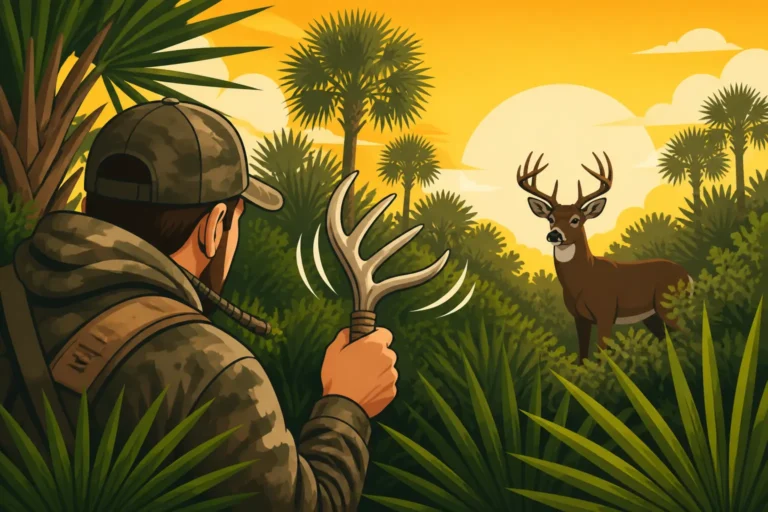
These are the deer's billboards, their social media. Bucks use rubs to mark their territory and communicate their presence, usually by scraping their antlers against saplings or small trees, leaving behind frayed wood and sap. A fresh rub will have moist, exposed wood, perhaps even fresh sap, and bark shavings scattered on the ground. Older rubs will be dried out, discolored, and less distinct. Scrapes, on the other hand, are pawed-out patches of bare earth, usually with an overhead branch (a "licking branch") that the deer chew, rub, and urinate on. They’re scent posts, essentially. Fresh scrapes are distinct, with damp, disturbed earth, strong deer odor, and often fresh tracks in the soft soil. Look for them along established travel corridors, especially on the edges of hammocks or near thicker cover. A cluster of rubs and scrapes, particularly in an area where trails converge, indicates a "communication hub" – a spot where multiple deer, especially bucks, are actively checking in. The volume of rattling in these thick Florida scrubs also changes, influencing how deer use these communication points, as explored in Rattling Volume in Thick Florida Scrub.
Tracks, Trails, and Travel Corridors
Tracks are perhaps the most common sign you'll find. In the soft, sandy soil often found in Florida hammocks, tracks can be remarkably clear. Fresh tracks will have sharp, distinct edges, and if there's any dew on the ground, it will be clearly displaced within the hoof print. Older tracks will be rounded by wind and rain, and any displaced dew will have evaporated. Pay attention to the size and shape – larger, blunter tracks often indicate a mature buck, while smaller, more pointed tracks usually belong to does or younger deer.
But it's not just about individual tracks; it's about the patterns they form. Deer repeatedly use the same routes, creating discernible trails. These can range from subtle depressions in the leaves to well-worn paths in the dirt, sometimes even resembling small tunnels through the dense undergrowth. Look for main travel corridors connecting bedding areas within the hammock to feeding areas, water sources, or escape cover. Secondary trails branch off from these, leading to specific browse patches or secluded bedding spots. Identifying these corridors is critical. A mapping app like GoHunt can help you visualize elevation changes or dense cover that might funnel deer into specific trails, even in seemingly flat terrain. When you're Hunting a Funnel Between Two Palmetto Heads, you're effectively using these same principles, just in a slightly different habitat.
Droppings, Beds, and Browse
These are the intimate details of a deer's daily life. Droppings (pellets) are like a deer's diary. Fresh droppings will be moist, dark, and often clumped together. Older droppings will be dry, scattered, and lighter in color. The quantity and freshness tell you how recently and how frequently deer are using an area. You might notice different consistency depending on their diet – firm, pelletized droppings when they’re eating mostly browse or acorns, and looser, more cow-pie-like droppings if they’ve been in a lush green field.
Bedding areas are where deer rest and feel safe. In hammocks, these are often found in the thickest, most impenetrable cover, often on a slight rise for better visibility or under dense palmetto where they can be completely concealed. You’ll find depressions in the leaves or grass where a deer has laid, sometimes with a few droppings nearby. These areas are notoriously hard to access without alerting deer, but identifying them helps you understand their security zones. Our guide on Where Florida Bucks Bed in Thick Palmetto offers more insights into these critical areas.
Finally, browse is the proof of what deer are eating. Deer are browsers, meaning they nip off the ends of twigs and leaves. Look for cleanly clipped twigs, often 6 inches to 4 feet off the ground, with jagged edges (deer don't have upper incisors, so they tear rather than cut). Identify what plants are being browsed – wax myrtle, greenbrier, various oaks, and other understory plants are common deer favorites. If you find heavy browsing in an area, you know it's a current feeding hot spot.
| Sign Type | Fresh Characteristics | Old Characteristics |
|---|---|---|
| Tracks | Sharp edges, clear dew/dirt displacement, moist earth | Rounded edges, vague definition, dry/crusty |
| Rubs | Bright, moist wood, sap present, bark shavings on ground | Discolored, dried wood, no sap, faded/missing bark shavings |
| Scrapes | Damp, dark disturbed earth, strong deer odor, fresh tracks | Dry, faded earth, faint odor, overgrown with leaves/weeds |
| Droppings | Moist, dark, often clumped, strong odor | Dry, scattered, lighter in color, no odor |
| Beds | Clear depression in fresh leaves/grass, body heat may linger | Flattened, leaf-strewn, no obvious recent disturbance |
| Browse | Freshly clipped twigs, exposed green/moist plant tissue | Dried, brittle stems, discolored/healed plant tissue |
Scouting Strategies for Oak Hammocks
Finding sign is one thing; knowing how to look for it effectively and then interpret it is where the real skill comes in. It's a blend of digital reconnaissance and boots-on-the-ground work.
Pre-Season Scouting and Digital Tools
Before you ever set foot in the woods, spend some serious time with digital mapping tools. Apps like GoHunt are absolute game-changers for Florida hunters. You can zoom in on aerial photos to identify oak hammocks, dense cover, and potential travel corridors. Look for transitions where different habitat types meet – these "edge" areas are often super productive. Identify natural funnels, pinch points, and areas where dense cover narrows. Mark potential bedding areas (the thickest, darkest green on the map) and potential feeding areas (more open canopy, varied hardwoods). You can even use topo maps, which, even in relatively flat Florida, can reveal subtle elevation changes that deer use to their advantage, affecting air currents and travel routes. Our guide on Reading Aerial Photos for Florida Deer delves deeper into these techniques. Planning your entry and exit routes digitally can also help you avoid spooking deer before you even get to your stand. Remember, thorough Scouting Florida Public Land Before Season significantly increases your odds.
On-the-Ground Techniques and What to Look For
Once you're actually in the hammock, adopt a systematic approach. Don't just wander aimlessly. One effective technique is a grid search, slowly moving through sections of the hammock, crisscrossing to ensure you don't miss anything. Always move slowly, stopping frequently to scan ahead and listen. Pay obsessive attention to the ground, looking for tracks, droppings, and disturbed earth. As you move, keep your eyes peeled for rubs and scrapes on trees.
Focus on the edges of the hammock first, where deer often transition between different types of cover or food sources. Look for trails leading into or out of the hammock, particularly where they meet a swamp edge, a clear-cut, or a food plot. Follow these trails as far as you can, noting any concentrated sign. When you find a promising area, slow down even more. Get on your hands and knees if you have to, examining the freshness of tracks and droppings. Don't forget to look for water sources within or adjacent to the hammock; deer will always need to drink, and these spots can be magnets.
Interpreting Sign and Planning Your Hunt
Finding sign is the first step, but interpreting it correctly is what turns scouting into successful hunting. The key is freshness and quantity. A single old rub from last season tells you a buck was once there. A series of fresh rubs and scrapes, combined with fresh tracks and droppings, tells you a buck is currently using the area. Look for patterns: do the trails lead from a thick bedding area to a specific feeding spot? Is there heavy browse on one side of the hammock but not the other? This indicates preferred food sources.
Once you’ve identified hot areas with fresh, concentrated sign, it's time to plan your hunt. Consider the wind direction carefully; deer in hammocks, especially pressured deer, will rely heavily on their nose. Our guide on Wind and Thermals in Flat Florida Terrain emphasizes how crucial this is, even in seemingly flat environments. Identify potential stand locations that allow for a silent approach, offer good visibility of the sign, and position you downwind of where you expect deer to approach. Think about where you'll set up a ground blind, perhaps blending it into the dense foliage, as we discuss in Using a Ground Blind on Florida Public Land. Remember, deer don't just appear where you find sign; they pass through these areas. Your job is to predict their movement and be there waiting.
Advanced Tips for Pressured Hammocks
Hunting oak hammocks, especially on public land, means dealing with other hunters. This pressure significantly impacts deer behavior and, by extension, where and when you'll find fresh sign.
Hunting Pressure on Florida Public Land
Let's be real: public land in Florida can get pounded. When deer feel that constant human presence, they become more nocturnal, more reclusive, and incredibly wary. This means that the sign you find might primarily indicate nighttime activity. You might find plenty of fresh tracks, but if they're all made after dark, your daytime hunt will be a bust unless you adapt. In these pressured hammocks, deer will often seek out the deepest, most inaccessible pockets of cover within the hammock for bedding. They'll use trails that are less obvious to humans, often skirting the edges of the thickest stuff.
To counter this, you need to think like a pressured deer. Focus your scouting efforts on finding sign in areas that other hunters overlook or are unwilling to penetrate. This could mean walking an extra mile, wading through a knee-deep slough, or pushing through incredibly dense palmetto. Sometimes, the freshest daytime sign will be tucked into these hard-to-reach sanctuaries. Remember, deer will still move during daylight, but often only when transitioning directly from a bedding area to a prime food source, or quickly across a natural funnel. Our article Hunting Pressure on Florida Public Land provides more context on how to strategize for these situations. You're trying to find ground others walk past, as we highlight in Finding Ground Others Walk Past.
Wind and Thermals in Flat Florida Terrain
Even though Florida is largely flat, subtle variations in topography, like those often found within and around oak hammocks, can create microclimates and thermal currents that significantly affect deer movement and scent dispersal. In the morning, as the sun warms the ground, thermals generally rise. This means scent will tend to lift upwards. In the evening, as the air cools, thermals drop, and scent will fall and settle into low-lying areas.
Within a dense hammock, the canopy can further modify these patterns, creating swirling or unpredictable winds. When scouting, pay attention to how the wind feels at different heights and in different parts of the hammock. Use a milkweed puff or a commercial wind checker frequently. Bucks, especially, will use the wind to their advantage, often bedding with the wind at their back, watching their backtrack, and relying on thermals to carry scent from other directions. Understanding these dynamics is crucial for setting up your stand or ground blind. If the wind isn't right for your chosen spot, move. It's better to hunt a less-ideal spot with the right wind than a perfect spot with the wrong wind. For example, a buck entering a small opening in an oak hammock might circle downwind of it before stepping into the clear, even if that opening is only a few yards wide. This behavior makes knowing your Wind and Thermals in Flat Florida Terrain paramount for success.
Disclaimer
Hunting is an inherently dangerous activity. Always prioritize safety, understand and follow all Florida Fish and Wildlife Conservation Commission (FWC) regulations, and ensure you have the appropriate licenses and permits. This guide provides general information and should not replace professional guidance or local regulations. Be aware of your surroundings and hunt responsibly.