Florida Hog Damage to Row Crops
If you're a farmer, rancher, or even just a backyard gardener in Florida, you know the absolute frustration of waking up to a field that looks like a rototiller ran through it overnight. Feral hogs are an undeniable menace, turning meticulously planted row crops into a muddy, torn-up wasteland, often just days before harvest. This guide is here to walk you through the relentless challenge these destructive animals pose to Florida's agricultural lands and offer practical, real-world strategies to protect your hard-earned investment from their relentless foraging.
The Devastating Impact of Feral Hogs on Florida's Agriculture
Florida's fertile soils and mild climate make it a prime location for a variety of row crops, from corn to peanuts to vast sugarcane fields. However, these same ideal conditions also create a perfect storm for an unwelcome guest: the feral hog. These animals aren't just a nuisance; they are an economic wrecking ball, capable of wiping out entire sections of a field in a single night. The sheer scale of the problem is often underestimated by those who haven't directly dealt with the aftermath.
Understanding the Scale of the Problem
Florida is home to a staggering population of feral hogs, some estimates placing the numbers well into the millions. These aren't your grandfather's barnyard pigs; they're wild, intelligent, and incredibly prolific. A sow can have two litters a year, with each litter averaging four to twelve piglets, and those piglets can be ready to reproduce themselves in just six to eight months. This explosive reproductive rate means that if you see one hog, you can bet there are dozens, if not hundreds, more in the immediate area, constantly pushing the population to critical levels.
Their natural habitats often border agricultural fields, creating an irresistible draw to easily accessible, high-energy food sources. A farmer might plant hundreds of acres of corn, only to find a sounder of hogs has moved in from a nearby cypress swamp or palmetto thicket. These animals don't respect property lines, and their movements are often dictated by the availability of food and water, meaning your carefully cultivated crops are essentially an open buffet in their eyes. The constant pressure from these ever-growing populations makes sustained crop protection a monumental task.
The cumulative effect of their presence is what truly devastates agricultural operations. It's not just a few ears of corn or a patch of peanuts; it's a relentless, nightly assault that never truly stops. While we often talk about Year-Round Hog Hunting in Florida, the reality is that the sheer number of hogs makes it difficult for recreational hunting alone to keep populations in check, especially when they have access to dense cover adjacent to crop fields where they can hide and reproduce undisturbed.
Specific Types of Crop Damage
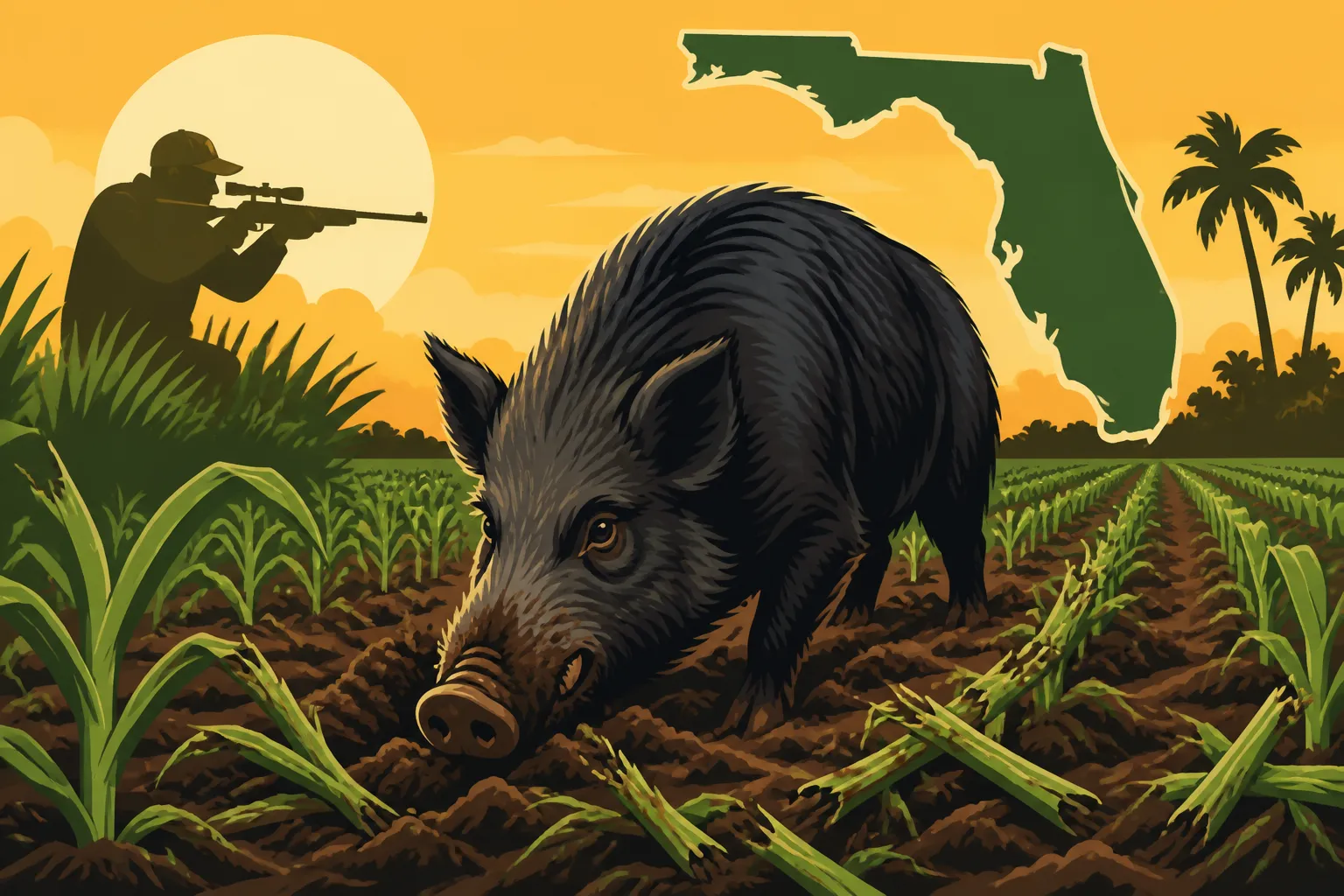
When feral hogs enter a field, they don't just eat; they absolutely decimate. The most iconic form of damage is "rooting," where they use their powerful snouts to dig up soil in search of tubers, insects, or plant roots. In a row crop field, this means tearing up young plants, severing root systems, and creating deep furrows that can damage irrigation lines and make harvest nearly impossible. Imagine a combine trying to navigate a field that looks like it's been rototilled only in random, jagged swaths – it's a recipe for equipment damage and lost yield.
Beyond rooting, hogs are also notorious for trampling crops. A sounder of twenty or more hogs, ranging from small piglets to large boars weighing hundreds of pounds, can flatten large sections of a field simply by moving through it. Young plants, especially those with tender stalks like corn or sugarcane, stand no chance. This trampling often occurs indiscriminately as they travel to and from feeding areas, creating pathways that further expose the field to more hogs and other opportunistic wildlife.
Then there's the direct consumption. Hogs aren't picky. They'll eat corn, peanuts, soybeans, watermelons, potatoes, and almost any other cultivated crop. They particularly love crops that are either sweet or offer a high caloric payoff, such as mature corn on the cob or freshly dug peanuts. It's not just what they eat, but what they waste and contaminate. Crops partially eaten or smeared with mud and feces become unsellable, adding to the financial burden on the farmer. They’ll also wallow in irrigation ditches and boggy areas, fouling water sources and compacting soil.
Economic and Emotional Toll
The financial losses incurred by Florida farmers due to feral hog damage are staggering. The costs are multi-faceted: there’s the direct loss of yield, which translates directly to reduced revenue. Beyond that, farmers face increased expenses for replanting, repairing damaged equipment, and implementing mitigation strategies that often require significant upfront investment in fencing or trapping equipment. In a tight-margin industry like agriculture, these losses can make the difference between a profitable year and one that puts the entire operation at risk.
The emotional toll, however, is often overlooked. Farmers pour their heart, sweat, and often generations of effort into their land and crops. To see that hard work undone overnight by a destructive animal is incredibly disheartening. It’s a feeling of helplessness and frustration, especially when traditional methods of control feel like bailing water from a leaky boat. This emotional stress can be immense, impacting not just the individual farmer but their entire family and livelihood.
Imagine standing in a field you’ve nurtured for months, seeing half an acre of sweet potatoes dug up and scattered, or rows of maturing corn flattened and chewed. It's a punch to the gut. The constant vigilance required, the sleepless nights wondering if the hogs will return, and the seemingly endless cycle of damage and repair can wear down even the most resilient farmer. It's not just about money; it's about a deep connection to the land and the pride in providing food, shattered by an invasive species.
Why Florida's Feral Hogs Are Such a Persistent Threat
Feral hogs are often described as the perfect invasive species, especially in a state like Florida. Their biology, combined with the ideal environmental conditions, makes them an incredibly persistent and difficult problem to solve. Understanding why they thrive helps us better understand the challenges in managing them and protecting crops.
Biology and Behavior of Feral Hogs
These are not your typical farm animals. Feral hogs are remarkably intelligent, highly adaptable, and incredibly elusive. They learn quickly, figuring out weak points in fences, avoiding traps that have previously caught their kin, and becoming nocturnal in areas with human pressure. Their keen sense of smell allows them to detect buried roots and tubers, as well as bait, from a considerable distance, while their acute hearing helps them evade hunters and equipment.
Their physical attributes are also perfectly suited for destruction and survival. They possess thick hides, muscular bodies, and sharp tusks, making them formidable animals that are difficult to deter. The boars' tusks are particularly damaging, used for fighting, tearing up ground, and even defending themselves against predators. Sows, on the other hand, are focused on reproduction and feeding their young, driving them to seek out the richest food sources, which often means agricultural fields. This combination of intelligence, adaptability, and physical prowess makes them a truly formidable adversary for farmers.
Furthermore, their social structure, often living in matriarchal sounders, means that knowledge of food sources and safe havens can be passed down through generations. Once a sounder learns that a particular field offers a consistent food supply, they will return repeatedly, season after season, making them creatures of habit. This learned behavior makes it even harder to break their patterns without sustained, intensive intervention.
Environmental Factors in Florida
Florida's natural environment plays a huge role in the proliferation and persistence of feral hogs. The mild, subtropical climate means there's no harsh winter to naturally cull populations, allowing them to breed year-round and survive without the stress of extreme cold. This constant breeding cycle, coupled with ample water sources in Florida's swamps, rivers, and even irrigation canals, provides everything they need to flourish.
The state's diverse habitats, from vast pine flatwoods to dense cypress swamps and expansive palmetto thickets, offer an abundance of cover. Hogs can easily hide during the day in these dense areas, venturing out under the cover of darkness to raid nearby fields. This accessibility to cover makes them incredibly difficult to locate and remove, especially on large tracts of land adjacent to wilder areas. When combined with the availability of natural food sources like acorns and palmetto berries, these hogs rarely face food scarcity, allowing populations to rebound quickly even after significant culls.
The expansive nature of Florida’s agricultural regions, often interspersed with wildlands, creates ideal corridors for hog movement. Farmers in areas like Polk County or Hendry County, known for their citrus groves and row crops, are constantly battling hogs moving in from adjacent wild preserves or forested tracts. The landscape itself facilitates their spread and resilience, making it a statewide challenge rather than an isolated issue.
The "Unprotected" Status and Its Challenges
In Florida, feral hogs are considered an unprotected species, meaning they can be hunted year-round on private lands without a closed season or bag limit. This is a crucial distinction, as it theoretically allows landowners and hunters maximum flexibility to remove them. You don't need a special permit to hunt hogs on private land with landowner permission, which differs greatly from regulated game species. This policy acknowledges the damage they cause and aims to give landowners the tools to fight back.
However, this "unprotected" status, while beneficial, isn't a silver bullet. The sheer reproductive capacity of hogs means that simply hunting a few animals here and there often isn't enough to make a dent in the overall population pressure. For example, even though Why Florida Hogs Have No Closed Season allows for continuous hunting, many landowners find that the effort required to truly control a large population far exceeds what recreational hunting alone can achieve. The animals learn quickly, becoming nocturnal and avoiding human activity, making them even harder to target effectively.
The challenge also lies in coordination. While one landowner might be actively hunting or trapping, their neighbor might not be, allowing hogs to simply shift their activity across property lines. This highlights the need for a comprehensive, cooperative approach, as individual efforts, no matter how dedicated, can often be undermined by surrounding properties that serve as sanctuaries for hog populations. This is a shared problem that often requires shared solutions beyond just open season.
Common Florida Row Crops Vulnerable to Hog Damage
Feral hogs aren't picky eaters, but certain crops present a higher appeal and are therefore more frequently targeted in Florida. Understanding which crops are most vulnerable and at what stages can help farmers anticipate damage and implement protective measures more effectively.
Field Corn and Peanuts
These two crops are often at the top of a feral hog's menu, especially during key growth stages. Field corn, a staple in many parts of Florida, is highly attractive to hogs from the moment it begins to develop ears. Hogs will tear down stalks to get at the developing kernels, consuming what they can and trampling the rest. They don't just eat the ears; they will also root around the base of the plants, digging up roots and weakening stalks, making the entire plant susceptible to wind and further damage.
Peanuts, which grow underground, are a particular favorite because rooting is exactly how hogs access them. As the peanut pods mature beneath the soil, hogs can smell them and will systematically dig up entire rows, leaving behind cratered fields and a fraction of the intended harvest. This damage is incredibly frustrating because it often occurs just before harvest, after months of cultivation and investment. Fields in counties like Levy or Gilchrist, known for their peanut production, often bear the brunt of this relentless foraging.
The timing of these crops' maturity often coincides with periods when hogs are seeking high-energy foods, such as when sows are lactating or when overall population numbers are at their peak. This creates a critical window of vulnerability for both corn and peanut growers, requiring heightened vigilance and proactive management strategies during these crucial phases of the growing season.
Sugarcane and Vegetables
Sugarcane, another significant crop in south Florida, especially around Lake Okeechobee, faces a unique threat from feral hogs. While the stalks are tough, hogs are drawn to the sweet, energy-rich pith inside. They will chew through the stalks, leaving them broken and susceptible to disease, or simply knock down large swaths of the field. This can cause significant yield loss, as individual stalks are what contribute to the overall sugar content.
Vegetable farms, often found in smaller, more intensive operations, are particularly susceptible to catastrophic losses. Crops like sweet potatoes, tomatoes, watermelons, cantaloupes, and even leafy greens are easily accessible and highly palatable to hogs. A single sounder can devastate a vegetable patch in hours, rooting up young transplants, consuming ripening fruits, and trampling everything in their path. The value per acre of many vegetable crops is very high, meaning even a small amount of damage translates to substantial financial loss for growers.
For these high-value, often softer-bodied crops, the impact isn't just about consumption; it's about contamination and destruction. Hogs might take a bite out of many different fruits or vegetables, rendering them unsellable. The sheer physical disruption to the rows and plants makes mechanical harvesting difficult or impossible, forcing manual labor to salvage what's left, adding further costs to an already damaged crop.
Other Cash Crops and Pastures
Beyond the major row crops, many other agricultural enterprises in Florida suffer at the hands (or rather, snouts) of feral hogs. Hay fields, for example, can be rooted up, damaging equipment used for cutting and baling, and contaminating the forage. Sod farms, which grow turfgrass for landscaping, can see large sections torn up, reducing marketability and requiring costly repairs. Even improved pastures, vital for Florida's cattle industry, are not safe; hogs will root for grubs, worms, and roots, destroying the valuable forage grasses and compacting the soil, which leads to reduced grazing capacity.
Hogs can also impact specialty crops like blueberries or citrus, though the damage often presents differently. While mature citrus trees are generally safe, young trees or those with low-hanging fruit can be targeted. Blueberry bushes can be rooted around, and fallen fruit consumed. Essentially, if it's edible and accessible, a feral hog will likely try to get to it. This broad dietary preference means almost no agricultural enterprise is truly immune to the threat of hog damage in Florida, making comprehensive management all the more critical for the state's diverse agricultural landscape.
This widespread vulnerability underscores Florida Hog Damage to Row Crops as a pervasive issue that affects the entire agricultural backbone of the state, from large-scale row crop operations to smaller, specialized farms and even ranching.
Strategies for Mitigating Hog Damage to Your Row Crops
Dealing with feral hog damage isn't about eliminating every hog in Florida; it's about making your fields less attractive and harder to access. A multi-pronged approach is almost always the most effective, combining various tactics to create a sustained defense against these intelligent and persistent animals.
Fencing and Exclusion Methods
One of the most effective, albeit often costly, methods for protecting row crops from hogs is exclusion fencing. Electric fencing is a popular choice because it's typically more affordable than heavy-duty woven wire and can be moved. A multi-strand electric fence, with wires placed at varying heights (e.g., 6, 12, and 18 inches off the ground), delivers a memorable shock that usually deters hogs. The key is to keep it well-maintained, clear of vegetation that can ground it out, and ensure the charger is powerful enough to deliver a consistent jolt.
For more permanent solutions, or in high-pressure areas, heavy-gauge woven wire fencing can be highly effective. This requires more substantial posts and significant installation effort, but it offers a physical barrier that hogs cannot easily breach. Critically, woven wire fences need to be either buried a few inches into the ground or equipped with a "flapper" wire laid flat on the ground and staked, as hogs will instinctively try to root underneath a fence. While the initial investment is higher, a well-constructed woven wire fence can offer peace of mind for many years.
No matter the type of fence, regular inspection is paramount. Hogs are masters at finding weaknesses – a loose wire, a washed-out section, or a gate left ajar. A single breach can lead to a sounder entering and causing extensive damage. Consider adding an offset electric wire to the outside of a woven wire fence for an extra layer of deterrence, as the combination provides both a physical and psychological barrier.
Trapping Efforts
Trapping is often cited as one of the most efficient methods for reducing hog populations, especially when you're targeting entire sounders. Large, corral-style traps are highly effective, designed to capture multiple hogs at once. These typically involve a large enclosure with a trigger gate that can be activated by a trip wire or even remotely. The key to successful trapping is pre-baiting: consistently providing an attractive food source (like soured corn) in the trap for several nights with the gate open, allowing hogs to become comfortable entering and feeding.
Once hogs are consistently entering the trap, you can set the gate. Timing is crucial, as you want to catch as many of the sounder as possible. Smart trapping also involves strategic placement. Use tools like a mapping app, such as GoHunt, to identify common travel corridors, bedding areas, and feeding patterns around your fields. Placing traps along these routes, especially where hogs are frequently entering your crops, significantly increases success rates. Remember, Baiting Hogs Legally in Florida is permitted, and using a strong attractant will draw them in.
It's important to be prepared for what happens after the capture. Hogs can be incredibly destructive even within a trap, so ensure the trap is sturdy. Trapping Feral Hogs on Florida Private Land details the importance of proper trap design and consistent monitoring. Trapping requires dedication, consistent effort, and a willingness to learn from past experiences, as hogs can become trap-shy if not managed properly.
Hunting and Removal Programs
Hunting, especially organized efforts, can be a vital component of a comprehensive hog management plan. While recreational hunting alone may not control an entire population, targeted hunts, particularly during peak damage periods or when hogs are moving into fields, can be highly effective. Hunting Hogs Without a Bag Limit means there are no restrictions on how many you can take, emphasizing the state's intent to reduce their numbers.
Night hunting, where legal and safe, can be particularly effective since hogs are often nocturnal crop raiders. Using night vision or thermal imaging equipment can give hunters a significant advantage. Many Florida counties allow for Night Hunting Hogs With Lights in Florida on private lands with landowner permission, which can dramatically increase harvest rates. Another method is working with professional hog removal services or experienced Dog Hunting Hogs in Florida teams, who specialize in locating and dispatching hogs efficiently. These professionals have the equipment and expertise to cover large areas and often provide a quick, effective solution to persistent hog problems.
When planning hunting and removal efforts, leverage technology. Mapping applications like GoHunt can help you plot out stand locations, identify hog trails, and track areas of recent damage. This allows for more strategic hunting, placing hunters in locations where they are most likely to intercept hogs moving to or from your crops, maximizing impact with minimal disturbance.
Integrated Pest Management Approaches
The most sustainable and effective way to mitigate feral hog damage is through an integrated pest management (IPM) approach. This involves combining several strategies rather than relying on a single method. For instance, using exclusion fencing around a high-value field, while simultaneously trapping adjacent wooded areas, and conducting periodic targeted hunts, creates a layered defense. Hogs that are deterred by one method might fall victim to another.
Rotation of tactics is also critical. Hogs are smart and can learn to avoid consistent pressures. Changing up bait types, moving traps to new locations, varying hunting pressure, and even adjusting planting schedules to avoid peak hog activity periods can keep them guessing and prevent them from habituating to your control efforts. This adaptive approach acknowledges the intelligence of the animal you're dealing with.
Furthermore, consider habitat modification where feasible. Reducing dense cover adjacent to crop fields can make it harder for hogs to hide and move undetected. While often difficult on a large scale, even clearing out overgrown fencerows or small patches of thick brush can make a difference in reducing their sanctuary zones. Regular monitoring of your fields and surrounding areas, perhaps using trail cameras or by actively scouting with tools like the GoHunt app to record observations, helps you understand hog movement patterns and adapt your IPM strategy accordingly.
The Long-Term Perspective: Managing Florida's Feral Hog Challenge
Managing feral hog damage to row crops isn't a sprint; it's a marathon. These animals are deeply ingrained in Florida's ecosystem, and their prolific nature means that effective control requires continuous effort and a long-term vision. It's about shifting from reactive damage control to proactive, sustained management.
The Need for Sustained Effort
The biggest mistake a landowner can make in hog management is assuming the problem is solved after a successful trap or hunt. Feral hog populations rebound quickly, and if continuous pressure isn't maintained, new sounders will move in or surviving animals will quickly reproduce. This means hog control must be an ongoing, year-round commitment, not just a sporadic activity when damage becomes intolerable. Think of it less as an emergency response and more as regular maintenance.
This sustained effort often means budgeting for ongoing costs, whether it's for trap bait, fence repairs, or professional services. It also means dedicating consistent time to monitoring, checking traps, and scouting for new signs of hog activity. The good news is that by staying on top of the problem, you can prevent small incursions from escalating into catastrophic damage, ultimately saving time and money in the long run.
The sheer numbers of How Many Feral Hogs Roam Florida makes it clear that this isn't a problem that will disappear on its own. It requires a dedicated commitment from landowners and agricultural producers to stay ahead of the curve, understanding that any slack in management efforts will quickly be exploited by these opportunistic creatures.
Community and Cooperative Approaches
Feral hogs don't respect property lines, making this a problem that's best tackled through community and cooperative efforts. If you're implementing robust control measures on your property, but your neighbor isn't, hogs will simply move back and forth, undermining your hard work. Reaching out to neighboring landowners, discussing the issue, and coordinating efforts can lead to much greater success. This might involve synchronized trapping programs, shared hunting efforts, or pooling resources for professional removal services.
Local agricultural extension offices are often excellent resources for information, workshops, and even connecting landowners with shared problems. They can provide advice on best practices, legal considerations, and new technologies in hog management. Building a network of like-minded landowners creates a stronger defense against these animals across a broader landscape, making it harder for hogs to find refuge.
Consider forming a local hog control cooperative or at least establishing lines of communication with your neighbors. Perhaps one landowner has a suitable location for a large corral trap, while another has expertise in Hunting Hogs Without a Bag Limit at night. By working together, the collective impact on hog populations can be far greater than any individual's isolated efforts, protecting everyone's crops and livelihoods more effectively.
Scouting and Monitoring
Effective hog management starts with good intelligence. You need to know where the hogs are, when they're moving, and what areas they're targeting. This requires consistent scouting and monitoring. Regularly walk your field edges, looking for fresh tracks, rooting, and broken fences. Trail cameras can be invaluable tools, providing 24/7 surveillance and helping you identify specific travel routes, entry points, and even the size and composition of sounders. Knowing if it's a small group of young hogs or a large breeding sounder dictates your response.
Mapping apps, like GoHunt, are incredibly useful for this purpose. You can mark areas of recent damage, plot hog trails, identify potential bedding cover in adjacent woods, and even plan trap locations or stand sites directly on your property map. This visual representation helps you identify patterns, understand hog behavior on your specific property, and make data-driven decisions about where and when to focus your efforts. These apps can integrate with satellite imagery, allowing you to Scouting With the Florida FWC App capabilities as well, to understand the broader landscape hogs are moving through.
By diligently scouting and monitoring, you move beyond guesswork and into a strategic approach. This intelligence allows you to adapt your tactics, deploy your resources most effectively, and stay one step ahead of these incredibly resilient and destructive animals. It’s about being proactive rather than constantly reacting to the latest wave of damage, turning the tide in the ongoing battle against feral hogs in Florida's row crops.
| Mitigation Strategy | Initial Investment | Ongoing Effort | Typical Effectiveness | Best Use Case |
|---|---|---|---|---|
| Electric Fencing | Moderate | High | Moderate to High | Protecting specific fields, temporary barriers |
| Woven Wire Fencing | High | Low to Moderate | High | Permanent field protection, high-value crops |
| Corral Trapping | Moderate | Moderate | High (for sounders) | Reducing large populations, adjacent wild areas |
| Targeted Hunting | Low to Moderate | Moderate | Moderate to High | Supplemental control, removing wary individuals |
| Professional Removal | High (per instance) | Low (for landowner) | Very High | Rapid reduction of severe infestations |
| Habitat Modification | Low to Moderate | Low | Moderate | Long-term deterrence, reducing cover |
Disclaimer
This article is for general informational purposes only and does not constitute professional advice. Laws, prices and regulations vary by location and change over time. Consult a qualified professional for guidance on your specific situation.