Florida Ground-Nesting Bird Predation by Hogs
It’s a frustrating reality for anyone who cares about Florida’s wild spaces: the sheer destructive power of feral hogs. These invasive animals aren't just an agricultural nuisance; they're an ecological wrecking ball, particularly for our vulnerable ground-nesting bird populations. This comprehensive guide will delve deep into the pervasive problem of feral hog predation on Florida's ground-nesting birds, explaining why it happens, which species are most at risk, and what steps are being taken to mitigate this serious threat to our native wildlife.
Understanding the Threat: The Ubiquitous Feral Hog in Florida
Feral hogs, often called wild hogs or wild pigs, are a common sight across Florida's diverse landscapes, from dense pine forests to open palmetto flats and cypress swamps. They are not native to North America; they were introduced centuries ago by European explorers and settlers, and their populations have since exploded, creating a significant management challenge. These animals are incredibly adaptable, reproduce at an astonishing rate, and thrive in nearly any habitat type the Sunshine State offers.
The Proliferation of an Invasive Species
Florida provides a near-perfect environment for feral hogs to flourish. The mild climate means they don't face harsh winters, allowing for continuous breeding throughout the year. Abundant food sources, including acorns, roots, tubers, insects, and even small animals, are readily available. With no significant natural predators to keep their numbers in check, especially once they reach adult size, hog populations can quickly spiral out of control. It's a classic invasive species success story, but one that spells trouble for native wildlife.
You can find Feral Hogs Across Florida in almost every county, making their impact widespread. This ubiquitous presence means that very few areas of ground-nesting bird habitat are truly safe from their influence. They don't respect property lines or ecological zones, moving freely between private lands, state forests, and national wildlife refuges. This constant movement makes effective management incredibly difficult, as efforts in one area can quickly be undermined by new hogs moving in from adjacent properties. Their intelligent, social nature also allows them to quickly learn and adapt to various control methods, adding another layer of complexity to the problem.
Why Florida's Hogs Have No Closed Season
Unlike regulated game animals such as deer or turkey, feral hogs in Florida are classified as a nuisance species. This designation reflects the severe ecological and economic damage they inflict. Because of this, there are very few restrictions on when or how they can be hunted on private land, and even on many public lands, special provisions are made for their take. This year-round, open season approach is a direct response to their destructive potential and rapidly expanding numbers.
The lack of a closed season or bag limit on private lands, and often very liberal limits on public lands, highlights the state's urgent need to control these animals. Landowners often find themselves dealing with extensive damage to crops, pastures, and even suburban lawns. For wildlife managers, the incentive is to remove as many hogs as possible, whenever possible. It's an ongoing battle, and one that requires sustained effort from all angles to even attempt to keep pace with their reproductive capabilities. Why Florida Hogs Have No Closed Season is directly tied to their status as an ecological threat.
How Feral Hogs Impact Ground-Nesting Birds
The impact of feral hogs on ground-nesting birds is multifaceted, extending beyond direct predation to include significant habitat alteration and competition for vital resources. Understanding these various pathways of harm is crucial for appreciating the scope of the problem. It's not just about a hog finding a nest; it's about the entire ecosystem being disrupted.
Direct Predation of Nests and Young
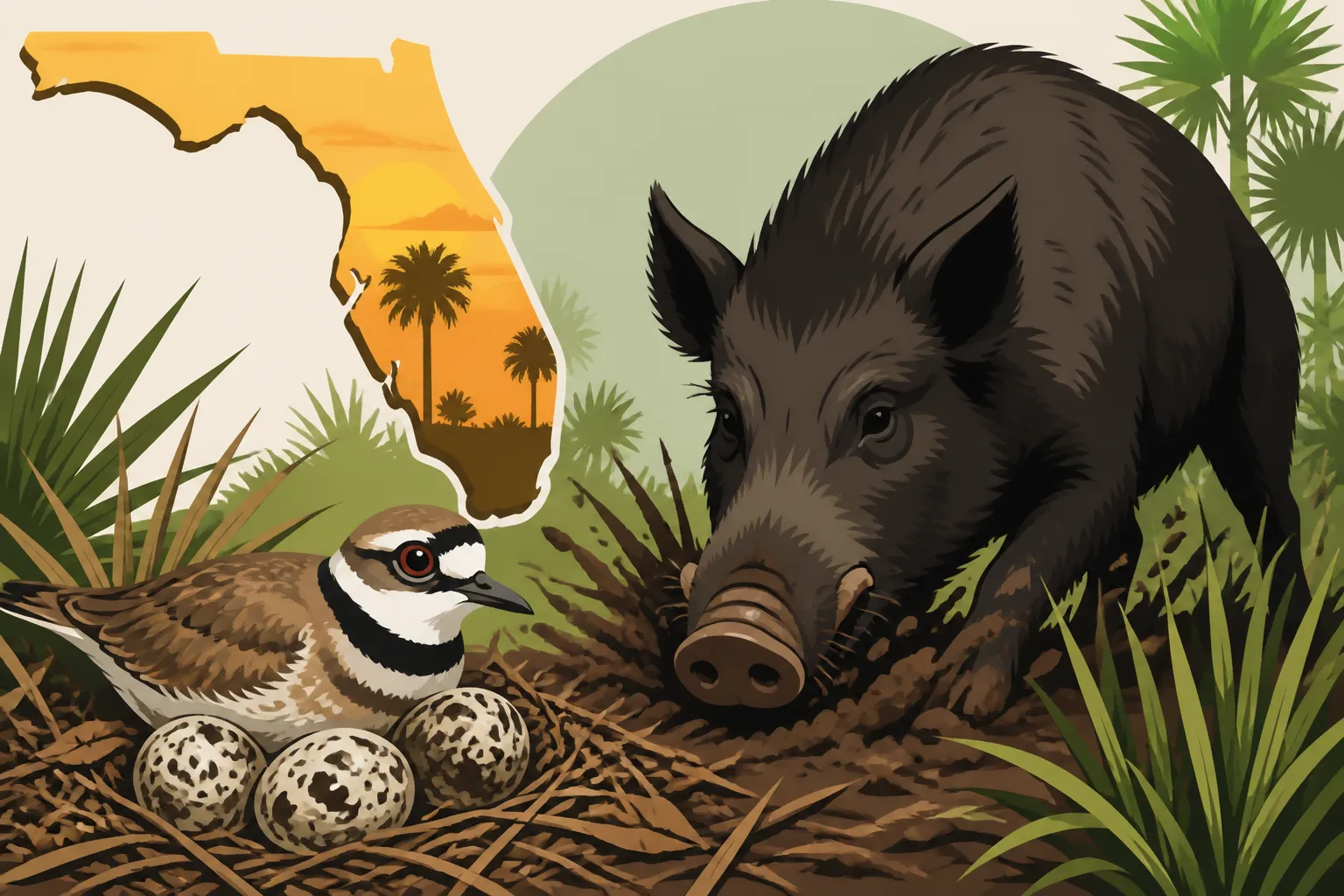
Perhaps the most immediate and devastating impact of feral hogs is their direct predation on ground-nesting bird nests, eggs, and chicks. Hogs are opportunistic omnivores with an incredibly keen sense of smell. They routinely root through leaf litter and soil, searching for underground tubers, insects, and anything else edible. When they stumble upon a bird nest, they don't hesitate. They will consume all eggs, destroy the nest, and if they find young chicks, those too become an easy meal.
This direct predation is particularly problematic for birds that lay their eggs directly on the ground or in shallow scrapes, often camouflaged among grasses or palmetto. Unlike many other predators that might take one or two eggs, a hog can wipe out an entire clutch in minutes. Their sheer size and indiscriminate foraging habits mean they are a highly effective nest predator, often leaving no trace of the nest itself, making it difficult for researchers to quantify the full extent of this loss. Imagine a turkey hen diligently sitting on her clutch of eggs, only to have a sounder of hogs pass through, leaving nothing but churned earth. This scenario plays out repeatedly across Florida.
Habitat Degradation Through Rooting
Beyond direct predation, feral hogs are notorious for their rooting behavior, which causes extensive damage to the very habitat ground-nesting birds rely on. They use their strong snouts to dig up soil, roots, and vegetation in search of food. This rooting behavior can turn a pristine patch of ground-nesting habitat into a disturbed, barren wasteland, destroying the cover and food sources critical for bird survival.
| Impact Category | Description of Hog Activity | Effect on Ground-Nesting Birds |
|---|---|---|
| Nest Predation | Direct consumption of eggs and chicks | Significant reduction in nesting success and recruitment |
| Habitat Degradation | Extensive rooting, soil disturbance, vegetation removal | Destruction of nesting sites, loss of protective cover, altered food plant composition |
| Forage Competition | Consumption of seeds, nuts, insects shared with birds | Reduced availability of essential food resources for adult birds and chicks |
| Disease Transmission | Potential carriers of various diseases | Risks to poultry and some wild bird species (less direct impact on nesting) |
| Water Source Contamination | Wallowing in shallow water bodies | Can impact invertebrate populations that birds feed on, degrade water quality |
The consequences of this habitat degradation are far-reaching. When hogs root, they expose bare soil, making nests more visible to other predators like raccoons and coyotes. They also destroy the dense undergrowth and native grasses that provide essential camouflage for nesting hens and newly hatched chicks. This loss of cover leaves birds much more vulnerable. Furthermore, the disturbed soil can promote the growth of invasive plant species that are less beneficial for native wildlife, further altering the ecosystem over time. Florida Hog Damage to Agriculture is well-documented, but their damage to natural habitats is just as severe, if not more so, for wildlife.
Specific Bird Species at Risk
While many ground-nesting birds face threats from feral hogs, some species are particularly vulnerable due to their nesting habits, historical population declines, or unique ecological niches within Florida. These include some of our most cherished game birds and species of conservation concern.
Our Iconic Bobwhite Quail
The Northern Bobwhite Quail is a beloved game bird and a classic symbol of the Southern landscape. Unfortunately, bobwhite populations have been in steep decline across much of their range, and Florida is no exception. While habitat loss and degradation are major factors, feral hog predation plays a significant, often underappreciated, role in preventing their recovery. Quail build their nests on the ground, typically a shallow depression lined with grass and leaves, well-hidden in dense cover. This makes their nests incredibly susceptible to rooting hogs.
A covey of quail might thrive in a carefully managed pine savanna, with controlled burns promoting the right mix of grasses and forbs. However, if that same area is overrun by hogs, their efforts to nest successfully can be severely hampered. The hogs not only eat the eggs but also disturb the very structure of the nesting habitat, making it harder for quail to find safe spots to lay their eggs or raise their broods. Bobwhite Quail in Florida rely heavily on specific habitat characteristics that are easily destroyed by rooting hogs. The decline of this species is a complex issue, but without effective hog control, even pristine habitat can become a death trap for quail nests.
The Majestic Wild Turkey: Osceola and Eastern Subspecies
Florida is unique in being home to two subspecies of wild turkey: the endemic Osceola (Florida) turkey found in the peninsula and the Eastern turkey in the Panhandle. Both are ground-nesting birds, and both face considerable pressure from feral hogs. Hens lay their eggs in shallow depressions, often at the base of a tree, in thick palmetto, or dense brush, relying on camouflage and stillness to protect their clutches. A hog's keen sense of smell, however, can easily defeat even the most well-hidden nest.
Turkey broods are especially vulnerable in their first few weeks. Young poults, while mobile, are flightless and rely on dense cover for protection from predators, including hogs. A sounder of hogs moving through an area where a hen is attempting to raise her poults can decimate the entire brood. This impact on recruitment, the number of young birds successfully joining the adult population, is a major concern for turkey managers. Florida Turkey Brood Survey Results often reflect the challenges faced by poults, and hog predation is a silent contributor to those struggles. Managing hog populations is therefore a critical component of healthy turkey numbers in Florida.
Other Ground-Nesting Species
While quail and turkey are often highlighted due to their game bird status, many other ground-nesting bird species, some of which are threatened or endangered, also suffer from feral hog predation. This includes various waterfowl species that nest on the ground near marshy edges, such as mottled ducks, and a variety of smaller songbirds that build their nests low to the ground in dense vegetation.
Even species that are not primarily ground-nesters but whose fledglings spend significant time on the ground after leaving the nest can be impacted. The ripple effect of hog activity touches many parts of the ecosystem. Consider the Florida grasshopper sparrow, a critically endangered species, whose nests are essentially hidden bowls on the ground. The presence of hogs in their dwindling habitat is an additional, severe stressor on their ability to reproduce. For conservation efforts focused on these rare birds, eliminating or drastically reducing hog presence is paramount.
Mitigation Strategies for Land Managers and Hunters
Addressing the problem of feral hog predation on ground-nesting birds requires a concerted effort, combining various management techniques and the dedication of both wildlife agencies and private landowners. It’s an ongoing battle, but one that is essential for the health of Florida's ecosystems. Technology, like the mapping tools provided by GoHunt, can assist in identifying hog hotspots and planning control efforts more effectively.
Trapping as a Primary Control Method
Given the rapid reproductive rate of feral hogs, trapping is often cited as the most effective method for reducing localized populations, especially on private lands. Trapping allows for the removal of entire sounders (groups of hogs) at once, which is crucial for making a significant dent in their numbers. Modern trapping systems, often controlled remotely, can alert managers when hogs enter the trap, allowing for strategic activation to capture as many animals as possible.
Setting up effective traps requires careful planning. Land managers will scout areas for signs of hog activity – rooting, tracks, wallows, and rubs. Bait, such as corn, is used to attract hogs to a specific location and habituate them to the trap site. Once a sounder is consistently visiting the bait, the trap is set and sprung when the maximum number of hogs are inside. Trapping Feral Hogs on Florida Private Land is a common and necessary practice, often yielding impressive results in terms of hog removal. It's a labor-intensive effort, but one that directly benefits ground-nesting birds by reducing predator pressure.
Hunting for Population Reduction
Hunting plays a vital role in feral hog control, particularly on both public and private lands. While traditional still-hunting or stalking can remove individual animals, more aggressive methods are often employed to make a larger impact on population numbers. Night hunting with the aid of artificial lights or thermal imaging, where legal, can be highly effective because hogs are often nocturnal, especially in areas with human activity. Similarly, organized dog hunts can cover large areas and drive hogs into positions where they can be dispatched by hunters.
On public lands, where trapping might be restricted or less feasible, hunting becomes the primary tool. Wildlife Management Areas (WMAs) often have specific regulations for hog hunting, but the general philosophy is to encourage harvest due to their invasive status. Knowing the movements of hogs through the use of scouting tools, such as the detailed satellite imagery and property line overlays found in GoHunt, can give hunters a distinct advantage. Hunting Hogs on WMA Land in the Off-Season is often allowed precisely because of their destructive impact on native wildlife and habitats. Every hog removed is one less predator for ground-nesting birds and one less animal rooting up valuable habitat.
Habitat Management and Exclusion
Beyond directly removing hogs, habitat management practices can also indirectly help ground-nesting birds cope with predation pressure. Creating dense, secure nesting cover can offer some level of protection, although it's rarely foolproof against a determined hog. Prescribed burning, for instance, can enhance desirable vegetation, creating better nesting and brooding habitat for species like quail and turkey, and can be used in conjunction with hog control efforts.
Another strategy, especially in highly sensitive conservation areas, is the use of exclusion fencing. While expensive and difficult to maintain over large areas, fencing can protect critical nesting sites from hog access. This is often reserved for small, highly valuable plots of land where endangered species are attempting to nest. Such physical barriers are a last resort but can be effective in preventing ingress. Land managers are constantly evaluating new methods and combinations of techniques to protect Florida's delicate ecosystems from the persistent threat of feral hogs.
The Role of Technology in Hog Management
In the modern era, technology has become an indispensable ally in the fight against feral hogs. From advanced scouting tools to remote monitoring, these innovations empower land managers and hunters to be more efficient and effective in their efforts to protect ground-nesting birds. Understanding how to leverage these tools is key to successful long-term management.
Advanced Mapping and Scouting Tools
Digital mapping platforms have revolutionized the way hunters and land managers scout and plan their hog control efforts. Services like GoHunt allow users to access detailed satellite imagery, topographic maps, and public/private land ownership overlays. This information is invaluable for identifying potential hog travel corridors, bedding areas, and feeding grounds – all places where hogs might encounter bird nests.
By using these mapping tools, managers can pinpoint areas of significant rooting damage, track historical hog activity, and plan trap placements or hunting routes strategically. If you see signs of fresh rooting near a known turkey nesting area on your GoHunt map, you know exactly where to focus your efforts. This allows for a proactive approach, rather than simply reacting to damage after it has occurred. Understanding how Reading Aerial Photos for Florida Deer can also apply to deciphering hog patterns is a game-changer. The more informed your strategy, the more successful your control efforts will be, ultimately benefiting vulnerable ground-nesting birds.
Remote Monitoring and Trail Cameras
Trail cameras and remote monitoring systems have become crucial for understanding hog behavior and increasing the efficiency of trapping and hunting. Placing trail cameras in areas of suspected hog activity allows managers to observe sounder size, movement patterns, and feeding times without disturbing the animals. This data is critical for deciding when and where to set traps, or for planning a night hunt with optimal timing.
Many modern hog traps are now equipped with remote triggers or notifications that alert a manager when hogs enter the trap. This means a trap can be left open, allowing hogs to become comfortable feeding inside, and then closed remotely only when an entire sounder is present. This maximizes capture rates and reduces the chance of educating hogs to avoid the traps. These technological advancements mean fewer resources are wasted, and more hogs are removed, directly translating to less pressure on the eggs and chicks of ground-nesting birds.
Ethical Considerations and Future Outlook
While hog control is essential, it's also important to consider the ethical aspects of animal removal. Methods should be as humane and efficient as possible. Landowners and hunters generally embrace this responsibility, understanding that effective management benefits the entire ecosystem. The long-term outlook for Florida's ground-nesting birds largely depends on the continued, diligent efforts to control feral hog populations.
This isn't a problem that will ever be fully "solved" in Florida; it's a constant management challenge due to the hog's reproductive prowess and adaptability. However, through a combination of sustained trapping, strategic hunting, improved habitat management, and the smart application of technology, we can strive to minimize their devastating impact on our native ground-nesting bird populations and help these cherished species thrive. Every effort, no matter how small, contributes to the overall health of Florida's unique natural heritage.
Disclaimer
This article is for general informational purposes only and does not constitute professional advice. Laws, prices and regulations vary by location and change over time. Consult a qualified professional for guidance on your specific situation.