Small Game and Predator Hunting in Florida
It's easy to get caught up in the allure of big game hunting, dreaming of a trophy whitetail buck or the excitement of a spring gobbler. But let's be honest, those hunts can be tough, requiring significant time, resources, and often a lot of luck. Many hunters overlook the incredible opportunities right under their noses in Florida: the abundant small game and challenging predators that offer constant action and skill-building experiences. This guide is here to shed light on these often-underappreciated pursuits, showing you how to find success and enjoyment in the diverse world of small game and predator hunting across the Sunshine State.
The Unsung Heroes of Florida Hunting: An Introduction to Small Game and Predators
Florida's wild landscape, from dense palmetto thickets to sprawling pine flatwoods and cypress swamps, isn't just home to deer and hogs. It's a vibrant ecosystem teeming with smaller creatures that offer fantastic hunting experiences, often with fewer crowds and more consistent action. For many of us, small game hunting was our first introduction to the woods, a place where we learned to read tracks, move quietly, and understand animal behavior. Predator hunting, on the other hand, presents a different kind of chess match, a thrilling test of wits against cunning, elusive animals.
Why Small Game and Predators Matter
Beyond the sheer enjoyment, focusing on small game and predators holds significant value for any hunter. First, it's an accessible way to hone your skills. Tracking squirrels through a hardwood bottom teaches you patience and observation. Calling coyotes sharpens your understanding of sound, wind, and concealment. These are fundamental skills that translate directly to success in larger game pursuits. Think about it: if you can sneak up on a wary fox, imagine how much better you'll be at closing the distance on a mature buck. Plus, the pressure is often lower, allowing for a more relaxed and educational experience.
Secondly, small game like squirrels and rabbits provide excellent table fare, offering a sustainable source of lean, wild protein. There's a deep satisfaction in harvesting your own food, and a skillet full of fried squirrel or rabbit stew is a testament to a successful day afield. Predator hunting, while not typically for the table, serves a crucial ecological role. By managing predator populations, especially opportunistic species like coyotes, hunters can contribute to healthier game herds and protect livestock. It’s a win-win, allowing you to enjoy the hunt while making a tangible difference in the local environment.
Overcoming Misconceptions and Frustrations
Some folks might dismiss small game and predator hunting as "lesser" forms of hunting, perhaps not as glamorous as chasing a trophy deer. This couldn't be further from the truth. The challenges are real, requiring specialized knowledge, keen senses, and a mastery of woodcraft. The frustration often comes from underestimating these animals or approaching the hunt with the wrong mindset. You can't just walk into a random patch of woods and expect squirrels to fall from the trees, or coyotes to come trotting in on a string.
A common frustration is simply finding consistent opportunities. Florida's dense cover can make spotting small game tough, and predators are masters of stealth. Hunters accustomed to open country might struggle with the thick palmetto and sawgrass. This is where diligent scouting, understanding habitat preferences, and utilizing mapping tools like GoHunt become indispensable. Another hurdle can be the sheer unpredictability of animals. One day, the woods might be alive with chatter; the next, it's silent. Predator calling can be particularly frustrating, as coyotes can ignore calls, circle downwind, or simply vanish into the scrub. But these challenges are precisely what make success so rewarding, proving that patience and adaptability are key.
Squirrel Hunting Florida's Lush Woodlands
Squirrel hunting is often where many of us first cut our teeth in the woods. It's an accessible, action-packed hunt that requires a sharp eye, stealthy movement, and a bit of patience. Florida's dense, often humid, woodlands provide excellent habitat for both gray and fox squirrels, offering year-round opportunities in many areas.
Best Habitats and Times for Squirrels
In Florida, when you're thinking about squirrels, you're primarily looking at two distinct species: the Eastern Gray Squirrel and the Fox Squirrel. Gray squirrels are abundant and widespread, thriving in virtually any hardwood forest or mixed pine-hardwood area. They particularly favor live oak, water oak, and hickory trees, especially when mast crops are plentiful. You'll find them in suburban parks, state forests, and public hunting lands alike. Fox squirrels, on the other hand, are a bit more particular and less numerous. They prefer open pine woodlands with a sparse understory, often associated with longleaf pine and turkey oak communities, particularly in north and central Florida. They're larger, more colorful, and often less skittish than their gray cousins, but also harder to locate consistently.
The best time to hunt squirrels generally coincides with the early morning hours, right after daybreak, and again in the late afternoon before sunset. This is when they're most active, foraging for food and moving between den trees. During the warmer months, they might become less active during the heat of midday, retreating to their dens. Cooler weather, particularly a crisp morning after a cold front, can really get them moving, making for fantastic hunting. Pay close attention to what the trees are producing. Acorn crops from oaks, pecans, and hickory nuts are prime attractants. If there's a strong mast crop, you'll often find squirrels concentrated in those areas. This can be a game-changer if you're Hunting After a Poor Acorn Year, as squirrels will disperse to find other food sources.
Tactics for Florida Squirrel Hunting Success
When it comes to hunting squirrels in Florida, a few tactics really shine. The "still-hunt" method is incredibly effective. This involves moving slowly, taking a few steps, then pausing and scanning the treetops and forest floor. Listen for the tell-tale rustle of leaves, the bark of a squirrel, or the distinctive chink-chink of them gnawing on a nut. Use your binoculars to pick apart the canopy, looking for movement or a tell-tale bushy tail. Often, squirrels will "freeze" when they sense you, flattening themselves against a tree limb. If you see one, mark its location, then slowly circle the tree, keeping the trunk between you and the squirrel until you get a clear shot. Patience is paramount here; many shots are missed by hunters rushing the approach.
Another excellent tactic is "sit-and-wait." Find a productive area, perhaps a cluster of mature oak trees or a pecan grove, and simply sit quietly against a large tree trunk, letting the woods come alive around you. This is a great way to let the squirrels calm down after your initial entry into their territory. For a deep dive into this, check out our guide on Squirrel Hunting Florida Hardwood Hammocks. Sometimes, if you're hunting with a partner, a "drive" can work for particularly dense areas, with one hunter pushing squirrels towards another waiting silently ahead. However, for most Florida squirrel hunting, stealth and patience are your best friends. Pay close attention to wind direction to help mask your approach and scent. Don't forget, squirrels give themselves away in many ways, including their chatter and movement. Learning How Early Season Squirrels Give Themselves Away can significantly boost your success rate.
Gear Essentials for Squirrel Hunters
You don't need a ton of specialized gear to hunt squirrels, which is part of their appeal. A good .22 caliber rifle or a small-gauge shotgun (like a .410 or 20 gauge) is ideal. The .22 offers precise, quiet shots for head-shots, preserving meat, while a shotgun provides a wider pattern for squirrels on the move or in thick cover. Many hunters also opt for an air rifle, which is incredibly quiet and effective for close-range shots.
Beyond your firearm, a comfortable pair of walking boots, camouflage clothing (though not strictly necessary, it helps), and a game vest or small backpack to carry your harvest are essential. Binoculars are invaluable for spotting camouflaged squirrels high in the canopy. A reliable compass or a GPS app on your phone (like the ones available through GoHunt) is always a good idea, especially if you're exploring new areas on public land. And don't forget bug spray – Florida mosquitoes and no-see-ums don't care about hunting seasons! A sharp knife for field dressing and a cooler with ice to preserve your harvest, particularly on warm Florida days, round out your basic kit.
Chasing Rabbits in Florida's Diverse Landscapes
Rabbit hunting might conjure images of snowy fields up north, but Florida offers fantastic opportunities for cottontails and marsh rabbits in its unique habitats. These quick, elusive creatures provide a fast-paced, exciting hunt that can be enjoyed throughout much of the year, particularly where thick cover provides them refuge.
Where to Find Florida's Cottontails and Marsh Rabbits
Florida is home to two main rabbit species that hunters pursue: the Eastern Cottontail and the Marsh Rabbit. The Eastern Cottontail is probably what most people envision when they think of a rabbit. They thrive in areas with abundant brushy cover, field edges, thickets, abandoned homesteads, and agricultural lands. You'll often find them near food sources like clover, grasses, and young shoots, always with dense cover nearby for a quick escape. Think of the transition zones between open fields and dense woodlands, or the overgrown fence lines that cut through ranch country.
Marsh rabbits, as their name implies, prefer wetland environments. They are excellent swimmers and often found in the margins of swamps, marshes, cypress sloughs, and along the banks of canals and rivers. Their diet consists more of aquatic vegetation. If you're exploring the edges of a wetland area on public land, or navigating a low-lying section of a WMA, you're likely in marsh rabbit territory. Both species benefit from habitat disturbances like clear-cuts, prescribed burns (once regrowth occurs), and areas with invasive species like Brazilian pepper, which can create incredibly dense, albeit thorny, cover. Understanding where Florida's rabbit populations are strong, as detailed in reports on Florida Cottontail and Marsh Rabbit Populations, can help focus your efforts.
Effective Rabbit Hunting Strategies
Rabbit hunting in Florida is primarily about flushing these wary animals from their cover. One of the most common and effective methods is to slowly walk through thick cover, kicking bushes and pausing frequently. Rabbits often won't bolt until you're right on top of them, preferring to hide. Having a hunting partner or two can greatly increase your success, as one person can push through cover while the others are positioned to intercept bolting rabbits. Communication is key to safety and success here. Be prepared for fast, often erratic shots.
For a truly classic experience, hunting with beagles or other rabbit dogs is an absolute thrill. These dogs excel at sniffing out rabbits and, once a track is picked up, will loudly "give tongue" as they pursue the rabbit. Rabbits, in turn, often run in circles, eventually coming back near where they were jumped, giving hunters an opportunity for a shot. The music of a beagle pack in full cry is something every hunter should experience. This method is particularly effective in large, dense areas where walking alone would be nearly impossible. If using dogs, make sure you're familiar with any local ordinances or WMA rules regarding dog hunting. Remember, always know your target and what's beyond it, especially in thick cover.
Equipment for the Florida Rabbit Hunter
Similar to squirrel hunting, the gear for rabbits is fairly straightforward. A 12-gauge or 20-gauge shotgun loaded with birdshot (like #6 or #7.5) is the weapon of choice, offering the spread needed for quick shots at close range in dense cover. For those who prefer a more sporting challenge or quieter approach, a .22 rifle can also be used, but it requires much more precise shot placement.
Beyond your firearm, durable, briar-resistant clothing is a must. Florida's thickets are notorious for thorns and abrasive vegetation, so good quality brush pants or chaps will save you a lot of discomfort. Sturdy, waterproof boots are also essential, as you'll often be pushing through damp or muddy terrain. A game vest or small pack, plenty of water, and a good first-aid kit are also wise additions. If you're hunting with dogs, a GPS collar system like those from Garmin can be invaluable for keeping track of your hounds in dense cover. A cooler for quick game preservation is also important, especially given Florida's often warm temperatures.
The Classic Pursuit of Bobwhite Quail in Florida
For many, quail hunting evokes a sense of tradition and nostalgia, of crisp mornings and the thrilling flush of a covey. Florida once boasted vast quail populations, and while numbers have seen declines in many areas, dedicated habitat management and private land efforts still offer opportunities to pursue these iconic game birds.
Understanding Quail Habitat and Decline
The Northern Bobwhite Quail is a ground-nesting bird that relies heavily on specific habitat characteristics: a mosaic of open pine woodlands (especially longleaf pine), native grasslands, and agricultural edges, all with a healthy understory of grasses, forbs, and legumes. Crucially, they need bare ground for dusting, dense clumps of grass for nesting, and shrubby cover for escape and thermal regulation. These varied components must be close together, creating a diverse, patchy landscape. Unfortunately, urban development, conversion of pine forests to less diverse timber plantations, and changes in agricultural practices have led to habitat fragmentation and loss, contributing to a significant decline in wild quail populations across Florida and the Southeast.
While wild quail populations have suffered, particularly in central and south Florida, certain regions and land management practices are actively working to reverse this trend. The Florida Panhandle, with its remnants of longleaf pine ecosystems, and large, well-managed private plantations (especially in the 'Red Hills' region bordering Georgia) are where you'll find the most robust wild quail numbers. Understanding Why Wild Quail Faded From Central Florida sheds light on these challenges. Conservation groups and private landowners are making strides with prescribed burning, thinning timber, and planting native forage to restore crucial habitat, and identifying these areas is key for modern quail hunters.
Traditional Quail Hunting Methods
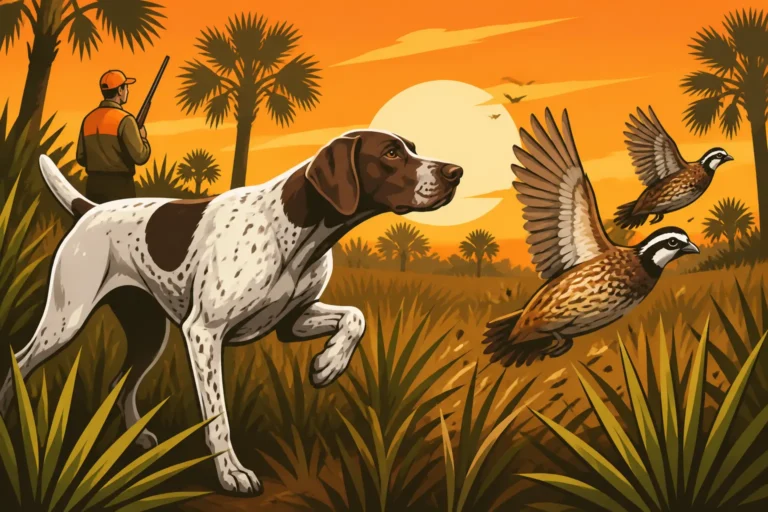
Traditional quail hunting is almost synonymous with hunting over pointing dogs. The sight of a good bird dog locked up on point, tail rigid, nose to the wind, is one of hunting's most classic images. English Pointers, Setters, and various flushing breeds like English Springer Spaniels are popular choices. The dogs work ahead, quartering the ground, using their incredible sense of smell to locate a covey. Once birds are located, the dog goes on point, indicating the covey's position. Hunters then walk in, usually side-by-side, to flush the birds. The explosive flush of a wild covey sends birds scattering in all directions, offering challenging wing-shooting opportunities. Safety is paramount when hunting with multiple shooters and dogs; clear communication and strict zone-of-fire awareness are critical.
Another less common, but still effective, method for quail is simply walking them up, especially in smaller, more fragmented habitats where a covey might be isolated. This involves slowly working through cover, hoping to stumble upon a covey or a single bird. This can be particularly challenging as quail are masters of holding tight, and their camouflage blends perfectly with the dry grass. This method is often more opportunistic, perhaps while scouting for deer or hogs, but it can still yield birds. For those fortunate enough to hunt on managed private lands, guides often lead these hunts, taking care of the dogs and knowing the best coverts. Our guide on Quail Hunting Florida Plantation Country offers more details on these classic pursuits.
Finding Opportunities for Wild Quail
Finding truly wild quail in Florida, especially on public land, can be a significant challenge today. Many Wildlife Management Areas (WMAs) have some quail populations, but they are often scattered and low density, requiring extensive walking and specialized effort. Your best bet for public land would be WMAs in the Panhandle and North Florida that have active timber management and prescribed burn programs, which mimic the historical longleaf pine savannahs. These areas often have extensive pine flatwoods or sandhills.
For more consistent quail hunting, looking into private land opportunities or guided hunts on dedicated quail plantations is often the most productive avenue. Many of these operations have invested heavily in habitat restoration and managing their bird populations, often supplementing with released birds to ensure a quality hunting experience. These experiences can be costly, but they offer a chance to relive the classic quail hunt. Keep an eye on FWC reports and local conservation groups for information on areas where Florida Quail Habitat Restoration Efforts are underway, as these might offer emerging opportunities. Remember that scouting beforehand using satellite imagery or tools like GoHunt can help identify potential habitat pockets, whether on public or private land.
Tackling Florida's Apex Small Predator: Coyote Hunting
Coyotes are relatively new to Florida, having expanded their range southward over the past few decades. These highly adaptable and intelligent canids are now found in every county, presenting a challenging and often intense hunting opportunity. For hunters looking to test their skills against a truly wary adversary, coyote hunting in Florida offers a thrilling experience.
The Growing Presence of Coyotes in Florida
Coyotes were not historically native to Florida. They are an invasive species, having steadily expanded their range from the western and central United States, moving across the Southeast and establishing themselves firmly within the Sunshine State over the last 50-70 years. Their incredible adaptability allows them to thrive in diverse environments, from deep wilderness areas and agricultural lands to surprisingly close proximity to suburban development. Their diet is incredibly varied, including small mammals like rabbits and rodents, birds, insects, fruits, and even deer fawns, making them a significant predator in many ecosystems.
Their impact on native wildlife, particularly ground-nesting birds and deer fawns, is a growing concern for wildlife managers and landowners. They have also been known to prey on livestock and pets. Because of their widespread presence and the desire to manage their populations, coyotes in Florida are considered an unprotected species, meaning there's generally no closed season or bag limit on private lands, and they can be hunted year-round. Public lands often have specific rules, so always check the WMA regulations before heading out. Understanding How Many Coyotes Florida Has can give you an idea of the population density in different regions.
Effective Calling and Decoying Strategies
Coyote hunting in Florida is largely a game of calling. There are two main types of calls: distress calls and challenge/territorial calls. Distress calls, mimicking a wounded rabbit, fawn, or bird, are incredibly effective, appealing to a coyote's instinct for an easy meal. Electronic callers, such as those from Foxpro or ICOtec, are popular, as they allow for a wide range of realistic sounds and volume control, often with a remote control, keeping you separated from the sound source. Mouth calls, like open reed or diaphragm calls, offer a more hands-on, traditional approach. The key is to vary your calls, mimic natural animal sounds, and avoid overcalling, especially on pressured animals.
Decoys can significantly enhance your calling setup. A motion decoy, like a simple piece of fur or a rabbit silhouette that twitches, can draw a coyote's attention away from you and towards the perceived "meal." Position your decoy 30-70 yards from your calling position, upwind or crosswind, ensuring the coyote focuses on it as they approach. Always set up with the wind in your face or crosswind to prevent coyotes from circling downwind and scenting you. Our guide on Coyote Calling Florida Ranch Land provides excellent insights into regional tactics. Use natural cover to break up your silhouette, and be prepared for a quick shot, as coyotes can appear and disappear in an instant.
Night Hunting Considerations for Coyotes
One of the most effective ways to hunt coyotes in Florida, particularly on private land, is at night. Coyotes are often more active and less wary after dark, especially in areas with human activity during the day. Night hunting with artificial lights is legal on private lands in Florida, provided you have landowner permission. This typically involves using powerful spotlights, thermal optics, or night vision equipment. Thermal scopes and handheld thermal imagers have revolutionized night hunting, allowing hunters to detect coyotes from hundreds of yards away, even in dense cover.
When hunting at night, safety is paramount. Always be 100% sure of your target and what's beyond it. Use shooting sticks or a bipod for stability. It’s also important to understand the specific local regulations, as rules can vary. On many public lands (WMAs), night hunting for coyotes is often restricted or requires special permits, so always check the specific area's rules and regulations well in advance. Consider partnering with an experienced night hunter or guide for your first few outings, as there's a steep learning curve. And remember to check the latest rules on Night Hunting Rules for Florida Coyotes.
Beyond Coyotes: Hunting Other Florida Predators
While coyotes often take center stage in predator hunting discussions, Florida is also home to other fascinating and challenging furbearers that can be pursued by hunters. Bobcats and foxes, though more elusive, offer unique hunting experiences that test a hunter's patience, stealth, and knowledge of animal behavior.
Bobcat Hunting: A Test of Patience and Skill
The bobcat, a secretive and powerful feline, is another apex predator in Florida's small game world. They are masters of camouflage and stealth, primarily nocturnal or crepuscular (active at dawn and dusk), making them a truly challenging quarry. Bobcats prefer dense cover, such as swamps, thick brush, and heavy timber, where they can ambush their prey, which largely consists of rabbits, rodents, and birds. While their population is generally healthy in Florida, hunting opportunities are limited by their elusive nature and specific regulations.
Hunting bobcats typically involves similar calling techniques to coyotes, focusing on distress calls like rabbit or bird in distress. However, bobcats are often more hesitant and less likely to charge in aggressively. Patience is absolutely crucial. You might need to call for 30-45 minutes from a single stand, often waiting for a bobcat to slowly creep in, using cover to remain hidden. Setting up near known travel corridors, dense bedding areas, or along game trails where you've seen tracks can increase your odds. Decoys, especially feather or fur twitching decoys, can be very effective in drawing their attention and giving you a shot opportunity. Pay close attention to subtle movements and ear twitches, as bobcats are experts at blending in.
Fox Hunting: A Stealthy Challenge
Florida is home to both Gray Foxes and, to a lesser extent, Red Foxes. Gray foxes are more common and widespread, favoring mixed forests, swamps, and brushy areas. They are unique among canids for their ability to climb trees, often using this skill to escape predators or hunt prey. Red foxes, while present, are less common and typically found in more open, agricultural landscapes, particularly in North Florida. Both species are cunning and wary, making them a formidable challenge for hunters.
Like bobcats, fox hunting often involves calling, particularly with high-pitched mouse or bird distress calls. Gray foxes, especially, can respond quickly but are incredibly cautious, often approaching from downwind. Setting up in areas with good visibility but also ample cover for yourself is key. Early morning and late evening are the most productive times, mirroring their activity patterns. Still-hunting through prime fox habitat, such as along creek bottoms or field edges that offer dense cover, can also yield opportunities. For those interested in the intricacies of calling these wily animals, delve into our guide on Predator Calling Florida Palmetto Country. Keep in mind that fox pelts can be quite beautiful, making them a prized furbearer for trappers and hunters alike.
Understanding Regulations for Other Predators
It's critical to understand that while coyotes are largely unregulated on private land, bobcats and foxes have specific regulations that hunters must adhere to. These species are considered "furbearers" in Florida and have designated hunting seasons, bag limits, and often require a specific furbearer license or endorsement in addition to a standard hunting license. For example, the season for hunting bobcats and foxes typically runs through the fall and winter months, and there are often daily and possession bag limits.
Furthermore, the methods of take can be restricted. While calling and firearms are generally allowed during the open season, specific equipment like night vision or thermal optics for hunting furbearers might have different rules than for coyotes. Always consult the latest Florida Fish and Wildlife Conservation Commission (FWC) regulations guide for the most up-to-date and accurate information before you head afield. Regulations can change, and ignorance of the law is never an excuse. Staying informed ensures you hunt legally and ethically.
Trapping Furbearers: A Different Kind of Challenge
Beyond hunting with firearms, trapping offers another traditional and effective method for managing furbearer populations in Florida. It's a highly skilled endeavor that requires a deep understanding of animal behavior, careful planning, and adherence to specific regulations. For those who appreciate the challenge of outwitting elusive animals without directly pursuing them with a weapon, trapping is a rewarding pursuit.
Legalities and Licensing for Trapping
Trapping in Florida is a regulated activity, and it's essential to be fully compliant with all state laws and FWC rules. Unlike simply hunting, trapping requires a specific Florida Trapping License Requirements. This license ensures that trappers are aware of and adhere to ethical and legal trapping practices. In Florida, the trapping season for furbearers like bobcats, foxes, raccoons, opossums, skunks, and otter typically runs from December 1st through March 1st. There are no daily bag limits for these species during the open season, but certain regulations regarding trap types, placement, and checking frequency must be strictly followed.
For instance, traps must be checked at least once every 24 hours. Specific types of traps are allowed and restricted; for example, snares are generally prohibited on land, and body-gripping traps (Conibears) above a certain size are often limited to water sets or specific situations. Foothold traps, once controversial, are now a mainstay but come with specific requirements regarding jaw spread and padding. Always consult the current FWC Furbearer Regulations handbook. Understanding these nuances is not just about avoiding fines; it's about ethical trapping that minimizes harm to non-target animals and ensures humane treatment of captured furbearers.
Common Furbearers and Trapping Methods
Florida's trapping scene primarily focuses on common furbearers like raccoons, opossums, skunks, and, to a lesser extent, bobcats, foxes, and otters. Raccoons and opossums are abundant and widespread, often targeted for nuisance control as well as their fur. They are relatively easy to trap, often falling for simple bait and cage traps or dog-proof traps. Skunks are often incidental catches but are also targeted. Otters, being semi-aquatic, require water sets, usually with foothold or body-gripping traps (within legal size limits) placed at slides, pinch points, or den entrances.
Bobcats and foxes are the more challenging furbearers for trappers. They are incredibly wary, and successful trapping requires meticulous attention to detail, scent control, and an intimate knowledge of their travel patterns and habits. Dirt hole sets, flat sets, and post sets are common for these canids and felines, utilizing specific lures and baits. Our article on Trapping Florida Furbearers delves deeper into these specialized techniques. When setting traps, consider the terrain and animal sign. Look for tracks, scat, rub trees, and established trails. Using mapping tools available from platforms like GoHunt can help you identify pinch points and travel corridors where traps might be most effective.
Ethical Considerations and Best Practices
Ethical trapping is paramount. It prioritizes animal welfare, responsible harvesting, and compliance with the law. Key best practices include:
- Trap Placement: Set traps in locations where non-target animals (like domestic pets or protected species) are unlikely to encounter them. Avoid public trails, recreational areas, and densely populated zones.
- Trap Maintenance: Ensure all traps are in good working order, clean, and properly camouflaged. Rusty or poorly functioning traps can lead to animal injury or escape.
- Quick and Humane Dispatch: Trappers are responsible for dispatching captured animals quickly and humanely. This often involves a shot from a small-caliber firearm.
- Checking Traps Regularly: Florida law requires traps to be checked at least every 24 hours. This minimizes the time an animal spends in a trap, reducing stress and potential injury.
- Record Keeping: Maintain detailed records of trap locations, catches, and fur harvested. This helps with future planning and understanding local furbearer populations.
- Respect for Landowners: Always have explicit, written permission before trapping on private land. This is not only a legal requirement but a fundamental show of respect.
Trapping is a hands-on method of wildlife management that contributes to healthy ecosystems and provides valuable fur resources. When done responsibly, it's a legitimate and often necessary part of Florida's hunting and conservation landscape.
Essential Gear, Safety, and Regulations for All Small Game and Predator Hunters
Regardless of whether you're chasing squirrels, calling coyotes, or running a trapline, a few universal principles apply to all small game and predator hunting in Florida. The right gear, a commitment to safety, and a thorough understanding of the regulations are non-negotiable for a successful and enjoyable experience.
Must-Have Equipment for Florida Conditions
Florida's unique climate and terrain demand specific considerations for your hunting gear. While exact items vary by target species, here's a general list of essentials:
- Footwear: Waterproof, comfortable, and durable boots are critical. You'll encounter mud, water, thorns, and uneven terrain. Brands like Muck Boot Company or LaCrosse are popular choices for their resilience.
- Clothing: Lightweight, breathable, and quick-drying fabrics are best for warmer months. For cooler days, layering is key. Briar-resistant pants or chaps are highly recommended for pushing through thick palmetto and brush. Blaze orange is often required on public lands during general gun seasons, even for small game, so check regulations.
- Navigation: A reliable GPS unit or a smartphone app like GoHunt is invaluable. Florida's public lands can be expansive and disorienting, with countless trails and clearings. Having your position, property boundaries, and potential escape routes clearly marked is a game-changer.
- Insect Protection: This is Florida, after all! Carry effective bug spray (with DEET or picaridin) and consider permethrin treatment for your clothing to ward off ticks and mosquitoes.
- Hydration: Always carry more water than you think you'll need, especially during warmer seasons. Electrolyte supplements can also be beneficial.
- First-Aid Kit: A basic kit with bandages, antiseptic wipes, pain relievers, and any personal medications is essential for minor injuries in the field.
- Knives and Tools: A good field dressing knife, a small multi-tool, and maybe a small saw or clippers for clearing shooting lanes or trails can be very handy.
- Optics: Binoculars (8x to 10x magnification) are useful for spotting small game in dense cover or scanning for distant predators. Rangefinders are also valuable for precise shots.
Navigating Licenses, Permits, and Seasons
Understanding Florida's hunting regulations can feel like navigating a maze, but it's crucial for legal and ethical hunting. First and foremost, you'll need a Florida Hunting Licenses and What They Cost. This includes a base hunting license, and often additional endorsements like a Florida Waterfowl Stamp (for ducks, geese) or a Migratory Bird Permit (for doves, snipe). For specific furbearers like bobcats and foxes, a Trapping License may be required, or they might fall under specific hunting seasons.
Small game seasons typically run through fall and winter, but some species like squirrels and rabbits have longer or year-round opportunities in specific areas. Coyotes are often year-round on private lands. Always consult the current FWC Hunting Regulations Handbook for the exact season dates, bag limits, and method of take for the specific species you plan to hunt in your chosen zone or WMA. Remember that Florida Hunter Education Requirements are mandatory for most hunters born after June 1, 1975. Carrying proof of your license and hunter education is also a must while afield.
Accessing Florida's Public and Private Lands
Finding a place to hunt is often the biggest challenge. Florida offers extensive public hunting opportunities through its Wildlife Management Areas (WMAs) and National Forests, but access often comes with additional rules and permits.
- Wildlife Management Areas (WMAs): Many WMAs across Florida allow small game and predator hunting. However, most require a Florida WMA Management Area Permit in addition to your general hunting license. Each WMA also has its own specific regulations, including open hunting dates, methods of take, vehicle access rules, and sometimes even quota hunts for certain species. Always check the specific WMA brochure for the most up-to-date information before you go. Using the FWC's interactive public land map or mapping tools from GoHunt can help you scout and understand WMA boundaries and access points.
- National Forests: Ocala, Apalachicola, and Osceola National Forests offer vast tracts of public land. While they don't always require a separate WMA permit, they do have their own set of rules and seasons, which generally align with the surrounding deer zones but can have specific exceptions for small game.
- Private Land: Hunting on private land requires explicit permission from the landowner. This is where most year-round coyote and hog opportunities occur. Building relationships with landowners, offering to help with nuisance animal control (especially for hogs and coyotes), or joining a hunting club can open up significant opportunities. Always ensure you have clear, preferably written, permission before stepping onto private property.
Table: Florida Small Game and Predator Quick Reference
Here's a quick overview of some common small game and predator species in Florida, their typical habitats, and general hunting methods. Remember to always consult the current FWC regulations for specific season dates, bag limits, and rules in your hunting zone or WMA.
| Species | Primary Habitat | Common Hunting Methods | Season & Bag Limit Notes (General) |
|---|---|---|---|
| Eastern Gray Squirrel | Hardwood hammocks, mixed pine-hardwood forests, suburban areas. | Still-hunting, sit-and-wait. | Varies by zone, generally long seasons (e.g., Nov-March). Daily bag limits apply. |
| Fox Squirrel | Open pine woodlands (longleaf), sandhills. | Still-hunting, sit-and-wait (more challenging). | Varies by zone, often same as gray squirrel. Daily bag limits apply. |
| Eastern Cottontail | Brushy fields, thickets, agricultural edges. | Walking them up, dog hunting (beagles). | Varies by zone, generally long seasons (e.g., Nov-March). Daily bag limits apply. |
| Marsh Rabbit | Wetlands, swamps, marsh edges, cypress sloughs. | Walking them up (often with waders), dog hunting. | Varies by zone, generally long seasons (e.g., Nov-March). Daily bag limits apply. |
| Northern Bobwhite Quail | Open pine woodlands, native grasslands, agricultural edges. | Dog hunting (pointers/flushers), walking them up. | Varies by zone, typically fall/winter. Daily bag limits apply. Often on private lands/plantations. |
| Coyote | Found throughout Florida, highly adaptable. | Calling (distress, challenge), night hunting (private land). | Year-round on private lands, no bag limit. WMA rules vary. |
| Bobcat | Dense swamps, thick brush, heavy timber. | Calling (distress), incidental during other hunts. | Designated trapping/hunting season (e.g., Dec-March). Furbearer license required. |
| Gray Fox | Mixed forests, swamps, brushy areas. | Calling (distress), still-hunting. | Designated trapping/hunting season (e.g., Dec-March). Furbearer license required. |
| Raccoon/Opossum | Widespread, near water and human habitation. | Trapping (cage, dog-proof), night hunting with dogs. | Designated trapping/hunting season (e.g., Dec-March). No bag limits. |
Disclaimer
Please remember that hunting regulations, season dates, and license requirements in Florida can change frequently. While this guide provides comprehensive information, it is crucial to always consult the latest official Florida Fish and Wildlife Conservation Commission (FWC) regulations handbook or website before planning any hunting trip. Compliance with all state and federal laws is the responsibility of the individual hunter. This content is for informational purposes only and does not constitute legal advice.