Hunting a Muzzleloader Tag Before Gun Season
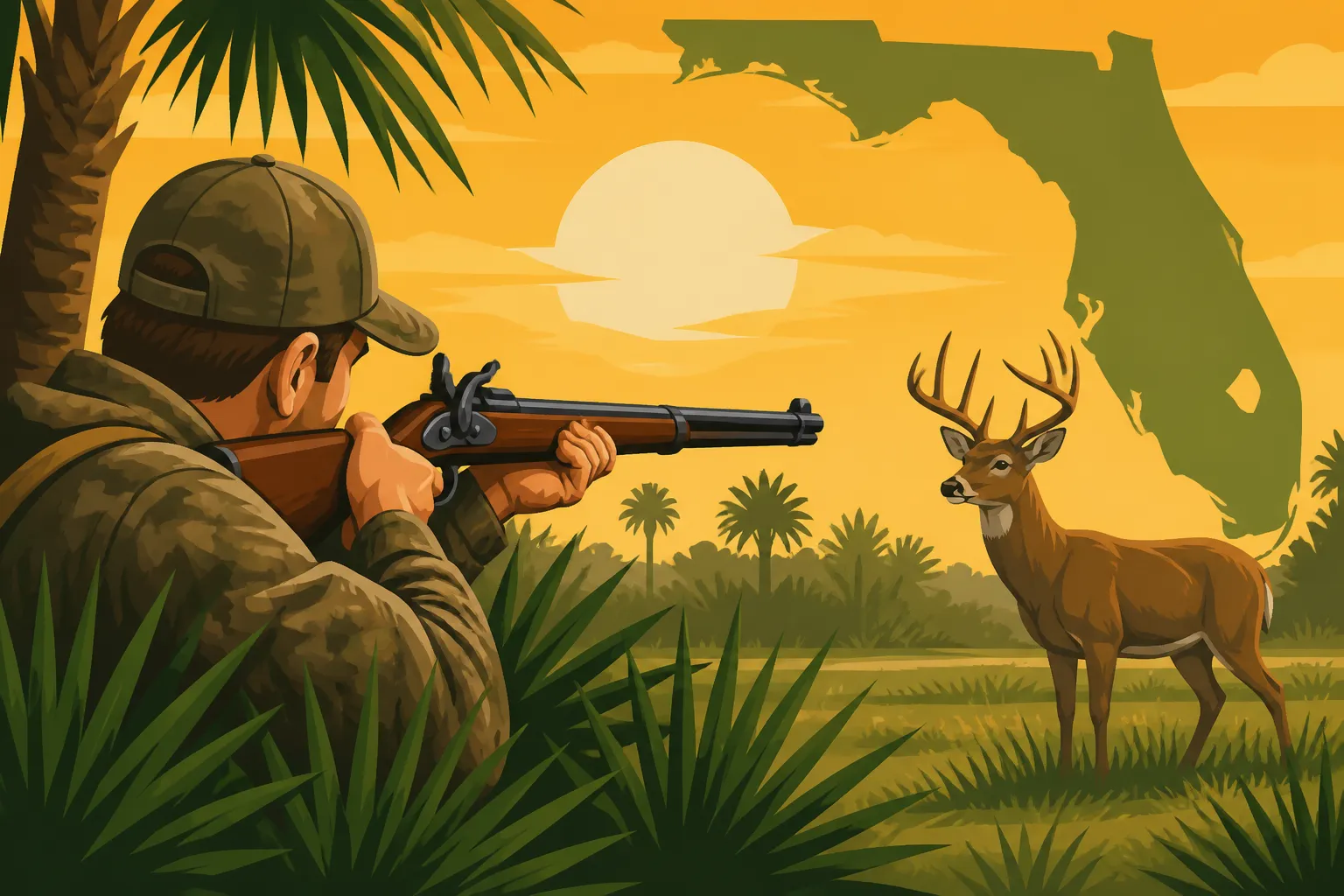
For many of us who live and breathe Florida hunting, the wait for general gun season can feel excruciatingly long. You've been scouting, dreaming, and counting down the days, but often, the prime early fall weeks slip by without a legal means to pursue whitetails with a firearm. This is precisely where Florida's muzzleloader season shines, offering a fantastic opportunity to get into the woods and tag a deer before the traditional gun season crowds descend. This guide will walk you through everything you need to know to make the most of this unique window.
Understanding Florida's Muzzleloader Season Structure
Florida's deer seasons are designed to give hunters various opportunities, and the muzzleloader segment is a special chance to hunt with a firearm during a less pressured period. It’s a bridge between the quiet challenge of archery season and the high-energy rush of general gun season, providing a distinct experience for those willing to embrace traditional firearms.
Why Muzzleloader Season Offers a Unique Advantage
The biggest draw of muzzleloader season in Florida is its timing. It typically falls right after the archery and crossbow seasons, but before the vast majority of hunters take to the woods with modern rifles and shotguns. This means you’re hunting deer that, while perhaps already feeling some bowhunting pressure, haven't yet been completely driven into nocturnal patterns or deep cover by the influx of general gun hunters. It’s an invaluable opportunity to encounter deer still on relatively predictable patterns, often frequenting food sources or traveling through familiar corridors during daylight hours. This early access can be particularly fruitful, especially if you've been diligently scouting since late summer.
Key Dates and Zone Specifics for Muzzleloaders
Florida is a big state with diverse habitats, and to manage its deer herd effectively, it's divided into four distinct deer management zones: Zone A, Zone B, Zone C, and Zone D. Each zone has its own specific season dates for archery, muzzleloader, and general gun, reflecting regional rut timings and habitat differences. For instance, in Zone A, you might find the muzzleloader season opening in September, whereas in Zone C, it could be October or even early November.
It's absolutely crucial to consult the Florida Fish and Wildlife Conservation Commission (FWC) regulations each year for the precise dates applicable to the zone you plan to hunt. These dates can sometimes shift slightly, and being off by even a day can result in a violation. Knowing Why Florida's Deer Seasons Vary So Much by Zone is key to understanding this staggered approach. Always double-check the FWC website or their annual hunting regulations booklet for the most current information.
Legal Firearms for Muzzleloader Season
When it comes to legal muzzleloading firearms in Florida, the FWC has clear guidelines to ensure fair chase and adherence to the spirit of the season. Generally, a legal muzzleloader must load from the muzzle, meaning the bullet and powder are loaded down the barrel from the front. This excludes modern breach-loading "inline" rifles that essentially function like cartridge firearms.
For deer, muzzleloaders firing a single projectile must be at least .30 caliber. This means you can use anything from a classic .50 caliber Hawken-style rifle to a more modern .50 or .54 caliber inline muzzleloader, as long as it loads from the muzzle. You'll typically use either a patched round ball, a lead conical bullet, or a saboted projectile. Each has its own ballistic properties, and what performs best in your particular firearm is something you'll discover through practice. While many states restrict optics during muzzleloader season, Florida generally allows the use of telescopic sights on muzzleloading guns, which can be a significant advantage, especially for older hunters or those with less-than-perfect eyesight. However, it's always good practice to confirm the latest rules regarding scopes.
For hunters who prefer shotguns, muzzleloading shotguns are also permitted, provided they are 20-gauge or larger and fire a single projectile, such as a slug. While often associated with modern firearms, these minimums help ensure humane harvesting. For comparison on other firearm types, you can find details on Minimum Bullet Diameter for Florida Rifles in other seasons.
Scouting and Strategy for Muzzleloader Success
Success during Florida's muzzleloader season isn't just about showing up with a black powder gun; it's about smart scouting, understanding deer behavior during this unique window, and applying the right tactics. Deer are creatures of habit, but they also react strongly to pressure and changing food sources.
Pre-Season Scouting Focus Areas
Your scouting efforts in the weeks leading up to muzzleloader season are paramount. This isn't the time to be making assumptions; it's the time to confirm current deer movement patterns. You need to focus on identifying active early fall food sources. While acorns are a classic deer magnet, remember that Florida’s oak trees don’t all drop at the same time, and some years are better than others. Look for fresh mast from live oaks, water oaks, or even persimmons if you're lucky enough to have them on your property or public land. Deer will key in on these highly nutritious food sources as they become available.
Beyond food, look for fresh sign: tracks along trails, newly rubbed saplings, and even early scrape activity. While the rut might still be a ways off in some zones, bucks will start making rubs to shed velvet and assert dominance. Pay close attention to travel corridors connecting these food sources to bedding areas. Ridge lines in upland pine forests, the edges of cypress swamps, or transition zones between thick palmetto and more open timber are all prime locations.
Using digital mapping tools like GoHunt or OnX Hunt can give you a significant edge during this phase. These apps allow you to mark potential bedding areas, food sources, and pinch points from the comfort of your home, then verify them on the ground. GoHunt's detailed satellite imagery and property line information can help you identify pockets of good cover or access routes that others might overlook on public land. For a deeper dive into general scouting methods, check out Scouting Florida Public Land Before Season.
Capitalizing on Less Pressure
One of the greatest advantages of muzzleloader season is the relatively light hunting pressure. Unlike the opening days of general gun season, when trucks line every forest road and hunters seem to be everywhere, muzzleloader season often sees fewer participants. This means deer are more likely to stick to their natural daytime routines and less likely to be driven deep into impenetrable cover.
To capitalize on this, consider exploring areas that become virtual no-go zones during general gun season due to high pressure. This might mean pushing a little deeper into a block of public land, or setting up closer to a known bedding area than you normally would. Deer might still be moving in the mid-morning or late afternoon, offering expanded hunting windows compared to the more wary, nocturnal deer of peak gun season. Think about how you approach your stand or blind, making sure your entry and exit routes are quiet and undetected. Deer are still sensitive to human intrusion, even with lighter pressure.
Still-Hunting and Stand Placement Tactics
Florida's varied terrain, from dense palmetto thickets to pine flatwoods and oak hammocks, demands adaptable hunting tactics. Still-hunting, a method where you move slowly and deliberately through the woods, pausing frequently to observe and listen, can be incredibly effective during muzzleloader season. It allows you to cover ground, find fresh sign, and potentially jump a deer that's feeding or loafing. This is particularly effective in areas like palmetto flatwoods, where visibility is limited but deer are often present. Learn more about Still-Hunting Florida Palmetto Flatwoods to hone your technique.
When it comes to stand placement, focus on those transition areas and pinch points identified during your scouting. A stand overlooking a dropping acorn flat that funnels into a dense bedding area is often a high-percentage spot. Consider prevailing winds and sun direction for your morning and evening hunts. With muzzleloaders, your effective range is generally shorter than a modern rifle, so getting within 75-100 yards of your target is ideal. This means finding tight corridors where deer are forced to travel close by.
Ground blinds can also be excellent choices, especially in areas with limited trees for treestands or where you need to conceal movement from wary deer. You can brush them in naturally to blend seamlessly with the environment, offering great concealment. Details on Using a Ground Blind on Florida Public Land can help you set up effectively. Always remember that stealth and scent control are just as critical, if not more so, with the shorter effective range of a muzzleloader.
Gear and Shot Placement Considerations for Muzzleloaders
Hunting with a muzzleloader adds a layer of complexity and tradition that many hunters cherish. However, it also demands specific gear and a meticulous approach to shot placement. Unlike modern rifles where you might carry a few extra rounds in your pocket, a missed or bad shot with a muzzleloader can mean a much longer, more involved reloading process, or even the end of your hunting opportunity for that sit.
Essential Muzzleloader Gear Checklist
Beyond your actual muzzleloader, a few critical items are essential for a successful and safe hunt:
- Powder: Whether you use granular black powder, Pyrodex, or Hodggon Triple Seven, ensure it's stored in a waterproof container. Know your exact load recipe and measure it precisely.
- Primers/Caps: Store these in a dry, easy-to-access capper or tin. Moisture is the enemy of consistent ignition.
- Projectiles: Carry enough bullets or patched round balls for multiple shots, along with patches and lubricant if applicable.
- Loading Accessories: A powder measure, bullet starter (for getting the bullet seated squarely), and a ramrod extension (if your under-barrel ramrod is too short) are indispensable.
- Cleaning Supplies: A bore brush, patches, and solvent are crucial for cleaning your muzzleloader after firing, especially with corrosive black powder. Even with modern substitutes, a quick clean can prevent misfires or accuracy issues.
- Optics: Binoculars are vital for spotting deer in thick cover, and a rangefinder is highly recommended. Knowing the exact distance to your target is critical for accurate muzzleloader shooting due to their often rainbow-like trajectory.
- Rain Gear & Waterproofing: Florida weather is notoriously unpredictable. Protect your powder and primers from moisture. Consider a small, waterproof bag or container for essential loading components.
- Bug Spray: Don't forget the mosquitos and no-see-ums, especially in early season Florida.
Practicing for the Critical Shot
Accuracy with a muzzleloader comes down to diligent practice. The ballistics are different from modern centerfire rifles, often featuring a more pronounced parabolic arc. You need to know your rifle, your load, and your effective range inside and out. Spend time at the range, shooting from various positions – off a bench, from sticks, and even freehand – to simulate real hunting scenarios. Practice at different distances, paying close attention to holdover and how your point of impact changes. Many hunters zero their muzzleloaders at 50 or 75 yards, then learn their holdover for 100 or 125 yards.
When the moment of truth arrives, shot placement is paramount. Due to the generally slower velocity and larger projectile diameter, a muzzleloader can be incredibly lethal, but a poorly placed shot can lead to a long, frustrating, and potentially unsuccessful track. Always aim for the vital organs – the heart and lungs – with a broadside or slightly quartering-away shot being ideal. Avoid risky quartering-to or straight-on shots unless you are absolutely confident in your ability to penetrate the shoulder and reach the vitals.
A clean, ethical harvest is always the goal, and knowing your firearm's capabilities and your own limitations is a sign of a responsible hunter.
Dealing with Florida's Heat and Humidity
Hunting early season in Florida means dealing with heat and humidity, which can be challenging for both you and your gear. For your muzzleloader, moisture is the primary concern. Black powder and most substitutes are hygroscopic, meaning they readily absorb moisture from the air. This can lead to reduced ignition, hangfires, or even misfires. Always keep your powder in sealed, waterproof containers. Similarly, primers and caps should be protected from humidity. Many hunters will load their muzzleloader with a fresh charge each morning to ensure optimal performance, or at least keep the muzzle covered with a piece of electrical tape or a specific muzzle cap to prevent moisture from entering the bore.
For yourself, staying hydrated is crucial. Carry plenty of water and electrolyte drinks. Dress in light, moisture-wicking clothing. The heat also means that once you've harvested a deer, the clock is ticking rapidly. You'll need to Hot-Weather Sitting Strategy in Florida and be prepared to field dress your deer quickly and efficiently to prevent meat spoilage. Having a plan for immediate cooling, whether that's getting it to ice or a walk-in cooler, is essential. More tips for dealing with the aftermath can be found in Field Dressing a Deer in Hot Weather.
Post-Shot Protocol and Reporting Requirements
Congratulations, you've made a good shot with your muzzleloader! Now comes the critical phase of recovery and reporting, which is just as important as the hunt itself.
Tracking and Recovery with a Muzzleloader
Unlike high-velocity modern rifle rounds that often create significant hydrostatic shock, muzzleloader projectiles, while large, typically rely on tissue damage and hemorrhage. This means a deer might not react as dramatically to a hit and might run further, especially if the shot wasn't perfectly placed. It's often advisable to give a deer hit with a muzzleloader a bit more time before initiating tracking – sometimes 30 minutes to an hour for a well-placed vital shot, and several hours (or even overnight) for a suspected gut or liver shot. Patience is a virtue here.
When you do start tracking, look for blood sign, broken vegetation, and disturbed ground. In Florida's sandy soil, tracks can be surprisingly clear if you know what to look for, but they can also disappear quickly in palmetto or thick undergrowth. Pay attention to the deer's direction of travel and listen for any sounds of it crashing or moving off. If the blood trail becomes sparse or disappears, slow down, grid-search the area, and consider calling in a tracking dog if legal and available. Knowing how to read subtle signs is vital for Tracking a Deer in Sandy Florida Soil. Sometimes, especially after dark, a good flashlight and a methodical approach can save a seemingly lost deer. For challenging scenarios, consult tips on Blood Trailing After Dark in Florida.
Florida's Deer Reporting Process
Florida has mandatory deer reporting requirements for all harvested deer, whether taken during archery, muzzleloader, or general gun season. This data is critical for the FWC to monitor deer populations, track harvest trends, and make informed management decisions.
The process is straightforward: you must report your harvested deer within 24 hours of taking possession. The easiest way to do this is through the FWC's Go Outdoors Florida mobile app or their website. You'll need information like the date of harvest, the zone and county where it was taken, whether it was a buck or antlerless deer, and the weapon used. Don't skip this step; it's a legal requirement and contributes to sound wildlife management. You can find more detailed instructions on Reporting a Deer Through Florida's App.
Muzzleloader Season vs. General Gun Season
Here's a quick comparison to help you weigh the pros and cons of hunting Florida's muzzleloader season versus waiting for general gun season:
| Feature | Muzzleloader Season | General Gun Season |
|---|---|---|
| Timing | Earlier in the fall (Sept-Nov, depending on zone), often before peak gun season. | Later fall/early winter (Oct-Feb, depending on zone). |
| Hunting Pressure | Generally lighter, as fewer hunters participate. Deer may be less wary. | Significantly higher, especially on opening days and public lands. Deer often go nocturnal. |
| Weapon Limitations | Limited to muzzleloading firearms (single projectile .30 cal+, or shotgun slug 20-gauge+). Slower reload. | Wide array of modern firearms (rifles, shotguns, pistols), offering diverse calibers and ranges. |
| Effective Range | Shorter (typically 50-125 yards), requiring closer stalk or precise stand placement. | Longer (150-300+ yards), allowing for shots at greater distances. |
| Deer Behavior | Deer may still be on more natural patterns, utilizing early food sources during daylight. | Deer are often pressured, highly wary, and primarily move at night or in thick cover. |
| Challenge/Tradition | Higher level of challenge and traditional appeal, one-shot opportunity. | Often focused on efficiency and shot distance. |
| Weather Conditions | Can be hot and humid, especially in early zones, requiring attention to meat care and hydration. | Generally cooler, more comfortable hunting weather. |
Ultimately, Florida's muzzleloader season offers a unique and rewarding hunting experience for those who appreciate the challenge and the opportunity to hunt whitetails during a less crowded, earlier window. It demands different skills and preparation but can yield incredible satisfaction.
Disclaimer
Please remember that hunting regulations are subject to change. Always consult the latest Florida Fish and Wildlife Conservation Commission (FWC) regulations before planning any hunting trip. This article is intended for informational purposes only and does not constitute legal advice. Adhere to all local, state, and federal hunting laws.