Working a Timbered Fence Line for Deer
The Florida woods, with their notoriously thick palmetto and dense oak hammocks, can make finding and patterning deer feel like an impossible puzzle. Many hunters spend countless hours busting brush, only to feel like they're wandering aimlessly through a green maze. However, there's an often-overlooked feature that can consistently direct deer movement and concentrate activity: the timbered fence line. This guide will walk you through how to effectively identify, scout, and hunt these natural travel corridors, turning frustrating wanders into productive hunts.
Understanding Deer Movement Along Timbered Fence Lines
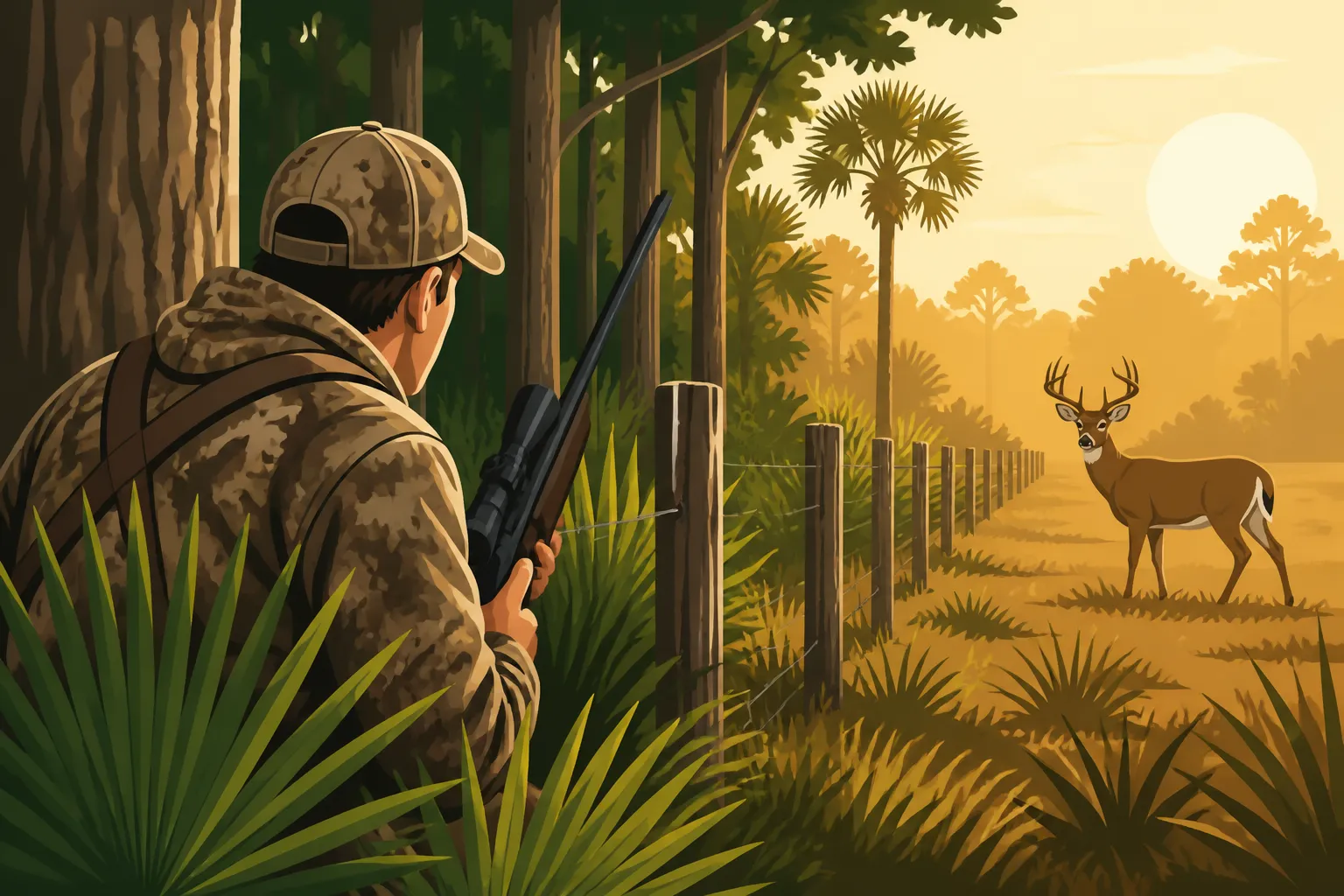
When you look at a map, or even just walk through the woods, a fence line might seem like an artificial barrier. But to a deer, especially one trying to stay hidden or move efficiently, a timbered fence line is often a well-used highway. These linear features provide security, direct travel, and sometimes even act as prime spots for scent marking, making them invaluable for hunters who know how to interpret their story.
Why Fence Lines Attract Deer
Deer are creatures of habit and efficiency. They prefer to travel routes that offer the most cover, the easiest path, and the safest passage. A timbered fence line, particularly one that has been left to grow up with native hardwoods, pines, or palmetto, creates an ideal edge habitat. Think about it: a fence often runs for hundreds of yards, dividing a pasture from a woodlot, a clear-cut from mature timber, or even two different types of forest habitat. These edges are natural transition zones where deer feel secure moving between bedding and feeding areas.
For a Florida deer, especially a wary buck, moving along the dense cover of a fence line is far less exposed than crossing an open field or busting through the thickest part of a palmetto head. It's a natural funnel, providing concealment from predators, human or otherwise. Deer use these lines almost like hidden highways, leveraging the dense vegetation to obscure their silhouette while still having a clear, relatively unimpeded path. They can connect a bedding area in a swampy cypress slough to a distant oak hammock heavy with acorns, or guide them along the boundary of a private land tract, giving them a sense of security even when they’re close to human activity.
Reading the Sign: Tracks, Rubs, and Scrapes
The beauty of a timbered fence line is how clearly it records deer activity. Because deer prefer these routes, they leave behind a treasure trove of intel. Your boots-on-the-ground scouting should focus intently on finding and interpreting this sign. Look for tracks, paying close attention to their freshness. A crisp track with sharp edges, especially after a rain, tells you a deer has passed recently. Muddled, dried-out tracks indicate older movement.
But it’s not just about tracks. Bucks, in particular, will use these linear features to mark their territory. You'll often find concentrated clusters of rubs on saplings and small trees running parallel to the fence line. These are indicators that a buck is actively using this corridor, especially during the pre-rut and rut phases. Even more exciting are scrape lines; a series of pawed-out patches of earth, often under a low-hanging branch, where bucks deposit urine and scent. These are often found where a fence line crosses a well-used game trail or enters an open area. Understanding and locating Scrape Lines Along a Sand Road can give you an incredible advantage, as deer, especially bucks, frequently check these markers. Look for these signs at various points along the fence to identify high-traffic zones and potential stand locations.
The Impact of Wind and Thermals
In Florida, where the terrain is often as flat as a pancake, understanding wind and thermals is absolutely critical, even more so when you're hunting linear features like timbered fence lines. Unlike mountainous regions where thermals rise and fall predictably with the sun, Florida's subtle elevation changes, even just a few feet, can create localized air currents that are hard to detect without careful attention. A timbered fence line, acting as a defined edge, can influence these air currents.
Imagine a fence line running along the edge of a slightly higher pine ridge that drops into a palmetto flat. As the morning sun warms the higher ground, thermals might begin to rise, pulling scent up and away. Conversely, in the evening, as the air cools, scent might fall and drift down the slope. Even on seemingly flat ground, a dense timbered fence line can create a slight tunnel effect, concentrating and directing wind currents. Your approach and stand placement must always account for the prevailing wind direction, ensuring your scent is carried away from where you expect deer to approach. You don't want to be caught off guard by a swirling breeze that alerts an incoming buck. Taking the time to understand Wind and Thermals in Flat Florida Terrain is paramount to success, especially when targeting these well-defined travel corridors.
Scouting and Planning Your Hunt
Effective hunting along timbered fence lines isn't just about showing up and hoping for the best. It requires diligent scouting and meticulous planning, leveraging both modern technology and old-school boots-on-the-ground effort. This combination will help you unlock the full potential of these deer magnets.
Utilizing Aerial Maps and Digital Tools
Before you ever set foot in the woods, the best place to start your reconnaissance is from your couch, with a good mapping app. Digital tools like GoHunt, OnX Hunt, or even Google Earth can be incredibly powerful for identifying potential fence lines that deer might use. Look for fence lines that connect different habitat types – a clear-cut to mature timber, a swamp to an upland pine forest, or a dense bedding area to a known food source. Pay attention to how these lines intersect with other features like creeks, old logging roads, or property boundaries.
These apps also help you quickly assess land ownership, which is crucial in Florida. When a timbered fence line serves as a property boundary, understanding Finding Florida Property Lines is not just smart, it's legally essential. You can identify pinch points or bottlenecks along these fence lines, such as where the cover narrows, or where a fence forces deer through a particular opening. These are prime locations for a stand. Look for areas where the fence line might create a "funnel" effect, directing deer traffic into a concentrated zone. Identifying these potential hotspots remotely saves you immense time and effort in the field, guiding your boots-on-the-ground efforts more precisely.
Boots on the Ground Reconnaissance
Once you've identified promising fence lines on your maps, it's time to hit the woods. This is where you verify your digital findings and uncover the subtle details that only direct observation can reveal. Walk the entire length of the fence line, looking for fresh tracks, droppings, rubs, and scrapes. Pay particular attention to natural crossings where the fence might be downed or where the vegetation offers an easier path for deer. These are often high-traffic areas.
Also, be on the lookout for specific food sources near the fence line. Deer often move along these corridors to access acorns in an oak hammock, tender new growth in a clear-cut, or even agricultural fields if you're on private land. Identifying Late-Season Food Sources for Florida Whitetails is crucial, as deer movement will often be dictated by these nutritional hotspots. As you walk, consider setting up trail cameras at key locations – especially at intersections with other game trails or where significant sign is present. Remember to review Trail Camera Rules on Florida Public Land if you're on WMA ground. The cameras will confirm deer presence, movement patterns, and even give you an idea of the quality of deer in the area, helping you to pinpoint the exact best spots for a stand.
Considering Pressure and Access
Hunting pressure is a huge factor in Florida, especially on public lands. A promising-looking fence line might be a bust if it’s easily accessible from a main road or parking area, as it's likely to be over-pressured. When hunting timbered fence lines, always think about how deer respond to human disturbance. Deer will often use fence lines that offer the most seclusion, avoiding areas where they frequently encounter hunters.
This is where identifying Finding Ground That Sees Fewer Hunters becomes an art form. It might mean walking a little farther, crossing a small creek, or navigating some thicker vegetation to get to a less-pressured section of the fence line. If you're Hunting Small Private Tracts in Florida, permission is, of course, essential, but you'll still want to consider how your presence might affect deer movement. Look for fence lines that are harder to access, or those that create natural barriers to human entry. For instance, a fence line bordering a swamp that requires a wade or a canoe trip to reach is likely to see less pressure than one running alongside an ATV trail. Being aware of the overall Hunting Pressure on Florida Public Land in your chosen area will greatly influence whether your fence line strategy is successful.
Effective Hunting Strategies for Timbered Fence Lines
Once you've scouted thoroughly and identified prime locations along a timbered fence line, it's time to plan your execution. Your hunting strategy needs to be adaptable, considering both your setup and how you interact with the environment to draw deer into range.
Stand Placement: Maximizing Your Shot Opportunity
Choosing the right spot for your stand is paramount when hunting a timbered fence line. You want to be positioned downwind of where you expect deer to travel, with good visibility, and a clear shot lane. Consider the natural travel path of the deer; do they walk directly along the fence, or do they hug the timbered edge a few yards in? Set your stand slightly back from the fence, typically 15-25 yards, so you can cover both scenarios. Look for trees that offer natural camouflage and break up your silhouette.
For areas with limited tall trees, or when hunting on public land where permanent stands aren't allowed, a ground blind can be an excellent option. Learning Using a Ground Blind on Florida Public Land effectively means brushing it in thoroughly and placing it strategically to blend with the natural environment. Pay attention to the sun's position throughout the day; you don't want to be silhouetted or have the sun directly in your eyes during prime hunting hours. Also, plan your entry and exit routes carefully, ensuring you can get to and from your stand without disturbing the area you plan to hunt. A noisy entry or exit can negate all your careful planning and push deer away from the fence line before you even begin or end your hunt.
Calling and Decoy Tactics
Deer calls can be incredibly effective when hunting timbered fence lines, especially during the rut. Grunt calls, doe bleats, and rattling can all be used to pique a buck's curiosity and draw him closer. When you're sitting on a fence line, you're essentially hunting a travel corridor, and calls can mimic other deer moving through that same corridor. For instance, a series of soft grunts coming from the woods can sound like another buck scent-checking the fence line, which can often bring a dominant buck right in to investigate. Learn how to use Grunt Calls in a Florida Oak Hammock to simulate real deer sounds accurately.
Decoys can also play a role, particularly a doe decoy during the rut to draw in cruising bucks. Place the decoy where it's visible to deer moving along the fence line, but far enough away that an approaching deer has to come into shooting range to investigate. However, remember that Florida's thick cover means visibility is often limited. Avoid over-calling or using a decoy if the woods are so dense that deer can't see or pinpoint the source, as it might just make them nervous. Always assess the cover and visibility before committing to a calling or decoy strategy.
Still-Hunting and Drives Along the Line
Sometimes, sitting in a stand isn't the only option, or perhaps not even the best one. Still-hunting, which involves moving very slowly and deliberately through the woods, pausing frequently to observe, can be incredibly effective along a timbered fence line. This method allows you to cover more ground and react to fresh sign as you find it. When still-hunting, move parallel to the fence line, just inside the timber, taking advantage of the natural cover. Focus on moving quietly, especially through palmetto or crunchy leaves, to catch deer unaware. Mastering Still-Hunting Florida Palmetto Flatwoods demands extreme patience and acute observation skills.
For hunters working with a small group, a carefully executed deer drive can also be productive along a fence line. The fence acts as a natural barrier, pushing deer in a predictable direction towards waiting hunters. Typically, one or two hunters, the "drivers," will slowly push parallel to the fence line, while others, the "posters," position themselves strategically ahead along the fence to intercept deer. This works best when the fence line runs between two dense cover areas. Always ensure clear communication and strict safety protocols when organizing a drive, making sure everyone knows the plan, shooting lanes, and safety zones.
Here's a quick comparison of these two tactics:
| Feature | Still-Hunting a Fence Line | Stand Hunting a Fence Line |
|---|---|---|
| Patience Level | High (slow, deliberate movement, frequent stops) | High (requires sitting for long periods) |
| Covered Area | More ground covered, adaptable to finding fresh sign | Limited to visibility from stand, relies on deer coming to you |
| Stealth | Critical; constant focus on quiet movement | Critical for approach/exit; less demanding while in stand |
| Shot Opportunity | Often quick, reactive shots; requires snap shooting skills | More controlled, deliberate shots as deer approach |
| Wind Reliance | Moderate; can adjust route based on wind shifts | Very High; stand placement is entirely dependent on sustained wind |
| Best For | Scouting as you go, actively seeking deer, covering distance | Ambush hunting known travel corridors, waiting out deer movement |
| Equipment | Minimal; good boots, binoculars, weapon | Stand (tree or ground), rangefinder, backpack, more comfort gear |
Overcoming Florida-Specific Challenges
Hunting in Florida comes with its own unique set of challenges that can test even the most seasoned hunter. When you're focusing on timbered fence lines, these elements can become even more pronounced, requiring careful planning and the right mindset.
Heat, Humidity, and Insects
Florida's climate is notoriously hot and humid for most of the hunting season. This isn't just uncomfortable; it can be downright draining and affect your ability to stay focused and still for extended periods. When planning a hunt along a timbered fence line, especially during early seasons like Bowhunting Florida's Zone A August Opener, you need to embrace a Hot-Weather Sitting Strategy in Florida. This means prioritizing light, breathable clothing that wicks moisture away from your body. Avoid heavy layers, even in the morning, as the temperature can soar quickly. Hydration is critical; carry more water than you think you'll need.
And then there are the insects. Mosquitoes, ticks, and no-see-ums can make a beautiful morning in the woods miserable. Invest in good insect repellent – permethrin for your clothing and a strong deet-based spray for exposed skin. Some hunters even use mosquito nets for their face or thermacell devices to create a zone of protection. Being prepared for these annoyances isn't just about comfort; it's about minimizing distractions and staying motionless when that deer you've been waiting for finally steps into view.
Navigating Dense Undergrowth and Water
Florida's woods are defined by their incredible density. Palmetto, sawgrass, tangled vines, and thick brush can make moving quietly a real struggle. Timbered fence lines often run through or alongside these dense areas, meaning you'll still have to contend with them during your approach, exit, or if you choose to still-hunt. Moving silently through this environment requires extreme patience and careful foot placement. Lift your feet, don't drag them. Take one step at a time, checking your balance and listening for potential deer movement before proceeding.
Furthermore, Florida is a water-rich state. Many timbered fence lines run through or border low-lying areas, cypress sloughs, or marsh edges. You might encounter standing water, mucky ground, or even small creeks that require careful crossing. If your target deer crosses a water feature, you'll need to know how to manage the challenge of Recovering a Deer From a Cypress Slough. Waterproof boots are a must, and sometimes even waders might be necessary to access prime spots or retrieve game. Always carry a small saw or pruners to clear shooting lanes, but do so minimally and subtly to avoid alerting deer. The trick is to embrace the challenge of the terrain rather than fight it; adapt your movement and gear to the environment.
Understanding Seasonal Deer Behavior
Deer behavior changes significantly throughout the year, and understanding these shifts is key to successfully hunting timbered fence lines. Early season often finds deer moving between bedding and feeding areas, with fence lines acting as safe travel corridors. During the rut, however, a buck's behavior becomes more unpredictable and aggressive. Knowing When the Florida Rut Peaks by Zone allows you to adjust your strategy. Bucks will use fence lines to cruise for does, rub their antlers, and refresh scrape lines, making these areas high-traffic hotspots. This is when calling can be most effective.
Later in the season, as temperatures drop (rare but it happens!), and food sources change, deer will alter their patterns. After a cold front, for instance, deer often become more active, moving more during daylight hours to feed. Understanding Hunting Deer After a Cold Front means being in your stand, ready for increased activity. They might seek out specific hard mast like acorns if available, or browse on tender green shoots. Your scouting should always be ongoing, even during the season, to identify these shifts. By understanding the seasonal nuances of Florida deer, you can anticipate their movements and position yourself for success along those reliable timbered fence lines.
Disclaimer
Hunting is an inherently dangerous activity. Always prioritize safety, follow all local, state, and federal hunting regulations, and obtain proper licenses and permits. The information provided in this guide is for informational purposes only and does not constitute professional advice. Ensure you are familiar with the specific rules of any Wildlife Management Area or private land you intend to hunt.