Year-Round Hog Hunting in Florida
One of the biggest frustrations for landowners and hunters alike in Florida is the sheer, overwhelming presence of feral hogs. These destructive animals tear up agriculture, destroy natural habitats, and seem to be everywhere you don't want them. The good news? Florida offers year-round hog hunting opportunities, providing an excellent chance to manage their numbers while enjoying a thrilling hunt. This comprehensive guide will walk you through everything you need to know to successfully hunt hogs in the Sunshine State, any time of year.
Understanding Florida's Feral Hogs
Florida's landscape is teeming with feral hogs, also known as wild boars. These aren't just farm pigs gone wild; many are descendants of European wild boars introduced centuries ago, crossbred with domestic stock, resulting in a hardy, intelligent, and incredibly adaptable animal. Their presence is felt far and wide, from the dense palmetto thickets to agricultural fields, and understanding them is the first step to hunting them effectively.
The Problematic Nature of Feral Hogs
Feral hogs are an ecological and agricultural nightmare. They reproduce at an astonishing rate, with sows capable of having multiple litters a year, quickly expanding their numbers into problematic populations. Their destructive rooting behavior tears up pastures, destroys crops like corn and peanuts, and devastates sensitive ecosystems by uprooting native plants and impacting water quality. For a farmer in rural Florida, a sounder of hogs can wipe out weeks of work overnight, causing thousands of dollars in damage. It's a constant battle, and hunting plays a vital role in mitigating their impact.
Beyond the immediate damage to land and crops, these animals pose a significant threat to native wildlife. They compete with deer, turkeys, and other species for food sources like acorns and mast crops. Even more concerning, they are voracious predators of ground-nesting birds, like quail and wild turkeys, and will actively seek out and destroy nests, consuming eggs and young. They also carry diseases, some of which can be transmitted to domestic livestock and even humans, adding another layer of concern for ranchers and public health officials alike. It's truly a multi-faceted problem that requires continuous intervention.
Biology and Behavior of Florida Hogs
Florida hogs are survivors. They typically live in social groups called "sounders," consisting of sows and their offspring. Mature boars often become solitary, only joining sounders for breeding. They are primarily nocturnal or crepuscular, meaning they are most active during dawn, dusk, and throughout the night, especially in Florida's warm climate. However, in cooler weather or areas with less hunting pressure, they can be seen moving during the day. Their keen sense of smell is their primary defense, often detecting danger long before they see or hear it. Their hearing is also excellent, while their eyesight is generally considered poor.
Understanding their diet is crucial for locating them. Hogs are omnivores and will eat almost anything. Their diet consists of roots, tubers, nuts, fruits, fungi, insects, snakes, eggs, and even small mammals. They especially love acorns, palmetto berries, and agricultural crops. This adaptability to various food sources is part of what makes them so successful and widespread. They'll also seek out water sources frequently, wallowing in muddy areas to cool down and protect themselves from insects. Learning the patterns of these animals is key to success, whether you're trying to figure out which Florida counties have the most hogs or just tracking a single sounder.
Identifying Hog Sign and Damage
When you're out scouting, learning to read the land for hog sign is paramount. The most obvious sign is rooting, where hogs use their powerful snouts to dig up soil in search of food. This often looks like a field has been rototilled, with churned-up earth and overturned sod. You'll find this in various habitats, from hardwood hammocks to open pastures and along creek bottoms. Another clear indicator is tracks. Hog tracks are cloven, similar to deer, but typically rounder and wider, with the dewclaws often showing even in soft ground, unlike deer.
Wallows are also a dead giveaway. These are muddy depressions where hogs have rolled to cool off and cover themselves in mud, which helps protect them from biting insects and parasites. You'll often find these near water sources or in low-lying areas that collect moisture. Rubs, where hogs scratch themselves against trees or fence posts, can also be present, often with mud or hair left behind. Finally, scat (droppings) can be found, though it varies widely depending on their diet and can sometimes be confused with other animals. The sheer amount of damage they inflict on crops is a testament to their presence and impact.
Why Year-Round Hog Hunting is Possible
Florida has a unique approach to feral hog management, largely due to their status as an invasive species. Unlike deer, turkey, or other game animals with specific seasons and bag limits, feral hogs are treated as a nuisance animal, and this classification opens up unparalleled hunting opportunities throughout the year.
Florida's Unique Hog Hunting Regulations
The Florida Fish and Wildlife Conservation Commission (FWC) classifies feral hogs as an unprotected species, meaning there are no closed seasons, no size restrictions, and no bag limits on private lands. This is a huge advantage for hunters and landowners looking to control populations. On private land, you don't even need a hunting license to harvest hogs if you're using a gun or bow. However, if you plan to use a gun and are on public land, or if you're trapping, standard hunting license and WMA permits might apply. For most private land situations, though, it's pretty straightforward.
This leniency reflects the state's understanding of Why Florida hogs have no closed season. They are a non-native species causing significant damage, and continuous pressure is the most effective way to keep their numbers in check. This means you can plan a hog hunt in January, July, or any month in between, which offers incredible flexibility for scheduling and maximizing your time in the field. Always double-check the latest FWC regulations, especially if hunting public land or using specific methods like night hunting, as rules can sometimes have nuances.
Benefits of Continuous Population Control
The year-round hunting opportunity isn't just a convenience for hunters; it's a critical tool for managing the escalating feral hog population. Because hogs reproduce so rapidly, taking a break from hunting, even for a few months, can allow their numbers to rebound dramatically. Continuous pressure, however, disrupts their breeding cycles, forces them to be more cautious, and ultimately helps to reduce the overall damage they cause. Think of it as a constant low-level war rather than a seasonal skirmish; it's far more effective in the long run.
Beyond the direct reduction in numbers, consistent hunting pressure can alter hog behavior, making them more nocturnal and wary, which can reduce their impact on daytime agricultural activities and potentially make them less visible to casual encounters in recreational areas. For landowners dealing with significant Florida hog damage to agriculture, the ability to hunt whenever needed is invaluable, allowing them to respond immediately to new incursions or burgeoning sounders before they can cause widespread devastation. This constant effort contributes to healthier ecosystems and more productive farmlands.
The Ethical Hunter's Role
While the rules around hog hunting are relaxed, the ethical responsibilities of a hunter remain paramount. Just because there's no bag limit doesn't mean you should shoot every hog you see without purpose. Ethical hunters strive for clean, humane kills, practice responsible game recovery, and respect the land they hunt on. This means knowing your target, understanding shot placement, and ensuring you have the skills to make a quick, clean harvest. It also involves taking only what you can use or properly process, whether for personal consumption or donation.
Furthermore, hunters play a vital role in data collection, even if it's informal. Noticing patterns, documenting significant damage, and understanding hog movements can contribute to broader management efforts. Organizations like the FWC appreciate when hunters are engaged and informed. Practicing ethical hunting not only reflects well on the hunting community but also ensures that the privilege of year-round hog hunting remains available for future generations, contributing positively to conservation efforts rather than just harvesting animals.
Key Methods for Hunting Hogs
Hunting hogs in Florida can be approached in many ways, depending on your preferences, the terrain, and whether you're on public or private land. Each method has its own set of challenges and rewards, offering diverse experiences for every type of hunter.
Stalking and Still-Hunting Tactics
Stalking, or spot-and-stalk hunting, is an exhilarating way to pursue hogs. It involves actively moving through the woods, using your senses to locate hogs, and then carefully approaching them for a shot. This method is particularly effective in areas with good visibility, such as open pine woods, fields, or along clear-cut edges. Success hinges on being quiet, mindful of the wind, and having sharp eyes to pick out the dark shapes of hogs against the varied Florida backdrop. Remember their keen sense of smell; playing the wind is non-negotiable.
Still-hunting is a slower, more deliberate approach where you move very slowly, pausing frequently to observe, listen, and scan your surroundings. This is often more effective in dense cover, like palmetto thickets or cypress swamps, where visibility is limited, and hogs might be bedded down. The key is patience and an ability to melt into the environment. Many hunters find success by moving slowly along trails or creek beds that hogs frequently use, particularly during the cooler parts of the day or in areas with less pressure. Using apps like GoHunt can help you identify potential travel corridors and dense cover areas where hogs might hide during the day, enhancing your chances significantly.
Trapping Feral Hogs on Private Land
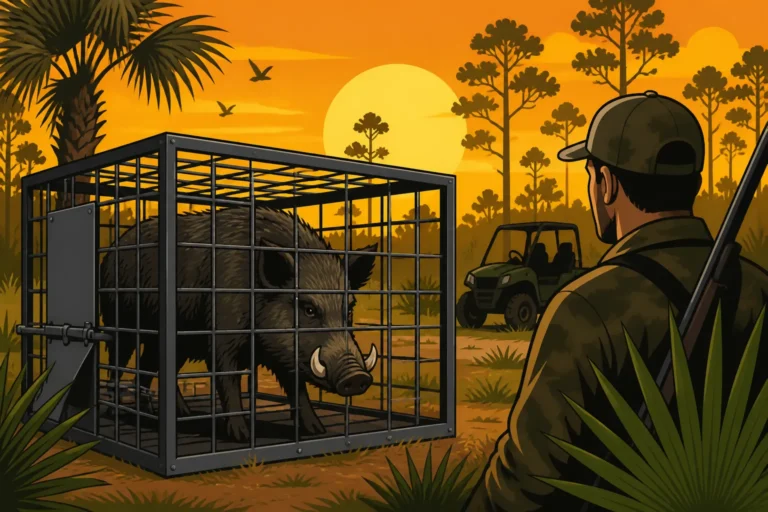
For consistent and effective hog control, especially on private land with persistent hog problems, trapping is often the most efficient method. Trapping allows you to catch multiple hogs from a sounder at once, making a significant impact on local populations. There are various types of traps, from simple panel traps to more elaborate drop traps or corral systems. The core principle involves baiting an area regularly to condition hogs to feed there, then deploying the trap once they are comfortable. Common baits include sour corn, old pastries, or commercial hog attractants.
Once you commit to trapping, consistency is key. Set up your trap in a known travel corridor or feeding area. Start by pre-baiting for several days or even a week, leaving the trap open so hogs can come and go freely, building their confidence. Once you see consistent hog activity within the trap area, set the trigger mechanism. Always monitor your traps frequently to humanely dispatch captured animals and reset the trap. This continuous effort, as detailed in guides like "Trapping Feral Hogs on Florida Private Land," can greatly reduce hog numbers and agricultural damage over time.
Night Hunting Hogs With Lights in Florida
Given their often nocturnal habits, especially in warmer months or pressured areas, night hunting offers a fantastic opportunity to target hogs. Florida allows night hunting for feral hogs on private lands with the aid of artificial lights. This means you can use powerful spotlights, thermal scopes, or night vision devices to locate and engage hogs during their most active periods. Many hunters find this to be an incredibly exciting and effective method.
When Night Hunting Hogs With Lights in Florida, safety is paramount. Always be sure of your target and what lies beyond it. Use appropriate firearms and ammunition, and familiarize yourself with your equipment in low-light conditions before hitting the field. A common setup involves driving slowly along field edges or known hog crossings, scanning with a thermal or spotlight. Once hogs are located, a careful stalk or ambush from a static position can be employed. Suppressors are a popular choice for night hunting, as they reduce noise pollution and allow for quicker follow-up shots without spooking the entire sounder.
Dog Hunting Hogs in Florida
For many Floridians, Dog Hunting Hogs in Florida is a deeply ingrained tradition. This method typically involves "bay dogs" that locate, chase, and corner (bay) hogs, keeping them in place by barking until the hunter arrives. Once the hog is bayed, "catch dogs" may be released to physically grab and hold the hog, allowing the hunter to move in and dispatch it, often with a knife or short spear. It's a high-energy, fast-paced, and often intense method that requires well-trained dogs and an understanding of the terrain.
While exhilarating, dog hunting comes with its own set of challenges and ethical considerations. Dogs can get injured, and the humid, dense Florida terrain can be tough on both canines and humans. It's crucial to have experienced dogs, proper protective gear for them (like cut vests), and a good communication system (GPS collars are a must-have). This method is most often practiced on large private tracts or specific public lands where allowed, as it can be disruptive in smaller or more populated areas. It's a method that requires significant investment in time and training, but the camaraderie and thrill are unmatched for its practitioners.
Scouting and Locating Hogs
Finding hogs reliably, especially year-round, requires consistent scouting effort and a good understanding of their habitat preferences and patterns. It's not just about walking around; it's about interpreting the clues they leave behind and predicting their movements.
Reading the Florida Landscape for Hog Activity
Florida's diverse landscapes offer a variety of habitats that hogs thrive in. From the vastness of the Everglades to the pine flatwoods and oak hammocks, hogs adapt, but they always leave a trace. When scouting, pay close attention to areas where different habitat types meet, such as the edge of a cypress swamp bordering a pine island, or where a dense palmetto head transitions into an open field. These transition zones often serve as travel corridors or staging areas. Look for rooting, wallows, and fresh tracks near water sources, as hogs need constant access to water, especially in the heat.
Seasonal changes also dictate where hogs might be. During acorn drops in fall, concentrate your efforts in oak hammocks. In drier periods, focus on permanent water sources. In areas with agricultural fields, hogs will often feed at night in corn, peanut, or soybean fields, and then retreat to dense cover during the day. GoHunt's mapping features can be incredibly useful for identifying these different habitat types, potential water sources, and connecting travel routes between them, helping you narrow down your search even before you put boots on the ground. Understanding the subtle shifts in their environment will lead you to consistent success.
Utilizing Technology for Scouting
In today's hunting world, technology is a powerful ally. GPS units and smartphone apps like GoHunt have revolutionized scouting by providing detailed aerial imagery, topographical maps, and public/private land boundaries. Use these tools to identify potential bedding areas (dense, inaccessible cover), feeding areas (oak stands, agricultural fields), and travel corridors (creek bottoms, fencerows, natural funnels). You can mark waypoints for fresh sign, WMA entry points, or potential stand locations.
Trail cameras are another indispensable tool for year-round hog hunting. Place cameras on active trails, near food sources, or over bait sites to monitor hog activity, identify sounder sizes, and learn their movement patterns and preferred times of day. This intelligence allows you to hunt smarter, rather than harder, by placing yourself in areas with proven activity. Cellular trail cameras, while an investment, can provide real-time updates, letting you know when hogs are in an area without disturbing it.
Identifying Seasonal Patterns and Food Sources
Feral hogs are opportunistic feeders, so their primary food sources will shift with the seasons. In late summer and fall, acorns are a huge draw. If it's a good mast crop year, hogs will concentrate in oak hammocks, sometimes moving long distances to find them. During the spring and early summer, green vegetation, palmetto berries, and tender shoots become more important. Agricultural crops like peanuts, corn, or soybeans are a year-round buffet for them, especially during planting and harvest. Understanding these seasonal shifts allows you to adjust your scouting and hunting locations accordingly.
Water is also a critical factor, especially during Florida's dry seasons. As smaller ponds and seasonal swamps dry up, hogs will concentrate around more permanent water sources. This makes creek beds, larger ponds, and marsh edges prime locations to find them. Don't forget that many hogs will also seek out areas to wallow, which are often close to water. By combining knowledge of seasonal food availability with water sources and dense cover, you can create a highly effective year-round scouting strategy.
Essential Gear and Equipment
Being properly equipped for year-round hog hunting in Florida is crucial, not just for success but for safety and comfort in demanding environments. The gear you choose will depend heavily on your chosen hunting method and whether you're hunting during the day or night.
Weapon Choices for Hog Hunting
Feral hogs are tough animals, so selecting an appropriate weapon is important for a humane harvest. For firearms, a wide range of calibers are effective. Many hunters opt for AR-style rifles in calibers like .223/5.56, .300 Blackout, or .308 Win, offering quick follow-up shots and good accuracy. Traditional hunting rifles in calibers such as .270 Win, .30-06, or 6.5 Creedmoor are also popular. Shotguns loaded with slugs are another viable option, especially in dense cover where shots are likely to be close. Ensure you're using proper bullet construction (e.g., bonded, solid copper, or heavy-for-caliber expanding projectiles) to penetrate their tough hide and cartilage plate.
Archery hunters can also find great success, but shot placement is even more critical. A compound bow with a minimum draw weight of 40-50 pounds and razor-sharp broadheads (fixed-blade or mechanical) capable of deep penetration is recommended. Crossbows are also legal during archery season and offer a flat-shooting, accurate option. Many bowhunters prefer to aim for the "crease" behind the shoulder or a quartering-away shot to reach the vitals. Whether using a rifle, shotgun, or bow, practice regularly to ensure proficiency and confidence in your chosen weapon.
Night Hunting Gear Considerations
If you plan on night hunting, specialized gear is essential. A powerful spotlight, either handheld or mounted to a vehicle, is necessary for scanning and locating hogs. Red or green filters can sometimes make the light less alarming to animals, though often hogs are so accustomed to human activity they don't react much. Thermal imaging scopes or monoculars are a game-changer for night hunting, allowing you to detect the heat signatures of hogs from great distances, even in dense cover. Night vision devices are another option, amplifying ambient light.
Beyond optics, a weapon-mounted light is crucial for target identification and shot placement. Many hunters also use suppressors to reduce muzzle blast and flash, which can prevent hogs from scattering after the first shot and protect your hearing. Don't forget reliable batteries, a headlamp for hands-free tasks, and appropriate clothing to blend into the night. It's often beneficial to have a partner, with one person scanning and the other ready to shoot, enhancing both safety and effectiveness.
Trapping Equipment and Best Practices
For those focused on trapping, the right equipment makes all the difference. Robust, heavy-duty trap panels or hog panels are essential for building a trap that can withstand the strength of a wild hog. A minimum of 6-foot tall panels are recommended to prevent hogs from jumping out. The trigger mechanism can range from simple trip wires to more sophisticated remote-triggered systems, like those offered by Jager Pro or Boar Buster, which can be monitored via cellular signal. These advanced systems allow you to observe hogs entering the trap and close the gate only when the entire sounder is inside, maximizing your catch.
Baiting is a science in itself. Sour corn, fermented for a few days, is a classic and highly effective bait. Commercial attractants can also boost effectiveness. Place your bait directly inside the trap and scatter some leading up to the entrance to entice hogs. Once a hog is trapped, swift and humane dispatch is critical. A .22 caliber rimfire pistol or rifle to the brain is often used, as it's quiet and effective at close range. Always have a plan for carcass removal and processing, which might include skinning and quartering on site, especially in remote areas.
Public Versus Private Land Opportunities
Florida offers both public and private land opportunities for hog hunting, each with its own set of rules, advantages, and challenges. Understanding these differences will help you plan your year-round hog hunts effectively.
Hunting Hogs on WMA Land in the Off-Season
Many of Florida's Wildlife Management Areas (WMAs) allow year-round hog hunting, often coinciding with specific small game seasons or as part of a general gun permit during designated periods. However, the exact rules vary significantly from one WMA to another. Some WMAs might require a quota permit during certain times, while others are open to public access with a general hunting license and WMA permit. It's absolutely critical to check the specific WMA regulations in the FWC's hunting regulations handbook for the area you intend to hunt. This detail often outlines "Hunting Hogs on WMA Land in the Off-Season."
The advantage of WMA land is access. Florida has millions of acres of public land, providing extensive opportunities. The challenge is typically higher hunting pressure and more restrictive rules regarding weapon choices, hunting hours, and methods (e.g., night hunting or dog hunting might be prohibited). For instance, while baiting hogs is legal on private land, it is generally prohibited on WMAs. Scouting is even more important on public land to find less-pressured areas and locate fresh hog sign away from popular access points. Using mapping apps to scout remotely and then putting boots on the ground is a sound strategy.
Securing Access on Private Land
For many hunters, especially those looking for consistent year-round opportunities with fewer restrictions, private land is the holy grail. On private land, you don't need a hunting license to take hogs, and there are no closed seasons, bag limits, or legal hunting hours for firearms (though local ordinances might apply for noise). This freedom allows for methods like night hunting with lights, extensive trapping programs, and even high-fence operations. Securing access, however, can be the biggest hurdle.
Approaching landowners respectfully, offering to help with hog control, and building trust are key. Many farmers and ranchers are desperate for help managing hog populations that destroy their crops and pastureland. You might offer to share processed meat or simply offer your services as a form of pest control. Sometimes, a handshake agreement is all it takes. Other times, hunters might join hunting clubs or lease land, especially for larger groups or more dedicated hunting efforts. Establishing a good relationship with a landowner can open up years of fantastic hog hunting.
Understanding Public Land Restrictions
While public lands like National Forests and WMAs offer vast hunting opportunities, they come with a distinct set of regulations that differ from private land. For instance, while you can Baiting Hogs Legally in Florida on private property, baiting is typically prohibited on public lands. Similarly, restrictions on weapon types, hunting hours, and the use of dogs or night vision can vary widely. It's not uncommon to find certain WMAs that only allow still-hunting during deer season or have specific periods for hog-only hunts.
Always consult the latest FWC regulations for the specific WMA or National Forest you plan to visit. These rules are usually published annually and available online or at local FWC offices. Ignoring these regulations, even unknowingly, can lead to fines, loss of hunting privileges, and even confiscation of gear. The GoHunt platform can also be incredibly helpful in understanding the boundaries and specific regulations of public land parcels, ensuring you stay compliant and avoid any unintended violations while in the field.
Processing Your Hog and Game Care
Harvesting a hog is only half the battle; proper field dressing and processing are essential to ensure the meat is safe, delicious, and not wasted. Given Florida's often warm climate, immediate and efficient game care is paramount.
Field Dressing a Hog in Hot Weather
Florida's heat and humidity are notorious, and they pose a significant challenge when it comes to game care. As soon as you harvest a hog, especially during the warmer months, you need to begin the field dressing process immediately. The goal is to cool the carcass down as quickly as possible to prevent spoilage and bacterial growth. This means removing the entrails, which carry a lot of body heat, and getting air circulating around the body cavity.
Start by placing the hog on its back, ideally on a slight incline to help with drainage. Make a shallow cut from the breastbone to the pelvis, carefully opening the abdominal cavity. Cut around the anus and pull the entire package of intestines, stomach, and other organs out. If you plan to save the heart and liver, remove them and place them in a separate bag on ice. Once the cavity is empty, wipe it clean with a cloth or paper towels, avoiding water if possible, as it can introduce bacteria. Prop the cavity open with a stick to allow maximum airflow. Even for a quick Field Dressing a Deer in Hot Weather, the same principles apply to hogs.
Transporting and Cooling Your Harvest
After field dressing, the next critical step is to get the hog cooled down as quickly as possible. If you're close to your vehicle, load the hog and head straight to a processing facility or your processing area at home. If you're in a remote location and have a long way to go, consider quartering the hog in the field. This breaks the carcass down into smaller, more manageable pieces that can fit into coolers.
Pack the quarters directly on ice in clean coolers. Don't just lay them on top; get ice all around and inside the body cavity if the hog is intact. If you have access to a walk-in cooler or a large refrigerator, hang the hog or quarters to allow for proper air circulation and aging, if desired. Aim to get the core temperature down below 40°F (4°C) within a few hours. This immediate cooling is the single most important factor in ensuring quality venison.
Cooking a Wild Florida Hog
Wild hog meat is incredibly versatile and delicious, often leaner than farm-raised pork, with a rich, savory flavor that can range from mild to robust depending on the hog's diet and age. The meat is excellent for slow-cooking methods like smoking, braising, or stewing, which tenderize the tougher cuts. Pulled pork is a classic use for hog shoulder. Chops and loins can be grilled or pan-fried, but be mindful of overcooking, as they are very lean and can dry out quickly.
Always cook wild hog meat to an internal temperature of at least 160°F (71°C) to kill any potential parasites, such as trichinosis. While rare, it's a critical safety precaution. Marinating cuts before cooking can add flavor and moisture. Experiment with different seasonings and recipes; the possibilities are endless. From sizzling bacon to hearty roasts, learning how to properly Cooking a Wild Florida Hog is the satisfying culmination of a successful hunt.
Safety Considerations for Hog Hunters
While hog hunting offers year-round excitement, it's essential to prioritize safety in the field. Florida's environment presents unique challenges, and hogs themselves can be dangerous when cornered.
Navigating the Florida Wilderness Safely
Florida's wild places, while beautiful, can be disorienting and challenging to navigate, especially in dense palmetto scrub, cypress swamps, or vast flatwoods. Always carry a reliable GPS device, a fully charged cell phone (though service can be spotty), and a map and compass as a backup. Inform someone of your hunting plans, including your exact location and expected return time. Wear appropriate clothing that protects against thorns, insects, and sun, and always carry a small first-aid kit.
Be aware of Florida's diverse wildlife, including venomous snakes (like rattlesnakes and cottonmouths) and alligators, which are common residents. Watch your step, particularly in areas with dense undergrowth or near water. If you're hunting with dogs, be extra vigilant, as they can stir up snakes or encounter alligators. Always carry enough water, especially in the warmer months, to prevent dehydration, which can quickly turn a good hunt into a dangerous situation.
Heatstroke and Hydration in the Field
Florida's heat and humidity are no joke, and they pose a serious risk of heat-related illnesses like heat exhaustion and heatstroke. Year-round hog hunting means you'll often be out in sweltering conditions. Staying hydrated is not optional; it's absolutely critical. Start hydrating before your hunt, carry ample water, and drink frequently, even if you don't feel thirsty. Electrolyte drinks can also be beneficial to replenish salts lost through sweat.
Wear lightweight, breathable clothing that wicks away moisture. Take frequent breaks in the shade, and avoid overexertion, especially during the hottest parts of the day. If you start to feel dizzy, nauseous, or experience cramping, stop immediately, rehydrate, and cool down. Hunting with a buddy is always a good idea, as they can help recognize the signs of heat stress if you become impaired. Don't push yourself to the point of danger; the hogs will still be there tomorrow.
Safe Weapon Handling and Ethical Shot Placement
Regardless of your chosen weapon, strict adherence to firearm safety rules is non-negotiable. Treat every gun as if it's loaded, always control the muzzle direction, keep your finger off the trigger until ready to shoot, and be sure of your target and what's beyond it. These fundamentals are even more crucial in the often thick and unpredictable Florida terrain, especially when hunting at night or with dogs.
When it comes to hogs, they can be surprisingly tough. Ethical shot placement aims for a quick, humane kill. For most weapons, this means targeting the vitals—the heart and lungs. On a hog, these are located slightly forward and lower than a deer's, primarily due to their unique skeletal structure and shoulder plate. A good reference point is usually about a third of the way up the body, directly behind the front leg. Avoid shoulder shots with lighter calibers or bows, as their dense gristle plate can deflect projectiles. Practice, precision, and patience will ensure an ethical harvest every time.
Disclaimer
Hunting is an inherently dangerous activity. This guide is for informational purposes only and does not supersede or replace official FWC regulations. Always consult the most current Florida Fish and Wildlife Conservation Commission rules and regulations before engaging in any hunting activities. Stay safe, be responsible, and know your local laws.