Hunting Florida Panhandle Pine Plantations
Hunting the vast, often dense pine plantations of the Florida Panhandle can feel like stepping into a labyrinth. Many hunters get overwhelmed by the sheer uniformity of the rows or frustrated by the lack of traditional "oak hammocks" or swamps they're used to elsewhere in the state. But don't let those straight lines fool you; these managed forests hold an abundance of game if you know how to read the subtle nuances of the landscape. This guide will walk you through understanding these unique hunting grounds, from scouting smarter to employing effective tactics for deer, hogs, and even turkeys that call the piney woods home.
The Unique Landscape of Panhandle Pine Plantations
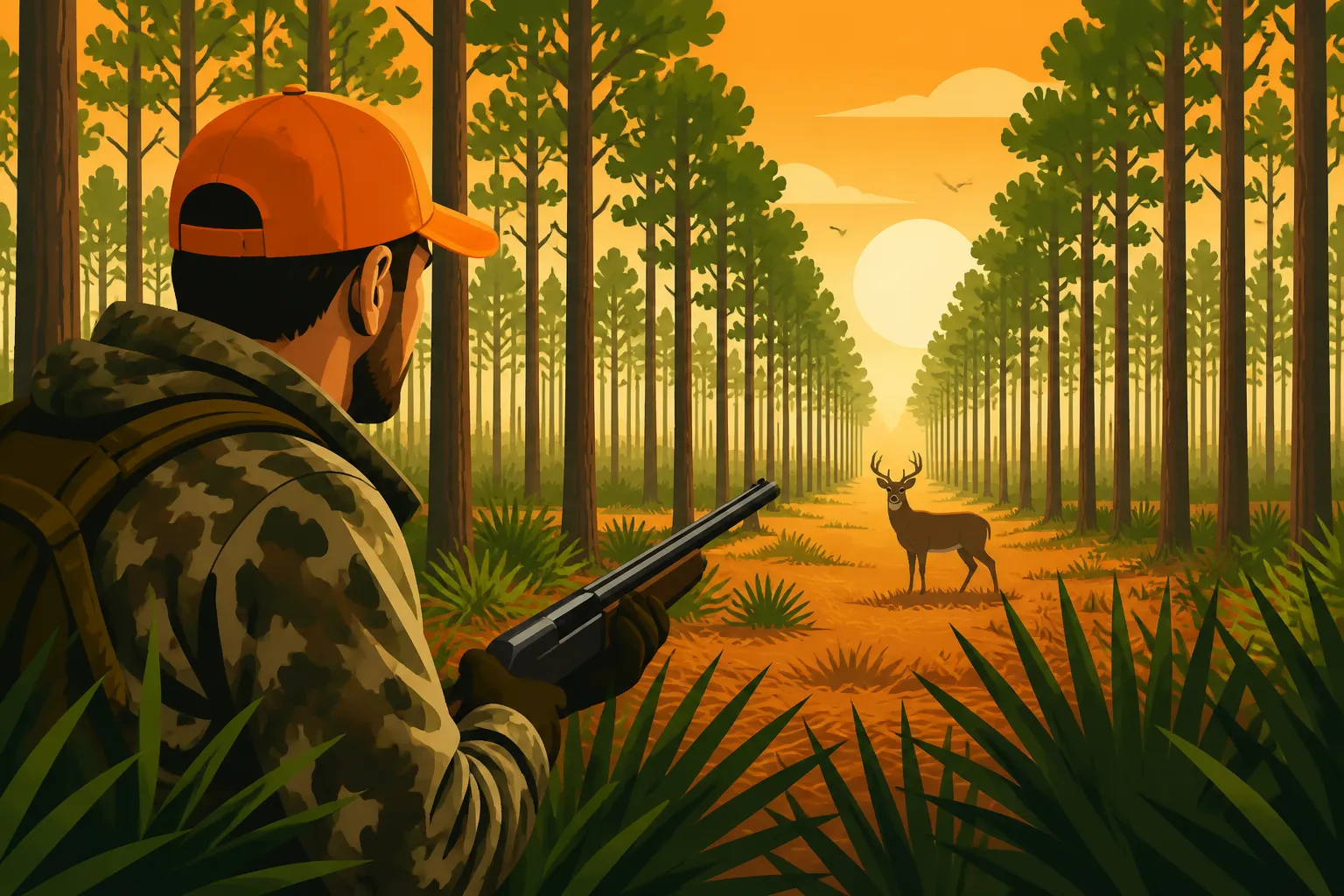
The Florida Panhandle is truly a different beast when it comes to habitat compared to the rest of the state. While much of central and south Florida is defined by cypress swamps, palmetto flatwoods, and scattered oak hammocks, the Panhandle, especially the northern reaches and towards the Alabama border, is characterized by vast tracts of commercially managed pine plantations. These aren't just pretty forests; they're actively harvested and replanted, creating a dynamic environment that, while sometimes challenging, offers fantastic hunting opportunities for those who understand it.
Age and Density Impacts on Wildlife
The age of a pine plantation is arguably the single most critical factor in how wildlife utilizes it. Imagine trying to find a deer in a stand of pines that are only a few years old – the saplings are often so thick you can barely crawl through them, let alone see more than a few yards. This incredibly dense cover, however, is exactly what deer and hogs seek for bedding areas and thermal cover, especially during colder snaps. It's tough for hunters to navigate, but it's a sanctuary for game.
As the pines mature, they're often thinned, which opens up the understory. Sunlight can finally reach the forest floor, spurring the growth of grasses, forbs, and browse that deer love to eat. This mid-rotation stage, typically 10-20 years old, becomes fantastic for both feeding and bedding. You might find deer browsing along the edges of these thinned areas or even deep inside where the canopy is starting to spread. Older, mature pine stands, on the other hand, might have less undergrowth but often feature larger, more widely spaced trees, creating open "park-like" settings where game might travel or even seek out older, mature hardwoods that have been left standing in pockets. These older stands can be excellent for still-hunting, as visibility improves significantly.
Topography and Associated Habitats
While Florida is generally flat, the Panhandle does offer some subtle topographic changes that are important to recognize. Gentle slopes, subtle ridges, and low-lying drains or creek bottoms can act as natural funnels or travel corridors for deer and hogs moving through otherwise monotonous pine rows. Don't overlook these minor elevation changes; even a rise of 10-15 feet can create distinct bedding and travel patterns.
Beyond the pines themselves, these plantations are rarely monocultures. They often encompass "islands" of hardwood hammocks, especially along creek beds, drainage areas, or property lines. These mixed-forest habitats are goldmines. Oak trees, especially water oaks or laurel oaks, provide crucial acorn crops in the fall and winter, drawing deer and hogs from surrounding pine stands. These areas also offer different types of bedding cover and a wider variety of browse. Keep an eye out for these hardwood pockets when you're Reading Aerial Photos for Florida Deer or using your mapping app. They break up the uniformity and create distinct wildlife magnets. You might also find cypress sloughs or small swamps intertwined within the pine acreage, especially in the wetter regions, which are classic hog hangouts and can provide excellent ambush points.
Common Game Species in Panhandle Pines
You'd be surprised by the sheer diversity of game that thrives in these managed pine forests.
- White-tailed Deer: The Panhandle consistently produces some of Florida's largest deer, a stark contrast to the smaller deer found further south. These piney woods offer abundant food sources and cover, especially when the forest management practices create a mosaic of different age classes. Deer will utilize the dense young pines for bedding and the thinned, mid-rotation stands or hardwood pockets for feeding. If you're wondering Why Panhandle Deer Grow Bigger Than South Florida Deer, it often comes down to genetics, nutrition, and management practices, which these plantations often provide.
- Feral Hogs: Hogs are prolific throughout Florida, and the Panhandle's pine plantations are no exception. They love rooting around in the soft soil of thinned pines or disturbed areas, and they'll readily consume acorns in any hardwood pockets. The dense young pine thickets provide ideal bedding cover, making them incredibly difficult to dislodge without dogs or a well-placed ambush. Hunters often target hogs year-round here, often focusing on areas with fresh rooting sign or near water sources. You might even consider Night Hunting Hogs With Lights in Florida in these areas, provided you check local regulations.
- Eastern Turkeys: While the Osceola is famous in peninsular Florida, the Panhandle is home to the Eastern wild turkey. These birds are master adaptors and utilize pine plantations extensively, especially those with an open understory. They'll feed on insects and seeds in thinned areas, strut in open pine stands, and seek out mature pine or hardwood trees for roosting. Hunting Florida's Eastern Panhandle Turkey requires a good understanding of their movement through these areas, often focusing on edges and natural clearings.
- Small Game and Predators: Don't forget the squirrels, rabbits, bobcats, and coyotes! Squirrels will be found wherever nut-bearing hardwoods exist, while rabbits thrive in the brushy undergrowth. Coyotes are ever-present predators, using the cover to stalk deer and small game, and can be called in effectively in more open pine stands.
Essential Scouting for Pine Plantation Success
Hunting pine plantations successfully isn't about aimlessly wandering; it's about smart, dedicated scouting. These areas demand a different approach than open hardwoods or sprawling swamps. You'll need to leverage modern tools and then hit the ground to confirm your suspicions and find the hidden gems.
Utilizing Mapping Tools and Aerial Imagery
Before you ever set foot in the woods, spend significant time pouring over maps and aerial imagery. This is where tools like GoHunt really shine. You can zoom in and identify variations in tree density, which often indicates different age classes of pines. Look for:
- Clear-cuts and replanted areas: These will show up as distinct, often lighter-colored blocks. These areas, though dense, are crucial for bedding.
- Thinned pine stands: These will appear less uniform and often have a slightly mottled look, indicating more open understory. These are prime feeding and travel areas.
- Hardwood pockets and creek bottoms: These will stand out as darker, often irregularly shaped patches. These are undeniable hotspots for food and cover.
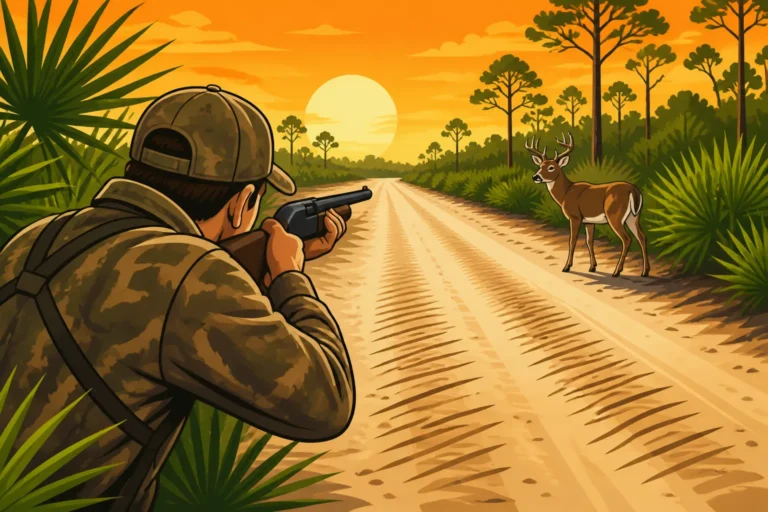
- Logging roads and fire breaks: These linear features are crucial. They serve as access points for you and as travel corridors for game. Deer and hogs frequently use these edges to move between different types of cover.
Mark potential bedding areas (dense young pines), feeding areas (thinned pines, hardwood pockets), and travel corridors (logging roads, creek lines, edges between different timber stages) on your map. This initial armchair scouting saves you countless hours of unproductive walking. It helps you focus your efforts when you finally get boots on the ground, creating a more efficient Scouting Florida Public Land Before Season plan.
On-the-Ground Sign Reading in the Pines
Once you've identified promising areas on your map, it's time to put boots on the ground. The sign in a pine plantation might be more subtle than in other habitats, but it's there.
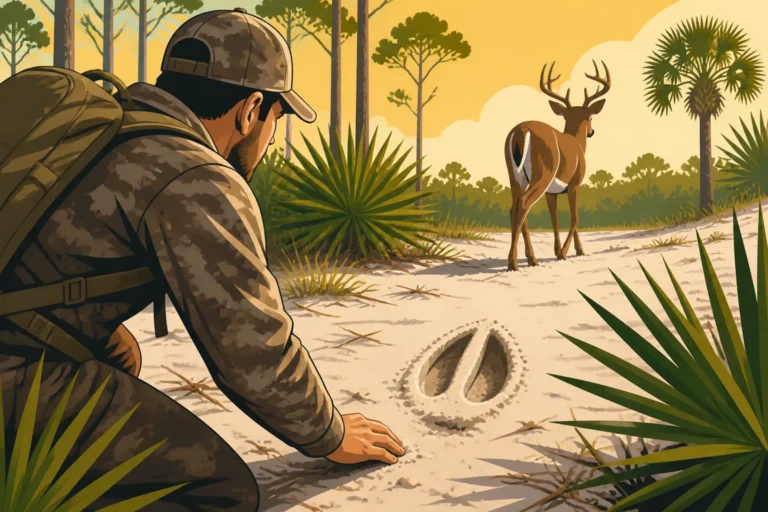
- Tracks: Look for deer and hog tracks along logging roads, fire breaks, and the soft dirt edges of pine rows. Pay attention to the direction of travel, which can tell you if animals are moving from bedding to feeding or vice-versa.
- Rubs and Scrapes: While not as common in the middle of dense pine rows, rubs and scrapes are frequently found along the edges of pine plantations, especially where they transition into hardwoods or along older logging roads. These are key indicators of buck activity. Knowing Scrape Lines Along a Sand Road can pinpoint a buck's travel route.
- Bedding Areas: These are often harder to find directly but are critical. Look for areas of very thick, young pines (5-15 years old) where you see numerous tracks leading in and out. Deer will often bed on slight rises within these thickets, giving them a vantage point and allowing thermals to carry their scent away. You might not find a perfect bed, but the concentration of tracks indicates heavy use. Hogs will also use these areas, often leaving wallows or rootings near damp spots.
- Feeding Sign: In thinned pine stands, look for clipped browse on young saplings or forbs. In hardwood pockets, fresh acorn cuttings or disturbed leaves under oak trees are dead giveaways. Hogs will leave extensive rooting sign where they've dug for roots and grubs, especially after a good rain.
Remember, the goal is to piece together the puzzle: where are they bedding, where are they eating, and how are they getting between the two?
Understanding Deer and Hog Movement Patterns
Deer in pine plantations are masters of using cover. They will rarely cross wide-open areas during daylight unless pressured. Instead, they'll stick to the thickest cover available, often using the rows of pines as linear travel routes. When pressured, they'll simply melt into the next dense thicket.
- Edges are King: The transition zones between young, thick pines and older, thinned pines, or where pines meet hardwoods, are constantly used travel corridors. These "soft edges" offer security and access to food.
- Crossings and Funnels: Look for natural funnels created by changes in habitat, topography, or even just breaks in the dense pine rows. A narrow strip of pines between two clear-cuts, a small creek crossing, or a finger of hardwoods extending into a pine block can be a killer ambush point.
- Wind and Thermals: Even in relatively flat Florida, wind and subtle thermals play a role. Deer will almost always try to use the wind to their advantage. In the morning, thermals tend to drop downhill; in the evening, they rise. Combine this with the prevailing wind direction to predict how deer will approach or depart a feeding area or bed.
Proven Strategies for Hunting Florida Pine Plantations
Once you've done your homework and understand the lay of the land, it's time to apply specific hunting strategies that work in these unique Panhandle environments. Flexibility and patience are key, as the game here can be incredibly wary.
Still-Hunting and Stalking Tactics
For many, still-hunting is the most effective and enjoyable way to hunt pine plantations. It requires extreme stealth and patience, but it allows you to cover ground and adapt to fresh sign.
- Go Slow, Very Slow: This isn't a quick hike. Take one step, then scan for several minutes. Use your binoculars to pick apart the shadows and look for horizontal lines (a deer's back) in a vertical world (pine trees). In dense young pines, you'll be looking for parts of an animal – an ear flick, a patch of hide, or even just the shine of an eye.
- Utilize the Rows: Move slowly down the rows, or parallel to them, always being aware of the wind. The uniform nature of the rows can actually help you break up your silhouette, but it can also make it harder to spot a deer that's moving with the rows.
- Hunt the Edges: Focus your still-hunting efforts along the edges where different age classes of pines meet, or where pines transition to hardwoods or open areas. This is where deer often travel and browse before entering thicker cover. Consider Still-Hunting Florida Palmetto Flatwoods tactics, as many of the principles of slow movement and careful observation apply here too.
- Wind is Your Friend and Foe: Always hunt into the wind or with a quartering wind. If the wind is swirling or unpredictable, it's going to be an uphill battle. Pay close attention to subtle shifts.
Setting Up Effective Stand Locations
Tree stands and ground blinds can be incredibly effective in pine plantations, especially if you've identified consistent travel patterns.
- Funnels and Crossings: These are classic stand locations. Find where two types of cover converge, where a logging road crosses a creek, or where a narrow strip of timber connects larger blocks. Deer and hogs will use these pinch points.
- Food Source Ambush: If you've located a hot feeding area – a patch of acorn-dropping oaks or an area with abundant browse – set up downwind of the most likely approach route.
- Bedding Area Exit/Entry: This is a high-risk, high-reward strategy. Set up on the downwind side of a dense bedding thicket, anticipating deer movement at dawn or dusk as they leave or return to cover. This often means getting in very early or staying very late. Be mindful of your scent and entry/exit routes.
- Ground Blinds: In areas where suitable trees for stands are scarce or in very thick cover, a ground blind can be an excellent option. Make sure to brush it in well, as deer are very attuned to new objects. Learn about Using a Ground Blind on Florida Public Land for tips on placement and concealment.
Driving Techniques Where Permitted
Deer drives are a traditional method in many parts of Florida, and they can be quite effective in pine plantations, especially for moving deer out of thick bedding areas. However, they require careful planning and a strong emphasis on safety. Always check WMA-specific regulations, as some areas may prohibit or restrict drives.
- Small, Controlled Drives: In pine plantations, large, chaotic drives are usually less effective and more dangerous. Instead, consider small, controlled drives with 2-4 hunters. One or two "pushers" walk slowly through a dense thicket, while one or two "posters" are positioned quietly and safely downwind at the likely exit points.
- Utilize Natural Barriers: Use logging roads, fire breaks, clear-cuts, or creek bottoms as natural boundaries for your drive. This helps funnel the deer predictably. Deer Drives With Three or Four Hunters are often more manageable and safer than larger groups, allowing better control in dense cover.
- Safety First: Communication is paramount. Everyone needs to know where everyone else is at all times. Blaze orange is non-negotiable for all participants. Ensure clear lanes of fire and never shoot towards other hunters.
Targeting Specific Species in Pine Plantations
- Deer: Focus on edges, funnels, and food sources. During the rut (which can vary by Panhandle zone, so check When the Florida Rut Peaks by Zone), bucks will be cruising thicker areas looking for does. Early season, they'll be patternable around food. Late season, they'll be looking for Late-Season Food Sources for Florida Whitetails like any remaining acorns or green browse.
- Hogs: Hogs are opportunistic. Look for fresh rooting, especially after rain, and track them to their bedding areas in the thickest pines. Set up near water sources or food plots if hunting private land. For public land, focus on transition areas between dense cover and feeding. If you're on public land Hunting Hogs Without a Bag Limit, you can be aggressive in your pursuit.
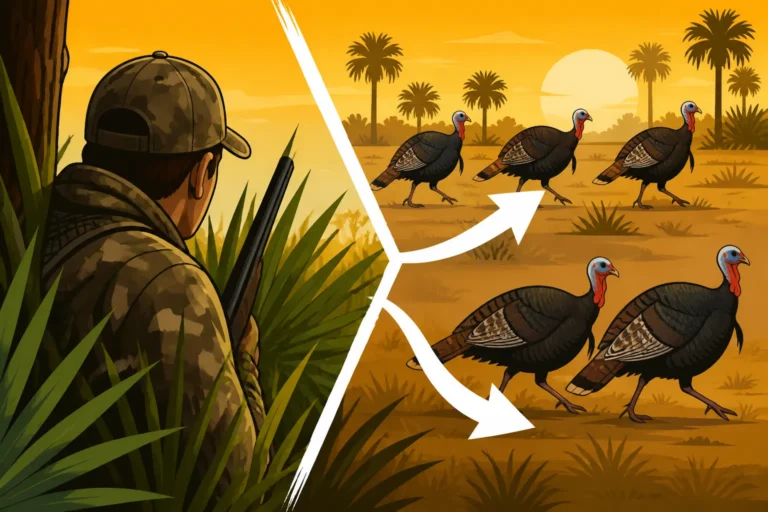
- Turkeys: Eastern turkeys will often roost in tall pines or hardwoods near water. In the mornings, they'll pitch down and feed in more open pine stands or field edges. Set up between their roost and a likely feeding area, using subtle calls. When Calling an Osceola Off the Roost, remember that Easterns respond well to similar soft tree yelps and fly-down cackles.
Gear and Considerations for Your Hunt
Hunting Florida's Panhandle pine plantations requires specific gear and a mindset ready for the unique challenges these environments present. Don't show up unprepared!
Weapon Choices for Dense Cover
The weapon you choose can significantly impact your success and safety in thick pine country.
- Shotguns: A shotgun loaded with slugs is an excellent choice for deer and hogs in dense pine plantations. The effective range is limited, but a slug provides tremendous stopping power for close-quarters encounters, and it's less prone to deflecting off small twigs than a high-velocity rifle round. Many WMAs also mandate shotguns for safety in high-pressure areas. Make sure you know Which Shotgun Gauges Florida Allows for Deer.
- Muzzleloaders: If you're looking for an alternative before or during general gun season, muzzleloaders are a solid option. They offer good accuracy at moderate ranges and pack a punch. They're particularly well-suited for still-hunting or stand hunting where shots are likely to be within 100 yards. You might even consider Hunting a Muzzleloader Tag Before Gun Season as a way to extend your time in the woods.
- Rifles: While legal on most private lands and some public lands, rifles require careful consideration in thick pines due to potential over-penetration and limited visibility. If using a rifle, a lower-power scope (1-4x or 2-7x) or a red dot sight is often more appropriate than a high-magnification optic. Always be absolutely certain of your target and what's beyond it.
- Archery/Crossbow: Bowhunting is extremely challenging but incredibly rewarding in these thick environments. Shots will be close, so practice quick target acquisition. Crossbows offer an advantage in dense cover due to their stability and ease of shooting from a confined position. Check the rules for Crossbow Hunting During Florida's Archery Season.
Essential Apparel and Footwear
The Florida Panhandle can be hot and humid, even in the fall and winter, but cold fronts do push through. Be ready for both.
- Lightweight, Breathable Layers: Even in "cooler" weather, walking through thick pines can work up a sweat. Layering is key so you can adjust to temperature changes. Moisture-wicking fabrics are your best friend.
- Durable Outerwear: Pine needles, palmetto fronds, and thorny vines will tear up flimsy clothing. Look for durable pants and jackets that can withstand abuse. Brush pants or chaps can be a lifesaver.
- Waterproof Boots: Even if it hasn't rained recently, low-lying areas, creek bottoms, and swampy spots can hold water. Good waterproof boots with ankle support are essential for navigating uneven terrain and staying dry.
- Blaze Orange: Florida law requires wearing blaze orange (or pink) during certain hunting seasons, especially during general gun season. Even when not legally required, it's a wise safety precaution, particularly if you're hunting with others or on public land. Refer to How Much Blaze Orange Florida Requires to ensure you're compliant.
- Insect Repellent: Don't forget bug spray, especially in warmer months. Mosquitoes, ticks, and gnats are ever-present. Consider permethrin-treated clothing for tick protection.
Safety and Navigation in the Piney Woods
Getting lost or having an accident in a vast pine plantation is a real concern.
- GPS and Maps: Always carry a reliable GPS device, whether a handheld unit or a smartphone app like GoHunt. Download offline maps before you go, as cell service can be spotty. Mark your vehicle, your stand, and any key features. Knowing how to use onX Layers for Florida Land Status is invaluable for staying on public land and avoiding trespass.
- Compass and Map: While GPS is great, always have a physical compass and map as a backup. Knowing how to use them can literally save your life if your electronics fail.
- Communication: Hunt with a partner when possible, or at least let someone know exactly where you're going and when you expect to return. Carry a fully charged cell phone, and consider a satellite communicator for remote areas.
- First-Aid Kit: A basic first-aid kit with bandages, antiseptic wipes, pain relievers, and any personal medications is crucial. A snake bite kit is also a good idea in Florida.
- Water and Snacks: Stay hydrated, especially in the Florida heat. Carry enough water and some high-energy snacks for your planned hunt, plus a little extra.
Hunting Florida's Panhandle pine plantations offers a different kind of challenge and a unique reward. With careful preparation, smart scouting, and adaptable tactics, you'll discover that these seemingly uniform forests are teeming with life and provide excellent hunting adventures.
Disclaimer
Always consult the latest Florida Fish and Wildlife Conservation Commission (FWC) regulations before planning any hunt, as rules and seasons can change. This guide is for informational purposes only and does not supersede official FWC guidelines.